
When I listen to flora cash, I don’t think of them as a duo. I think of a couple sitting across from each other in a room that hasn’t been cleaned in a long time. A room where silence can speak. I think of two people who decide to be together, not because it’s romantic, but because they’ve spent too long searching for someone who truly sees them.
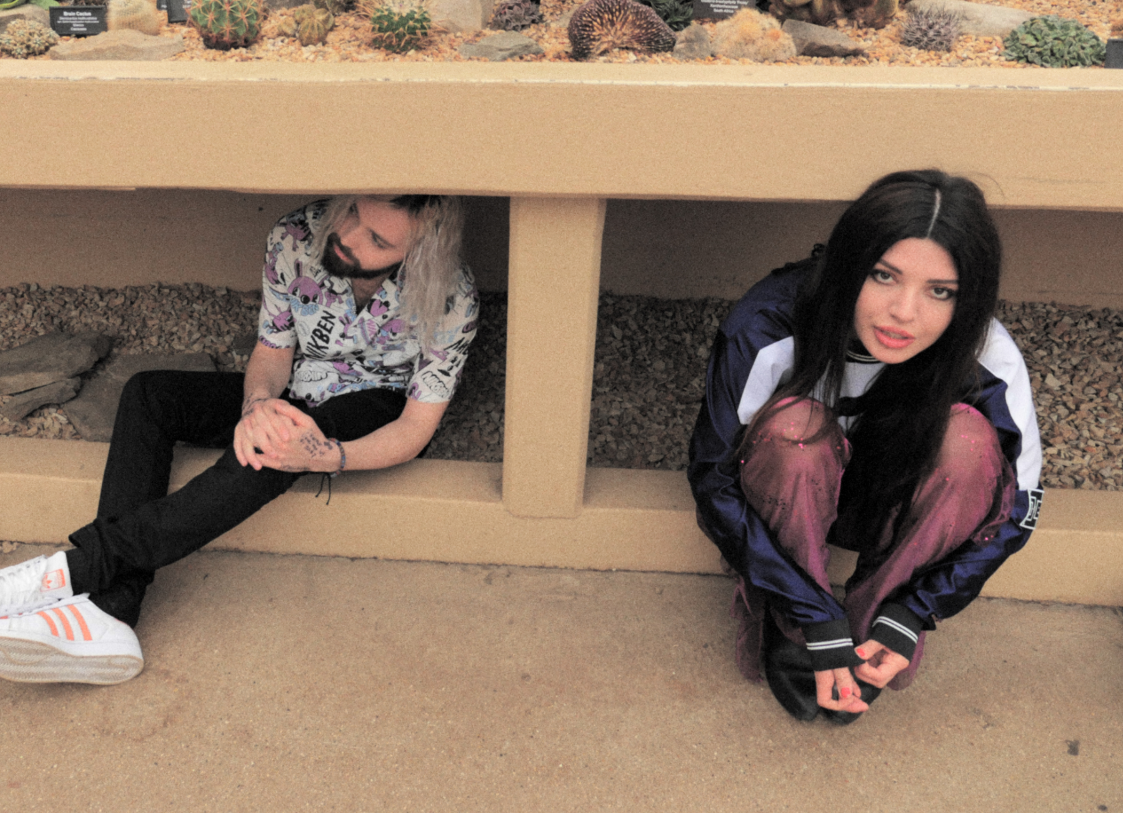
photo by @floracash
When I first heard them, there was something introverted about their music, as if they weren’t singing for an audience, but for one specific person. And underneath the gentle pop songs lies a very grown-up story. A story about what remains after the honeymoon moments are gone, and you’re left alone with reality.
The new album behind every beautiful thing isn’t about surface-level love. It’s not an album for those who believe in “happily ever after” in the traditional sense. It’s an album for those who know that love doesn’t save you. It doesn’t fill the holes in your heart. Sometimes it even makes them wider. Love here is a kind of laboratory, where you, like a mad scientist, mix different elements, knowing that each one could explode. But you keep experimenting anyway.
Through their music, Shpresa Lleshaj and Cole Randall touch on something intimate: “Why do we talk so little about vulnerability in love?” We’re taught that relationships are about support and mutuality, but who talks about how love is a mirror? That it doesn’t always give you answers, and instead, it can confront you with your darkest fears. And that’s exactly what behind every beautiful thing is about. It doesn’t offer those comforting messages like “everything will be okay.” It says that sometimes things fall apart, and that’s okay. You’re left sitting on the floor among the wreckage, looking at what’s left. And then what? Love doesn’t make you whole. It can only show you that you were broken from the start.
Every pause on this record is space for doubt, for the kind of silence that often scares us in real life. We’re afraid that if we stop talking, love will disappear too. But flora cash assert that it’s in that silence where you find the truth. And that shouldn’t be frightening. It’s just a fact. Love on this album is a process of continuous deconstruction and an attempt to understand what’s happening within you.
behind every beautiful thing feels like a walk through a fog of memories—it blurs in front of you, and each track is a step deeper into something very personal, intimate. And, of course, this album wouldn’t have been possible without the contributions of other musicians who infused their unique charm into the sound, such as Dakota Holden on the pedal steel in Morning Comes, Baby I Love You, and The Night Is Young, Djordje Milanovic on violins and viola, and Yoed Nir on warm cello.
From the very first track, Should’ve Dressed for the Event, it’s as if you’re holding your breath. That breath is almost an intimate gesture, like a touch, and it sets the tone for the entire album. In the hazy melody and Cole Randall’s vocals, you hear exhaustion—not disappointment, but more of an acceptance that this path, no matter how hard it is, must be walked.

photo by @floracash
And then comes Just Wanna Feel You. This song is a quiet confession, something you say to someone when you both know that words don’t really matter anymore. The whole track is built around the airiness of Shpresa Lleshaj’s vocals, as if you could feel the words not with your ears, but with your skin.
And then there’s My Ex Would’ve Left By Now—can I call this track a movie scene? It’s night, it’s raining, you’re sitting in the car, and the headlights are illuminating the wet asphalt. It’s melancholic, but not the kind that pulls you into depression; it’s the kind that heals with its simplicity. Here, Shpresa Lleshaj and Cole Randall play the role of old friends who hold you up when you’re about to fall apart.
Morning Comes feels like a breat of fresh air after a long conversation. There’s something incredibly tender about this track. The duo’s voices unfold as an intimate dialogue, the kind you have with yourself in the early morning hours when the truth becomes inescapable. Here, Shpresa and Cole wrap you in warmth, and in that embrace, you suddenly realize: yes, maybe the song isn’t about your pain, but somehow it still becomes yours.
But, as is often the case, after the morning light comes the night. The Night Is Young is a memory of a spring evening when the future feels infinite. But I’m Tired is the other side of the coin. This song doesn’t ask for comfort. It simply declares its right to exist. There’s an exhausting weariness in it, one that almost turns into a cry—a cry for the acknowledgment of vulnerability.
And as the album comes to a close, the tracks Dragon and The Builder leave you in a state of near catharsis. Dragon, with its echo, is a prayer, lifting you to heights where every note is soaked in both desperation and hope. And the final track, The Builder (För J. Blom), instrumental, speaks the language of music and needs no words.
In behind every beautiful thing, there are no loud declarations about love, because those always oversimplify. Speaking loudly about love is like trying to hold sand in your hands: the tighter you squeeze, the less you have left. flora cash’s record is like opening your palms and seeing what happens. Without control. It’s the feeling that any form of love—real love—will always be something frightening. But that’s its power. In the fear of what you might lose, in the fear of not being enough. Love here becomes a quiet revolution unfolding within your own mind, reshaping everything in its silence.
*This review was made possible by SubmitHub






 Indie Boulevard Magazine