
When you look at John Doe Trio, you see a band that’s as much about resilience as it is about music. It’s been four years since the release of Railroaded, an album that brought the trio acclaim but left them at a crossroads when the world shut down and, with it, the band’s momentum.
Phil Woollett, the group’s frontman and one of the UK’s most respected blues guitarists, has weathered more storms than most. After suffering the devastating loss of his young son, he hit rock bottom, a place he never thought he’d climb out from. Music, however, pulled him back, and he found purpose in forming John Doe Trio with drummer Paul Townsend and bassist Craig Ferguson. The pandemic nearly undid that progress. Like many musicians, the isolation, the canceled shows, and the uncertainty hit them hard. But Phil, who’s always fought his own battles with mental health, decided to lean into the very medium that saved him. Instead of letting the struggle quiet his voice, he made it louder. Now, with a new lineup that includes his son Ben Woollett, the band is gearing up to take their sound to new heights with JDIII.

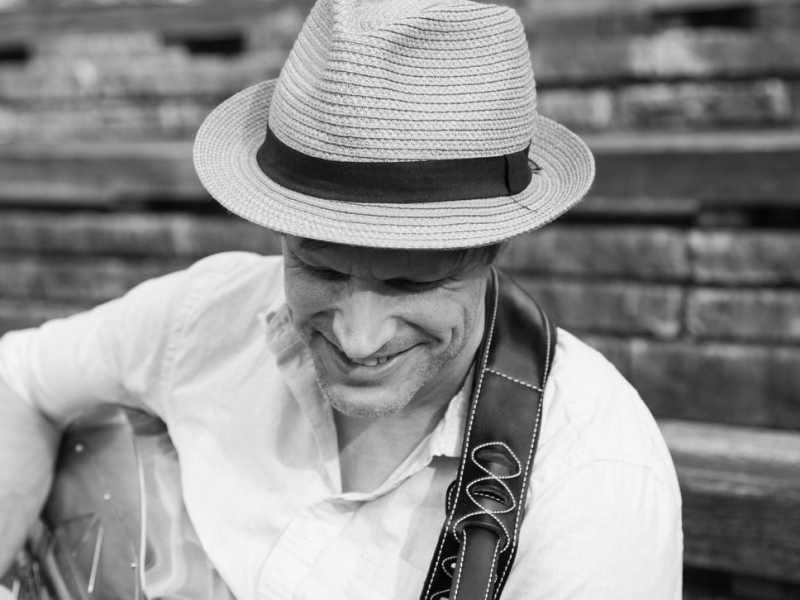
photo by @johndoetriouk
You’ve been through a lot as a band, from lineup changes to the challenges of the pandemic. Reflecting on your journey, what moments or turning points do you think shaped you most profoundly as artists?
Initially, I would say the recording of Stranger back in 2016 was the biggest thing. Like any band, I guess, you don’t feel like you really properly exist until you’ve got something recorded and out there. That album did ok and got a pretty decent reception so I think it was then that we felt we really belonged within the blues scene. More recently I would say it was helping to arrange and performing at the Kent fundraiser for Matt Long, from Catfish. Sadly Matt has since lost his battle with cancer, and will be sorely missed, but I guess the whole experience just put things into perspective. In the big scheme of things, losing a new-album tour to COVID and struggling a bit as a band pails into insignificance compared with situations like what Matt and the family went through. That’s pretty much when we decided to just go for it with a new album and took the view that if it doesn’t go perfectly again, then that’s not so bad after all.
With the blues scene being such a close-knit community, you’ve been actively involved in fundraising and mental health awareness. What role do you see music playing in this advocacy, and how has it personally impacted you?
I often say that in many ways music saved my life. I lost my mother at 13 years of age and really started going off of the rails. Music helped to literally keep me off the street and likely prevented me from getting myself into life changing amounts of trouble! In later life when I suddenly lost my son I again fell back on music to kind of escape from the world for a bit every so often. The power of music as a force for good really can’t be underestimated. In sport we see top figures coming out about their own struggles with mental health, and using that to raise awareness, and I think music has the power to do a similar thing. In many ways they are comparable; essentially both involve standing in front of a load of people and having your abilities judged, which isn’t an easy thing, so it’s perhaps not surprising that mental health issues are prevalent in both fields. That does, however, create an opportunity for them to act as vehicles for awareness and destigmatisation too, which I want to be at the forefront of.
“Railroaded” received strong praise, but it was also tied to such a difficult time, as you’ve mentioned, with the pandemic cancelling your tour. Now, with the new album, JDIII, you’re bringing a sense of hope and resilience back into the spotlight. Could you tell us more about this new album?
As I mentioned, it’s kind of born out of sense of perspective. COVID ruined our last album release and tour but so many people suffered in a very real way. I guess that, because of that, we wanted it to have a real feeling of musical honesty and not to get too deep or self indulgent. It’ll certainly be more traditionally “bluesy” than Railroaded but will still push the boundaries a bit in terms of genre. There are some serious messages within the music, especially around mental health issues but also much more light-hearted moments. Above all we just wanted it to be us being us.
Phil, you went through a remarkable personal transformation, both in terms of mental health and pursuing degrees later in life. How has this journey shaped the overall sound of John Doe Trio?
I guess going back to university and doing two music degrees isn’t the tradition approach for a blues artist but, since a young age, I’ve enjoyed exploring music quite deeply: everything from classical music to heavy metal. There’s a bit of a narrative around blues that suggests that anyone playing it shouldn’t be really technically proficient or musically knowledgeable, perhaps thinking that that all belongs to jazz, for example. I don’t get that. Many of the great blues artists of the ages – like Robert Johnson, T Bone Walker, Stevie Ray and so on – were great technicians and simply didn’t have the opportunity to study music formally even if they’d have wanted to. I have had that opportunity and have really relished it. I think it allows me to write from a broader musical perspective, resulting in material that does lean towards a number of different styles and genres, whilst (hopefully) never losing it’s blues DNA. My own mental health struggles, as well as providing a great source of blues lyrics (I joke, of course), really do fuel the passion and intensity that I plough into my writing and playing. Life experience shapes us as people and that can’t help but be reflected in the music someone produces; that’s certainly true with me, anyway.
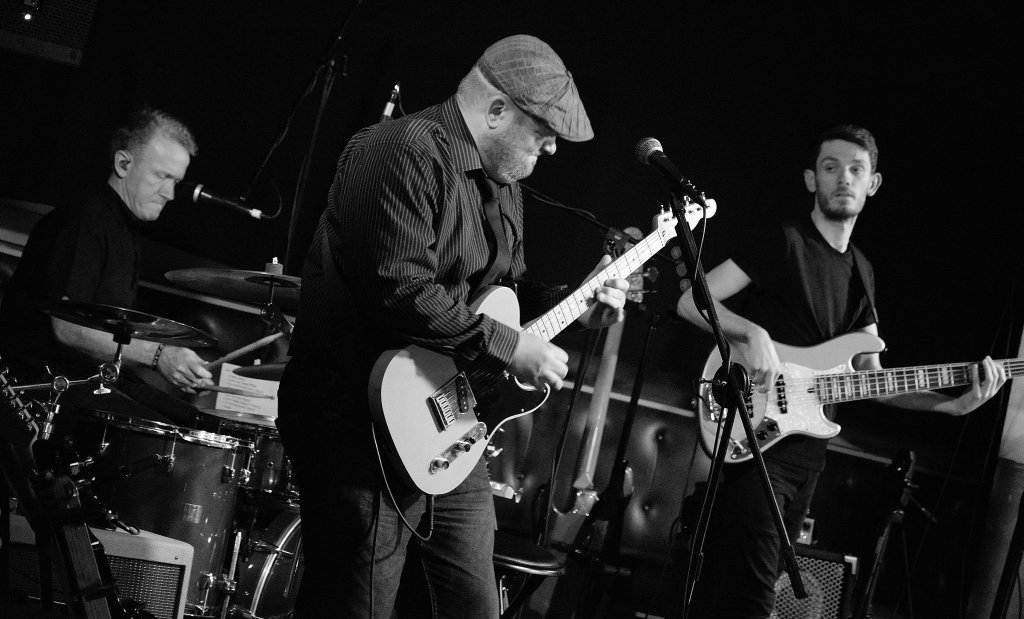
photo by Mark Stasiuk
With Lenny Bunn and Ben Woollett joining for the upcoming tour, how do they bring a new energy or style to the band’s sound? What’s it like to tour with such a mix of talent?
Ben will certainly bring the average age of the band down, which is a bonus! In seriousness, he does bring real youthful energy, which can’t help but rub off on us old stagers. The original plan was for him to jump in straight away, but other circumstances meant that he’s having to miss the first couple of months. Lenny is a seasoned pro, so we were delighted when he agreed to step in for the beginning of the tour. He, essentially, retired from touring a while back, so for him to come back out on the road for us is a real honour for JDT.
You’re going back on tour with a new album after four years, and fans are no doubt eager to hear what’s next. How are you planning your upcoming shows, and is there a specific vibe or setlist strategy you have in mind to reintroduce yourselves after such a long time?
We’ve still be getting out sporadically over the last couple of years, so it’s not a huge deal in terms of actually playing shows, but bringing new material to the shows, after so long, is really exciting. It does bring problems, as there are now far more songs that I’d like to include in the set than there is time for, so I try to find a balance between the old favourites and the new stuff. There are always a couple of songs that are designed to be studio tracks, where we really go to town on production and never really intend to play live, but on the upcoming album pretty much everything should translate to a live setting pretty nicely, so they’ll be some tricky decisions to make.
For JDIII, you’ve said it’s a ‘no-holds-barred adventure.’ What specific risks or new creative approaches did you take with this album that you might have hesitated on before?
I think we have just decided to go out and create the music we want to create rather than what we feel we are supposed to create. I feel we’ve always worried too much about keeping up with what other bands are doing or chasing current trends, rather than just being ourselves. The result will be that traditional bluesier feel that I mentioned early but with a couple of real left-field tracks thrown in, in terms of style. It’s going to be a lot of fun. On the technical side, after being a stalwart tube amp devotee for decades, I’ve finally turned to amp modelling for my guitar sound. I’ve never felt that modelling ever achieved the warmth of a tube amp but the new tech now available is mind-blowingly good and offers so much tonal variety. It’s always a gamble, as it could bother the purists, but I just feel it opens up so many amazing doors and allows a fantastic consistency between live and recorded tones.
Can you walk us through a particularly memorable moment from recording JDIII where you felt you were breaking new ground?
For us I think just getting back into the studio felt almost like breaking new ground, as we genuinely never thought we’d get there again. Having said that, having featured a rubber chicken, named Pedro, on the last album I can honestly say I’m not sure there’s much ground left to break this time!
Looking back on your journey, from Stranger to Railroaded and now JDIII, how would you say the band’s sound has evolved, and what would surprise listeners most about this new album?
We went for a more natural, less produced, sound for Railroaded and I think we’ll keep with that feeling with JDIII. We’ve certainly become more confident in backing our gut-feelings when it comes to writing and the overall sound. We’ve included a beautiful instrumental ballad, named “Little J” after my late son, Joel, which I think may suprise some folks. We’ve included instrumental numbers before, but they’ve been more technical or lighthearted, where this is a really deep, meaningful track in which we hope we can portray a real sense of emotion and beauty without the need for lyrics. I really hope people like it.
Before the stage lights come on and you’re out there rocking, there’s that stretch of time—one or two hours before the concert—when the waiting can be both exciting and nerve-wracking. So, what’s the John Doe Trio’s go-to pre-show ritual? Are you the type to rehearse one last time, grab a snack, or maybe just debate which snack is best? Or do you have any quirky traditions to shake off the nerves?
Paul, our drummer, can usually be found tucking into something ridiculously healthy from a tupperware container before a show, whereas I would usually be trying to find out why something on my oversized, over-complicated pedalboard wasn’t working: switching cables or power supplies in a blind panic. Hopefully my new rig will allow me a slightly more relaxed pre-show routine now! In an ideal world I just sit back, perhaps have a sneaky beer (just the one though) and try to relax.
*This interview was made possible by Quite Great PR



 Indie Boulevard Magazine