
I’ll admit, attempting to describe Dustin Gledhill’s new work is no easy task. It feels as though you’ve touched something majestic, and the weight of responsibility for every word multiplies tenfold. But am I ready to take on this challenge? Oh, absolutely.
Today marks the release of Live at Wigmore Hall – 2010, a live album recorded by pianist Dustin Gledhill at the renowned Wigmore Hall in London. The album features selected works by François Couperin, Gabriel Fauré (in honour of the centenary of his death), and Sergei Prokofiev. At first glance, it might seem impossible to unite such diverse composers in a single concert. Yet Gledhill achieves this with such natural grace that it feels as though they were always connected by an invisible thread.

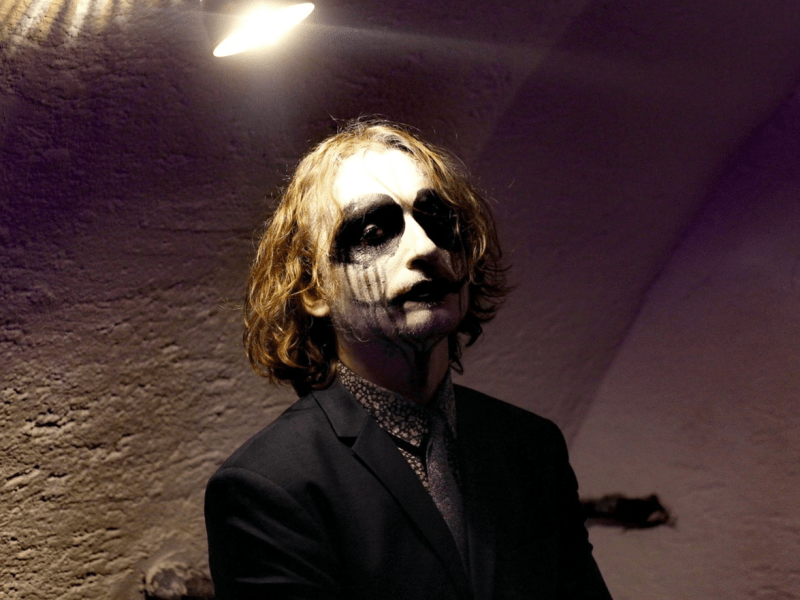
photo by @dustingledhill
Let’s begin with Gabriel Fauré—a composer whose legacy is so vast it’s impossible to encompass fully. His romances, set to the poetry of geniuses like Verlaine and Gautier, immerse us in the atmosphere of French symbolism. It’s akin to the works of Russian composers who set Pushkin and Apukhtin’s poetry to music: profound, melodic, and piercingly evocative.
The history of art flows like a slow-moving river, winding its way through the centuries and leaving behind the sediment of eras, ideas, and contexts on its banks. Listening to Dustin Gledhill’s performance, you can almost smell the air of the era in which this music was born. How would I describe this sensation? This is music steeped in the spirit of cosy salons—you know, the kind where Verlaine’s dazzling phrases gave way to glasses of wine, and the entire culture seemed hesitant to disturb the peace of its own melancholy.
The program for Dustin Gledhill’s recital at Wigmore Hall reads like an introspective journey through time—a dialogue across centuries, uniting the precision of French Baroque with the raw intimacy of early 20th-century modernism. Gledhill’s choice of repertoire feels deliberate, as if each piece wasn’t merely selected to highlight his technical prowess but also to weave a narrative, both personal and historical.
November 2024 marks a century since Gabriel Fauré’s passing, and Gledhill honours the occasion with Nocturne Op. 63. Composed during a period of renewed creativity following a hiatus from piano composition, the piece exudes unparalleled grace. Gledhill leans into its quiet power, allowing its moments of hesitation and resolution to unfold like a whispered confession.
Beginning with François Couperin’s Les ombres errantes and La Mystérieuse, originally composed for the harpsichord, Gledhill reimagines these works through the prism of the modern piano. Their inherent delicacy acquires a newfound resonance, layered with depth and introspection. The somber stillness of Les ombres errantes evokes the sensation of wandering through a mist-laden landscape, where each step reveals a fleeting, half-forgotten memory. Meanwhile, La Mystérieuse lives up to its title—a piece that demands to be experienced rather than simply heard, as if the music itself has taken on a life of its own. Through Gledhill’s interpretation, these compositions seem to draw breath, creating a space where time dissolves into sound.

photo by @dustingledhill
The program takes a dramatic turn with Sergei Prokofiev’s Sonata No. 4 in C Minor, Op. 29. Prokofiev—now, that’s a different story. Gledhill approaches this work with both care and boldness, presenting the world of the Russian Revolution in all its chaos, energy, and pain. This is music born from a fractured era, where sounds began to scream, argue, and flail. And here, I wonder: is it not because of this that it resonates so profoundly in our modern world, where we too stand at the edge of an epoch?
In this sonata, Gledhill channels a composer wrestling with grief and memory. Dedicated to Maximilian Schmidthof, Prokofiev’s close friend who tragically took his own life, the work is both turbulent and tender. Gledhill interprets it as an exploration of loss in all its complexity—the anger, nostalgia, and the faint glimmer of hope that persists even in the darkest moments. His playing is relentless, almost defiant, daring the listener not to look away.
Gledhill’s artistry feels like an ongoing dialogue across eras. As I listen, I begin to see the faces of those who once lived, wrote, played, and listened. The significance of this recital extends beyond the repertoire. Wigmore Hall, steeped in history, provides the ideal setting for an evening of music that is simultaneously reflective and forward-looking.
Gledhill’s ability to bridge the past and present makes this performance unforgettable. In an age of streaming services and the millennial generation, one might question whether such music holds relevance today. My answer is a resounding yes. Artists like Dustin Gledhill remind us of timeless values, of the enduring beauty of classical music that never loses its relevance. Live at Wigmore Hall – 2010 is the breath of three eras. Here, Gledhill is a pathfinder, promising resonance for anyone willing to truly listen. There is no artificial grandeur, only a sincere dialogue between past and present, where the works of Couperin, Fauré, and Prokofiev merge into a unified whole.
*This review was made possible by SubmitHub







 Indie Boulevard Magazine