
Dripping Trees have always had a knack for sweeping the ground out from under you—their music grabs you by the collar and doesn’t let go until you’re fully immersed. But this time, it’s different. They’ve traded straightforwardness for subtlety, and honestly, I wasn’t immediately prepared for this shift in tone.
They’ve long proven they can be loud, socially charged, even provocative. But with their new album, Balance is Gone, they’ve gone deeper—not digging into the world but within themselves. This is a record meant to be heard in solitude, preferably at night, when there are no trees or skies visible outside—just your thoughts and their music.
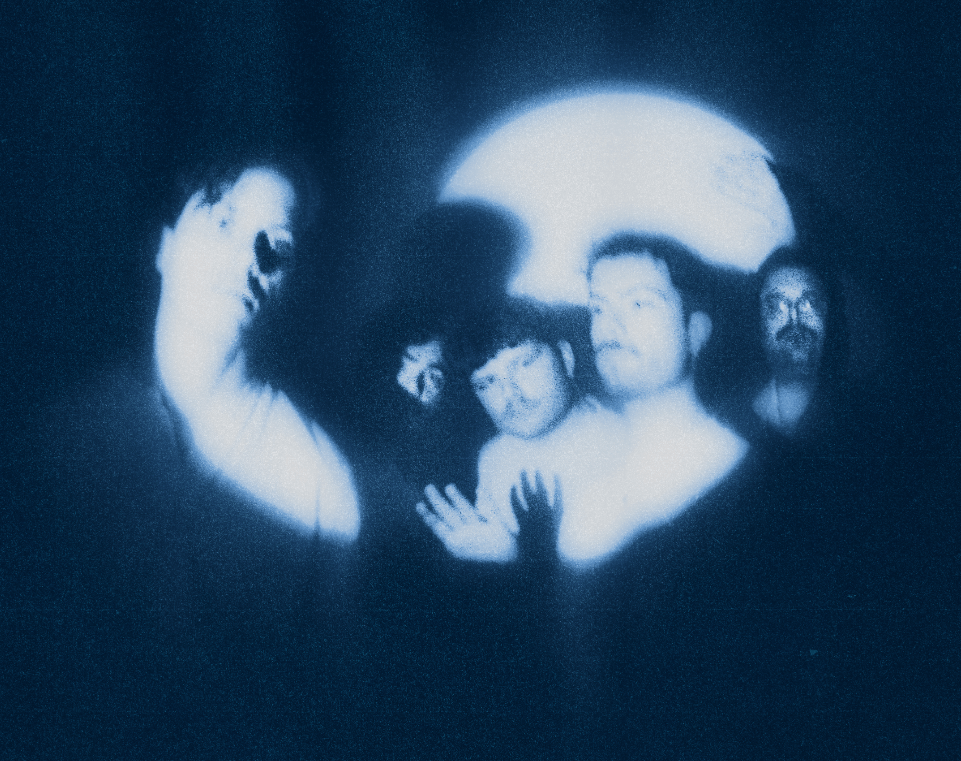
photo by Ingrid Enache
Their message feels like a letter you stumble upon by chance, read, and then can’t get out of your mind for days. I’m used to Dripping Trees grabbing me by the throat. This time, they went for the heart. Not literally, of course—that would be too direct for them—but the feeling lingers all the same.
Koen, Stef, Stijn, and Stef were joined by Luc Lamée on piano, and it turns out he was the missing piece of the puzzle I didn’t even realize was missing. Barely audible notes trickle like rain, softening the sharp edges of their post-punk past. They always sounded like a loud night, but now they resemble a slow dawn—not the kind that brings relief, but the one that makes you wonder what comes next. I get the sense they knew exactly what they were doing. There’s something comforting about that—knowing someone is making music not for algorithms, but to awaken something old, almost forgotten, inside you.
The album opens with Nothing’s Changed, a melancholic reflection on life. Gentle guitars and a velvety bass create a contemplative mood, while the vocals confidently carry the melody, setting the tone for the entire work. Listening, I find myself sinking into the lyrics. Nothing’s changed — how much of a question is there in that? Do we truly believe it? Or is it just an attempt to convince ourselves?
Sea of Ants continues this thread. A slow intro with velvety rhythms lulls you into a state of calm, while the lyrics add a tinge of unease, pulling you into deep introspection. The track unfolds into a blend of alternative and psychedelic rock, transitioning into gentle folk—a surprisingly powerful move that conveys both tragedy and healing. The sea of ants is a metaphor. I think of movement, of people walking, not even noticing where they’re going. This isn’t a song you can listen to on the run. It compels you to stop and reflect.

photo by Ingrid Enache
Bulging at the Seams captivates with its minimalist apathy and romantic gloom. In this song, I hear exhaustion with no outlet. The imagery in the lyrics feels deeply personal yet universal. It reminds me of my own moments when the world feels too constricted, when everything inside is ready to burst outward.
Ecstasy draws you into its rhythm with a pulse-quickening bassline, while delicate piano keys reveal the song’s brighter side, maintaining its romantic darkness.
Waltz of Eternity offers a moment of introspection and inner stillness. Its simplicity highlights the sadness in the vocals, creating an emotional space where you can completely dissolve into your own thoughts. The lyrics feel like a toast raised to something that’s no longer there.
Stray unfolds with tender vocals that elevate dark pop-folk to a new level. This six-minute track lays bare fears and sins, revealing new layers of meaning with every listen. The finale, with its epic guitars and powerful keys, leaves a lingering sense of unease.
The album closes with Balance is Gone on a bright and gentle note. Harmonies and soulful guitars bring a sense of calm, wrapping up the story with a feeling of resolution and hope. It’s a stylish, airy track—deeply personal and piercing straight to the heart. This song feels like a conclusion, a reflection on everything that came before. It’s as if the band is acknowledging that life isn’t split into black and white. Balance may be lost, but that doesn’t mean it’s over.
The live recording gives the album a sense of continuity. There are none of those sharp studio “seams” where sound is artificially pieced together. You can feel the drummer subtly slowing the rhythm, the bass reverberating dully in the corner of the room, and the vocals blending with the instruments rather than standing apart. This is especially evident in tracks like Waltz of Eternity.
It’s a risky approach. When you record everything together, you can’t fix every flaw in post-production. And that’s the point. Balance is Gone doesn’t sound polished—it sounds honest. It’s an album unafraid to show its rough edges, because those imperfections are where the life is. Every song carries a tension that’s only possible in the moment musicians play together. Dripping Trees have created an album inseparable from the space where it was born.
And perhaps that’s why the album is named as it is. There really is no balance—not anywhere. Not in life, not in the sound, not in the recording process. It’s all chaotic, raw, and real energy, and every track reflects this loss of equilibrium.
*This review was made possible by SubmitHub








 Indie Boulevard Magazine