
There’s a moment in jazz, just as the last ice cube clinks against a glass and the lights dim to a perfect haze, when time seems to stretch. It’s in that fleeting instant, between stillness and surrender, that Lorna Reid resides. With her new album, I Will Tell Your Story, Reid once again stakes her claim as a siren of the human condition.
The lead single, Sweet Baby Blues, is a midnight confession set to the glow of piano keys and the smoky sigh of a saxophone. Written in the wilds of Scotland alongside Darden Smith, the track carries the weight of a 2 a.m. heart-to-heart—intimate, raw, and startlingly honest. Reid herself calls it a song of reconnection, one that reveals fresh truths every time she performs it. For those who have followed Reid’s career, I Will Tell Your Story is a natural evolution—an album that fuses the elegance of classical jazz with the daring spirit of its creator. There’s Ella and Sarah in the DNA, of course, but also Joni Mitchell’s storytelling, Quincy Jones’s orchestral finesse, and even a rebellious flicker of punk from X-Ray Spex. It’s a record that refuses to settle, much like the artist behind it.
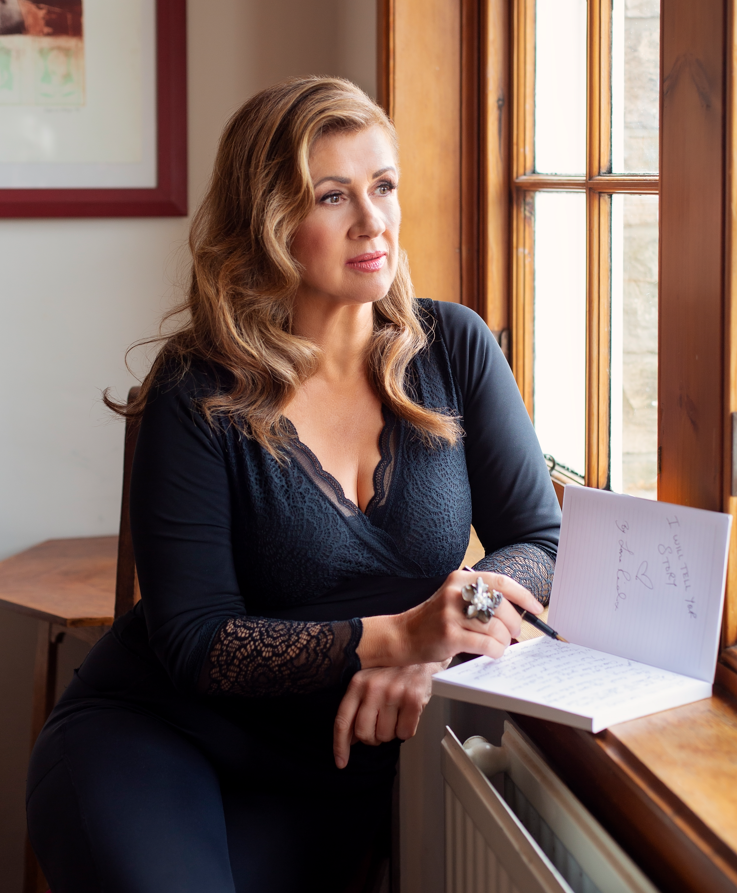
photo by Roslyn Gaunt
Hi Lorna! First off, congratulations on the upcoming release of I Will Tell Your Story. It’s such a beautifully evocative title. Let’s talk about your lead single, Sweet Baby Blues. How did 2 a.m. and Moniak Mhor shape the song’s bittersweet tone?
Thank you! Sweet Baby Blues is a song I treasure for its simplicity and honesty. Perhaps the stark and barren nature of the Scottish Highlands is reflected in the writing. The relative isolation on a retreat is a place where you can really search your heart and mind, as you are away from your daily life, routines and family. It creates a special space; a yearning of the soul.
Your lyrics often feel layered, as if they speak to different listeners on different levels. Do you have a way of knowing when a song feels “finished”?
This is something that is important to me in my songs. There are levels and hidden meanings that I have created. But others that I don’t see, and others find. I love it when people attach their own personal connection. The short form nature of songs means, ‘less really is more’ When I am crafting a song it is often what I take out that has greatest impact. Everything hangs off an idea. A bit like a book cover – it tells you what you need to know in the title. Song writing is infinite and so if the story has not yet been told it can appear in another song or in another guise. Emotions have no end.
“I Will Tell Your Story” sounds like a promise. What does this album reveal about you personally, and is there a part of your own story hidden between the lines?
A music journalist friend said they felt that my emotions are laid bare in this album, and he is right. The title track I Will Tell Your Story was written as a tribute to a friend who died – way too young. I wanted him to be remembered for more than just his ending. I find beauty and sadness in the world around me and want to honour the stories of people that I love and care about. Or stories of strangers, that profoundly touch me. Writing is my way of making sense of the world, like threading an idea through the eye of a needle.
Your music blends jazz, blues, and soul so effortlessly, yet you pull influences from artists as varied as Ella Fitzgerald and X-Ray Spex. That’s quite a range! How do you weave such diverse influences into your work while still making it unmistakably you?
I think you will hear more hints of Ella than Poly Styrene in my music! But in both cases I can still remember the exhilaration I felt when I first heard the music and its raw honest emotions, worldly observations and often obtuse use of metaphors. As a writer everything I have experienced and heard is there to drawn on, like a rich colour palette.
If you could describe your new album as a landscape or a painting, what would it be? Mountains, city lights, or something entirely abstract?
Now I think about it, ‘light’ is a theme that runs through my songs. I use it as a romantic, metaphorical landscape that takes many forms; dark, dancing, dazzling, rising sun. ‘Dappled Lightness’ is one of the tracks where light filters through the branches of a tree, casting shadows and creates a mood that expresses love and pain. I like to play with atmosphere and light is an enigmatic way to do that.
Recording an album entirely in Scotland gives it a sense of place that feels rooted in your identity. How does the Scottish culture seep into your music, even when the genre feels so universal?
The main part of the album was recorded on a farm in the borders at Grans House Studios. Angus Lyons who recorded the album is also an accordion player (with a band called Blazin’ Fiddles). Angus plays some fantastic lines on tracks (Paris in ’95 and Souls for Sale). Most of the musicians are Scottish and so we have that culture that connects us, but we also have a vast range of influences between us and so all those ideas can be drawn on to create a sound that is unique and in the moment. I really feel that we have created a soundscape that has a sound of its own.
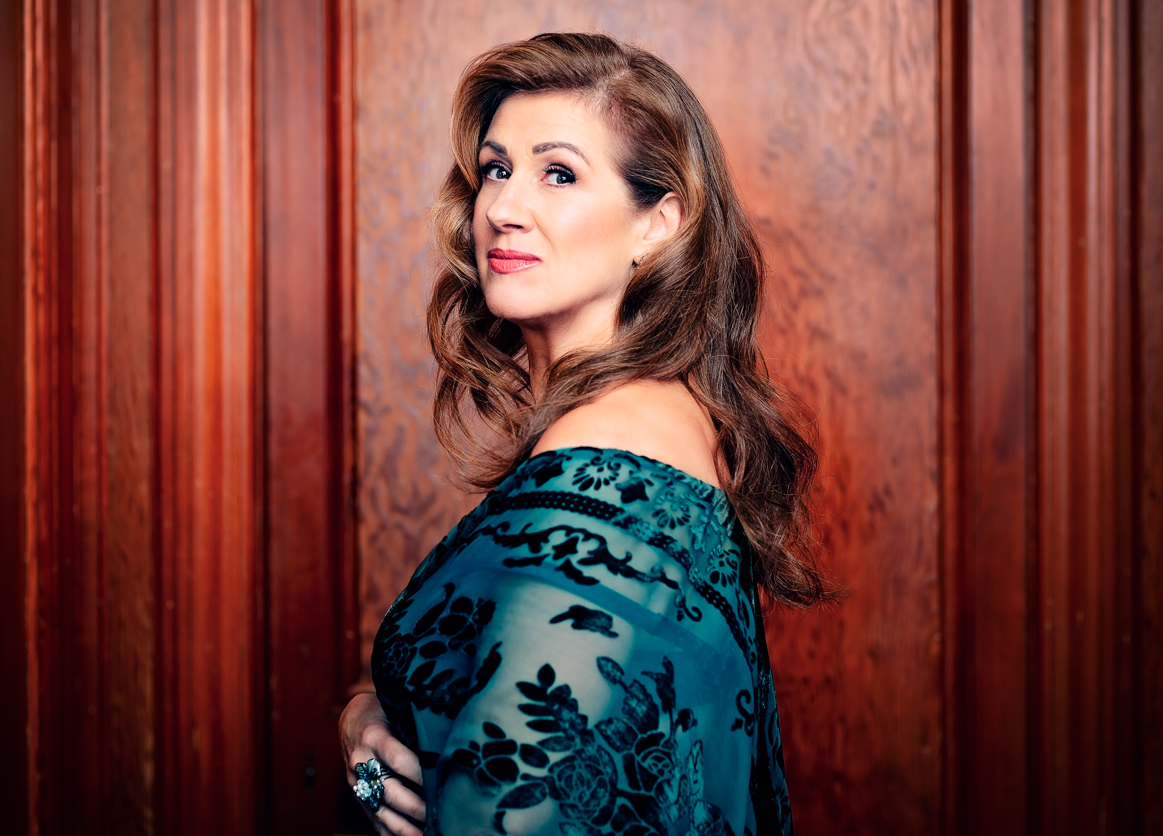
photo by Roslyn Gaunt
You’ve been described as “breaking out of classical jazz norms while paying tribute to its astonishing legacy.” As someone who clearly loves the genre but isn’t afraid to challenge it, how do you see the future of jazz evolving?
Jazz is more diverse than it has ever been and continues to develop across the genre from the blues and soul end of jazz, to the more contemporary ‘out there’ styles. When I first started performing jazz people almost exclusively sang Jazz Standards in the bars and clubs (wonderful songs by Cole Porter, The Gershwin’s, Rogers and Hart etc). Ten years ago, I released Falling Like Dew – an original cross over album of jazz, blues, soul and country. In the last decade more singers than ever are writing and performing original music which is great. I still love the wonderful jazz standards but also feel its crucial that we create our own sound and honour our own influences.
Your work as a coach and host for foreign language students gives you a unique perspective on human connection and culture. How do those experiences outside of music influence the stories you tell in your songs?
My work as a Coach means I have to be able to work in the moment with people. I have often related my work as a Coach to working with a jazz band, where is it important to be able to go with the flow. If someone is doing a great solo, then we might decide to open up the tune and change the form as the energy is there and the audience love that energy. Taking that sense of going with the flow as a writer is critical to allowing yourself to open up to ideas and also not being too judgemental. Heavy judgement is a sure-fire creativity killer.
The production credits on this album are remarkable, with the likes of Boo Hewerdine and Louise Clare Marshall. Collaborating with such a team must have been inspiring. How did their expertise shape the final sound of the album?
Boo Hewerdine and I worked closely together to create a sound that is both familiar to me and my musicians, but also brings distinct new flavours and sounds. For example, Gustaf Ljunggren (a multi-instrumentalist from Sweden) has introduced dimensions such as a fantastic horn section on I Will Tell Your Story and flute on There for You Again. Boo also brought Louise Clare Marshall on board (of Jools Hollands band). When I heard the backing vocal arrangements Louise did on Paris in ’95 it took my breath away as her work is so beautiful. So, we invited her to work on more tracks. I love working in an organic way. Yes, we have a general plan and then stay open to fresh ideas and approaches from the players.
Performing at a festival like Rochester NY International Jazz Festival must be a thrill—the energy, the sheer size of it all. But your music has this quiet, personal core that feels almost like a conversation. How do you hold onto that sense of intimacy when the stage and the audience feel so much bigger than life?
It’s so important to have a great trust and rapport with your musicians, on stage, as this energy is projected and felt by the audience. Energy can be both quiet and extremely powerful. I have been told by so many people that they love it when they see us having a fun time and totally immersed in the music. That in turn relaxes the audience. You have to love what you do and also believe in it. If it feels real, then it is believable. Not everyone will love every song to the same degree, but if someone felt it was worth saying, then that is a very good place to start.
*This interview was made possible by Quite Great PR




 Indie Boulevard Magazine