
Kangaroo Crucifix—a title where whimsical absurdity intertwines with a provocative, almost biblical seriousness. What could a carefree “kangaroo” possibly have in common with a grim “crucifix“? Yet, this contrasting pair sets the tone for a musical world where reggae tropes unexpectedly merge with thunderous metal, and an eccentric sci-fi tale stands side by side with the deeply personal experiences of its creator.
We’re used to thinking of “rock opera” as something from the last century, when posters flashed names like Waters or Lloyd Webber. But in the case of Shock Rabbit, the traditional definition falls short. Is it a 10-minute suite or an extravagant musical saga in the form of an EP? It’s a product of decades of influences, from ’90s rock classics to cult hip-hop beats and the sacred roar of a Hammond B3. In our interview, I’ll dig deep to uncover the essence of it all: How did an unexpected image from a bathroom transform into a full-scale rock operetta? Why does the combination of such polar sounds feel so seamlessly organic? And can we even talk seriously about a release like this in an era where streaming platforms crave quick hits, and listeners often struggle to finish a track to its midpoint? All these questions are answered by Dave Parillo, the band’s frontman and the mind behind the madness. This is an interview about music that’s guaranteed to pull the rug out from under you.
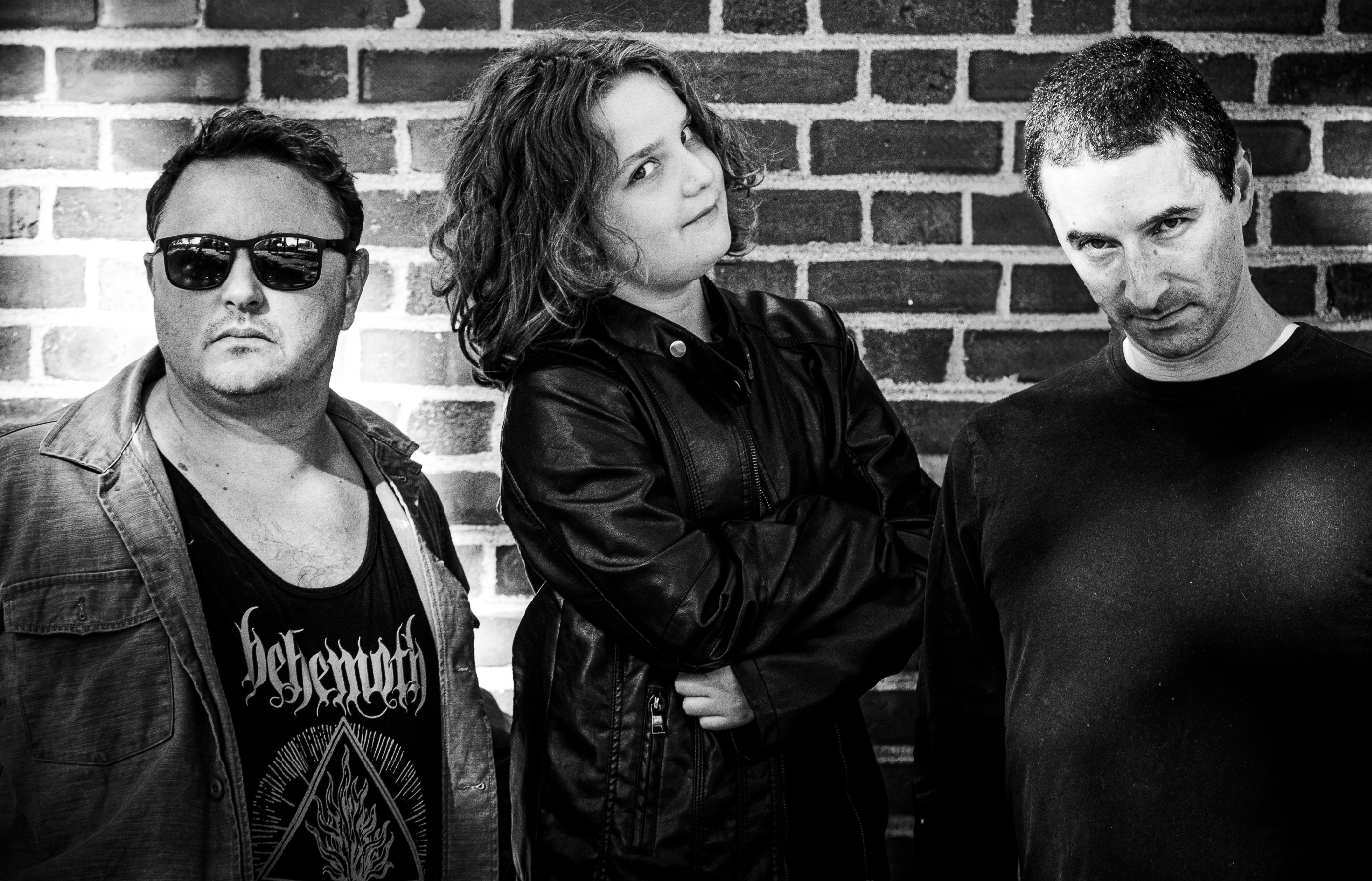
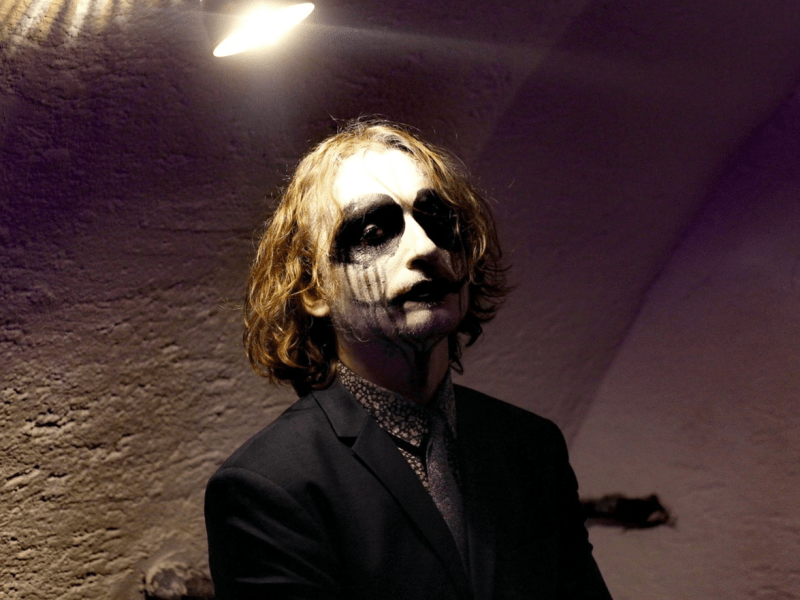
photo by @kangaroocrucifix
Your music project is itself something of a paradox—“Kangaroo” and “Crucifix” sound like two opposite poles, yet it’s in this contrast that your music comes to life. How did you decide that this combination of words best reflects your philosophy and creative approach?
Initially, the name just came out of nowhere– I liked the alliterative sound of it, and I liked the triplet feel of it rolling off the tongue. But it’s that paradox that made it special. “Kangaroo” is such a bouncy, lighthearted word, whereas “Crucifix” is angular, sharp, deadly serious. I wanted a name for the project that spans a broad range of emotions (to be fair, I’m pretty sure I borrowed the idea from Guns N’ Roses), because while a lot of the stuff I write has that heavier sound, there’s plenty that is anything but. Humans are complex, and while the music industry demands we codify our art into easily pre-packaged pigeon holes, I think we all know that none of us ever feel entirely Kangaroo or Crucifix, and we all slide up and down that scale every moment of every day. I wanted a name that could capture all of it.
Many composers describe creating rock operas as a challenging process due to the need to combine narrative with musical themes. How did you approach the development of ‘Shock Rabbit’?
I didn’t set out to write a rock operetta about a sci-fi mutant rabbit in space. Hell, I didn’t set out to do anything. Like a lot of good art, it comes from a confluence of circumstances aligning their lenses in just the right way, at just the right time- it’s up to the artist to simply grab it and run. And while I can’t think of any other examples, I’m sure I’m not the only one who found inspiration in the shower. I was just standing there, splashing about, when I noticed two streaks on the door that shot upward like electrified rabbit’s ears. Someone else looking at the same pattern might’ve seen something totally different, but to me, there was Shock Rabbit, staring back at me, clear as day. At the same time, I’d just read Rick Rubin’s book The Creative Act, which I credit for giving me the perspective necessary to not just discard my vision as a silly little moment, but instead to blow on the ember and see where it went. I had a little reggae groove I’d been working on at the time, and so I toweled off, went to the studio (the next room over), and just sang “whoa, Shock Rabbit!” over it. That turned out to be the start of the whole piece, and once I had that momentum, it just started rolling downhill from there. I have a collective of musical friends that are excellent creative foils—and as I reached decision points about what to do next, they’d offer suggestions. I stuck with the Rubin ethos of just accepting what was being broadcast to me, and over time, the story and the music took shape.
Your work spans an impressive range of genres—from disco and synth-driven sounds to heavy rock. Where do you find inspiration to make these genres, shall we say, not contradictory but seamlessly woven into a cohesive picture?
We’re all just the summation of our experiences, and any musician’s ear, brain, and heart is shaped by what goes into it. The story of an American kid from suburbia in the 90s with access to MTV should tell you everything you need to know about why Kangaroo Crucifix sounds the way it does. Trent Reznor and James Hetfield taught me a bunch of foundational shit, but so did TLC, and so did Dr. Dre, and so did, I dunno, Tammy Wynette (not 90s but you get the idea). I was in a band with friends, and I was fortunate enough to grow up around some absolutely killer musicians- musically adept and technically proficient cats that understood the language of jazz and helped me see close up what live improvisation looked like. All of that is in me, and so what comes out is a bizarro stew comprised of all those ingredients.
Your operetta combines elements of seriousness, yet it remains a lighthearted piece. How did you determine the emotional tone that would be central to this story, and how did that influence the musical side of it?
It’s actually the other way around. As the music came together, and little parts or flourishes went in, the story assembled itself around the music. At the end of the reggae section, there’s this synth sound that vaguely sounds like an alarm sounding. I played it for Boris (@boris.roosevelt), a creative partner in crime, and without skipping a beat, he suggested the main enemy of the story, The Hares, and their goofy affliction of being bald and jealous of the Rabbit’s hair. I loved the absurdity, and wove it into the thrash metal section that until then, just existed in a vacuum—but in the end, captures the Hares’ attack. Throughout, the musical vibe is what dictated the story.
Working across multiple genres and collaborating with guest musicians requires a certain level of flexibility. How did this process shape the final result? Were there moments when guest performers contributed something that shifted your original vision?
Hiring session players and VO talent to fill out the work was the best decision I ever made. I’m an alright rhythm guitarist, but for stuff like the lead guitar solo in ‘The Hares’ section, I needed someone who could really light that riff on fire. I got connected with Max Waynn (@maxmemusic) through Fiverr, and he brings the house down with that solo. Same with the drums for that part—Fabio Allesandrini is a monster drummer for Annihilator (@annihilatormetal) that took the drum part I wrote and just crushed it. Both Max and Fabio brought unique elements to their parts, things I could’ve never envisioned, and the tune is eminently better off for it. But the real emotion shines because of the collaboration with long time friends- there’s no drummer I’d rather play with on earth than Matt Cole (@fallintotheskyband), who has been the pulse of any music I’ve made for nearly the last 30 years. It’s his groove that makes the whole thing truly swing.
The concept of a sci-fi opera often brings vivid visual imagery to mind. How do you envision this project visually? Did you ever feel the urge to complement it with a music video, animation, or even a full-fledged stage production?
There’s definitely a visual component to Shock Rabbit, and an animated music video would allow this piece to achieve its final form. If you’re an animator, and you see something in your mind’s eye, give me a shout and let’s get started! Of course, once we have the music video done, this will act as the starting block for the Broadway musical, so we’ll have our work cut out for us, but you gotta start somewhere 🙂
You mentioned that this project had been in development for many years. What was the most significant challenge you faced during the process, and how did you overcome it?
Honestly, there was no rush for this to come to life. The whole thing started as an exercise of creativity, and so it unveiled itself at its own pace. Right around the start of it, I was laid off from a job I’d devoted many years to, and that re-ordering of my life and all the stress that came with it is absolutely tattooed on the sonic skin of Shock Rabbit. As a weekend warrior, suddenly I had all the time in the world to devote to creating music—but that doesn’t mean the creative process moves any faster. Forcing creativity is like trying to grasp air in your palm. So I had to overcome the challenge of being patient for the tune to show itself, while managing the ennui of unemployment and uncertainty. It was Shock Rabbit, and the goal of completing it, that allowed me to overcome that challenge, even if I knew I couldn’t move it along any faster than it wanted to appear.
‘Shock Rabbit’ is impressive in its scope—a 10-minute rock operetta and tracks, each of which feels like a standalone story. It seems like you had enough material for a full album. Why did you choose to release an EP instead?
I certainly considered blowing out each section into its own song. Maybe that will happen one day, and I’ll rent the Sphere in Vegas and do it right. But at the time, I really liked compressing all these ideas into one Frankenstein-y singular work that told this epic story. 10 minutes is a long song, but not a full “rock opera” like Tommy or The Wall, hence the “operetta” moniker. It just felt right. I included my previous singles on the Shock Rabbit in the hopes that it might get them some additional attention, but they each have their own vibe going on. I think in total, the full release is a great way to capture a time period of my life, and each tune does tell a story- albeit very different ones.
The use of a Hammond B3 in a modern rock operetta is quite unusual. What drew you to this instrument? Was it a love for its vintage charm?
The Hammond B3 organ, at full throttle with some overdrive and a Leslie speaker screaming along with it, is one of humanity’s greatest accomplishments. There’s a reason why it’s so prominent in gospel music—no instrument is going to get you closer to the divine than that one. I actually played the part initially, but quickly realized I was out of my league, and reached out to Abel Boquera (@abelboquera), a monster player from Barcelona who gave life to it the way it was meant to be heard.
Completing a project that has spanned several years inevitably comes with certain emotions: pride, relief, excitement. What did you feel when you put the final touches on your rock operetta?
I felt all of those things for sure. But I also felt a creative charge- and that has fueled future works that I hope to release in 2025. In the end, this was done simply to do it. To make a piece of art with friends old and new, that captures a span of time that is authentic to our collective experience, is something we’ll be able to look back on for the rest of our lives and simply say: “Look at this thing. We made that thing. And we sounded fucking great.”
*Promoted content. All information provided is prepared in accordance with editorial standards and is intended to offer useful insights for readers.



 Indie Boulevard Magazine