
Sometimes, when listening to a musician’s new work, you just want to forget all things serious for a moment and sink into the soft embrace of melodies. Sunday Forever by Sylva Faye invites exactly that—settling into a cozy chair and letting the sounds carry your thoughts somewhere peaceful, with a touch of magic. This record came to life at a studio on Clarence Street in Leicester, imbued with a special atmosphere of warmth and friendship, while in a quiet corner, the Grim Reaper himself seems to have taken an unexpectedly calm stance.

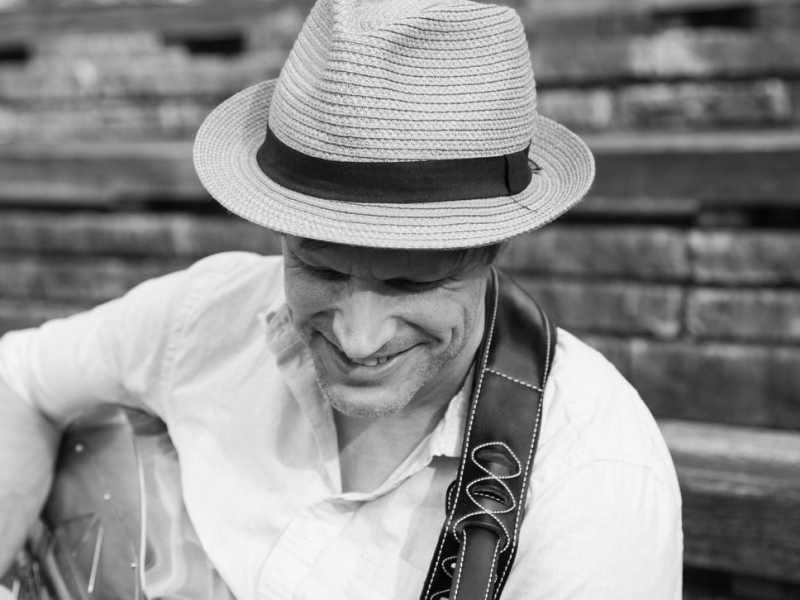
photo by @sylvafaye
Looking at Sylva Faye’s work, you can’t help but picture a film where musical instruments have lives of their own, coming together in a single frame for a shared dance. On her new album, Sunday Forever, she takes charge of guitar, piano, vocals, synthesizers, flute, mandolin, and even accordion. It feels like she’s holding an entire orchestra in her hands, though she chose to record in a small studio, bringing in a few exceptionally talented guests: Dave Donaugh on cello, HIRO on guitar, and Joe Doyle on bass.
This album was born as a contrast to the previous one, Space Before Sleep, which was steeped in grief and deeply personal experiences. Now, the atmosphere is noticeably different—brighter and rather hopeful. Though the album is fairly short, Sylva explains that she prefers concise works, believing that everything important can be conveyed without lengthy compositions or unnecessary repetition.
There’s a touch of experimentation in Sunday Forever, as Sylva usually works with rap and hip-hop artists, providing backing vocals and instrumental parts. But her heart has always been closer to folk, drawing inspiration from artists like Kishi Bashi. The result is an eclectic blend where the spirit of old ballads intertwines with a modern synthesizer backdrop. The combination of cello, flute, and mandolin gives the album the feel of an intimate stage performance—small in scale yet full of pleasant surprises.
In some ways, Sunday Forever can be called a friendly, almost home-like work. It seems Sylva has found a way to blend simple human warmth with a touch of humor and a philosophical outlook on life. She reflects on how conversations with Death don’t have to be frightening—sometimes, they can even be reassuring, offering a deeper awareness of our own impermanence while reminding us of the value in every day we live. So what lies beyond the familiar edges of the everyday?
Here, we find Golden Hart and Bones—two tracks that hold the listener’s hand, each in its own way. “Golden Hart” is a soft beam of light cutting through a sleepy morning, where guitars and strings weave together in harmony, and Faye’s vocals float over a gentle dream-pop haze. There’s an airiness to it, yet something profound as well—like the sky just before dawn, when silence carries a quiet significance. “Bones” takes things further; it’s a song about meeting death, not as a tragedy, but as an act of peaceful acceptance. It stands out on the album, exploring how inspiration can flow even through the darkest themes, filling them with calm. In my view, it’s one of the most important songs on the record, touching on something deeply meaningful.

photo by @sylvafaye
Bible and Honeysuckle are two contrasting tracks, each emphasizing different aspects in its own way. “Bible” is an airy interlude with a touch of melancholy, carrying that echoing dream-pop quality that makes it feel almost ghostly—like a memory. “Honeysuckle”, on the other hand, takes a completely different approach—sharp, rhythmic, with unexpected harmonies and a raw, lively vocal performance. It’s the moment where the music stops being simply beautiful and starts playing, challenging, and surprising.
Angel is the kind of track that invites you to close your eyes and sink into its layers of sound. Flowing string arrangements, an expansive choral backdrop, and Sylva Faye’s almost ethereal vocals create a hypnotic effect.
Then, Sunday Forever and the bonus track One More For The Road bring the album to a close, but in very different ways. “Sunday Forever” feels alive—its accelerating vocals, acoustic ballad structure, and sense of lightness radiate joy. This is the moment when the album’s central idea comes into focus: everything passes, but music remains. Meanwhile, “One More For The Road” takes a different turn, unexpectedly introducing pop elements, a light beat, and a slightly more commercial sound. It’s a surprising ending that shows Sylva Faye isn’t afraid to experiment.
Looking back at her past projects, this album undoubtedly brings a breath of fresh air. Its short runtime only reinforces Sylva’s commitment to conciseness—each track is distilled to its essence. She admits that Sunday Forever is the work she’s most proud of, likely because here she gives herself more freedom to experiment with styles and instrumentation, moving beyond the traditional folk framework.
For those who remember the cold, lingering tones of Space Before Sleep, seeing Sylva Faye in such a light and almost springlike mood will be a real surprise. These few tracks hold a lot within them—quiet reflection, irony, and a sense of intimacy that quickly wins the listener over. And perhaps there’s nothing better than turning to this music on a Sunday and feeling it lay out the cards of the future before you, offering a bright smile instead of a heavy sigh.
*This review was made possible by SubmitHub








 Indie Boulevard Magazine