
Five years of silence, three days of writing—numbers that seem disproportionate. As if the universe had been patiently waiting for Andrea Nicole King to gather this energy inside her, then simply snapped its fingers: “Alright, it’s time.” Harvest Love is an album that emerges when you finally let go of everything that’s been holding you back.
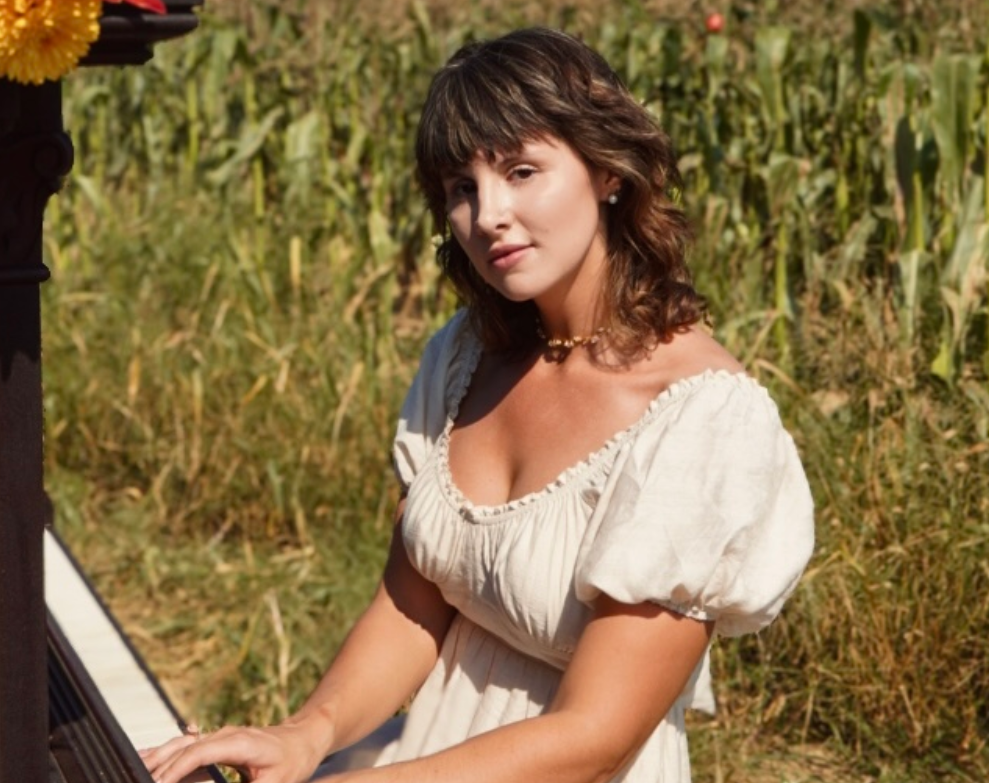
When I first heard that someone had stayed silent for years and then poured an entire album’s worth of music onto the page in just three days, it sounded almost like a half-mythical story—something out of a legend about an enchantress locked in a tower, gathering strength for a single, potent spell. And honestly, that image fits Harvest Love by Andrea Nicole King remarkably well. It’s a distinctive work, created in collaboration with nearly fifteen musicians under the careful guidance of Ron Flack at Realgrey Records in Canton, Ohio. Though the writing process was a rapid outpouring, the recording itself unfolded over six months, allowing the songs to take their final shape with patience and care.
At the core of Harvest Love is a full-blown life reset. Not just a breakup, but the kind of shift that makes you question everything. After five years in a relationship, Andrea found herself unmoored, unsure of what came next. That’s when she fell into a caregiving job, working with dementia patients—something she hadn’t planned but ended up needing more than she realized. Taking care of people who were losing pieces of themselves gave her perspective. Her own heartbreak, while heavy, felt small compared to what these patients and their families were facing. That job grounded her. Those patients became her family. She’s still in that world today, studying music therapy while continuing to work in caregiving.
But California, the place where she had spent years trying to build a life, started feeling like a past version of herself. By April 2024, she realized she hadn’t been holding on out of stubbornness but because letting go was harder than staying—leaving California meant giving herself a second chance at life. But staying? That would’ve been worse. So she packed up and drove three days back to Ohio, starting over with no guarantees—just the knowledge that she couldn’t keep living in the past.
Returning to Ohio opened up a new chapter of healing in a place she’d never expected: Seiberling Farms. Taking on seasonal work at the farm gave her a renewed sense of purpose, reminding her that growth—whether personal or in the fields—takes time, patience, and care. The title Harvest Love is no accident; the connection she felt on that land planted the seeds for this album, turning her heartbreak and self-discovery into something tangible. It was there, in the dirt and the rows of crops, that she felt truly rooted again.
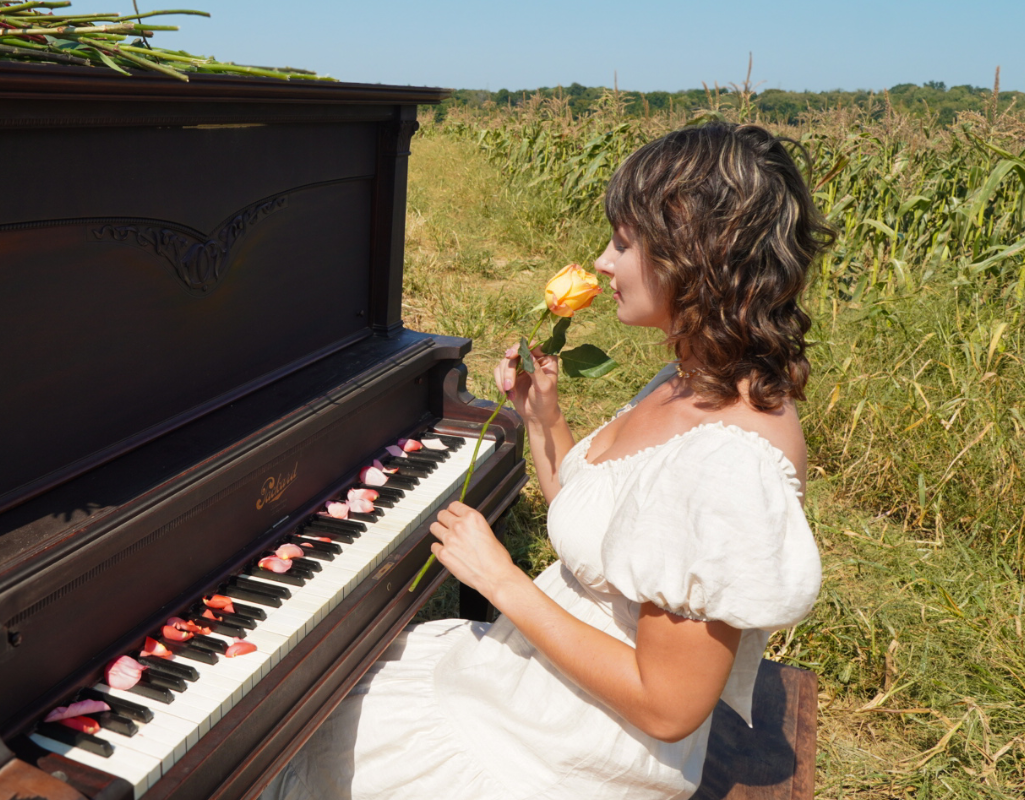
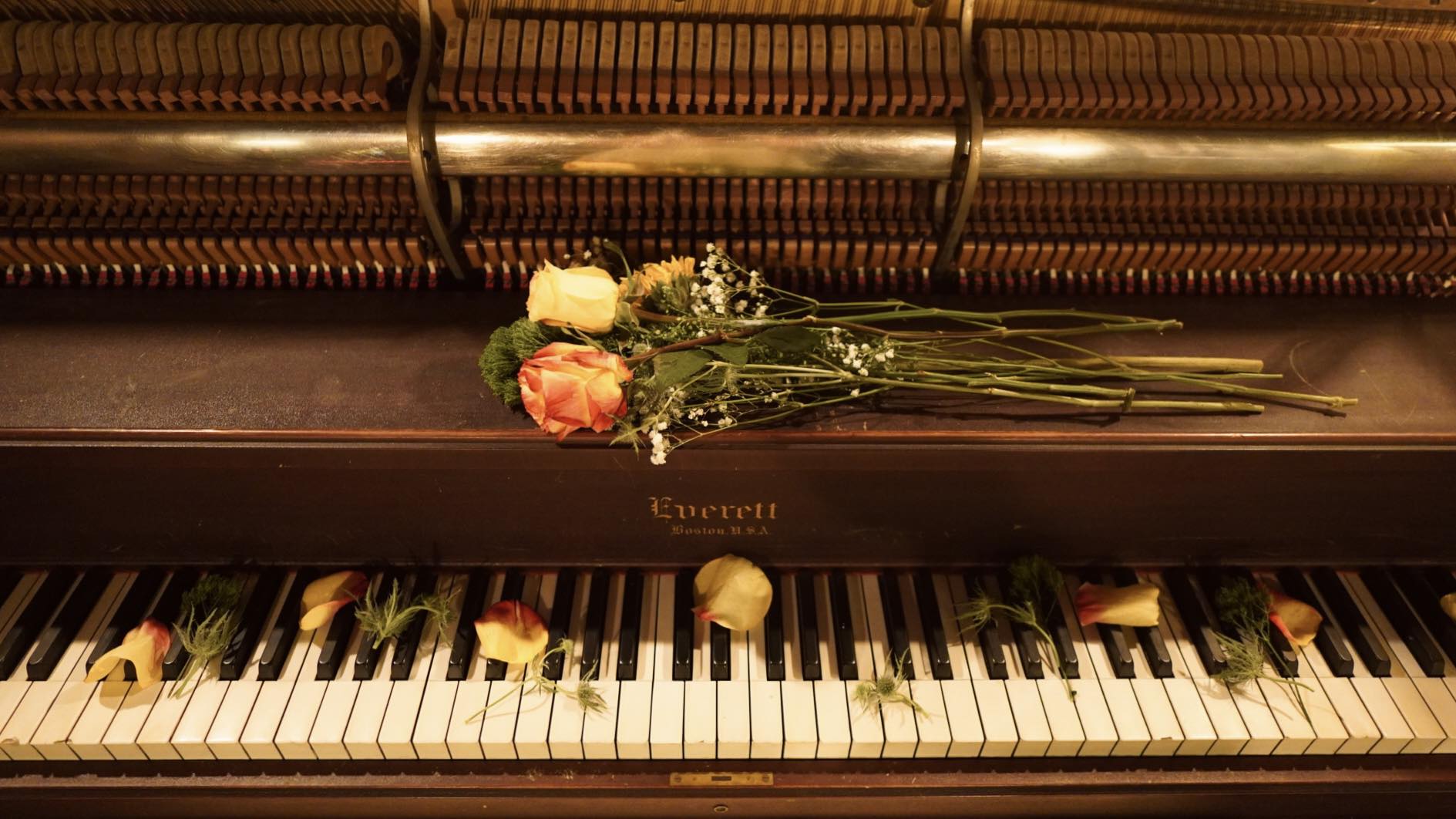
When it came time to capture the album’s essence visually, Andrea doubled down on the spirit of the farm by hauling an upright piano straight into a cornfield for the photo shoot. It was an extension of the album’s theme: tending to one’s own heart in the same way you’d nurture a field. You can hear all of that in Harvest Love. Some songs sound like they’re catching their breath, fragile but determined.
I’ve always been drawn to those moments when an artist suddenly finds themselves surrounded by people who genuinely understand their story. That’s exactly what happened here—thanks to everyone at the helm in the studio, Harvest Love takes shape as a deeply personal revelation, where every word resonates with a sense of freedom and profound renewal.
On some songs, Andrea’s voice carries a delicate intensity, as if pushing through a lump in her throat, giving the music an almost fragile sincerity. It’s like being in the room, sensing the vibration of every emotion that surfaced during the recording.
A few songs leave a particularly strong impression. Day I Changed, for example—Andrea Nicole King’s voice in this track carries regret, but not defeat. There’s acceptance, a search for meaning, and a sense of hope breaking through the melancholy, like dawn pushing through heavy clouds.
To Be Seen is a must-listen. Here, King’s voice grows more assured, and the melody takes on warmth. There’s a clear transition—not just musically, but emotionally. If the first track was a confession, this one is about moving forward. It carries a tenderness, an almost lullaby-like softness that wraps around you, offering comfort.
Placeholder and Left for Dead create some of the album’s most piercing moments. In Placeholder, King’s vocals seem to dissolve into the air, lost in thought, leaving behind a lingering sense of emptiness. It’s the kind of track meant for solitude, for staring into a dark window and feeling it echo deep inside. But in Left For Dead, her voice regains its strength. It starts with a solitary piano, then expands into something powerful and enveloping. It’s a song of home, an embrace—one that makes space for hope.
Despite its emotional depth, the album doesn’t dwell on pain. Fearless, for example, takes a lighter approach, leaning into acoustic folk with warm harmonies. It’s the kind of song that plays when the sun finally breaks through heavy clouds. Yet it’s more complex than it seems—the shifting harmonies create a sense of emotional push and pull, as if capturing the struggle between fear and release.
Then comes Me and You, where the violin paints a warm, almost cinematic atmosphere in the air. It’s a song about tenderness, resilience, and how even the most delicate moments can become a source of strength.
More Than Anything In This World emerges as the album’s emotional apex, answering the unspoken ache that lingers after Leaving You for Years and paving a pathway toward the gentler promise of The Greatest Attachment. The composition itself has a quiet grandeur: the piano seems to hold a solemn dialogue with King’s vocals, which quiver under the weight of loss. One imagines a single spotlight illuminating her as she grants herself permission to mourn, shedding that final tear before moving on. It becomes the beating heart of the record, where every note converges, and from which the entire album’s emotional geography unfolds. That emotional progression ties the songs together.
The album’s ending, however, is something else entirely. Harvest Love is a celebration of transformation. There’s no sadness, no regret—only light, gratitude, and a sense of closure. The voices of the musicians who helped bring this album to life join in, making it feel even warmer, almost like a family gathering. It’s a song about finding your place, your home, your love, even after the longest storms.
I can’t help but compare this album to her debut, Where Flowers Die, They Bloom—an album of firsts: first love, first heartbreak, the first attempts to make sense of it all through music. It carried the tenderness and naivety of youth, taking four years to come together, with every detail carefully considered. Harvest Love comes from a different place. It’s a mature, self-sufficient album, steeped in experience, shaped by pain, understanding, and what remains after. There’s no distance here, only the raw sincerity of the moment—Harvest Love sounds as if it was recorded in the midst of an internal struggle, without embellishment, without an attempt to smooth out the sharp edges.
Those five years of silence seem to have been exactly what Andrea Nicole King needed to gather the right energy and release it in its purest form. Harvest Love has everything in place: dramatic moments, a lump in the throat, soft glimmers of light at the end, and an overwhelming sense of gratitude for life and the people in it. And despite the intimacy of this project, it grows within you—like a sprout waiting beneath the soil, emerging only when the time is right to blossom into something beautiful.
*This review was made possible by SubmitHub








 Indie Boulevard Magazine