
Ambient music has changed beyond recognition over the past half-century. Once, it was a music of experimentation, almost a scientific study in sound—back in the ’70s, Brian Eno was shaping the genre by exploring how sound waves fill space, how silence interacts with noise. Today, ambient music is everywhere: for sleep, meditation, background focus, even work. It has become something like an auditory interior. But there’s a catch: even in its most tranquil form, ambient isn’t always about comfort. Sometimes, it reveals the tension hidden beneath smooth surfaces. Vojtech Vesely, known as De Moi, seems to understand this catch perfectly.
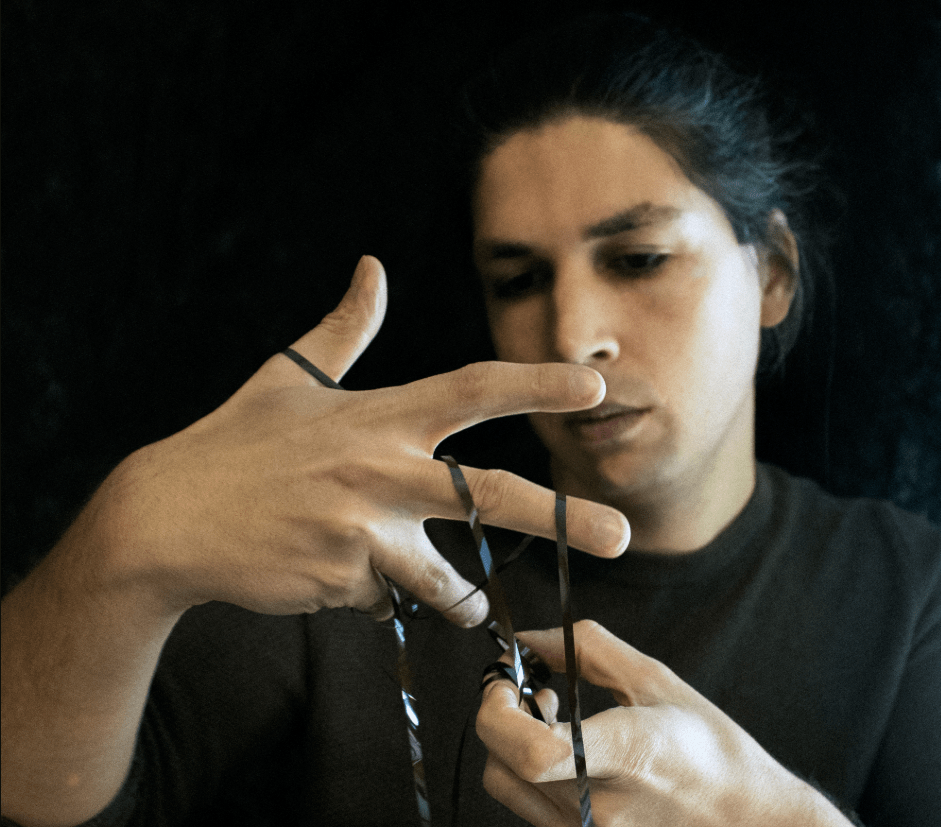
His new album, Drifting Intervals, builds on everything we love about ambient: tape delays, distant sustained notes, moments of barely perceptible buildup and gradual decay. But what’s most interesting is the emphasis on the technological aspect. There’s no sense that the artist is simply fixated on the idea of “functional music for relaxation.” He goes further, treating the very process of sound itself as a field for experimentation.
If we go back to Brian Eno, many initially saw Ambient 1: Music for Airports as nothing more than a pleasant musical backdrop. Yet even then, there was a deep concept behind how the sounds were meant to merge with the surrounding environment. Over time, some fans of the genre came to view ambient as a convenient form of white noise—something to put on and relax without overthinking it. But plenty of artists took a different approach: William Basinski, Terry Riley, and Robert Fripp introduced layering and meditative repetition. All of this made ambient a living, flexible genre—one that sometimes soothes and sometimes unsettles, just a little.
Drifting Intervals merges all these approaches into a distinct blend. De Moi builds his compositions on tape delays and extended digital reverb. Imagine, for a moment, that sound can travel miles away before slowly returning to you in an altered form. This idea draws from techniques similar to those used by Basinski and Riley, but Vesely introduces artificial reverb—creating the effect of an endless hall where each chord can dissolve and be reborn.
The musical intervals in Drifting Intervals breathe, break apart, and reassemble. Yet, it never feels like Vesely is chasing the idea of reducing music to pure noise. Instead, he carefully balances between melodic fragments and complete dissolution into space. At times, everything fades into an almost imperceptible whisper, only for deep, resonant tones to suddenly emerge—like an echo of a past melody breaking through the wall.
Drifting Intervals doesn’t follow a conventional “beginning-climax-resolution” structure. Instead, each track flows into the next, losing defined edges and taking on new shades. Early on (I–II), lower tones dominate before gradually evolving into the high waves and delicate vibrations of III. A single note can “live” for several minutes, its shape shifting like an ocean absorbing and reshaping its own currents. This is especially striking in VI and VII, where the original motifs have nearly dissolved, leaving behind residual harmonics that surface and drift into a hypnotic, continuous stream.
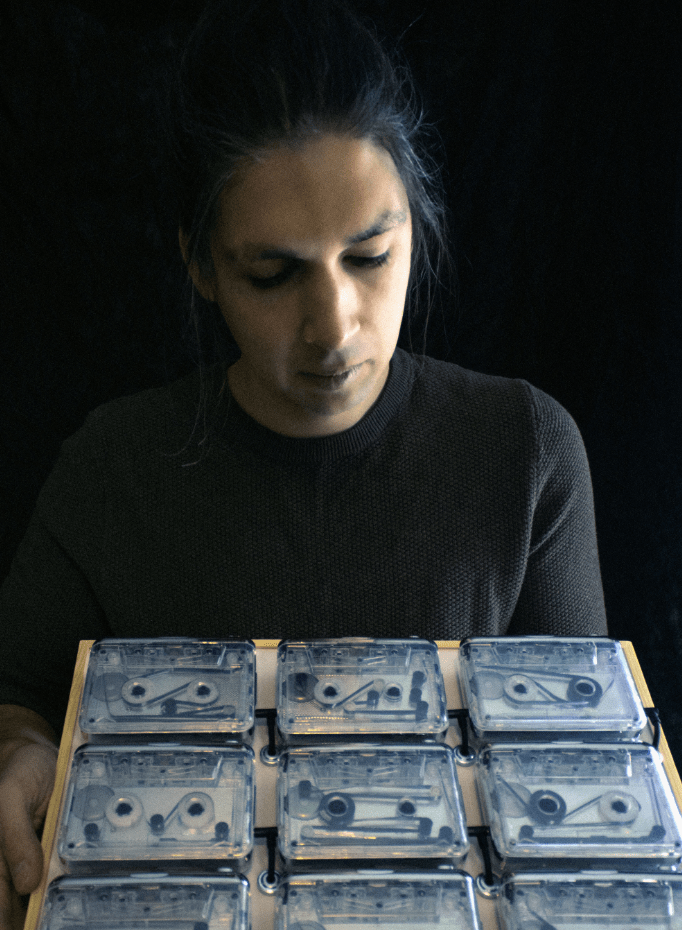
This effect unfolds across the entire album. It can be played on a continuous loop, creating a curious sense of wholeness. At some point, it becomes difficult to tell where one section ends and another begins. Transitions are seamless, and the music envelops the listener, shifting so gradually that these changes feel like a slow descent into a new state.
The branching low motifs and stretched-out high tones give the sound a hypnotic quality. This becomes especially clear in the middle of the album, where the waves expand wider, and tonal tension gives way to massive layers of reverb. Vesely seems to deliberately highlight moments where sound and silence exist on the same threshold—harmonics don’t vanish completely but instead become the foundation for the next cycle of sound. In tracks IX–XI, it’s particularly striking how each tone has the potential to bloom rather than fade.
So yes, if you’re looking for something for quiet evenings or meditation, Drifting Intervals fits perfectly. At the same time, the album offers an opportunity to sit down and immerse yourself in a sonic engineering laboratory. Sometimes, just a few minutes are enough for reality to dissolve into a series of tranquil images, accompanied by subtle overtones and echoes of distant tape loops.
This is an album best experienced with headphones, letting yourself forget the news and daily tasks for a while. It’s a journey into a different kind of reality, a descent into the subconscious—where you sink into the dim light, yet everything feels still and weightless. Drifting Intervals amplifies and accelerates this effect.
Nearly half a century of exploration in ambient music has led to a point where it can be more than just “functional” for relaxation—it can also embrace experimentation at its deepest level. And Drifting Intervals by De Moi is a brilliant example of how theory, technology, and creative freedom can coexist seamlessly, offering a rich sonic experience.







 Indie Boulevard Magazine