
Mark Springer has always been drawn to the raw edges of music—whether with the unchained energy of Rip Rig & Panic or in his own explorations of contemporary composition. His latest project, Sleep of Reason, is a testament to that restless spirit, a three-part work that channels the unease of our era through the lens of Francisco Goya’s etchings.
With solo piano, a string quartet, and a quintet featuring Neil Tennant of Pet Shop Boys, the album—out April 25 via Sub Rosa and The Exit Label—blurs the boundaries between classical, avant-garde, and art pop. Springer sat down with us to talk about Sleep of Reason, its inspirations, and how working with Tennant shaped the album’s haunting final movement.

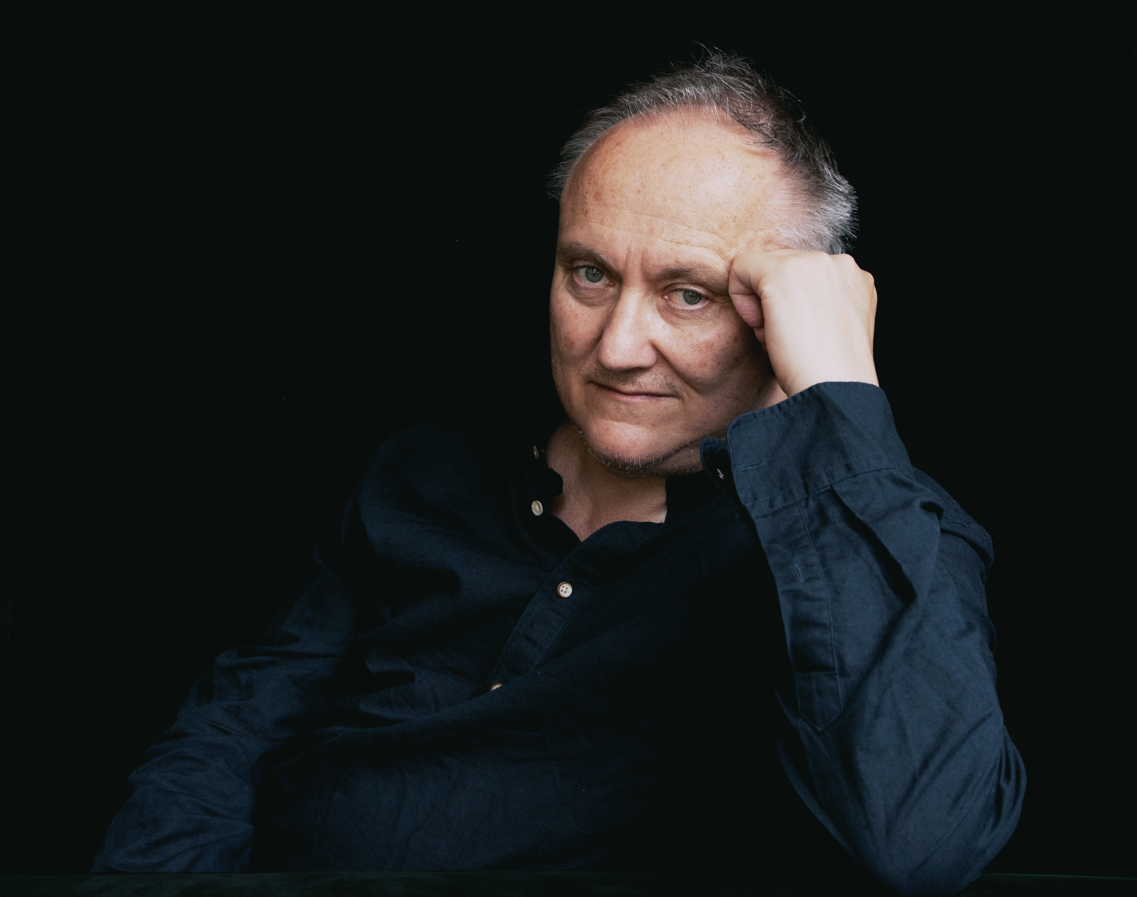
Photo by Oliver Marshall
Mark, when I first heard about Sleep of Reason, I was gobsmacked by how you took Francisco Goya’s etchings—these dark, nightmarish glimpses into the human condition, full of shadows and chaos—and turned them into music. You’ve blended piano, strings, and this vocal that feels like it’s floating over an abyss. Where did that idea even begin for you? Was it one of those moments where you thought, “Let’s create something completely unexpected,” or did it come together more gradually?
The idea for writing a piece around Goya’s etchings was first suggested to me by Charlotte Horton who runs a series of Arts and Activism Festivals in Italy at Castello di Potentino. The whole Goya idea kicked off before Covid kicked in. I started composing a piece for string quartet and voice to be performed in Italy at the castle. Unfortunately, when Covid arrived the project was abandoned and all thoughts of an Italian performance quashed and the music was put away alongside many other written works that I have composed over time. Years later Neil Tennant and I contacted each other via a series of random chance events. We discussed the possibilities of working together as we both felt that something special might come out of the collaboration. Sarah Killery, the artistic director of the Exit Label, was convinced I send Neil the music that I had originally written for strings and an opera voice but that she said she could hear his voice working brilliantly instead.
I had, by this time, completely forgotten about the music for the Goya quintet but I agreed to give it a try and send it to Neil. I decided to expand the piece into 3 parts; a quintet, a quartet and an extended piano piece, as I felt the work had bigger scale possibilities than just the quintet part alone. Neil loved it! and there began the collaboration for the Sleep of Reason album with Neil and his personal take on Goya. Neil brings his own contemporary view of the current culture and politics of our day echoing the extremes of the power and social hypocrisies in Goya’s own world.
You’re known for your days with Rip Rig and Panic—wild, explosive jazz-punk energy—and now here you are with a string quartet and these deep, almost philosophical soundscapes. It might seem like a huge leap, but it makes perfect sense for a mind like yours. What was the biggest thrill in shifting from that kind of raw chaos to something so intricate and cinematic?
Rip Rig + Panic was an early vehicle for developing my piano playing and compositions and my desire to break down the musical conventions of the day and to add a kind of anarchy and freedom into the popular music scene. There wasn’t a group at that time who could produce singles for radio1 air play with the singer Neneh Cherry while also making totally anarchic free form experimental flights of sound into the unknown. And to be joined by Neneh’s father, Don Cherry, the great American jazz trumpeter too, heightened the live dynamics for me.
Even at that time, I was experimenting with larger orchestral formats and getting bigger scored works for many musicians performed at places like The Commonwealth Institute in London during a Rip Rig performance. After Rip Rig, I signed to Virgin Venture, a part of the Virgin stable of labels. I was writing music for other instruments continuously and recording pieces on Virgin as well. I have always enjoyed pushing the idea of longer developed structures such as 3 or 4 movement pieces where I could really explore motivic ideas and no longer felt that improvisation was an end in itself for my music and I began to move away from the jazz elements.
You wrote the music for three distinct setups—solo piano, string quartet, and the full quintet with vocals. Each has its own character, yet they all connect. How did you keep them from feeling like separate worlds and instead weave them into one cohesive experience?
The quintet with Neil has very distinctive melodic, harmonic and rhythmic structures and I always felt that there was more motivic development to add into a larger scale work and I wanted to write a quartet as well as a solo piano piece. The quintet has very expressive lyrics and in each of the six vocal parts Neil writes words that capture the sounds of the quartet brilliantly in all its movements. Each part of the quintet is exploring different shades of sound, each is connected yet distinctly different as well. When working I ask myself, How many ways can I remake the sound of each part; quintet, quartet and piano solo so that it is similar but also tangibly different. Also, I wanted the solo piano music to be challenging to play and to explore different techniques and moods from the other works.
Phantoms and Monsters, the first single, is out now, and it’s like a slow curtain rise into the world of the album. If you had to give that track real-world embodiments, who would they be? One “phantom”—something elusive and flickering just out of reach—and one “monster”—something undeniable and terrifying. Who comes to mind?
The first track represents the darker side of humanity, the phantoms can be personal but also generic and all encompassing. The monsters can be mysterious but also deadly and both ancient and modern. It is Neil who wrote the lyrics in his response to my music with his own connection to Goya casting their sharp light and shadows.
You’ve done chamber music, operas, soundtracks, and now this collaboration with Neil. It’s like you’re always challenging yourself to step into new territory. What felt like the biggest risk with Sleep of Reason? Was there a moment where you thought, “Blimey, this is either going to work beautifully or fall apart completely”?
Well when I first sent the original quartet to Neil I had a sense of him singing in a totally acoustic setup with the strings and I suppose I wasn’t sure if he would react favourably or just say, you’re having a laugh! He was totally overtaken by the music and so that was a real thrill for me. Also, we really liked the voice being non operatic in the obvious sense as that puts the whole mysterious interplay between the quartet and vocal on a whole other footing into the unknown.
You and Neil come from such different musical spaces—you with your classical and avant-garde roots, him with his pop legacy—yet the result is seamless. Did you ever find yourselves pulling in different directions, or did it all click from the start?
Remember, I was in a band that was genre breaking in essence and I think that I am always looking for new avenues to go down. Neil has such a distinctive voice and a real point of view in his lyrics so I knew things would be interesting! We never seemed to go in different directions, it seemed there was a kind of fate from the first moment to now, rather seamless all the way.
The album digs into themes of division, ego, and the chaos of social media—very much now. Yet the music itself has this striking beauty, almost uplifting at times. Do you think something this dark can still offer hope, or is it more about confronting those “monsters” head-on?
Well there is a moment when things are existing all at once. There is chaos and egos are everywhere and sometimes we must step through those like avoiding stepping on landmines and getting blown away. I see SOR not as a dark piece, but as a piece that encompasses sometimes the darker side of human nature but also it confronts dark and light in different ways throughout all 3 pieces.
In Sleep of Reason, you create an atmosphere through a blend of different instruments, and every sound has a cinematic quality. When envisioning this music visually, were you inspired by specific Goya paintings, or was it more about capturing the abstract emotions they evoke?
All the etchings from the original Goya work were very loose springboards into the music for me and I think Neil also. I was more responding to the accumulated atmosphere of Goya’s works as that is such a strong presence. When I write I am not imagining a cinematic experience but I am told that my music often creates visual images in the listener.
The album carries a strong sense of tension and release, almost like a dialogue between restraint and expression. Was there a particular track or moment where you felt that balance was the hardest to achieve?
Music for me as a composer demands tension and release, often together. I find that tension and release are equal partners and neither are restraint or release but a combination; both or sometimes neither.
Sleep of Reason is coming out on double vinyl, CD, and digital—a big release that clearly has a lot of heart behind it. Plus, it’s on Sub Rosa and Exit, giving it a distinct underground edge. If you could picture someone listening to Sleep of Reason for the first time, where would they be? Headphones at night, spinning the vinyl in a dimly lit room, or maybe somewhere unexpected like an abandoned theatre?
What always amazes me is that out of me just being alone and writing from the piano, a work starts to live way beyond my individuality and solitary focus, taking on a life that takes off in myriad ways. It begins from the earliest moments and extends beyond to anyone, anywhere, open and interested. As I said, Sarah Killery was mono-ideated with SOR as she could hear Neil’s voice as part of the quintet, I might have considered another work entirely, but she was sure. She’s the concept driver at Exit so we are used to working artistically together and we have enjoyed working with Guy Marc Hinant and Fred Walheer at Sub Rosa. They collaborated with Sarah and me to make this a production fully realised in all its expansiveness and depth. My sense is that both Exit and Sub Rosa share a rogue spirit and a commitment to the uncompromising road. With Neil being so open and connected to the music, I was aware from his first vocal sketches that the collaboration would be powerful and effecting, finding us all in the recesses of our thoughts, fears and feelings. …
Well I can see a real mix of people getting into this album, possibly some extreme venues or on the front stoop, up the fire escape, down low in a dell or under a donkey!(Los Caprichos) People who are also up for being drenched deeply in music as we’ve all flooded energy and attention into making it. There will be a definite unexpected quality for some listeners, I am sure, and the quality of the recording should appeal to hifi vinyl wilders but also there might be some underground murmurings that could be spread around. Say the word!
*Promoted content. All information provided is prepared in accordance with editorial standards and is intended to offer useful insights for readers.





 Indie Boulevard Magazine