
Let’s be honest — we screwed it all up. Algorithms have long been deciding what we love, who we sleep with, how we dress, and what we believe in. Faces have turned into currency, clicks into breathing. Artists have become avatars of themselves: smiling on cue, singing in the right tone, moving strictly within the permitted bounds. And then he shows up — T3d Bunny, with a name that looks like a coding error or someone you randomly met on IRC back in 2007.
I can already picture the creak of an attic door, where in the corner sits a strange box labeled “No entry.” The image is cinematic enough: a cyberpunk rabbit from Lisbon. But start digging, and it feels like he’s holding a dozen keys to doors others don’t even notice. And each one opens into another corner of his boundless cyber-psychedelia.
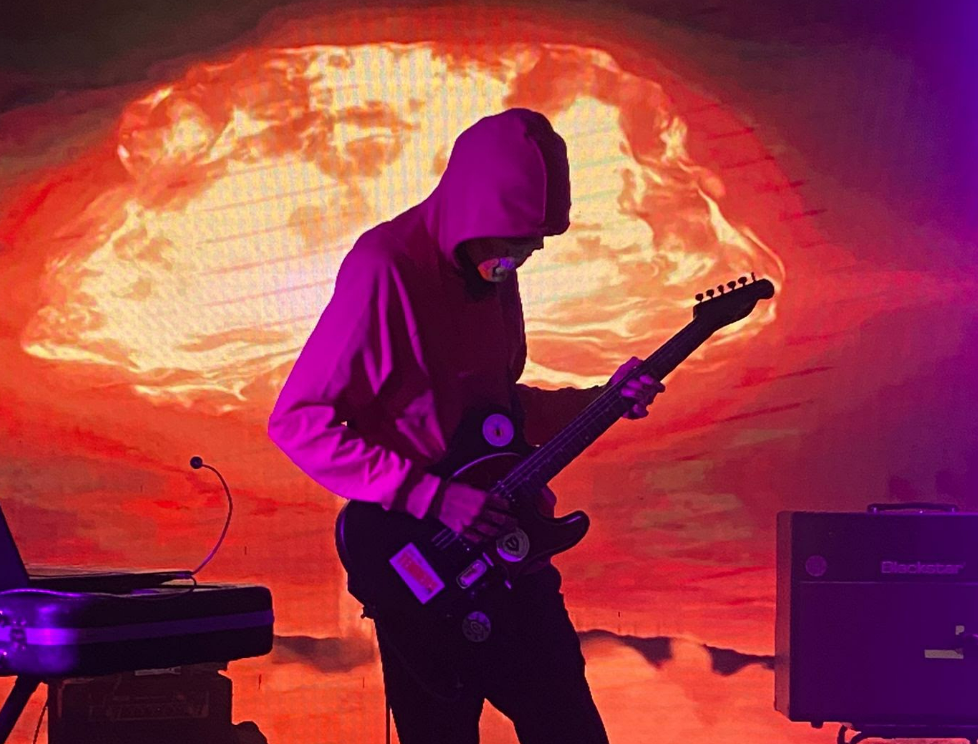
In 2020, he emerged as an A.R.G. — meaning you didn’t really know if it was an album, a website, a game, or a system glitch. From the beginning, everything was a cipher, a meaning slipping through your fingers. T3d Bunny was toying with how we perceive music, visual content, coded messages — and ourselves. Picture it: reality and flashmob blur into each other, everything mashed together and served with a side of post-digital confusion. You join a forum, start searching for clues, and in response, you get some multilayered QR code leading to a playlist that turns your room into a dance floor for ghosts. It might seem like total chaos, but in reality, it’s arranged so precisely that you want to take a step back and examine every tiny fragment.
Now, with the release of the second album, Bach 2 Human, this strange structure made of sound fragments and hints has only grown stronger. Across twelve tracks, T3d Bunny invites us to take a closer look at everything surrounding us in the age of endless scrolling and chats that crackle like New Year’s fireworks. There’s something ironic in the title Bach 2 Human — a wink to those who think we’ve drifted too far from anything human and it’s time to return. But T3d Bunny isn’t scolding anyone or waving signs. He sends a quiet message: we’re still human — we just need to wipe our eyes and stop hiding behind filters.
Bach 2 Human breathes in contradictions. From the opening seconds of “cmd PRMPT,” it feels like you’ve landed in a glossy ad-world — sharp beat, catchy melody, an almost playful tone. But then it all begins to crumble — the electronics grow heavy, gleaming, shattered.
“Cidade III” is the opposite. It drags you down. All the world’s gloss dissolves into the bass, and the air turns thick and sluggish. There’s no verse, no hook. Just the sense that you’re stuck between commands. A point of suspension. A coma. “Init HARD PROGRAM EXE” is acceleration. It surges forward, trying to outrun the next collapse. Hip-hop and electronics clash, not blending but coexisting tensely — like two passengers on a train avoiding eye contact while breathing in sync.
T3d Bunny doesn’t cycle through styles out of some affection for eclecticism. I wouldn’t call it a stroll through genres — more an anatomy of a disintegrating self. On “Read The Policies,” compressed, almost claustrophobic hip-hop marches through fragments of command-line syntax. And then suddenly — “Intermission.” Synthpop, chillwave, blurred edges, softness.
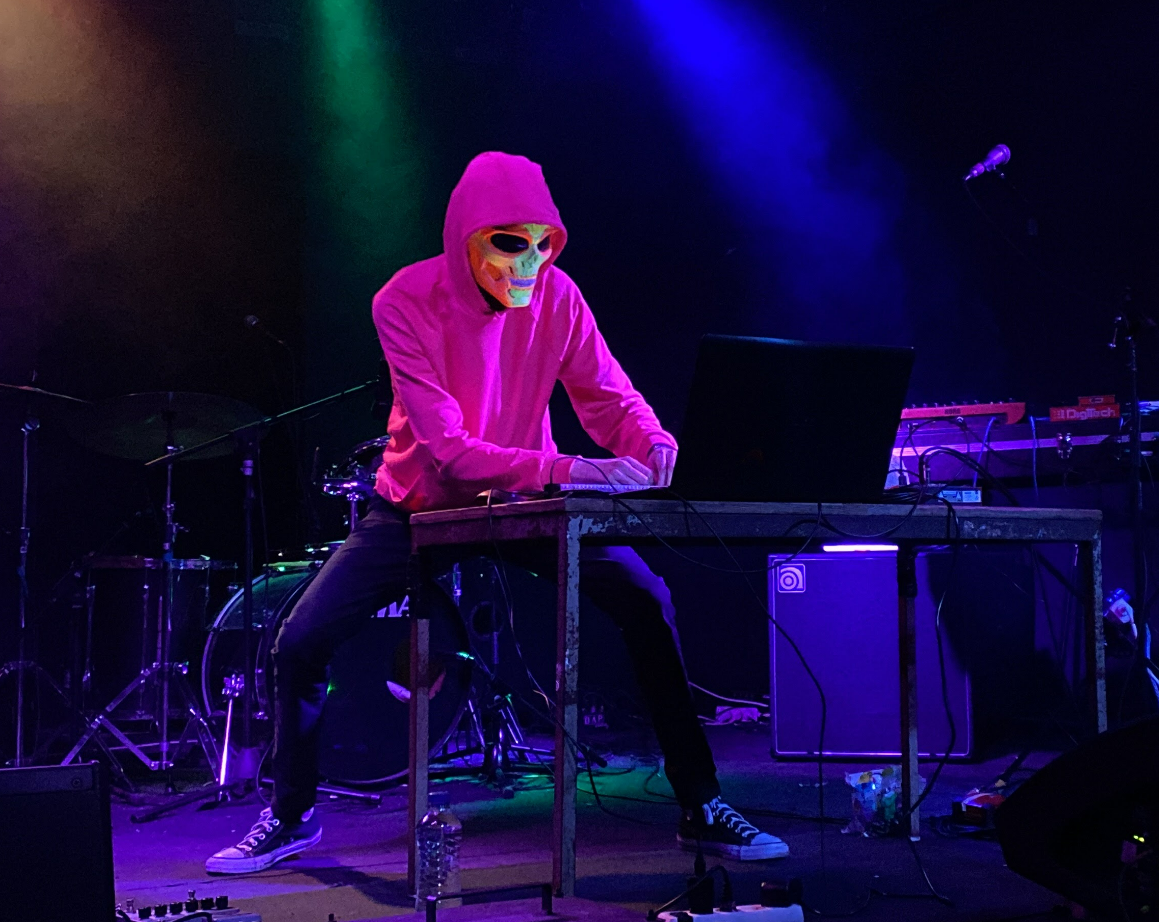
And then there’s “Harvest.” Track seven — the midpoint, but in feel, it’s the turning point. It’s the first time we hear T3d Bunny’s own voice. Not processed, not hidden — his voice. He simply speaks, and it’s enough. That’s the moment you realize: up to now, you’ve been wandering through machines — and now, you’re hearing a person. Maybe for the first time. Listening to someone trying to speak through the noise, through the glitches, through himself.
For T3d Bunny, D.I.Y. is a way to stay free. The album sounds uneven, at times risky — and that’s exactly where its value lies. “8 T∅RR∃” and “Tachycardiac Root” are two clear examples of full unpacking. The former sees T3d Bunny staking ground in techno territory. The latter builds on swaying structures, fragmented voices, clicks — it all plays out like an attempt to express something that words can’t capture. Or maybe don’t need to. The final track, “Heliophobia,” leans on gentle lo-fi beats and barely-there synths. And no, it’s not a closing statement. It’s an open door. You stand in the quiet and decide for yourself — stay or walk through.
I don’t think of T3d Bunny as a musician in the usual sense. His music unfolds as a matryoshka — with the releases as only the first layer. Beneath that: visual codes, algorithmic videos, disappearing 24-hour messages, gestures strung into GIFs, glitches you didn’t expect. He encodes feelings and then unpacks them into synesthetic fragments. People with guitars play chords. He writes bits of reality as raw code.
Even the title Bach 2 Human hits with the effect of a double-click — a return to something alive. With this album, T3d Bunny continues his artistic resistance. He ignores the pressures of branding, refuses to sit inside the hype cage, and seems more than comfortable with the strange freedoms offered by his enigmatic online identity. To understand what drives him, you can’t just listen. You have to look — at visual sketches, streams, flickering promo trailers, bits of code. Maybe that’s the point: he invites you into a hypermedia world to see if you can still tell the difference between the living and the artificial. So if your fingers are itching from yet another forgettable album engineered to “please everyone,” try diving down the rabbit hole toward T3d Bunny. Maybe you’ll learn something about how you yourself respond to this endless swirl of digits and faces.
*Promoted content. All information provided is prepared in accordance with editorial standards and is intended to offer useful insights for readers.







 Indie Boulevard Magazine