
Five years of silence is a long stretch, especially for an artist used to turning inner unrest and sudden insights into something quite tangible. Dominic Parker, known as The Sympathy Of All Things, returns with his new single “Mourning Ghosts”, channeling everything that had been simmering inside him during that hiatus.
The interview itself reveals several key details without slipping into confessional territory. Dominic touches on themes of personal loss, a conversation with himself in the rearview mirror, and the courage it took to release a track born from such a charged emotional experience. He also discusses how he worked to push beyond familiar musical forms, blending modern electronic elements with classic rock textures to create something that holds attention and feels fresh for a 2025 audience.

Hey Dominic! Great to chat with you. Your new single ‘Mourning Ghosts’ hit like a thunderclap after five years of silence. That’s a long time, and I imagine a storm of emotions, thoughts, and ideas built up over the years. What was the trigger that made you say, “That’s it, I’m sitting down to write right now”? Was there a specific moment, day, or event that pushed you, rather than, say, a year ago or earlier?
There’s a lyric — a question — in the second verse that served as the impetus for the entire track: “Remember when you had a soul? How much did you sell it off for?” This is a question I had asked myself internally after a conversation with an acquaintance in which they told me they had been too afraid to pursue their talents due to the imperative of making money. I understand where that individual was coming from at the time, but the melancholy of such a sentiment really affected me. It’s a point of view one hears a lot in the independent music space, and it’s one I am actively fighting off each day. We all know that we live in extremely tough times any way you slice it: economically, politically, socially — everything appears to be a powder keg that’s one spark away from detonating. But nonetheless, making and performing music is a compulsion I just can’t shake. I recorded the demo of ‘Mourning Ghosts’ shortly after that conversation in the summer of 2021, and began recording the studio version with my producer Diego Hodge at Valley Crest Recording a few weeks later. This was the track that laid the foundation for the rest of what would become my upcoming album AMARGI.
Listening to the track, it feels deeply personal. You mentioned writing it during a period of grief. Was there ever a moment when you hesitated about releasing it?
Yes, that’s correct. Though the initial idea came from the conversation I mentioned earlier, the bulk of the lyrics changed a lot as the years went on. They changed most dramatically when my mother Debby passed away from Alzheimer’s Disease in December of 2022. This loss hit me like a brick. To help metabolize the pain, I allowed many of my feelings around her death to alter the final lyrics. Though it’s one of my most emotionally raw tracks to date, I never felt hesitation to release it as I know that I am far from the only one experiencing grief in the world. I hope the track can be a catalyst for others to process their pain as well. As the album’s opening track, I feel it perfectly distills the overarching theme of the album: the transmutation of death. My goal with the song, and the album as a whole, was to make beauty out of tragedy, the same way alchemists once sought to create gold out of coal.
It’s been five years since your last release, and the world has changed a lot in that time. Did you consciously adapt your style to fit today’s landscape, or did you just let whatever was inside you flow naturally, without thinking about trends?
This upcoming album is definitely an evolution of many of the musical ideas I played with on my first album Translucence. I’ve always loved electronic music, and I leaned into electronic instruments more on this record than on anything I’ve worked on previously. More than half the songs feature some combination of synth bass lines and drum machines. However, I am also fascinated by the unique sounds that are produced when acoustic instruments meet these artificial elements. As such, the album is very much a fusion of traditional rock band stylings with more modern sounding electronic sounds. There was a conscious effort to build on the ideas from the first record in a way that a 2025 audience would latch on to more easily. Because of this, listeners will find more emphasis on sub-heavy bass frequencies and punchy drum production inspired by acts like Tame Impala and Phantogram.
You’ve said you want this song to help listeners process their emotions. Has it already served that purpose for you? Do you feel like you let go of something important once it was finished?
I do feel this track, as well as the upcoming record as a whole, has helped me to process quite a lot of difficult emotions. During the production of the record I have experienced not just the death of loved ones, but also social deaths in relation to people I once called best friends. We live in an era of artificial, digitally mediated relationships that make friendships more fickle than ever. With this song, I have tried to make a vessel out of all that pain.
The ‘Mourning Ghosts’ video is something truly unique, almost like a short art film. How did the idea for such an unusual concept come about? Did you have a clear vision from the start—like “I want a ghost dancing behind me while I sing” — or did it evolve naturally during the process, growing its own layers along the way?
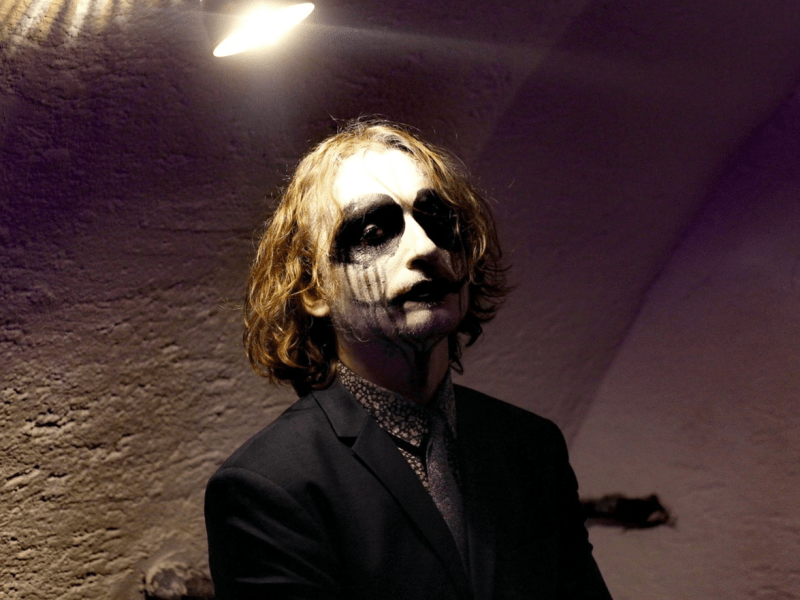
I’m so glad you like the music video! It’s the first video I have ever made to accompany a single so it means a lot to know the message was successfully conveyed. I must say that I took a lot of inspiration from a music video released by my friends in the band TMEG. The video for their song ‘Phantoms’ features a sheet ghost heavily and I loved that imagery. However, my video really focuses on the theme of one attempting to escape the past rather than acknowledge and make peace with it. The idea that got the whole thing rolling came to me while I was driving through the Mojave Desert. I made eye contact with myself in the rear-view mirror. There was an instant poem there: I was looking at myself who was looking behind me. From there I had my friend and former bandmate Gus Beeler create storyboards. I then casted my younger brother Kenny Parker as The Ghost, tapped my friend Sean Basham to film the video, and edited the project myself. I’m very proud of how it turned out.
The shoot didn’t look easy—so many details, atmosphere, and open spaces. Walk me through the process: where did you film, how long did it take, and was there a particular moment on set that really stood out to you?
I’m sorry to shatter the illusion, but the process was actually much easier than you might think! We shot the video over 3 days, working in 2 hour increments. We shot everything on location. When you live in a Mojave Desert town like Lancaster, California, you’re never more than a 20 minute drive from the open desert landscape! That made shooting the second half of the video very simple. We just drove around until we found a dirt road that fit the feeling we wanted and did our best to get in and get out as quickly as we could! Gus Beeler’s storyboards were a huge help though. His drawings kept us on track during the entire shoot as we never had to guess what part came next. My favorite part of the shoot was the final scene, which we shot in Lancaster Cemetery. I love how green and verdant that space is compared to the rest of the video. It really drives home the whole theme of making peace with tragedy. I must note that we were very careful to remain respectful to the cemetary’s inhabitants and made a conscious decision to shoot the backside of the featured tombstone so as to not display the name of the deceased.
After five years away, stepping back into the public eye as an artist must have been a shift. How did you handle the pressure—like, “What if this doesn’t land with people”? Or did that not bother you at all?
Well, I haven’t been entirely out of the public eye during all that time. After releasing my debut album Translucence in 2020, I returned my creative focus to my band Sound Curfew. Between 2020 and 2024 I released 6 singles and a full-length album called Where Seldom Is Heard with the band. However, as listeners will very quickly ascertain once they hear ‘Mourning Ghosts’, the music I release as The Sympathy Of All Things is very different from Sound Curfew’s material. In that way, I do feel a certain amount of pressure to make this project as successful, if not more so, than Sound Curfew was. Part of my approach this time around is to spend much more energy on my digital presence to introduce this music to more listeners via new avenues. Time will tell, but I am very excited nonetheless!
Let’s dig into the video a little more. There’s a clear sense of symbolism running through it. Is there a detail or scene that you consider key, but that viewers might not immediately catch?
I think the most important thing for viewers to keep in mind as they watch the video is to compare the opening shot to the final shot. This juxtaposition should tell them everything they need to know!
You’ve said you hope the track helps people heal. If someone were to message you and say, “Hey, your song really pulled me out of a dark place,” how do you think you’d react?
If my music makes any such impact on someone I’d feel as though I’ve done my job as an artist! To me, art is at its best when it elevates beauty and resolution instead of shock and provocation. It would be a full circle moment for me, as I have relied heavily on music to pull me out of dark times as well.
‘Mourning Ghosts’ is a powerful comeback after such a long break—especially with its depth and striking visuals. Now that you’re back in the game, what’s next? Are you planning more singles, an album, or even a live show this year? Or are you taking a step back to breathe and see how this one resonates first?
All of the above! There will be no breather any time soon. Listeners can expect several more singles/music videos in the coming months that will culminate with the release of my sophomore record AMARGI later this year. Additionally, I am in the early stages of putting together a West Coast tour where I will be bringing this new material to a compelling live show. I hope to include tracks from Translucence as well as some deep cuts from the Sound Curfew catalogue!
*Promoted content. All information provided is prepared in accordance with editorial standards and is intended to offer useful insights for readers.




 Indie Boulevard Magazine