
There is a quiet clarity to Jim Stanard’s work — a deliberate, measured voice that resists haste and avoids embellishment. His new album, Magical, offers a collection of songs that navigate personal memory and historical experience with an unforced precision. The result is a body of work rooted in narrative craft, musical restraint, and a deep respect for the listener’s attention.
Stanard draws on themes that demand care — the forced relocation of the Cherokee Nation, the erosion of trust in relationships, the tension between moving forward and holding on. Each track maintains a sense of scale and proportion, even when the subject matter stretches across generations. Recorded in Nashville, Magical brings together an ensemble of seasoned musicians — among them producer Kip Winger, Wanda Vick, Bobby Terry, and Shanna in a Dress. The sound they achieve is unhurried and transparent, allowing Stanard’s voice to carry the weight of the material without interference. Though the names behind the production include artists with long-established pedigrees, the focus remains squarely on the songs themselves — each shaped with a sense of purpose. We spoke with Jim Stanard about structure, restraint, and the importance of speaking plainly — especially when the subject matter asks for it.
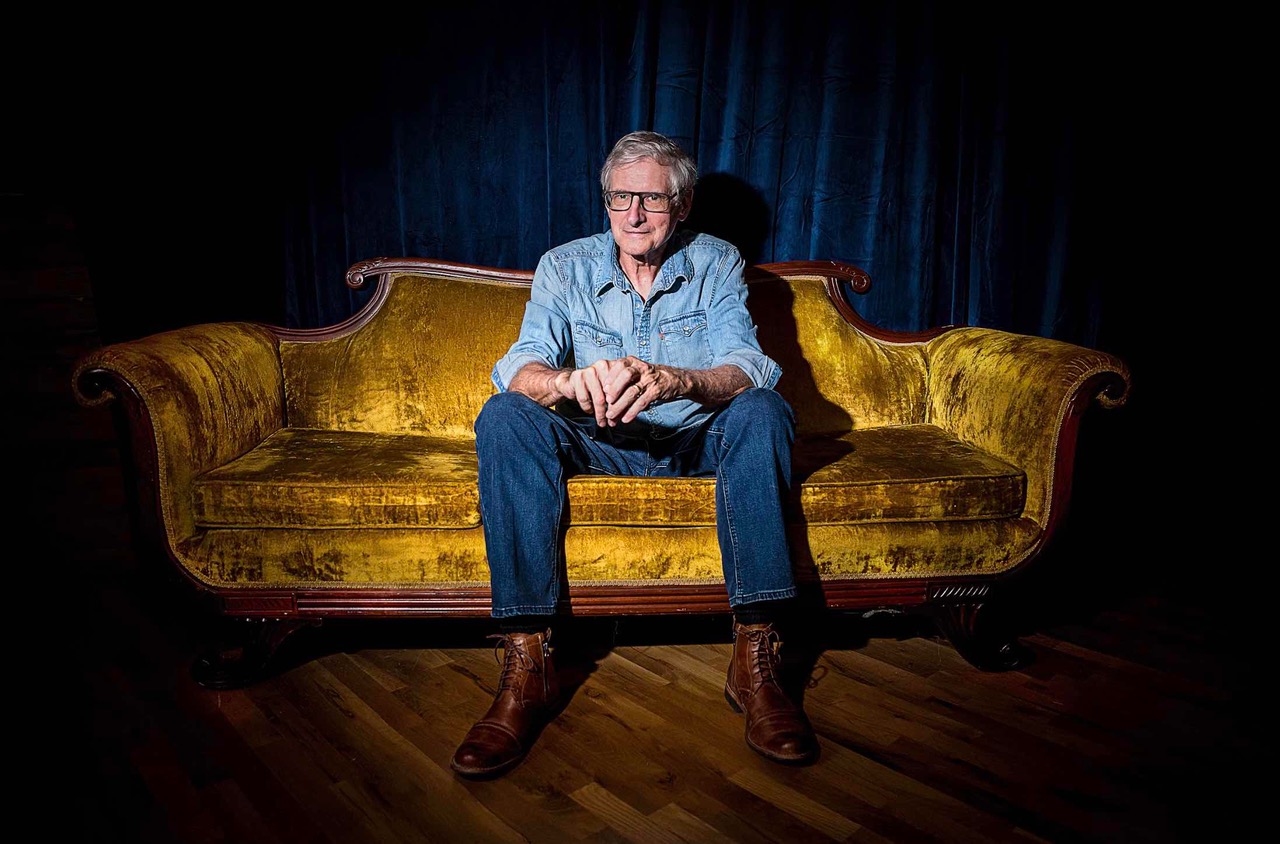
Hi Jim, thanks for taking the time to chat with me. When listening to Magical, it feels like each song carries a distinct sense of wonder. So my first question is naturally about that—the way you bring magic into your songs. How would you define the main source of that magic? Is it more about your personal outlook on life, working with experienced musicians in the studio, or perhaps a response to the world around you?
Thank you for hosting this interview and thank you for your kind comment about the songs on Magical. I think the main source of my writing is the influence of the songs I was listening to in the 60’s, and over 70 years of life experience.
Lookin’ Back has a touch of nostalgia but also a sense of moving forward. The lyrics suggest that new adventures can be found even in places that seem fully explored. It sounds like the idea of change resonates with you. How did this theme take shape in the song? Was there a conscious desire to inspire listeners to take bold steps into the future?
Ever since I heard the Dylan line “he not busy being born is busy dying” it has stuck with me. I remember it when I need to push myself outside my comfort zone.
You’ve mentioned that you didn’t start releasing music in your twenties but later on—when many people swap guitars for newspapers or a quiet life in the countryside. What was the key moment that made you say, “It’s time to record albums and share my music”? Did you ever worry that the industry tends to focus on younger artists, and if so, how did you push past those doubts?
I don’t feel that I’m competing with younger artists, I am just doing the music that fits for me. It is much easier for me because I don’t have to worry about my music paying the mortgage. I’m fortunate that I grew up musically in the 60’s listening to Dylan, Beatles, folk/rock etc. which is music that is still popular today.
The album features When The West Was Won, a song that touches on a period still painful for many—the displacement and tragedies faced by Indigenous peoples. You’ve said that you often imagine specific individuals in these songs, like the fictional Cherokee child in this one. What’s more important to you: artistic depth, or engaging with the historical context in a meaningful way?
I simply want a song that will engage the listener. Where they get interested in the story and want to hear the rest of it – and then want to hear it again.
You Turned Red (That Made Me Blue) has racked up hundreds of thousands of views, and people have been actively discussing its deeper meaning—there’s humor in it, but also hints of political commentary. Did you intend it as satire, or was it more of a personal expression that naturally took on an ironic tone?
Completely satire about political polarization and the fun of the entire song being a double entendre. It didn’t occur to me that it could be construed as taking a political side, until I started seeing the comments on youtube. It could have just as easily been “you turned blue and that made me red” except that phase didn’t make any sense.
What’s your usual songwriting process like? How did you approach your new single, The Minotaur?
The usual process is starting with a title or a “hook”, then writing a chorus. The Minotaur started with an idea of “you can’t get there from here” which of course has some irony. That lead me to the idea of a maze which lead me to make the song about The Minotaur (which of course isn’t what the song is really about).
The album balances lighter moments with more dramatic ones—like Kansas, which has a dark, almost cinematic narrative, or Waking Up Dead, which carries a philosophical tone. How do you shape this emotional arc within a single release?
I usually see my songs as movies playing in my head – so if the listener sees the movie, then that’s success.
The album features contributions from Kip Winger, Steve Postell, Bobby Terry, and others, each bringing a different musical background—rock, country, folk. How did all these influences come together? Did you feel a sense of synergy between different generations and genres while making the album, and did that help bring your ideas to life in new ways?
I guess I never thought of them and others on the album in terms of their styles. I think of them as amazing musicians who contributed musical ideas for the arrangements.
You’re often compared to Bob Dylan, John Denver, and Kris Kristofferson, yet your music doesn’t feel like a direct imitation of the classics. How do you weave their legacy into your own style?
First I’m stunned and humbled to be compared with those giants. Dylan and the great folk and rock music of the mid and late 60’s was what I grew up on, so that music defines what I think makes up a great song, so naturally I use that as a target to try to emulate. One of the biggest influences on me was Warren Zevon – I’ve listened to his entire catalog many times. I love his dark humor and irony.
With Magical getting such a strong push, it seems like a major chapter in your career. Are there plans for a tour, another album, or collaborations with other artists?
No specific plans at this point. I enjoy playing locally in Sarasota, FL and Beaver Creek, CO, but I’m not planning a tour.
*Promoted content. All information provided is prepared in accordance with editorial standards and is intended to offer useful insights for readers.








 Indie Boulevard Magazine