
It’s honestly strange that there still isn’t a dedicated subgenre for albums like this. You know the kind—when you put on a record and it’s as if someone says, “Alright, we’re not going to explain anything here, just take this.” And you take it—and you don’t let go.
When the first chords of II by Baleine start to cut through your awareness, there’s this pleasant sense of stumbling into someone’s personal sound lab. Now just picture this: three French guys—Nicolas, Jonathan, and Hector—completely ignoring the rulebook and crafting their own unique blend using two guitars and drums, without bothering with vocals. The result is hypnotic in the best way. The sound has that rounded quality of an old vintage tube amp, but it still manages to feel incredibly sharp and modern.

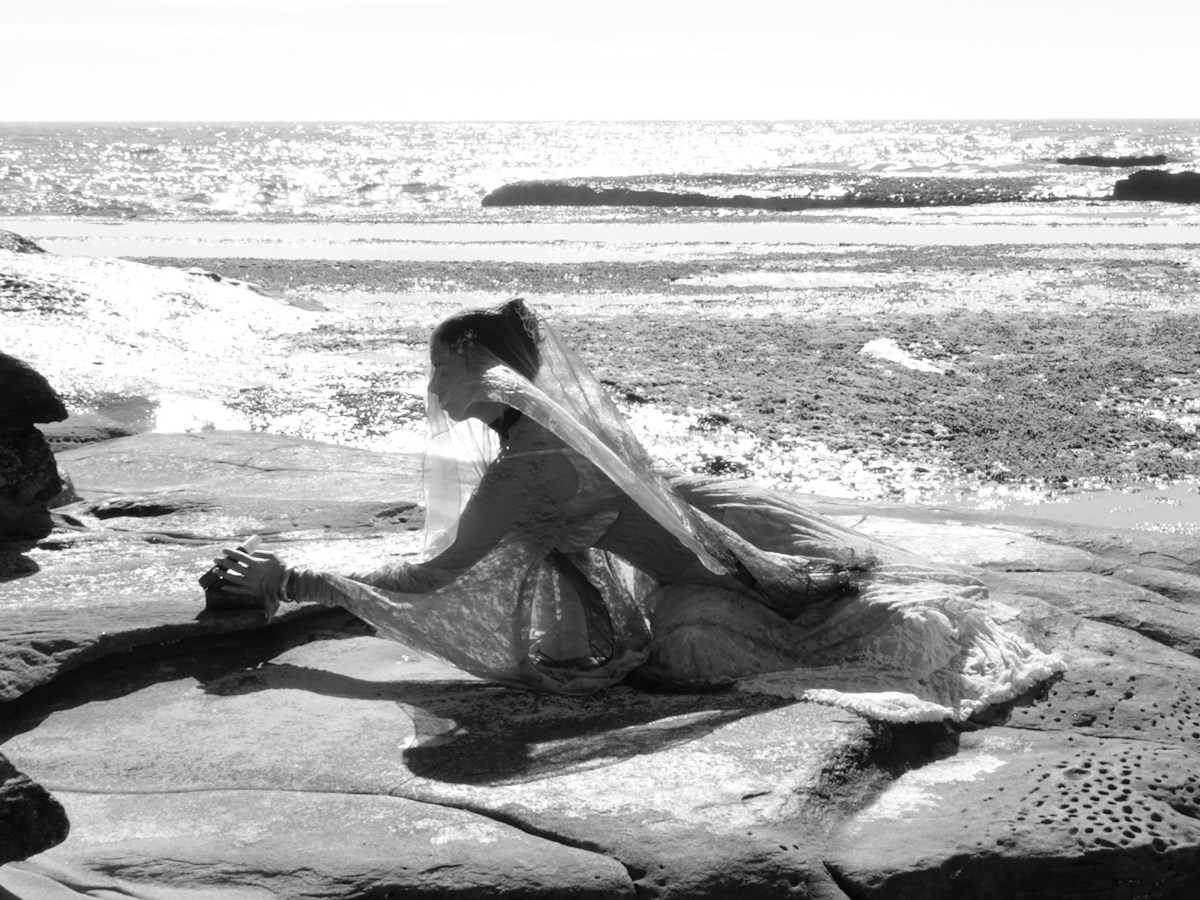
photo by Emma David
You can really sense how the musicians push each track to its limits with care and precision, letting each piece breathe, expand, and wrap around the listener in a dense sonic cocoon. The involvement of sound engineer Jean-Charles Versari and mastering expert 3ee adds an extra layer of charm: the mix is smooth, and the mastering highlights all the fine details the band built into the tracks.
Although II is often labeled post-rock, it’s full of different influences. At times you catch a biting guitar assault that could belong to a stoner rock band; elsewhere there’s a wave of near-jazzy ease, with a subtle psychedelic aftertaste. The tracks gradually flow into one another, creating the sense of a single musical journey where every step matters, but you never know what’s coming next. Yes, it’s post-rock—if you’re into labels. But not in any rigid or textbook sense. It’s not the kind of post-rock built on the usual “quiet → loud → louder → dramatic pause” pattern. Here, everything is gentler, a bit more improvisational, warmer—closer to a jazz mindset, though it never slips into jam territory. The album constantly walks the line between atmosphere and structure. That, by the way, is a rare skill.
From the very first second of “Février,” the guitars shimmer as if they have voices of their own, and you never even think about whether vocals are needed. The rhythm section keeps up effortlessly: the drums strike with precision, forming a pulse that saturates everything around it. The melody gradually spirals, sweeping away familiar genre boundaries and creating an intimate sense of connection with the sound. If you’re into unusual forms and unexpected turns, this track is made for you.
“Bleu” plays out as a direct transmission from the rehearsal room—only without the background clutter. You’re right there with the band, letting the sound waves pass through you, filtered through the immediacy of a live performance. The style is richly textured, blending a range of musical tones, yet everything remains cohesive, never pulling in too many directions. “Sélection” hits with a sudden weight laced with a gothic edge. The guitars come forward and bloom in the darkest hues, pulling you into a near-slow-motion trance. Yet the track never crushes—it leads you into a space where heavy riffs take on melodic form. Here, the band makes it especially clear that risk and experimentation aren’t just buzzwords for them.

photo by Emma David
After the darker tones of “Sélection,” “Tournevis” surprises with calm. Gentle guitar build-ups and delicate loops unfold like a musical embrace. But Baleine know how to shake things up: at a certain point, the drums shift into a heavier sound, creating a vivid blend of tenderness and force.
“Windmill” stands as proof that two guitars and drums are more than enough to recreate an entire sonic universe. The density of the musical space here makes it feel like at least five people were involved in the recording. Toward the end of the album, the mood darkens even further. “Jeju” opens with a thick, almost viscous intro that evokes shades of heavy ambient, and at times even leans toward industrial textures.
The final word goes to “Home,” stretching out to a full 7 minutes and 9 seconds. Over that span, the track shifts direction more than once. You can tell the band poured everything they’ve learned into this piece, enriching it with their distinct sound. It’s a grand closing moment—this is where all the energy built up throughout the album finally breaks free.
It’s fascinating to watch how Baleine, working with a fairly familiar set of instruments, manage to carve out something close to cinematic turns. On one hand, this is an album where you can latch onto a specific riff or just zone out to a long atmospheric passage. On the other hand, II challenges you: “Are you ready to hear another layer?” And suddenly, you catch yourself noticing the shimmer of an arpeggio or an unexpected rhythmic shift that makes the sound feel richer.
All in all, II is an album you can get wonderfully lost in. Baleine have built a powerful record worth returning to—each time uncovering new small touches, like sifting through someone else’s thoughts. And it seems the band has no intention of stopping here. II gives a taste of how many discoveries still lie ahead for them.
*Promoted content. All information provided is prepared in accordance with editorial standards and is intended to offer useful insights for readers.








 Indie Boulevard Magazine