
Baleine is a Paris-based trio playing instrumental post-rock, but before you roll your eyes: no, it’s not the 12th Mogwai knockoff this month. These guys actually do something with teeth. Their new record II drops April 11th, and it’s seven tracks of murky, groaning, slow-burning stuff that pulls from folk, shoegaze, noise, math, and probably a few other subgenres that only exist on Bandcamp.
It’s raw, kind of ugly in a good way, and doesn’t care whether you’re listening or not. The guitars aren’t here to make you feel safe — they creak and scrape, twist around disjointed drum patterns, then suddenly land on something that sounds like an emotional breakdown. Or a jam session in the middle of a thunderstorm. Either way, it works. There’s no vocalist. There’s barely a structure half the time. And yet it keeps pulling you back in — probably because Baleine actually has a point of view, which is rare in this genre lately. I sat down with the band to talk about the making of II, the chaos of DIY production, and how they shape such a textured sound without it turning into post-rock wallpaper.
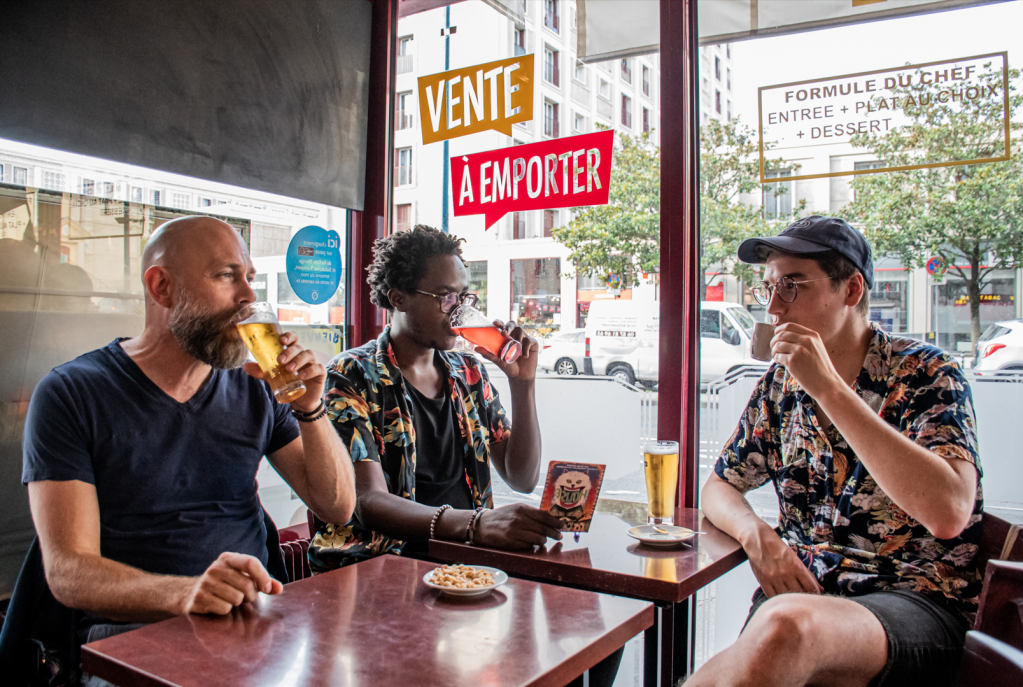
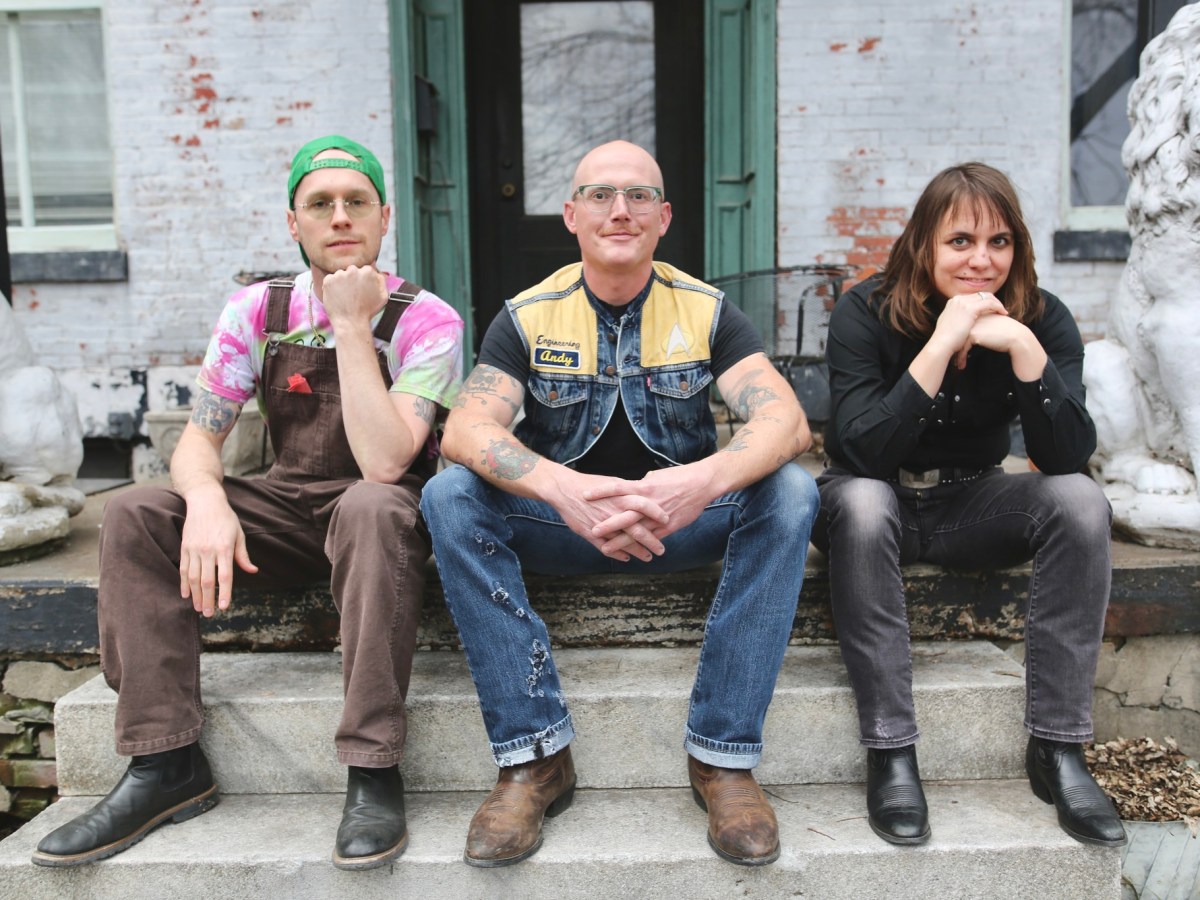
photo by Emma David
Hey guys, thanks for taking the time to chat with me. Your second album, II, feels like a journey through melancholic depths, with sudden highs and an electrifying chaos. It really gives the sensation of riding the waves—calm one moment, stormy the next. How do you decide when to shift from quiet introspection, like Février, to full-on riff-fueled mayhem, like Tournevis? Does it happen spontaneously, or do you plan these emotional roller coasters in advance?
J: Hi! Thank you for having us on Indie Boulevard! II does feel like a journey, even to us. We’ve really turned things up a notch with this new album! For instance, I challenged myself with Sélection, going from out-of-tune reverberated melodies to Radiohead-like arpeggio, whilst Nicolas’ guitar, immutable, plays its never-ending riff. Hector also outdid himself with the ecstatic drums of Jeju or the emotional deep-rooted rhythms of Février. We’ve tried to make this album with our guts and our hearts. And as the heart ebbs and flows, so do these seven songs. We had no idea it would end with such heights and depths. We are pretty proud of it!
You firmly stick to the “two guitars, one drum kit—that’s enough” philosophy. How do you balance things so that no one overshadows the others, while still surprising each other every time? And have you ever been tempted to throw in a few lyrics or maybe a sample, just to break up this raw, human minimalism?
J: Well, this formula is really simple, yet it creates the intended impact to the listener. Nicolas plays the bass with a distorted guitar and thick walls of noise, while I make my Telecaster scream with high-pitched notes and delayed melodies. Hector, with forte as a percussionist and as a drummer, creates rhythms to dance to, sometimes closer to me with aerial cymbals, sometimes telluric and full-bodied with Nicolas. Playing with frequencies and highs and lows is our trademark and we’ve been thriving in it so far. On a few occasions in the past, we might have been tempted to play with additional instruments or adding a voice to our songs. But we’re happy with what we have at the moment, so there’s no change scheduled for now!
You once mentioned that Baleine didn’t start out as a post-rock project—you experimented with lo-fi electronics and folk-infused shoegaze. Then at some point, you just went, “Screw it, let’s go with two guitars and drums and rework our old tracks.” What ultimately pushed you in that direction? And do you feel that II is the point where you’ve fully found your sound, or are you still exploring within this musical melting pot?
J: The current formation started more as a constraint than a choice. Our previous formation was a four-piece with slow riffs, a powerful yet sensitive voice and a lo-fi, melancholic vibe. When we ended up being three, as our singer friend Okia Lys left for other projects, we wanted to use the rawest parts of our instruments. With Hijiri Shimamoto (Gli Insetti Nell’Ambra), our talented friend and previous drummer of Baleine, we tried to rework our old content and create lyrics and moods with only two guitars and a drum kit. From there on, we switched to something more punchy, rock-inspired. In my opinion, Magritte is the epitome of this change of gears, with its radical progression, while Les oiseaux ont-ils des poils sous leurs ailes ? became the anthem of this first album. II brings a different era and different experiments, as Hector replaced Hijiri behind the drums. We still try to reinterpret content from more than ten years ago, when it was only Nicolas and I. But now with Hector, we feel like we’ve matured our sound and we dare to try new things. And the chemical solution that is Baleine is still mutating today, with new material in progress…
Nico is into new wave and post-punk, Jonathan leans towards indie pop, and Hector lives for metal and psychedelic rock—that’s like three completely different worlds. How do you make it work when writing songs for II? Were there moments when someone suggested a riff or rhythm, and the others went, “Umm… maybe let’s rethink that”? How do you handle those situations?
N: We usually manage to reach an agreement naturally. For example, when one of us brings scraps of riffs, drums or chords for new content, the others complete this sprout of a tune with their own artistic and cultural background. We discuss the details while creating the new track: should we tweak it a bit? What are the others’ opinions on what we’ve just played? Each one of us is his own leader. We each own our respective instruments and we can individually take the final decision on our part of the track. We have a very democratic and fluid way to compose, as we know each other very well. Thus, we do not compromise ourselves artistically and we have a very good time playing together and leave space for surprise. This process has the merit to drag us from our own comfort zone. That’s how I feel about this with the guys!
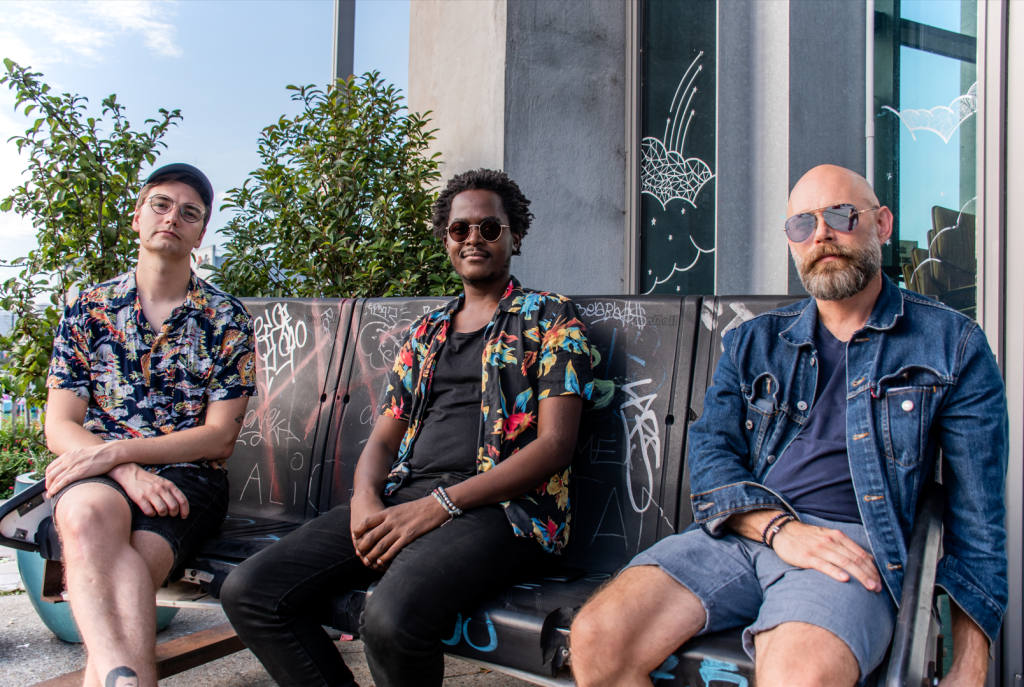
photo by Emma David
You’ve blended elements of folk, shoegaze, and even electronic music in your early experiments before transitioning into a fully instrumental format. It seems like this background shaped your guitar work in a way that almost replaces vocals. Do you still feel drawn to those genres you started with, or do you now see yourselves primarily within the post-rock scene, given your focus on instrumental storytelling?
J: Well, as a starter, we’ve never really thought of ourselves being part of the post-rock scene! It is the need to tell stories with instruments, melodies and rhythms that brought us to post-rock. But I think the influence of our current sound originally results from our work during our early era (the band name wasn’t Baleine yet). Nicolas is the man behind the machines, as he’s used them in previous projects (Propermood, Silence, Rhizometonic). Then, he used them to create the demo for early Baleine, when I joined him. Nowadays, Nicolas tries to play machines without having a machine, using pedals with heavy distortion and even an octaver. In the meantime, I try to replace vocals and melodies with my guitar… and then we switch places! I feel like this game of pretending and replacing is our personal genre, now, and our main focus when composing tracks, with the very minimum.
You recorded II with Jean-Charles Versari, who clearly knows how to make a sound feel alive and tangible. What was it like working with someone so experienced? How did you decide to entrust him with the album? That’s a pretty crucial aspect, after all.
N: What we appreciate in working with Jean-Charles is his capacity as a sound engineer and as an artist himself (Versari) to understand what we play and how we play it, the instrument we use and their perks, etc. All of this while integrating in the recordings his experience and his artistic view. The result is a subtle, well-carved and polished sound, adding texture to the tracks of II.
J: He took a greater place in the sound design of II, and I think that’s for the best!
N: Yes. He was of great help and we thank him for his work with us on the album. With his panoply of professional and vintage gear, he was able to design our sound on II. It creates a very unique and recognizable sound, upgraded from the one on I.
While the album carries a sense of bright melancholy, you also weave in more energetic, and at times even aggressive, moments. It adds an unpredictability and rawness to the sound, especially when the drums break into a more freeform structure. Do you have certain criteria for when it’s time to “blow up” a track’s structure?
H: Our main focus when composing is: “If the song goes on a clear path and the build up is obvious, then we have to take it to the opposite direction”. We also like to maintain some moods for longer periods of time. That’s why we allow ourselves to make abrupt changes at some point in the songs—structure, tempo, playing style. In addition, I often come with a fairly simple and basic drum pattern, always looking for a twist, without necessarily finding it. During rehearsals, Jonathan and Nicolas tend to ask me for new ideas and additional sounds and rhythms. With my percussionist background, I like to think of the drum kit as a multi-percussion system, where each member of my body is a different instrument.
Your style has already been compared to legends like Slint, Tortoise, and Trans Am. Listening to II, there’s definitely an old-school post-rock spirit in there, but with your own signature twist. How do you feel about these comparisons? Do you have any specific influences from the genre’s classics, or do you just do your thing without overthinking it?
J: I’m very fond of Tortoise and the Chicago scene with acts like Ui and Trans Am. I also like the Constellation records bands like (early) Godspeed You! Black Emperor or Fly Pan Am. Tortoise is a major influence to me, both for Baleine and my side project (Kuroi Payne). I know Hector and Nicolas also love post-rock, with acts like Slint or Mogwai. But in the end, we never claimed to be part of the legacy these great bands left. Nowadays, other bands represent the post-rock brand better than we do. We are proud to fit in this musical scene that has adopted us, especially since the Post in Paris festival last year. But clearly we don’t think of it too hard when making our tunes. Baleine is a post-rock band because it’s a massively monstrous wave of emotions. The genre defines us pretty well so far.
The cover of II is pretty trippy—a surfer riding a beam of light, very surreal. And yet, the album title is simply II. Your first album was called I, and now the second one is II—it’s like “1, 2, 3,” just a straightforward sequence without any extras. Ed Sheeran did something similar with mathematical symbols, and Adele names her albums after her age. How did you come up with this stripped-down system? Is it a nod to your minimalist approach to music, or did you just decide not to overthink the titles?
H: Each LP evocates something specific and develops its very own universe. That’s why we don’t use complex titles for our albums. We record with no artifice and without overproduction. Our music is made of emotional rollercoasters, free of exaggerated interpretations. This minimalist approach fits well with our personality as Baleine. As for the title and cover, again, the new album is named II. We could see a sign of this in the cover, with the two protagonists.
N: As Hector said, the trademark of our music are those emotional rollercoasters, from the simplest and intimate ones to the most explosive and extravagant, but without overkill. The colorful and trippy artwork also calls back for the “fun” and playful side of our band. We do have fun together, when creating new content or playing live, or when we rehearse together. When in rehearsal, for a few hours a week, we surf the world with these tunes and forget about everything.
Are you planning to hit the road after the album release to bring this melancholic storm to life on stage? If so, where can fans catch you—Paris, Europe, maybe beyond?
N: Well, we might play a few gigs in Paris this year, but nothing is decided yet. It also depends on the venues and their agenda. We would be proud to play II in Paris, but also around France: Lyon, Lille, Rennes, Eastern France… We might need someone to help us schedule a mini tour!
J: As for gigs in Europe… That would be a great experience! I’d love to play in Brighton, London or in Germany. Yet, there’s nothing concrete for the moment. But one thing is sure: II is an album that could be enjoyed by our fellow European citizens, and maybe even farther, who knows?
*Promoted content. All information provided is prepared in accordance with editorial standards and is intended to offer useful insights for readers.



 Indie Boulevard Magazine