
When I played ‘I Am Nowhere, I Am Everywhere’, a strange feeling caught up with me right away: I already knew it. Not in the sense that I had heard these songs before, but in the sense that I instinctively understood where everything was going to unfold.
The Ram continues to grow and has clearly reached the status of an established artist. It is not about radical experiments but about subtle choices, about the confidence with which he pieces together his sound into a unified, almost casual yet precise structure. On one hand, this album can be called a step forward. But if you look deeper, it stays within the same artistic plane where The Ram has been working from the beginning.

And there’s nothing unusual about that. Any artist returns to their themes again and again. Leonardo da Vinci painted the same faces, the same enigmatic looks, and no one demanded novelty from him. And yes, maybe the comparison is naive, but the essence is the same: ‘I Am Nowhere, I Am Everywhere’ fits naturally into this way of creating. It is another turn of the large, slow spiral The Ram moves along without rush or doubt.
The nine tracks unfold at an unhurried pace, each like a small slice of time captured somewhere between New York, Pennsylvania, and California. Each runs about five minutes, giving the music time to reveal the scent of fresh asphalt after a summer storm. The Ram’s vocals are warm and deep, slightly smoky; he easily reaches the upper edges of melodies but more often prefers to stretch the words out like a mantra, leaving the salt of the ocean in them. The lyrics are clear: home is something you can fit in your pocket, the road teaches the heart a new way to walk, and family is a constant refrain repeating in the background until you realize the melody has long become your own.
Everything was recorded on home equipment, and that is part of the magic as well. No attempts to polish the tracks to sterile studio perfection. The album’s soundscape balances between country, blues, and light art rock. The guitars sound soft, the rhythms breathe freely. Sometimes The Ram adds something fresh — faint synth layers or unusual uses of reverb — but does it so carefully that the new ideas blend seamlessly into the fabric of the tracks. Everything is thought out to keep the atmosphere cozy and slightly blurred.
From a Burst of Light to Dissolving Into The Air
The first track, ‘Listen to the Cold’, immediately blows the roof off with its openness. It is a sunlit burst of energy that crashes into the room, shatters the windows, wraps around the walls, and makes everything around breathe differently. At the same time, it’s striking how the arrangement manages to stay together under such pressure — the rhythm is steady and gripping, like a good woven hammock holding you above the ground. In this mix of styles, where country embraces art and blues winks in from a passing breeze, there’s something deeply personal. This song was written on a family farm in Downingtown, Pennsylvania, and The Ram pays tribute to his late father through it. It clearly holds a special meaning for him.
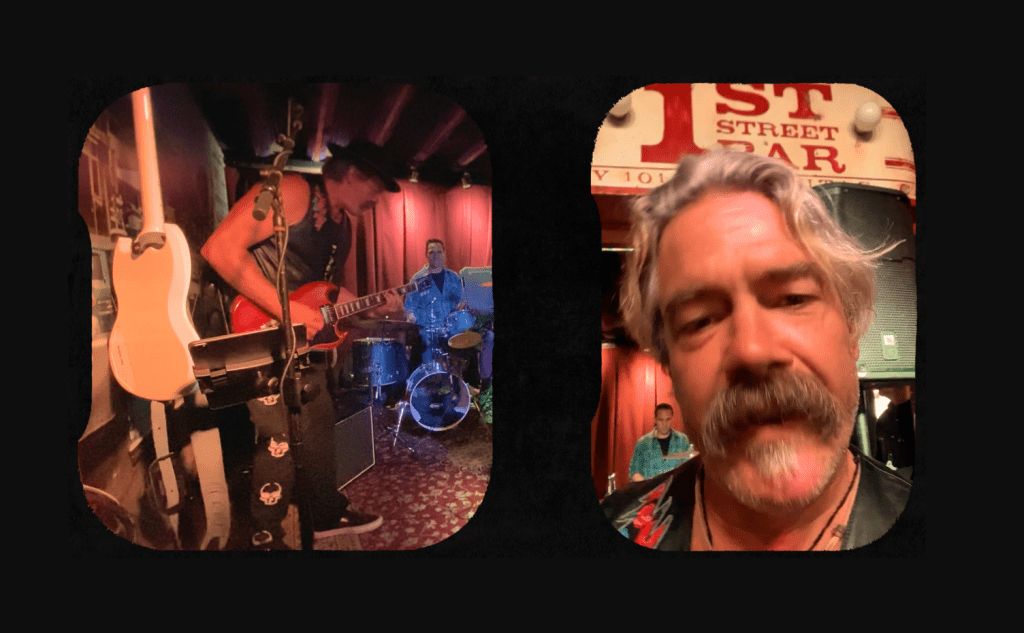
When ‘The Moon’s Loving Light’ starts playing, it feels like another part of the day — a warm evening when the light softens. The Ram hypnotizes here without flashy tricks — simply by placing the right accents.
Then comes ‘Love Is a Terrible Thing to Waste’, and the album brings a new wave of warmth. The swinging country-blues fills the room with a living fire, the rhythm grabbing you by the collar and rocking you at its own pace.
For those who enjoy tracks where you can truly dissolve into the sound, ‘Flip Jam’ and ‘Everything’ will be real finds. These songs don’t rely on quick wow effects; they work through gradual immersion. ‘Everything’ stands out especially: it stretches slowly, envelops with a smooth motion, and The Ram’s voice physically pulls each line out, thread by thread.
And after all this warm thickness, ‘Perpetual Change’ delivers the hypnosis of complete disconnection. The track constantly shifts shape: the rhythm stumbles, then slowly grows back in, and the vocals blend into the background noise. It’s a true experiment. Here, The Ram dares to step into a new art direction without losing his country-blues essence. It comes together naturally. It’s especially striking that both ‘Everything’ and ‘Perpetual Change’ were written after a morning surfing session — a moment when you literally become part of the elements — and the album captures that energy without a trace of pretense.
‘Join Along’ is an easy, bright blues track, carrying no mission other than simply being here and now. And smoothly, without haste, everything flows into ‘Warmth of the Fire’ — a tender, cozy country song that sounds like a good evening spent with the right people. The Ram’s vocals here are soft and enveloping. The arrangement is unhurried and measured, exactly what is needed at this point: just the quiet joy of being part of this world. The album’s title reflects exactly that.
‘I Am Nowhere, I Am Everywhere’ sounds like a philosophical riddle but actually describes the essence of the album with complete honesty. It captures that feeling when you are physically in one place — in a room, on a farm, on a beach after a surf session — but inside, you are scattered across the entire space. And the more you listen to the album, the clearer it becomes: The Ram isn’t building any forced concepts; he is simply recording his natural state. Nowhere and everywhere. A sense of home within constant wandering.
The tracks on the album work in The Ram’s familiar style: a blend of country, blues, and light art rock. There’s a lot of breathing space, a lot of personal lyrics. The slight rawness of the sound only adds charm. This is an album to listen to while driving along the coast without any particular destination. The Ram builds his musical universe stone by stone, patiently and honestly. If you’re looking for a warm, slightly rough-edged soundtrack for evening drives, ‘I Am Nowhere, I Am Everywhere’ will fit perfectly. And if it doesn’t catch you the first time, come back to it later. The Ram’s songs take more than one listen to fully open up.
*This review was made possible by SubmitHub









 Indie Boulevard Magazine