
Today we’re taking aim at Disquiet — an album Brian Halloran spent a full ten years working on. It’s set to release on May 13, and I can say with confidence that the new record is a personal confession refined to studio perfection. When an artist spends ten years on an album, it always raises questions. Not because it’s “too long” — quite the opposite. It creates a sense that something refuses to come together until it becomes absolutely honest.
I’ve listened to Brian Halloran’s previous releases, including Overnumerouness — that one was lively, energetic, clearly leaning into guitar-driven directness. There was still a belief in structure, in the idea that an album could be a comfortable frame. Disquiet is the complete opposite. It pulls inward. At times, it feels like a weight placed squarely in the center of your head. It’s colder, slower, darker. And that’s where its precision lies.
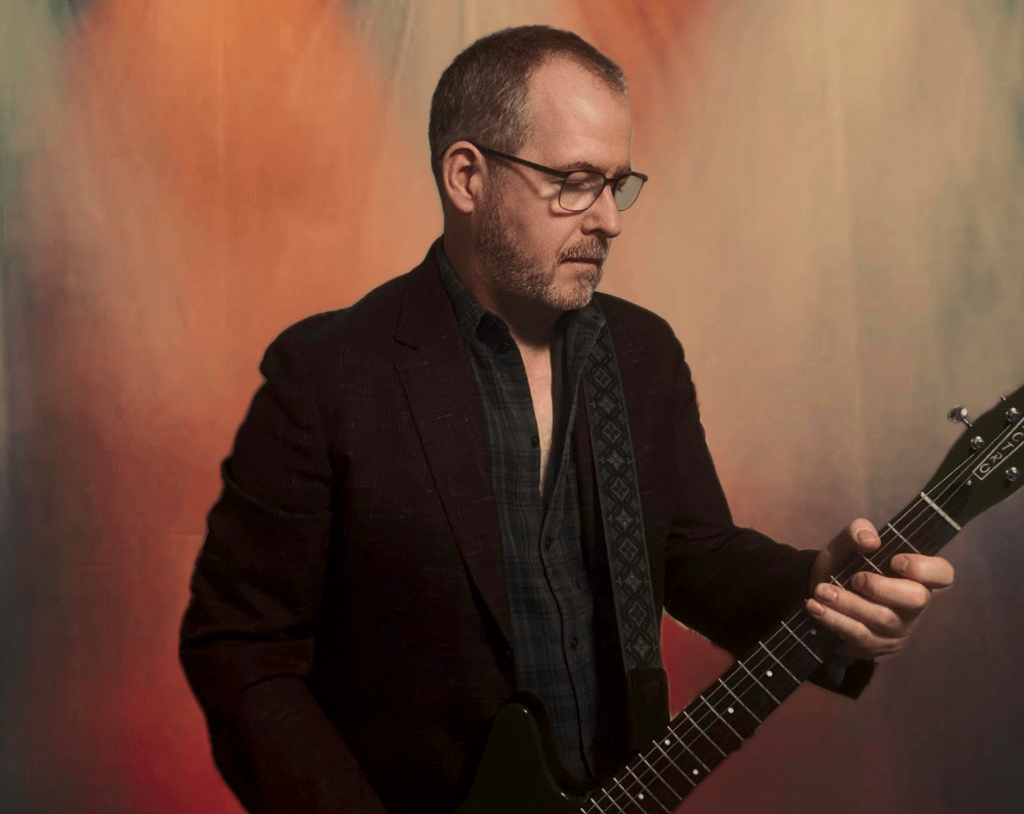
It’s important to highlight the mindset Halloran brought to this project. He gave Disquiet a decade of time and soul, because I don’t think music, for him, is some abstract category. It’s more like the tangible outcome of personal experience. The album is arriving relatively soon after Overnumerouness, but Halloran didn’t drift forward on momentum — he stayed in control of every step, from writing to final mastering. Aware of how easy it is to treat a project like this too lightly, he brought in Ricky Watts — an engineer whose mixes for 30 Seconds to Mars echo across the biggest arenas — to get the balance and sonic depth just right. That move shows how much every detail matters to Halloran, and how much this entire album means to him. Did he succeed? Yes. The vocals, drums, riffs, and bass lines have gained extra clarity and depth.
Disquiet is built on a dialogue between forceful alternative rock and restrained, almost intimate moments. The heavy guitar layers don’t bury the lyrics — Halloran’s voice is front and center, delivered with conviction and stripped of excess. The writing avoids abstraction: he speaks directly about lived experience, about hope and vulnerability, without evasive metaphors. The production deserves a separate mention: every instrument has its own space, but the whole doesn’t melt into that glossy, echoing mush that plagues so many records right now. I’m not a fan of that — the sound stops breathing, starts pressing down, and instead of a live texture you get a dense lacquered surface where nothing feels truly graspable.
Here, everything is sharply defined. Panning and reverb are placed with surgical precision, and the frequency balance keeps both the depth of the low end and the airiness of the highs intact. The result is that Disquiet sounds spacious without ever losing focus on its emotional core.
Straw Man, for example, kicks off the record with a powerful charge. The guitar riff forms the core of the tension, while the drum part blends precision and force, keeping the listener in constant motion. The bass has a more defined texture now, made noticeable by the wide stereo spread of the mix. Halloran’s voice carries a kind of stage charisma — sharp diction and a smooth rise into the upper register pull the focus in. And despite the track’s drive, there’s a streak of emo melancholy running through it. That kind of contrast gets to me.
I Feel Like I Should Like Your New Band bursts in with a dynamic blast, raising the energy to a new level. The rhythm turns aggressive, and the guitar picking grows sharper, tied together by sliding transitions between phrases.
In Late Night Drive, the harmonic palette widens thanks to a rich chord progression. The guitar layers act as a second voice, creating interplay between lines. Reverb stretches the space into something almost infinite, while electronic touches give the track a modern edge.
I have to highlight You’re Not Even Trying. The track erupts with gothic tension through deep synth layers and heavy guitar lines. The keyboard parts add a cold shimmer, and the rhythm section lays down a foundation for the drama. Halloran’s voice takes on a guttural tone, and the lyrics come across like a string of aphorisms laced with hidden pain.
The album closes on a high note with The Ramparts. The final track feels like a cleansing resolution. Light fingerpicked guitars and soft keyboard chords form a calming backdrop. Echoes and spatial effects paint the image of a sunrise after a long road, and the slow build of the melody leads to a sense of emotional release.
At the same time, there are moments where the material might have benefitted from tighter editing — long instrumental bridges delay the peaks. But those passages come off more as a stylistic choice than a misstep: Halloran seems committed to giving each mood the room it needs.
In the end, Disquiet stands as the quintessence of Brian Halloran’s creative maturity. His uncompromising approach and willingness to wait until every detail clicked into place resulted in something deeply personal. You can spend five minutes with a random EP, but it took ten years to unpack the full depth of his own stories. And it’s that patience that gives the album weight: Halloran didn’t bend to trends, he speaks plainly — about fear, about faith, about memory. About piecing yourself back together when you’re no longer sure there’s a reason to. This is a mature record, but don’t mistake it for heavy-handed. It has energy, it has blood, it carries the live pulse of someone who had every reason to quit — and didn’t.
*This review was made possible by SubmitHub








 Indie Boulevard Magazine