
If you’ve spent any time lately rummaging through the bottomless pit of cookie-cutter pop tracks and AI-generated pseudo-soul, stumbling upon something with teeth, heart, and a backbone feels like a small miracle. Enter Matt DeAngelis—a name that might not yet ring bells on mainstream radars, but one that deserves to start echoing through every hallway where rock still means something.
Hailing from Turnersville, New Jersey, Matt brings with him a sound that refuses to flatten itself to trends or water down its message for easier digestion. With ‘Rock And A Hard Place’, Matt carved out a space for complex emotions and unapologetic melodies, pulling inspiration from Queen’s theatricality, Yes’s prog wizardry, and the melodic ingenuity of The Beatles. It’s not nostalgia-core, though. It’s something more urgent. You can hear the struggle in the layered harmonies, the decision-making in the chord shifts. It’s a song for people who’ve actually had to choose between two bad options and still woke up the next day trying to do better.
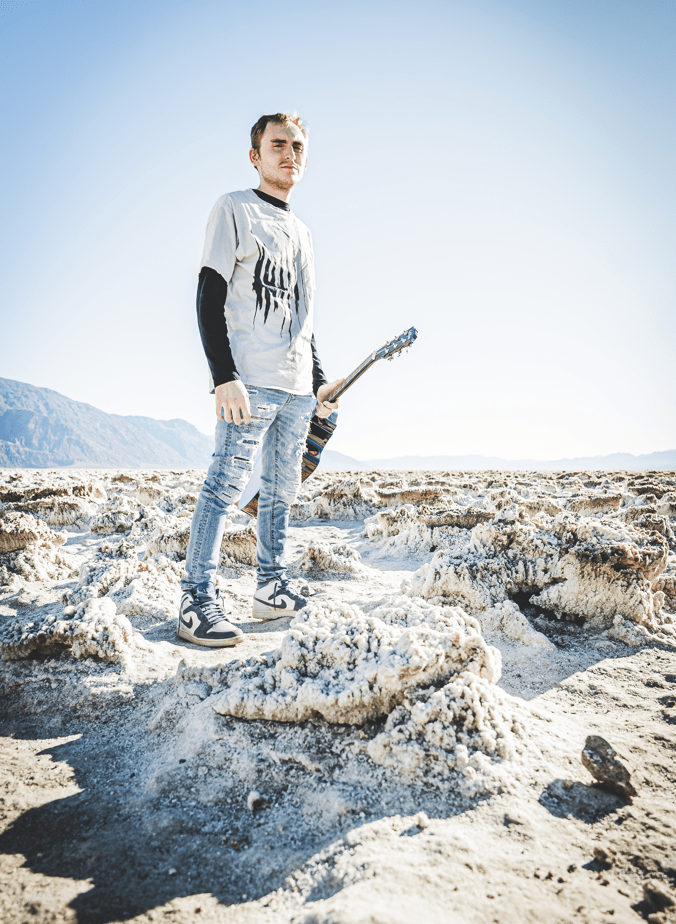
One Tornado at a Time
Now, with his latest single ‘For Better’, he pivots the lens outward. This one hits differently. Instead of leaning on technical showmanship (though the musicianship is tight as hell), it goes straight for that raw nerve so many of us keep buried under push notifications and newsfeed doomscrolling. It’s a song that calls out the modern condition for what it is: spiritually disfiguring, socially anesthetizing, and dangerously easy to ignore. I sat down with Matt to talk about what drives this vision, how it all comes together with his band, and why making music today carries real weight—far beyond tossing singles into the algorithmic churn.
Hi Matt! Great to get the chance to chat — I’ve been diving into your music, and ‘For Better’ really struck a chord. There’s something strangely beautiful going on there: hints of ‘80s synths, almost a gothic atmosphere, and then lyrics that speak directly to the present — to a world that’s moving too fast, overloaded — and the desire to simplify it. It’s striking how well that contrast fits. How did you arrive at that mix? Or was it more of an instinctive process — like, “this is how it’s supposed to sound,” and that’s it?
There’s always a complex process when writing and recording a song. When I first wrote the song, my overview of the world was that we as a race have become far too reliant on advancements in technology and glamour, losing sight of the true meaning of life. With the help of my amazing team of producers, we were able to put the meaning of this song into music, where a faster, upbeat chorus can be representative of an exponentially growing and fast paced society we are living in.
You sing about internal things — faith, anxiety — and still manage to stay open. Everything’s right there, but never too direct. That’s a pretty subtle writing style. How do you usually land on what a song is about? Does it come with the music, with the rhyme, or is it based on something external you’ve observed?
I tend to write about just a few main topics but find different perspectives in all my songs. My mental health struggle with OCD and anxiety has strongly influenced my writing and led me to my faith in God. I am also very observant of the world around me. Sometimes a song just happens to find me. Every experience, good or bad, is an opportunity for a new song. There are times when I begin writing lyrics to begin an idea, but in other instances I find myself composing a melody on the keys or guitar, before the lyrics come. I feel it’s important not to force anything in the writing process, because it directly reflects in the song that’s being written.
The sound of ‘For Better’ stands apart from what’s typically associated with a singer-songwriter today. It comes across like a full studio project with a big vision — there’s depth, detail, space… honestly, it sounds amazing. Do you handle the production yourself?
Thank you so much! I have an incredible team around me that has helped tremendously with production. My producers Bill Kennedy and my dad, John DeAngelis, who is also an established musician for many years, have helped to mold my style into what it is today. My dad often suggests additional parts to the songs I have already written. My producer Bill Kennedy is also essential in this process, as he is very experienced in shaping a song into the best it can possibly be. While I’m the main composer, my team directly contributes to how the final product will sound. We essentially collaborate on the production process, reflexing on every change until it feels right with the message I’m trying to give to the world.
Your songs rarely lean on familiar musical clichés. You use unusual harmonies, non-standard structures — that especially stands out in ‘For Better’. Do you actively move away from pop forms, or is it just a natural result of how you hear music?
From a young age, my parents influenced me on both classic and progressive rock. I was never a kid who actually enjoyed listening to what was current or “in” at the time. I definitely march to the beat of my own drum, but I wouldn’t say I actively move away from pop forms. It’s something that tends to happen naturally, but I do have pop influences that shape my songs, most notably a form of pop progressive rock, with elements of each genre in my style.
You’ve mentioned that your faith and your internal battles with anxiety shape your music. And that definitely comes through. How do you find a language to talk about heavy things in a hopeful way, without slipping into slogans or preaching?
My experiences with my mental disabilities have led me to a more positive outlook on life. My faith and relationship with God has directly influenced this outlook. I tend to look at things from different perspectives, not just a one way street that leads to a cliche or slogan everyone’s heard before. I believe that we should all have a positive outlook on life, no matter the circumstance. I am one of many who have struggled, but no two people have the exact same experience. I realized that the only control that any of us have is our attitude. We can choose to look at life from a negative perspective or look at it in a positive way. I tend to state what I see around me–be it bad or good–and put my positive spin on it.
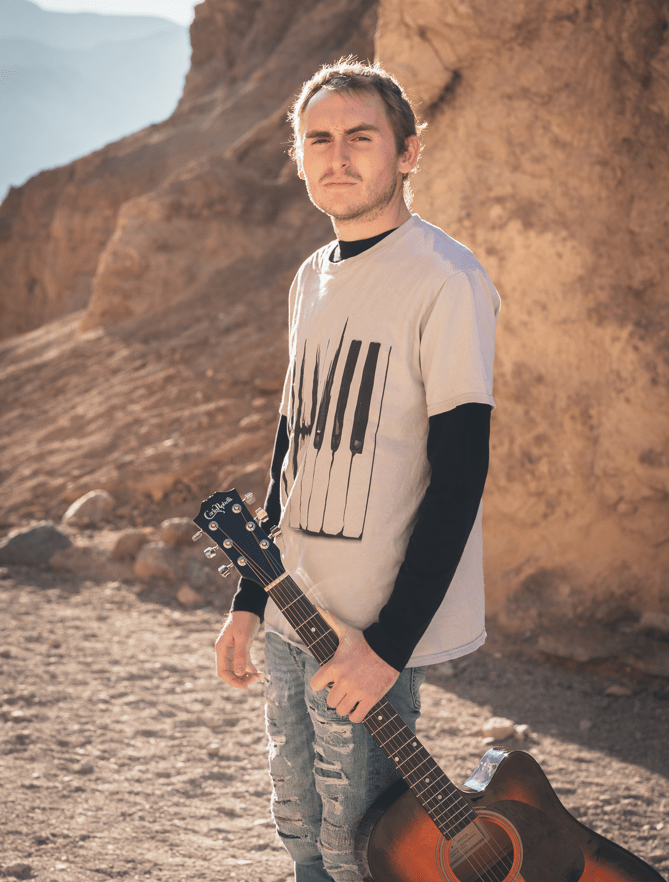
You started writing songs at just eight years old — which is rare, and honestly kind of amazing. That early start must’ve shaped a lot about how you approach music. But now, with everything you’ve learned and experienced since, how much of that original instinct still guides you?
From a very young age, I knew I was a songwriter. Writing for me was and is just a part of daily life, so while my experiences have shaped my writing style into what it is today, I feel I’m truly still the same writer I was when I first began. I can remember writing my first song ever about 18 years ago as a young child. The feeling and concept I develop when I write a song today still remains the same as it did then but with a more mature way of expressing myself. My original instinct tells me to write and spread positivity to the world so that others can relate to their own experiences. That’s what will keep us going as a human race. Without hope, we are lost, especially with all of the turmoil in the world today.
You don’t have any albums in your discography — just singles. That’s an interesting approach, especially in a time when many artists are still drawn to making albums to give listeners a full experience. What’s curious is that you look and sound like someone who would have an album. I imagine that choice isn’t random. Do you feel like the album format doesn’t fit your style, or is it more of a creative decision that lets you work more freely with each track?
I released my first EP with 5 songs entitled “World I’m Comin’ For You” several years ago which featured members of Billy Joel’s original band–Richie Cannata on sax, Liberty Devitto on drums, with the grammy award winning John Arbuckle, mixing and mastering the tracks. It was quite an honor to have recorded with such established and incredible musicians. While this was the closest I’ve ever gotten to releasing an album, my team and I feel that in order to stay in the public’s eye, a more consistent release of music is necessary. In order to become more successful as an artist, I felt I needed to adhere to the algorithms of both spotify and YouTube, if you will. It has certainly been a challenging experience, but in the last year or so, the direction of my career, as an artist, has become much more clear. For the most part, we release up to around 4-5 singles each year, with music videos to at least 3 of these songs. This increases content and has helped keep the interest of my audience. But there is a method to the madness. The order in which I release each single is actually how it would be if it were on an album. I could essentially combine my singles in groups of 10 to form an album. I very much enjoy the freedom of varying my style from track to track creating different emotions with each one, while remaining cohesive as a whole.
Your voice really stands out — the tone is rich, deep, and there’s something in it that can’t be faked. It sounds like there’s been a lot of practice, vocal work, and experimentation behind it. I’d love to know how and where you developed your singing.
I joined my first band at the age of 9, at Rock University, where I was also studying and performing classical piano. At that time I was just the keyboard player in the background. At home, I began singing from around the age of 8, which is also about the time I began songwriting, but started taking my vocals more seriously in my early to mid teen years. As a classical pianist, it isn’t quite as common to also be a frontman and lead singer. However, I have been able to do this in recent years and this has helped me to become a more multifaceted musician and performer that can captivate an audience. However, I did have valuable vocal training along the way. Singing is something I very much enjoy, but I will always be rooted to my musicianship, from a player’s perspective, as well.
You became a storm chaser — that’s a pretty unusual hobby, especially for a musician. I’ve never heard of storm chasers before, and I honestly have no clear picture of how it works. Can you walk me through it — do you literally go after storms and try to get into the thick of it, or is it something else?
A storm chaser is basically what it sounds like- someone who chases storms. I’ve always had a strong interest in weather from when I was young, but started taking storm chasing more seriously several years ago when I captured a strong tornado right near my hometown in New Jersey. My footage landed me on a Weather Channel show called Deadline To Disaster, with interviews and my footage also being featured on national and local news stations. My close experience with this tornado has changed the trajectory of my storm chasing career. I now chase in the Plains and Midwest of the United States, as well, and have become an experienced chaser since my first real tornado encounter.
So, summer’s around the corner and the live season’s about to kick off in full. What shows do you have lined up for the coming months? Are there any places on the list where you’ll be performing for the first time?
Summer is shaping up to be quite busy for me, as I plan to be performing several times a week throughout the Mid Atlantic region. There are a couple new venues that I’m excited to play such as the Point in Sea Isle City, NJ, the new Borgata Casino Level 1 Atlantic City, and Conch Island in Rehoboth Beach Delaware. I’m hopeful that this will lead to even more opportunities while continuing to expand my fan base. Ultimately, the goal is to bring joy to anyone watching.
*Promoted content. All information provided is prepared in accordance with editorial standards and is intended to offer useful insights for readers.



 Indie Boulevard Magazine