
‘Sea Glass’ — quite an intriguing and poetic name, isn’t it? The first image that came to my mind was a seaside shore, where instead of sand, you have those tiny multicolored shards scattered under your feet — smoothed and polished by the waves over the years until they become translucent pebbles.
Snowden River — or more precisely, Lukas Roselle — has released a rather beautiful, charming, and light album. And I must admit, the name captures the essence of the record with surprising accuracy.
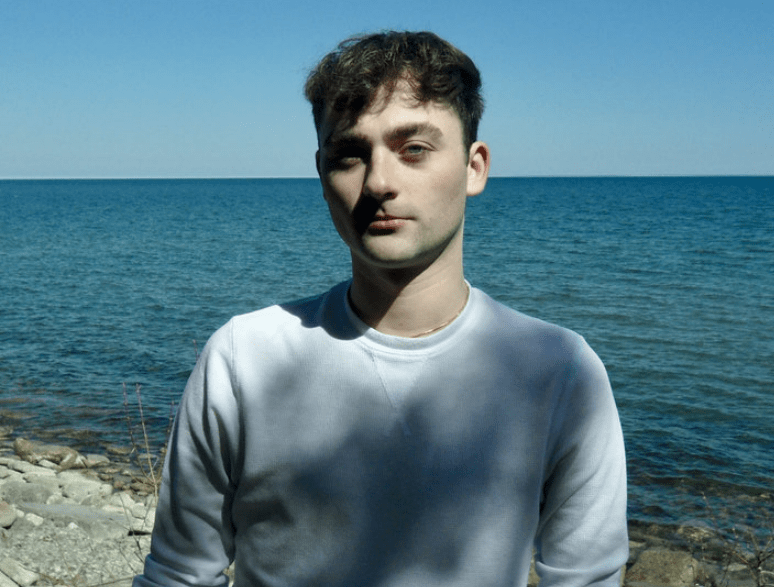
And you know what? The entire album — and I mean this literally — was recorded in a dorm room. The kind of place where someone’s microwaving instant noodles, and a roommate is constantly knocking to borrow a phone charger. That’s where Lukas Roselle plays all the instruments, writes, and mixes an album that sounds so professional and serene you’d think it was the work of a full production team. Whether that’s pure talent, persistence, or some kind of dorm-room magic, it is hard to tell.
‘Sea Glass’ sounds like something you’d hear in a good commercial — maybe a perfume ad, “brand up to you,” or one of those spots with carefree people walking on a beach, looking at the waves, always smiling by the end. Simple chords, a touch of soft vocals — yet this combination works in a way that makes you feel like you can breathe easier afterward. This album has a wonderful quality — it never overwhelms. It just flows, like a wave, from one track to the next, so smoothly and naturally that you barely notice when one song ends and another begins. It may sound somewhat similar throughout, but that’s actually a strength — ‘Sea Glass’ flows as one continuous story told in a single breath.
I want to pause for a moment on the details, because they are what make ‘Sea Glass’ come together as a complete work. And that matters — to experience the album not as a set of individual songs, but as a path you walk from beginning to end.
Right from the start, with ‘Empty Room’, it becomes clear — everything moves slowly, carefully, like walking barefoot on wet sand. Soft rustles, barely-there background textures — if you listen closely, you can almost catch the sound of a wave rolling over pebbles. Lukas’s voice does not stretch notes for beauty’s sake — it breathes in sync with the instruments. And that creates a space, an atmosphere where everything feels a little softer, a little more intimate.
Then comes ‘Open Tab’ — a different kind of step. It lets in a bit more light. The guitars start to move more freely, a rhythm emerges, with a touch of laid-back groove, and the horns at the end sound almost celebratory, without ever pushing too hard. This track is like an improvised dance in the kitchen when you’re home alone and no one’s watching. It feels incredibly alive.
The title track ‘Sea Glass’ delivers on its name completely, and I would not be surprised if Snowden River wrote it right by the ocean. A simple but gripping melody, and a voice that gently leads the way. This track carries a light, bright kind of nostalgia — or rather, the memory of a moment when everything felt right, and you enjoy returning to it. I would call it the heart of the album.
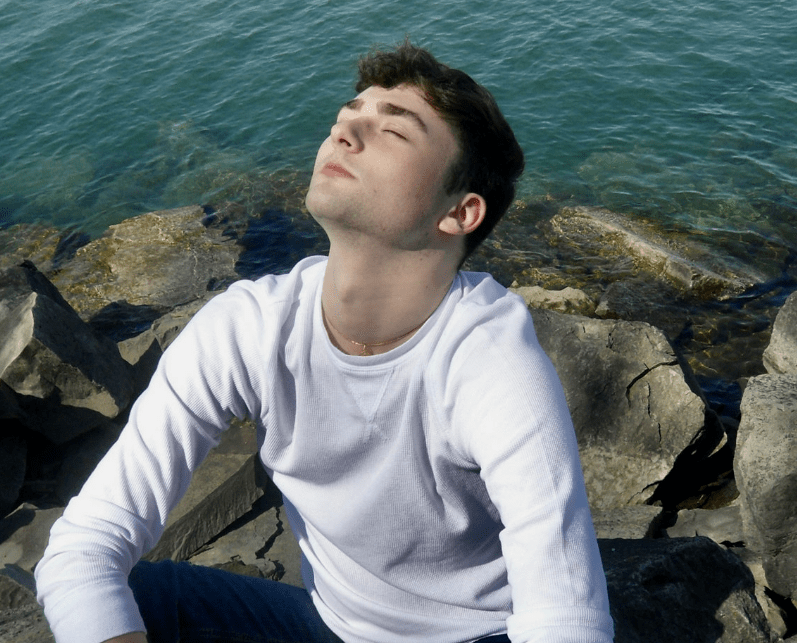
‘Blitzed’ — this is where you really want to say Snowden River knows how to surprise. The harmonica does not sound like a folk cliché, it comes across as part of a conversation. The whole track feels incredibly homey. The kind you put on in headphones when you’re returning to the city after a long trip.
Then there’s ‘Evergreen’. Here the mood shifts. A slowed-down waltz, blurry, almost drowsy. And still, not a single instrument feels out of place. Beautifully done.
The transition into ‘Maryland’ makes perfect sense. It sounds like a continuation, but with added textures, as if the sound became thicker, more saturated. The vocals come in closer, even warmer.
‘Christopher’ wraps everything up with a delicate touch. Harmonica, light keys, guitar, vocals front and center — exactly as it should be. The album closes on the same soft frequency it began with. It creates the feeling of a finished circle.
‘Sea Glass’ is a precise, well-crafted work, made with care for both sound and listener. Lukas Roselle built this album not around big concepts, but around a state of being. Yes, it is folk. Yes, it is indie. Yes, you have heard a voice and a guitar a thousand times. But here it works, because Roselle simply writes good, smooth, weightless tracks that hold a consistent mood. And that is the beauty of it.
There are not many instruments here, but it feels like each one was chosen under a microscope. The harmonica comes in exactly where it should. The horns arrive unexpectedly, but tastefully. The guitars do not just strum — they groove, they guide, they build the space. And the vocals? The vocals hold everything together as a spine. Some might say the album offers few dramatic turns, but that’s exactly what makes it special. Roselle creates an atmosphere you want to stay in. An evening that stretches on — and you are glad it does.
This album is about small moments, gentle sadness, tenderness, and quiet joy. I am truly glad I heard it. For me, it became something personal, and I believe it will find its way to others too. I do not know how many people will discover it, how many will like it or add it to a playlist. But if even one person puts it on in their headphones and thinks, “Yes, this is exactly what I needed right now” — then it already worked.
*Promoted content. All information provided is prepared in accordance with editorial standards and is intended to offer useful insights for readers.







 Indie Boulevard Magazine