
Kent Parker’s story is the kind of thing that sounds made up until you realize—no, he actually lived it. We’re talking about an artist who spent decades away from music, built a life, traveled the world, racked up miles like a touring artist without ever stepping on stage… and then came back swinging with an album that feels like it’s been quietly simmering in his bones the whole time.
The Way is not a debut in the traditional sense—it’s more like the release valve on a life full of observations, relationships, and late-night thoughts that never made it into a journal. Until now. Sonically, this record lives somewhere between Progressive Americana, classic Country, and singer-songwriter introspection. Think Dylan storytelling, Floyd atmosphere, and a splash of Beatles charm—but filtered through someone who actually lived outside of music long enough to bring something fresh back to it.
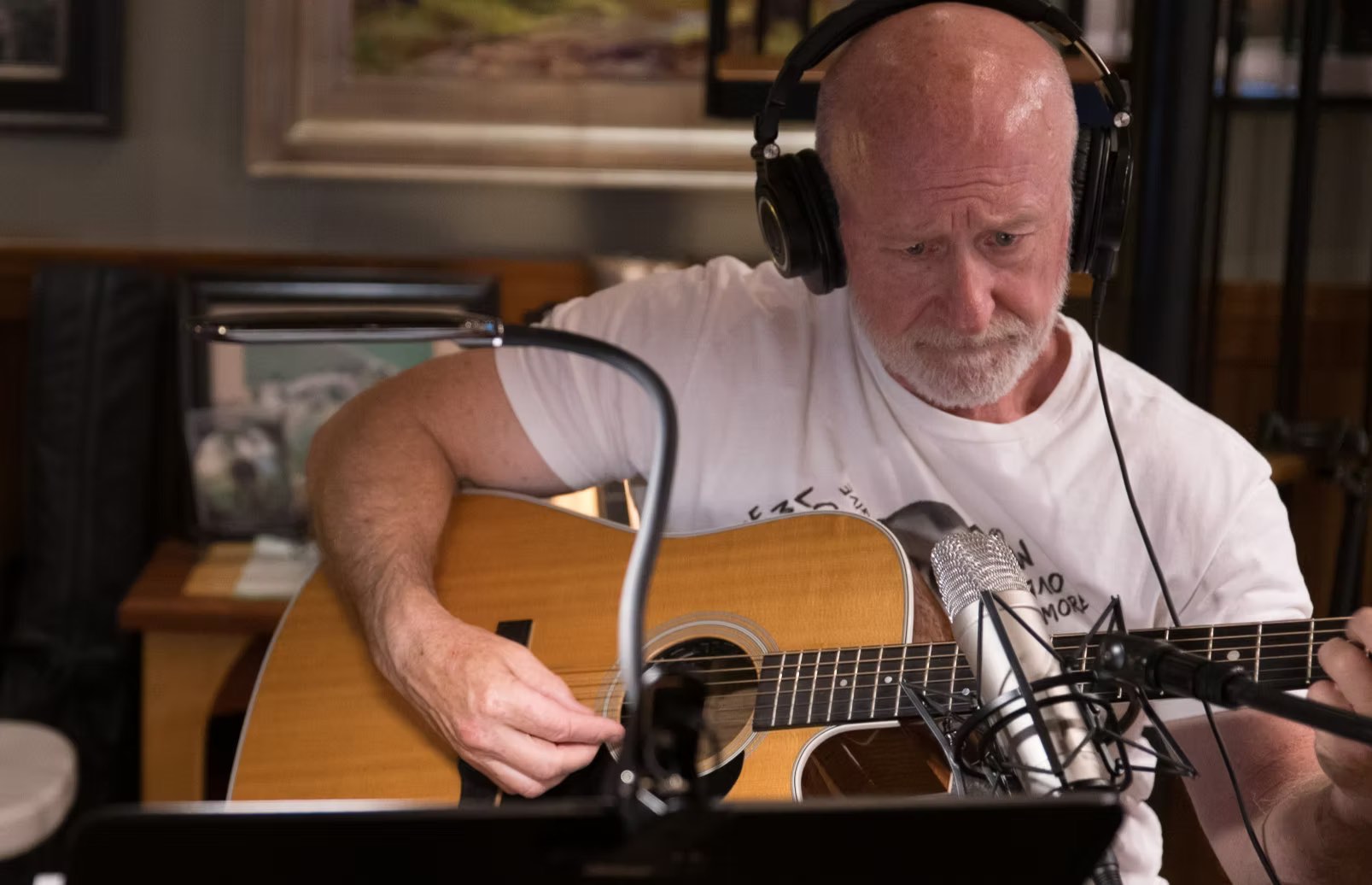
When someone says they’re making a debut album in their sixties, you might expect something charming, maybe a little nostalgic. What you don’t expect is a fully-formed, emotionally precise, beautifully sequenced album that hits like a memoir. We sat down with Kent to talk about how The Way came to be, what it means to chase the art without chasing the industry, and what happens when you finally decide it’s time to tell your story.
We had the chance to speak with Kent Parker—and the conversation that followed goes far beyond the usual talk about songwriting and studio sessions. This interview will make you look at music differently. And if you’re really paying attention, it just might make you rethink a few things about life, too.
“At my core, I love the act of creation. Being a recording artist for my own songs feels like completing the creation cycle in a way I can control.” – Kent Parker
Hey Kent, great to talk with you — I’ve been listening closely to The Way, and what really stands out is how it unfolds. The songs take their time. They hold space for reflection, without rushing to the next line or the next hook. You mentioned that the full weight of the album only hit after hearing the final mixes months later. That moment — sitting with the finished songs and recognizing something deeper in them — what was that like? Did it feel like a chapter closing, or the beginning of something new?
Thanks for taking the time to interview me! I’m excited to dive into the story behind The Way and share some insights about the journey that led to this album. As we worked on the album throughout the summer of 2024, I was fully immersed in the production of each song, working in focused bursts of time. It wasn’t until I heard the first cut of all the mixes in order—just before mastering—that the full weight of the album hit me. Hearing everything together, in the way it was meant to be heard as one cohesive piece, was a deeply emotional and fulfilling experience.
This being my first LP, it was the first time I had experienced the music in its final form, in sequence. Rather than feeling like a chapter closing, it was more of a reminder of how much I enjoy the creative process itself. It made me incredibly excited about the thought of doing it again. I’ve always seen myself first and foremost as a songwriter—writing is my first passion. While I’m not a performer, the act of writing and recording is what truly fuels me. There’s something about the creation process that I find endlessly rewarding. It didn’t feel like a chapter closing; instead, it felt like stepping into a new phase of my journey as a songwriter. It reaffirmed that the creative process, from writing to recording, is where I feel most alive. And it left me excited to keep exploring this path and looking forward to the next opportunity to create something new.
One of the most quietly moving things in your story is that image of nine-year-old Kent Parker, harmonica in hand, listening to Charlie McCoy and unknowingly setting a course that would loop back decades later. You ended up recording with him. What was going through your mind the first time you two were in the same studio, working side by side?
Working with Charlie in the studio was a surreal moment for me. Over the years, I had often thought about reaching out to him—just to thank him for the profound impact he had on my love for music. But it wasn’t until this album project, with a real and valid reason to approach him, that I actually did. Charlie is so gracious and understated; it still boggles my mind to think about the sheer depth of his contributions to some of the greatest musicians in the world—Elvis, Dylan, Cash, Roy Orbison, Leon Russell, Loretta Lynn, Chet Atkins, Waylon Jennings, Joan Baez, Kris Kristofferson, Paul Simon, Ringo Starr, and the list goes on. Not to mention his own success as a solo artist, his place in the Country Music Hall of Fame, his role as music director and performer on Hee Haw, and his standing as a member of the historic Nashville A-Team. Charlie is a living legend, and probably one of the most important and understated contributors to music in the past 60 years.
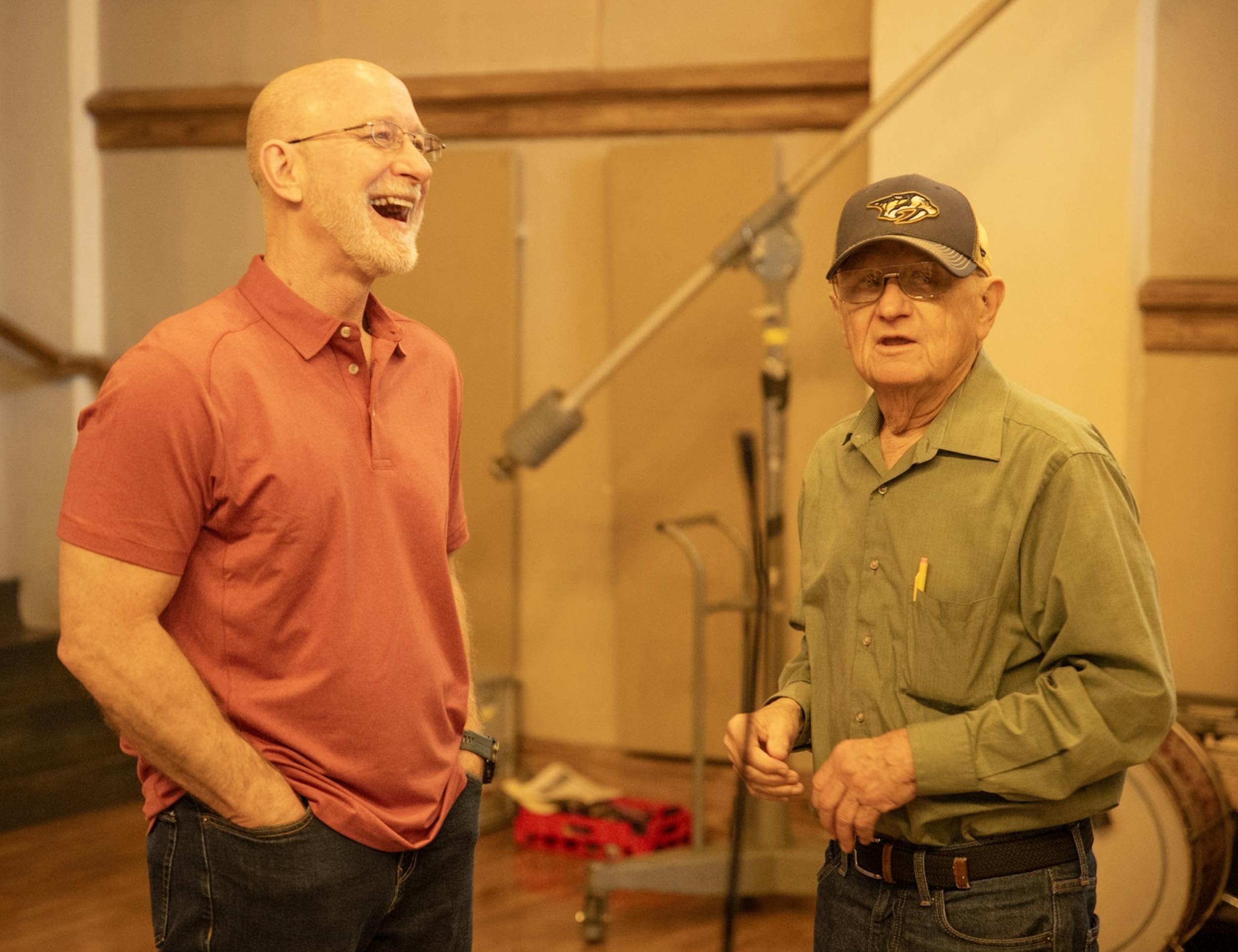
So, yeah—suffice it to say, I was a bit nervous when we first met in the studio. The thought of him hearing my music and being part of the sessions was overwhelming. I remember thinking, “Let’s see what he thinks, let me gauge his reaction to the songs, and see where this goes.” But when Charlie walked in, I was immediately struck by his warmth and charm. He treated me like I was the best artist he’d ever worked with—when, of course, I was far from it. He was collaborative and thoughtful, asking about the songs I’d written and my vision for them. I was blown away by his approach and felt at ease almost immediately.
By the way, you could feel the admiration from the other musicians in the room for Charlie—the unspoken sense that “a legend” was among us. The first song we worked through was Silence of the Night, and Charlie plays an amazing harmonica solo during the instrumental break. I was standing right next to him as he played it. I couldn’t believe it—perfection on the first take, for a song he’d only heard my demo of just minutes before. When he finished the solo and the recording stopped, he looked up at me and asked, “Did you write that song?” I sheepishly said yes. With a sincere look, he said, “That is a GOOD song.” I’ll never forget that moment—it was artistic validation like nothing else. It’s the kind of compliment that means more to me than any number of streams a song could ever achieve.
You grew up on a family farm in Indiana, in the very house your father was born in. That alone feels like a country song waiting to happen. How do you think those early days—the land, the quiet, the rhythms of that rural life—still echo in your music today?
My childhood and upbringing have had a profound and positive influence on my emotional and intellectual makeup as an adult, and I’m truly grateful for that. I realize that’s not always the case—some people reflect on their childhood as a negative or troubled experience, which can shape them in different ways, sometimes leading to great outcomes or expressive art. But for me, my memories and experiences are joyful and richly satisfying.
I think my perspective is rooted in the understanding that we don’t need a lot materially or financially to be happy. Of course, it’s fantastic to have both, but the awareness that what really matters—what truly makes us feel alive, real, and of consequence—is often deeper than what we tend to focus on as adults in a competitive and status-driven world. Growing up on a farm instilled that in me. The cycles of nature, the rhythm of life, the simple joy of a muggy, humid August morning when the smell of corn fills the air—it’s a grounding reminder of what truly matters. I find myself reflecting on that when we grumble about the next heat wave we have to endure.
All of this informs my music: developing stories or observations to share through song, tapping into the emotive core of an experience, and using words and sonics to convey that essence. The closer a songwriter is to the real heart of what makes life tick, to what really matters, the more authentic their music becomes. I believe that’s key.
You took what some might call a long detour—life, family, business—and came back to music much later. And yet, when I listen to these songs, they sound fully formed, like you’ve been writing them all along in your head. What pulled you back to it, and when did you know this time it wasn’t just a hobby?
I’ve always been a goal-driven person, and while my journey back to music started gradually after I retired in 2012, I quickly realized that songwriting was the key for me. I consider myself a competent, but rather average musician. As a songwriter, though, the instruments became tools to shape and create the song. I wasn’t playing to improve as a musician; I was playing to form and craft a song. This felt more authentic to me in terms of “making music.” I felt good about my writing—there was no external motivation, no deadlines or pressure to impress anyone. The joy came from pure artistic expression. As the songs started to feel more solid, I dove into recording. I set up my own studio and began learning how to produce my own demos, so I could fully flesh out and define the songs. Eventually, I decided to take what I thought were my best songs and register them with a Performing Rights Organization (PRO), choosing BMI.
As I developed more songs, my initial thought was, “How could I get an artist to want to cover one of my songs?” But staying true to my goal-driven nature, I decided to be patient and wait until I had a sufficient catalog to work with. I set an arbitrary goal of 50 songs registered with BMI. Once I reached that number, I would then start asking, “Now what?” By early 2023, I had hit the 50-song mark at BMI, with dozens more written but not yet pursued further. It was at that point that I began to think more seriously about the “what next?” question. Ultimately, I decided to record an album to showcase my writing. The idea was to create a professional collection of recorded songs that I could pitch to established performers and recording artists. I started with the first song, Summer Sun, as a sort of “trial run.” But after that, the notion of actually being the artist myself, rather than just a songwriter trying to build a catalog for others to cover, began to take hold. A lot of people, including producer Gabriel Millan and my wife Laurie, helped me solidify this direction and encouraged me to take this leap.
The Way holds 14 tracks, each one clearly chosen with care — they sit together like chapters from the same book, even when they shift in tone or style. But I kept wondering about the songs that didn’t make it in. You’ve mentioned having a pretty large catalog — over 60 registered songs, plus a bunch more in progress. When it came time to narrow it down for this album, how tough was that process? Were there songs you wrestled with cutting, or did this particular set come into focus early on, like, “these are the ones”?
It was an interesting process to go through my portfolio and figure out which songs truly belonged on this album. The fact that this was my first album added a layer of complexity. As an unknown artist with no “footprint” in the industry, no fans, and not even my friends or family aware that I was doing this, it was daunting to not only choose the songs but to figure out how to express them. What was “my sound“? What genre did I fit into? What was my musical identity and brand? How did I want to be represented? I come from the era when albums were treated more like a book—each song a chapter, and the order of those songs was just as important as the music itself. An album wasn’t just a collection of tracks; it was a journey. The sequencing of the songs allowed the music to unfold in a way that took the listener through an emotional experience, creating a deeper connection than what each song could offer individually. I’ve always believed in the power of that order—whether it’s telling a story or guiding the listener through a shared emotional journey.
In today’s streaming world, the concept of the “album” has become somewhat of a lost art. People often listen to individual tracks without the same sense of continuity or narrative. But with The Way, I still put a lot of thought into the sequence of the songs. There’s an intention behind it that goes beyond just picking songs—it’s about creating a flow, a feeling of progression, and an emotional arc that mirrors the themes in the music. So, all of this fed into the song selection process. Ultimately, the album’s theme helped me focus and narrow things down. The Way became a narrative about relationships—my relationships with family, friends, my wife, my past career, my music, and myself. It also reflects relationships I have observed along the way. This thematic alignment made it easier to select the songs and assemble the narrative I envisioned for the album.
“I wasn’t playing to improve as a musician; I was playing to form and craft a song. This felt more authentic to me in terms of ‘making music’.” – Kent Parker
You’ve traveled to over 70 countries, all 50 states of the USA, and you’re now on a mission to “live” in each one of these states. That kind of restlessness—it shapes a person. Do you find yourself writing different kinds of songs depending on where you’re living or staying at the time? Is geography a creative force for you?
I’ve always been an inquisitive person, and traveling has been an important extension of that curiosity. Combined with my goal-driven personality, I’ve spent much of my adult life excited about discovering as much of the world as I can—seeing it all and taking it all in. Throughout my career, I’ve traveled more than most would consider reasonable. Between all the commercial airlines, I’ve accumulated nearly 6 million miles of air travel! I’ve been to the European continent more than 150 times, for example. But at some point, especially with business travel, it can become routine and uninspiring—like traveling to London or Brussels, both beautiful cities, a dozen times a year for meetings and not really seeing anything other than the inside of an office building or hotel room.
In the past 20 years, I’ve had the chance to make time for more relaxed travel, where I could experience the world at a different pace—more intimate, thoughtful, and immersive. This shift also led to the quest my wife Laurie and I embarked on to “live” in every state of the USA. While we’d already visited all the states years ago, in 2017 we decided to take it further and figure out what it would be like to actually live in each one. It’s a very different experience from just visiting a state to “see the sights.” Having lived in eight states as a married couple, we had a good frame of reference for the difference—living in New Hampshire for nearly a decade earlier in our marriage, for example, is very different from someone visiting for a week to see all the highlights.
The challenge, though, is how to experience living in every state when starting this journey later in life. We settled on the idea of renting a house for one month in each state we hadn’t already lived in. We found that this gives us a decent proxy for what it might be like to live there. Since we’ve already done most of the tourist activities, we can approach the visit more like potential residents rather than tourists. We do a lot of research to choose our locations—not based on sights or key attractions, but on where we’d want to live if we were to move there. It’s a very different process from planning a “holiday visit.”
As for my writing, I don’t necessarily think the places I visit directly inspire the core idea of a song—though it has happened in some cases. More often, it’s a snippet of an experience, a visual, or a small observation that enriches my thinking process as I write. I do a lot of writing on the road. Removing myself from my daily surroundings helps me focus better and think more freely. That mental shift has been incredibly effective in helping me as a songwriter.
Listening to The Way, I kept picking up on echoes — not in a derivative sense, but in a way that felt like you were in conversation with the artists who shaped you. There’s a bit of Dylan in the phrasing, flashes of Pink Floyd in the atmosphere, and that narrative clarity that calls back to storytellers like Tom T. Hall. But the thing is, it all still sounds like you. Like your life is the filter, and everything else just passes through it. Was it something conscious, or did it just show up naturally while you were chasing the sound that felt honest?
I’m glad to hear you say that my music sounds like my own! That’s something that’s really important to me. After decades of listening to music and being deeply influenced by so many artists throughout my life, it’s inevitable that my musical “DNA” has been shaped by them. I think this is especially true for someone like me, who decided to start songwriting later in life. If I had started writing songs as a career when I was 18, my influences would have been more limited in scope and nature. I mean, I was into AC/DC in 1976, and I love Bon Iver in 2025—those are two very different worlds, but they’ve both shaped my musical approach in their own way.
The vast array of artists and styles I’m drawn to can be hard to track, and it doesn’t always make sense in a world where we used to be more boxed into specific genres or styles of music—something that was more common 40 or 50 years ago. I’ve come to appreciate all sorts of genres, including hip-hop, if it has the ability to tell deep, emotive stories and say something authentic. For instance, I’ve been really inspired by the Welsh artist Ren lately. His music is nothing like what I would create myself, but it’s truly moving to see an artist who can connect with listeners on such an emotional level through their stories.
That said, the artists you mentioned— Bob Dylan, Pink Floyd, Tom T. Hall —along with others like The Beatles, Tom Petty, Peter Gabriel, Neil Young, Warren Zevon, Meatloaf and Jim Steinman, Annie Lennox, Bruce Springsteen, John Mellencamp, David Bowie, Louis Armstrong, Steve Winwood, Beck, David Byrne, Johnny Cash, Sheryl Crow, Lenny Kravitz, Jack White, Elton John, Elvis, AC/DC, Rush, Merle Haggard, Leonard Cohen, and Marty Robbins—all somehow combine and contribute to this unique melding of notions and influences in my mind. My gosh, if you put that list in a paper bag, shook it hard, and poured it out, what in the world would you get!?
This is the challenge, I think, for a songwriter over 60 just getting started: a lifetime of vast and varied influences that collectively shape my subconscious. For The Way, I feel there’s a very distinctive Americana sound, with some very subtle country roots on some of the songs. But who knows what my next album will sound like? I’m fascinated by the idea of exploring a different sound that highlights my love of variety. I’m not really concerned about trying to sound the same over and over. For me, music is expressive art—nothing more. No algorithms to chase, no established sound to cling to. The freedom I feel in making music comes from not needing anything other than the joy of the art itself.
The Way already feels like a full-circle moment — returning to music, working with people who shaped your early love for it, and telling stories that’ve been with you for years. But it also feels like a starting point. Now that the album is out in the world, what’s next? Are you already writing again, planning something new, or just taking a moment to sit with everything this project became?
The making of The Way has been one of the most fulfilling experiences of my life. It’s been transformative—not just through the writing and recording but also in understanding what it takes to share my music with the world. The post-production, marketing, and interviews have all shown me how much more there is to the process of making music than just writing songs. I’m completely hooked.
What I’ve learned about myself is that, at my core, I love the act of creation. Being a recording artist for my own songs feels like completing the creation cycle in a way I can control, delivering an outcome that truly expresses what I want with my music. The fact that I don’t need to rely on live performance financially lets me focus on what I love most—new song creation. This freedom allows me to pursue music without the pressure of performing or touring for financial reasons.
I can’t wait to start another new project! In 2024, I had little time to write or work on new ideas, as I was fully immersed in producing The Way. The album rollout began with a single in January 2025, followed by the full album release in February. Working with filmmaker Carl Diebold, we also created a documentary about the making of the album, which is currently airing on PBS Passport (“Kent Parker – The Way” – https://www.pbs.org/video/kent-parker-the-way-xqacwt/). I’ve released a handful of lyric videos and one official music video (“Silence of the Night“). Another music video (“Summer Sun”) is set for mid-June, with a third (“Full Circle“) due in mid-July. I’m also tentatively planning to release an instrumental version of The Way in late August or September.
In terms of streaming, The End and Look In Here are the two highest streamed tracks, which is great to see. What’s even more rewarding is that all the tracks are performing well—each has found its audience. As for personal favorites, She Will Be There, Don’t Look Now, and Full Circle stand out to me. That said, all the songs hold a special place in my heart, so it’s hard to pick favorites. Look In Here streaming link:
After the release of the instrumental version of the album later this summer, I’m excited to move on to the next project. I’m already back to writing and recording demos, and since the start of the year, I’ve written about a dozen new songs. I’m eager to start again and see where the next project takes me!
When you step away from writing songs, where do you go for fuel? What keeps the fire going — books, films, conversations, long walks, or just paying attention to the world moving around you?
A great question—and as for the fuel, I’d say “all of the above.” I think it’s important to be in and of the world, moving about unnoticed, freely, with a real sense of inquisitiveness and keen observation. For me, this is a crucial foundation for authentic writing. I think for performers who become celebrities, this must be a challenge—to keep it real and stay connected to the world as most of us can. I’m thankful that I’m just a regular person, able to go unnoticed and take in life from that perspective.
Of course, travel and exploration are another important element, as I mentioned earlier. Laurie and I are planning to “live” in upstate New York this fall and then New Mexico in the winter—so we’ll have some great time away from our home base in Nashville and my writing studio in Indiana. These immersive experiences in different places always offer fresh perspectives and new inspiration for my writing.
I also plan to continue spending a lot of time with friends and family, who are the most important anchors in my life. I have three grandchildren to enjoy—two of whom are just months old—and I’m curious to see how they’ll influence my writing as I watch them grow. Family and close relationships are a big part of where I draw inspiration from, and I’m excited to see what new perspectives they’ll bring to my music.
You’ve spent serious time across the country — living, observing, listening. That kind of presence gives you a view of America most people never reach. What has stood out to you along the way? When the noise fades and you’re just present — what have you seen in this country, in its contradictions, its kindness, its fractures, its spirit?
I think as we get older, we often find ourselves going in one of two directions: either becoming set in our ways, less open to change, and more narrow in what we believe or want to deal with, or becoming more empathetic, more open to alternate points of view, and more aware that not everything is as we might have seen it or expected it to be. There are many ways to view situations. I choose to aspire to the second path, and I feel that has happened to a great degree through my journey in songwriting and music creation. Extensive travel has contributed to this as well. Travel builds empathy and offers a deeper awareness of the human condition. It shapes and molds you into someone who is much more open to the ideas and beliefs of others.
Of course, one can’t help but notice the political division and the self-centered viewpoints that seem to have amplified in recent years. It’s something that’s become so visible around the world, especially as it’s often fueled by outside forces looking to gain power or profit by keeping us divided, angry, and fearful. But despite all this, what I see at the core is that we humans have much more in common than what we disagree on. When you sit down with someone, meet them, and take the time to learn about their personal journey, their beliefs, what has shaped them, and the struggles they face, you most often develop empathy and understanding. You find more that connects you than divides you. Maybe music can help with that—it can offer a way for us to relate, to feel, and to connect. I hope so!
*Promoted content. All information provided is prepared in accordance with editorial standards and is intended to offer useful insights for readers.



 Indie Boulevard Magazine