
Marie Minet began her musical journey with the album Clair Obscur, where the delicate lyricism of French chanson intertwined effortlessly with echoes of Cape Verde and Portuguese influences. And then came Ghana — a complete reimagining of what it means to write a song. Highlife, afrobeat, tight guitar lines, rhythm and radiance. Her collaboration with Joshua Moszi evolved into a genuine creative partnership.
Her new release, the acoustic version of Je Serais Tout Ce Que Tu Veux, clearly reflects that transformation: minimalism and intimacy infused with the pulse and vitality of West African music. Together with Moszi, she managed to blend cultural traditions so organically that the distance between continents seems to dissolve in melodies and phrasing.
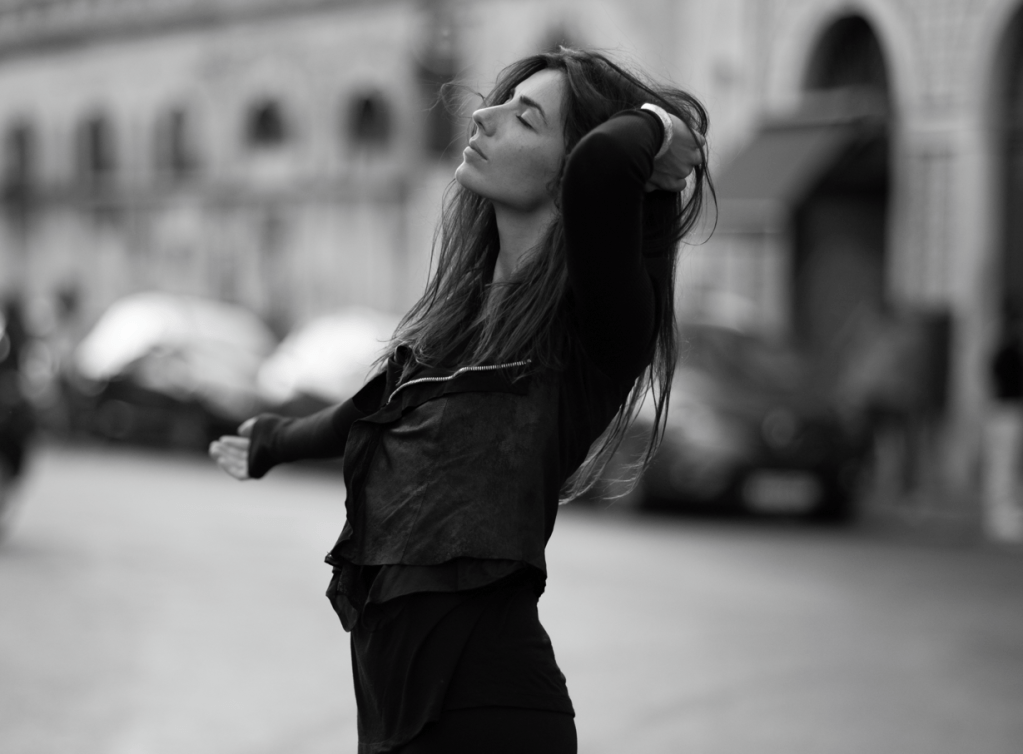
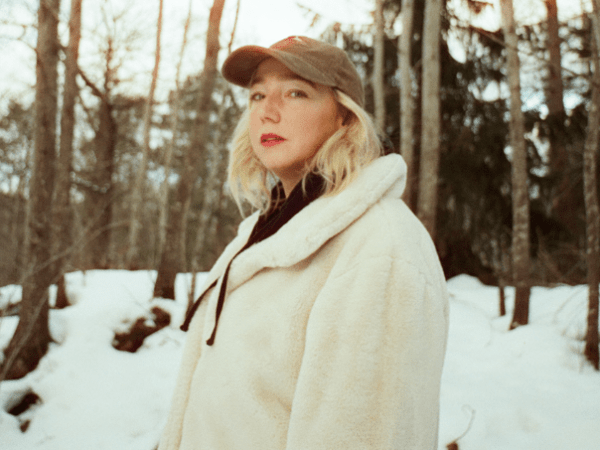
photo by Daryan Dornelles
Marie is now actively working with major artists, including Gyedu-Blay Ambolley, Seyi Shay, KillBeatz, and Kel-P. These collaborations are shaping her new sonic direction — a modern Afro-fusion sound where the traditions of different countries and continents interact with a sense of ease and freshness.
Honestly, Marie Minet stands out as one of the few artists unafraid to move beyond the familiar, merging European and African musical cultures with striking clarity. I was incredibly lucky to speak with her about how such musical unions come to life, her search for identity in sound, and where her path might lead next. In this interview, Marie shares the thoughts and details behind a story that is clearly only just beginning.
Hi Marie! Thanks so much for taking the time to talk with me. Before our interview, I really dove into your debut album, Clair Obscur, and it felt like pure French chanson, but with these beautiful touches of Portuguese and Cape Verdean flavor. Now, listening to the new version of ‘Je Serais Tout Ce Que Tu Veux – the single from the ‘High Life Edition – Acoustic’ – I can’t help but feel like you’re stripping your songs down to their bare essence, almost leaving them “naked” through this acoustic approach. Do you ever get that sense yourself, that you’re exposing both yourself and your music in a new way with these arrangements? And how did you realize that these particular songs were meant for an acoustic makeover?
This idea came after a very inspirational trip to Ghana, where I had reached a new artistic level and a sense of creative freedom. Among other artists, I had the opportunity to meet Joshua Moszi, and we began a musical conversation — his highlife guitar playing met my interpretation of French chanson. I connected deeply to the way he played highlife — the apparent simplicity of the guitar opened up a new creative space for me, where I found the freedom to re-challenge my melodies. Since then, I’ve wanted to fix that moment and this progression in my artistic path by creating an acoustic album. That was my intention.
I looped the acoustic version of ‘Je Serais Tout Ce Que Tu Veux’ three times in a row — and each time I felt you pulled out some hidden tension from the track, that spark that was masked by rhythm in the original. You worked with Joshua Moszi, someone clearly tuned into the West African music scene, and yet the result feels incredibly raw. Minimalist, but rich on the inside. How did your studio dynamic with him play out? Was it a live jam, a spontaneous exploration of atmosphere, or did you walk in with a clear vision and just guide him?
Yes, the idea behind the title of my first album Clair Obscur is all about tension — how we deal with the polarities within us, between dark and light, between intuition and reason — and how, as an artist, I can transform that tension and integrate it into my creative work. That’s what we do as artists — and that’s what I did. I’m happy that this tension remains visible in the acoustic album. As for the recording process, it was very spontaneous and raw — very much like a conversation between Joshua’s highlife guitar and my voice. The apparent simplicity of highlife, the way Joshua played, gave me total creative freedom. It allowed me to reach melodies and ideas I would never have found otherwise. Everything was recorded live, in an extremely simple setup. We recorded in different places — mostly in my apartment — just with a microphone, studio monitors, and a guitar. It wasn’t a studio-style setup at all. The session was intentionally very simple. I wasn’t focused on the result, only on capturing the moment. I wanted this to feel like a live album — like a jam, composed and recorded at the same time. There was intentionally no defined vision of the outcome. I simply wanted to record the musical journey as it happened. That was the spirit of this album.
The lyrics of ‘Clair Obscur’ and ‘High Life Edition’ hit different emotional notes, but in the acoustic ‘Je Serais Tout Ce Que Tu Veux’, the words come alive in this sparse space. Your vocal delivery feels far more intimate. Which lines or images from the original lyrics do you think gained the most emotional weight in the acoustic transition?
Yes. This conversation between the voice and the guitar offered an open canvas to re-challenge and redefine the rhythm and overall structure of the song in a more unexpected way. In this version, the melody flows like a river — finding its way in response to the guitar, like an echo. The spoken words now emerge within the melody in a more fluid way. I think the intimacy of the song also comes from the simplicity of the recording and composing setup. We were in my apartment in Lisbon, working with just the basic devices — no audience, no pressure, no expectations. I wasn’t fully aware — intentionally — that I was recording an album. I was simply present with the song, focused on the moment rather than the outcome. That helped me reach a state of flow and spontaneity.
You could have gone the other way — released something fresher, louder, more layered — but you chose intimacy, space, and softness. Why now? Why did you decide to revisit this track in an acoustic version, and what did you want to express through this new sound that the original didn’t capture?
I think you need a certain level of confidence to expose yourself — to expose your voice with only the presence of a guitar. And it was only after this transformative trip to Ghana that I found that confidence, and a new level of creativity that I don’t think I was ready to express before. That experience helped me feel more complete as an artist, more detached from personal expectations, and more faithful to the artistic journey itself. I wanted to record this moment — to let it stay somehow, to capture this new stage of my artistic path through the acoustic album.
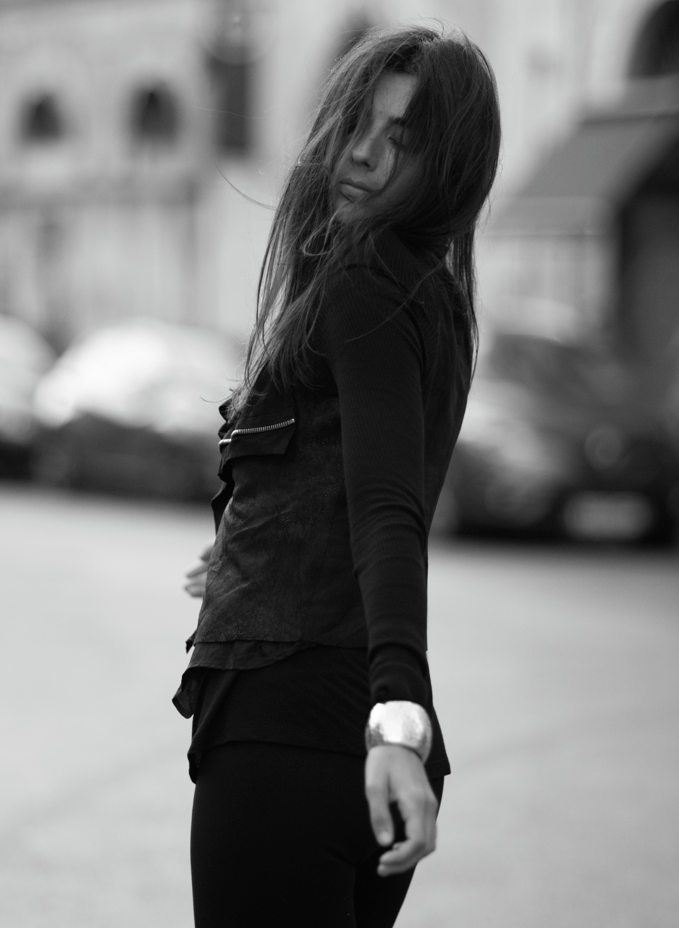
photo by Daryan Dornelles
French chanson is a deep-rooted, traditional genre, yet you confidently blend it with highlife, Afro-fusion, and acoustic textures. Do you feel part of a particular music scene at all? Or do you feel more like a solo traveler, where genres are simply tools you pick up along the way?
My work has always evolved through experimentation, through encounters, and through openness to different musical worlds. Rather than belonging to a defined scene, I’ve followed a path shaped by curiosity and creative freedom. For example, my first album came to life by setting melodies to poems written by my brother — without any formal intention or structure. I tend to approach music without fixed goals, allowing it to take shape naturally. That freedom is essential to me. Of course, I carry strong influences from French chanson and classical music, which have surrounded me for years, but I prefer to let each project define itself rather than fit into a specific category.
‘Clair Obscur’ felt like a diary set to music — personal, atmospheric, almost cinematic. What are you working on now? Any sketches of a new album or EP? And how different do you think it’ll be from your past work?
Yes, that’s a great way to define it — it’s like a diary. It captures a moment in my creative journey. It’s very raw and intimate, with no effects and no production. It’s real, in that sense. Right now, I have two projects. One is to release remixes of my album — it’s the second phase of the project. So there will be the acoustic version and a remix version, produced by a West African producer. They’ll be released together. The other project is more classic — an EP of French chansons, probably just piano and voice — that I might also release very soon.
You’ve been talking more and more about collaborations with artists like Gyedu-Blay Ambolley, Seyi Shay, Kel-P. That’s a serious level, especially within the African music scene. What draws you to these artists? What inspires you in their work?
I’ve been fortunate to have very established West African artists respond positively to my music and be open to collaboration. That has been deeply meaningful to me. What draws me to them is the strength and consistency of their artistic journeys. They’ve each contributed to shaping what West African music is today — with persistence, humility, and integrity. I see them as raw models: grounded, instinctive, and deeply connected to their art. Their work resonates with something essential I try to touch in my own practice.
From what I gather, your time in Ghana was full immersion — street music, parties, markets, studios. What surprised you most about Ghana’s music culture? And more importantly, what felt completely opposite from your European experience?
What surprised me the most was the complete immersion, music is everywhere: in the streets, at parties, in the markets, in the studios. It’s deeply alive and accessible. What felt completely opposite from my European experience was the openness and spontaneity. There’s less of a structured or distant relationship to music. In Ghana, it’s something you live, something that belongs to everyone. That energy changed the way I relate to my own creative process.
Do you have live performances planned for 2025? And if so, are you leaning more toward an intimate acoustic format, or do you want to bring full highlife arrangements to the stage?
Right now, I’m focusing more on creation than on performance. But if I were to bring this album to the stage, I would want to recreate the exact atmosphere of the recording — just guitar and voice. That’s the format I would choose. One of the musicians I respect most once said that music should not be repeated — it should be in constant movement. I really believe in that. This album is like a canvas, and each time I perform it, I want to reinvent it. So it’s an open space, made to be transformed in the moment, again and again.
And to wrap this up — be honest: if someone gave you three months off, no shows, no studio, just a break — what would you do with it? Or would you end up recording an album in some cabin at the edge of the world anyway?
I think I would simply do what I love and do best: keep traveling, and keep opening my work to new encounters and new possibilities. That’s been very enriching for me, and I want to stay on that journey — creating new channels of communication with other artists, staying open to what can emerge from those meetings. I’m very driven by the transformative power of travel — how it shapes my creative journey in ways I can’t always explain, but always feel.
*Promoted content. All information provided is prepared in accordance with editorial standards and is intended to offer useful insights for readers.



 Indie Boulevard Magazine