
Daouda Diabatè is an artist whose music goes far beyond playlists, trends, or streaming numbers. For him, creativity is inseparable from history, tradition, and a responsibility to those who came before. Born in 1974 in Ziguinchor, in the Casamance region of Senegal, he grew up surrounded by people known in Africa as dialy. These are the guardians of history, the keepers of the continent’s memory, for whom music and storytelling are sacred duties.
There’s an old African saying: “Anyone can become a griot — you just have to learn. But not everyone can be a dialy.” Names here are passed down through generations, becoming part of one’s identity and destiny. And the name Diabatè is one of those names — it sounds like a chord tested by time. From guitar virtuoso Sékou Diabaté of Bembeya Jazz, whom the BBC once called “the man with the diamond fingers,” to Daouda himself, these are people who embody legacy. Since the age of 14, Daouda Diabatè knew his path was to carry his family’s traditions forward. At the heart of his work lies the philosophy of abedical, which in Mandinka literally means “to give the best of yourself to the world.” And indeed, his music cannot be confined to a single category or genre — Daouda sings in French, English, Mandinka, Wolof, and Spanish, effortlessly blending African and Western musical traditions with his band Toubamba, which he founded after moving to Spain.
Today he lives in Vielha, in the Aran Valley, where for about eight years he has been creating music that sounds modern while staying true to its roots. We sat down with Daouda Diabatè to talk about how to preserve authenticity in a world full of noise, why heritage is a responsibility, and how to create music that connects even the most distant corners of the world.
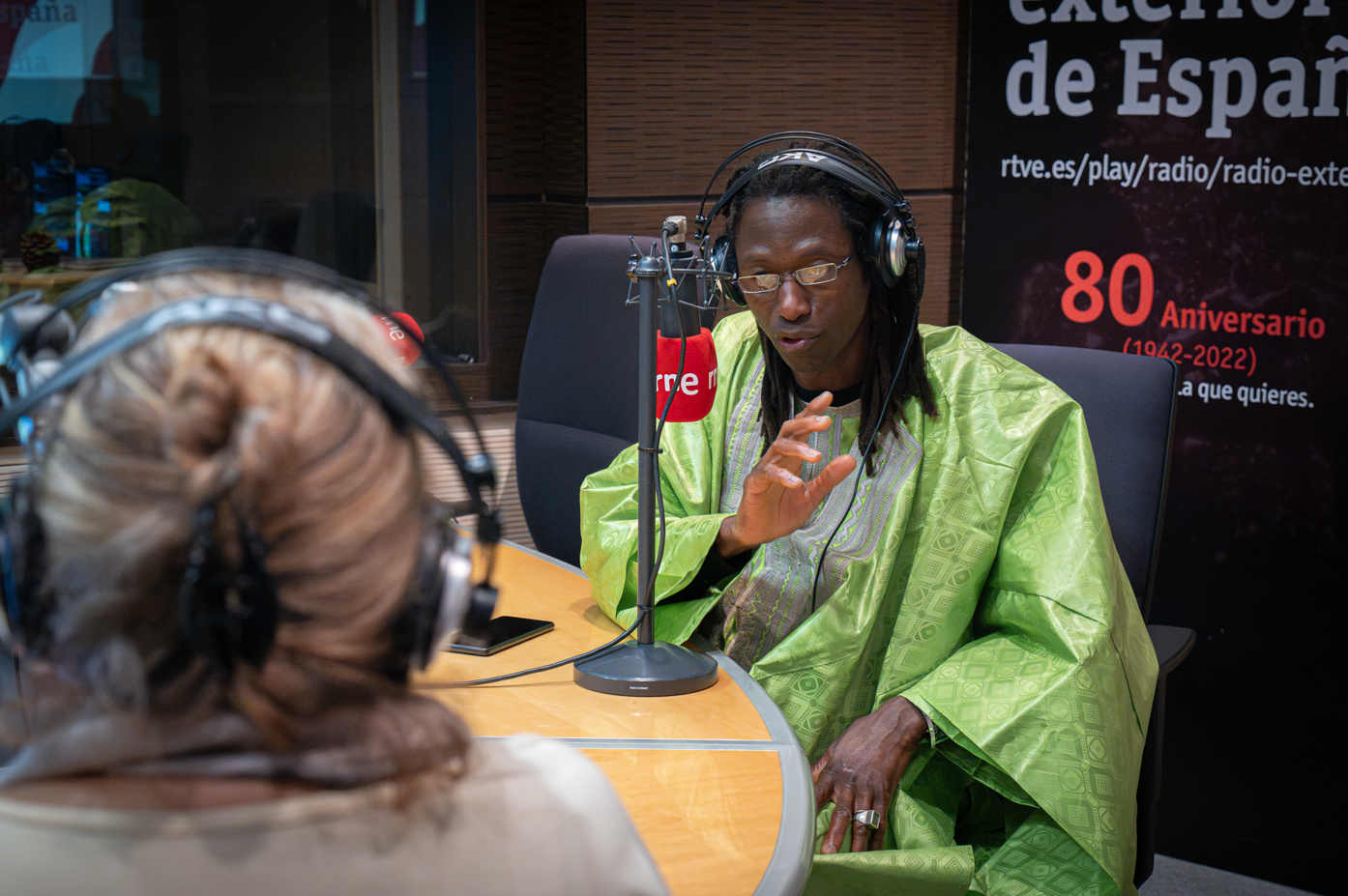
Hi Daouda, thank you for taking the time to talk. You grew up in the Diabaté family, among the Dialy — people born into the role of preserving memory, language, rhythm. In such an environment, music walks alongside life from the very beginning. When did you realize that your songs continue this line and have become part of what is passed down from generation to generation?
Thank you for your invitation and for giving me the opportunity to share my artistic sensibility with the rest of the world. As you so rightly said, we are the memory and library of Africa throughout history. I am a descendant of the Diabates family. The Diabates have perpetuated the art of music for generations, more precisely since the 13th century. And our generation has a duty to share and play our part in this world of cultural mixing and intermingling. I have created a style of music that can connect with the sensitivity of universal cultures, bringing my personal touch to the heritage of African and universal music.
One thing that stayed with me is how you describe your musical direction as “abedical” — the idea of giving the best of yourself to the listener. There are no rigid genre boundaries or language barriers in your albums — everything feels alive, in motion, breaking out of fixed forms. When did you come to understand that this was your mission — to create music that does not hold on to borders, but speaks directly to anyone?
My artistic approach and a universal sensitivity, the orientation on my approach as a musician artist are to bring my touch and my imprint on the creation of a new musical style that I finally called ABBHEDICAL MUSIC which means in my dialect, swearing to give the best of myself to the world.
Cultural exchange runs through your work constantly. You live in Spain, write music in several languages, and collaborate with Spanish musicians in Toubamba. People often say music is a universal language, but what have ‘you‘ discovered in working with musicians from a different country, with a completely different cultural background?
Yes, indeed, I work with Spanish musicians. I’ve also formed two music groups in Spain, all of which is due to the universality of my vision and artistic approach. I’ve worked in the past with Belgian musicians. A partnership agreement was signed between the Belgian and Senegalese governments on intercultural mediation. We held concerts for street children and released an album called Intercultural Mediation, which was later released in Belgium.
In one interview, you quoted the saying: “To the son of an elephant, you must wish for more than just a heavy weight.” It fits. Especially in your case — the Diabaté name carries expectation. It is known, it is awaited, and behind it stands history, music, duty. You’ve said you felt this responsibility from an early age — to preserve and carry on what your lineage has passed down. How do you feel about that now? What goes on inside when you realize you were born with an obligation to everything your name represents?
I think the legacy of Dialysis is a very significant one. I admire the great works of aw grandparents did; they left us great works. It’s up to aw generation to bring and share this universal sensitivity that is music and communicate with the rest of the world.
The album ‘Tama Silo’ sounds like the journey of a traveler told through music — both contemporary and rooted in African tradition. It’s your fourth record, and perhaps the boldest in terms of experimentation. What discoveries did you make musically during its creation?
The album tama silo, as you have so well written, it is as if you are speaking my native language, tama silo in my native language mandinka means the path of life, it is an album that travels in time and space, for this reason I brought together musicians from different horizons, and of different nationalities, Cuban, Spanish, Argentinian, African, recorded between Europe and Africa.
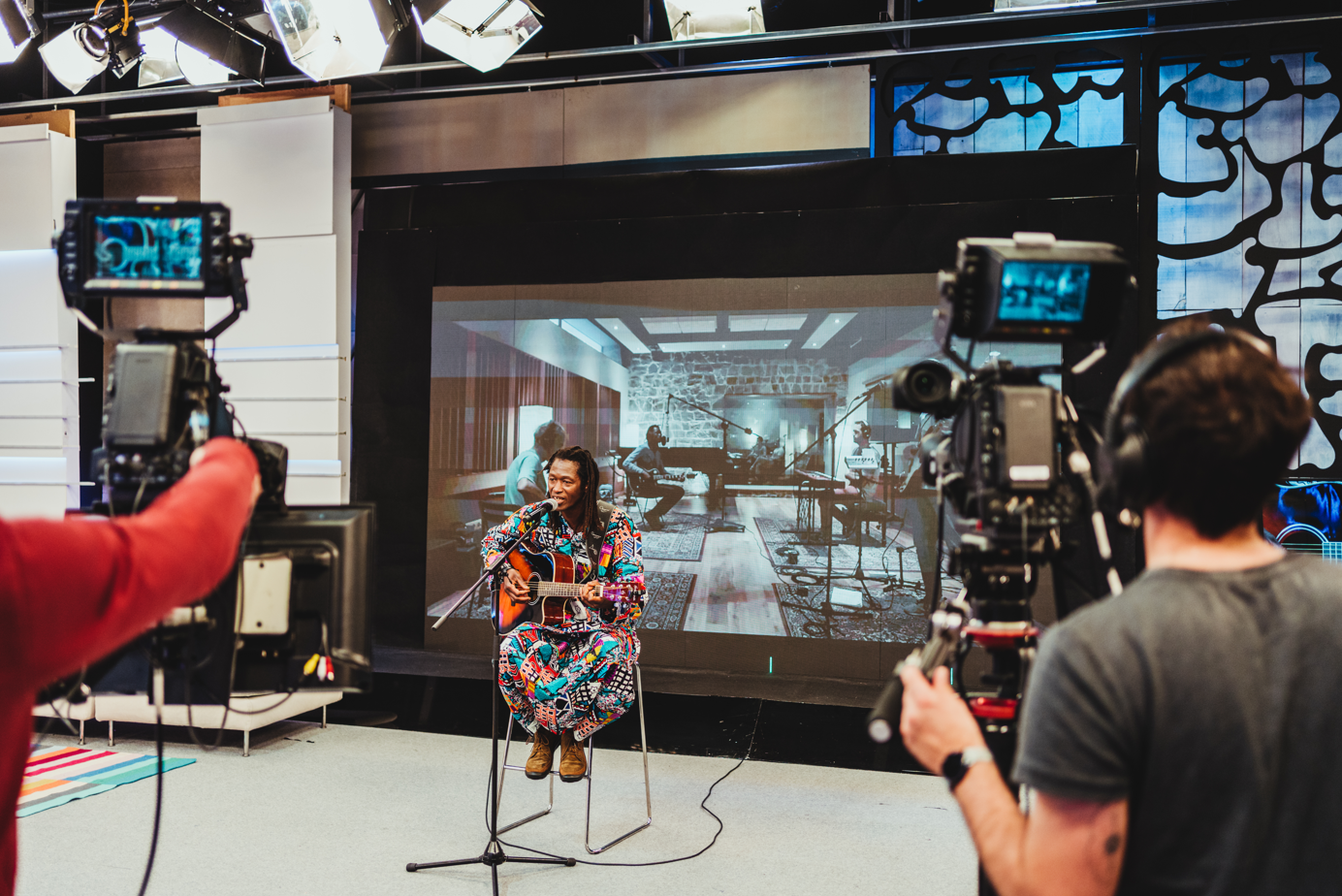
Your debut album ‘A New Day (Un Jour Nouveau)’ was recorded in several languages. That’s often a risky move for a first release, since it can be disorienting for new listeners. But you chose that path. Why was it so important to you that your debut immediately showcase the full scope of your musical and cultural perspective?
My first album was called Intercultural Mediation in collaboration with the Belgian government. A New Day is my second album. I chose to sing in my African language, and also composed songs in French, which was the album producer’s idea, so I could also communicate with the French-speaking world. But I’ve always sing in many different languages, so when the producer suggested it, it was very easy for me.
When you talk about your project ‘Window of Smile’, it feels like music, for you, goes beyond art and becomes a form of public service. In your view, what is the true power of music that allows it to bring people together and inspire them?
The Windows of Smile project, as a solidarity and humanitarian organization, was a childhood dream that we are committed to making a reality. We are making this dream a reality. I see my grandfather bringing joy to people through his music, and also bringing happiness to the disadvantaged by helping them socially. And every time I move forward in my life, I contribute by giving the joy of living to people who are more in difficulty through my humanitarian organization, Windows of Smile. We dig wells in areas of Africa that have difficulty accessing drinking water, and we also take action in terms of education, health care with medicines, and also a thief, which many people in Africa don’t dare face, or worthy families who struggle to make ends meet, who cannot cry for help, who suffer in silence.
Listening to Toubamba, it feels like a space where different musical traditions meet and genuinely work together. African and Spanish roots come through clearly, without clashing — every member keeps their voice, yet you create something new as a group. In those situations, how do you maintain each culture’s identity without one overshadowing the other? How do you and your bandmates find that point of harmony where everything holds together?
The concept of Toubamba as a music group is to give each musician the opportunity to express themselves based on the idea that music is a universal language that has no color, race, or ethics. Music is the universal soul. You have to know the right dose to cross borders and social barriers. The melodies captivate the soul, without asking permission or requiring a visa to enter a country or region.
Your journey from Senegal to Vielha in Spain has taken you across different worlds, and with them, different ways of understanding music. Sometimes, moving to a new place changes even how you see your own roots. Has living in Spain shifted your perspective on music and creativity, or has it made you feel your African identity even more strongly?
In my case, I live between Europe and Africa, and I spend 6 months a year on each of these continents. This is why I don’t lose my roots. I also have a group of musicians in Africa with them I recorded my 3 live studio albums. I continue to work with the same musicians during the 6 months of the year that I spend in Africa. With this group, we have a recording studio managed by my pianist.
You’ve performed at many festivals. Was there ever a moment on stage — maybe in Spain, maybe back in Senegal — when everything just clicked? The weather, the sound, the energy, the crowd. One of those nights where it all came together. What’s the most joyful or unexpected performance you’ve had that really stuck with you?
You know, I play different styles of music. I sometimes play alone on stage with my guitar, and I also sometimes play with two or three musicians in acoustic form. I also sometimes play with my entire musical ensemble, eight or ten musicians, depending on the demand of the festivals. The concert that left the biggest impression on me was at the beginning of my professional career, the one I performed in collaboration with the Belgian government, a solidarity concert for street children.
*Promoted content. All information provided is prepared in accordance with editorial standards and is intended to offer useful insights for readers.



 Indie Boulevard Magazine