
Golden hour spills across a dusty Nashville attic while Miles Jenson coaxes life from a scarred upright piano. Sweat beads, wood creaks, sunlight licks brass strings. Every hammer strike recalls train-car childhoods, jazz-club midnights, cross-country bus rides, conference-room promises, rooftop soul-searching. He collects melodies the way others collect photographs — pieces of who he was, who he’s becoming.
That stockpile erupts on ‘Sunshine Goldmine’, a three-chapter epic dressed as an EP, sculpted beside Grammy-winning alchemists King Garbage. Stax grit blends with Radiohead ambience, and a Fiona Apple-grade sting winds through deep-pocket grooves. Jenson sings calmly about difficult choices, about how to change without losing yourself next to someone else. The instruments stay restrained: the guitar freezes mid-note, cymbals shimmer with anxious breath. Everything rests on quiet tension. He built his debut EP from memories, mistakes, and moments of reflection — pressed into the shape of a record. We spoke with him about how music became a way to survive, why he walked away from a major label, and what truly lies beneath the gentle sound of Sunshine Goldmine.
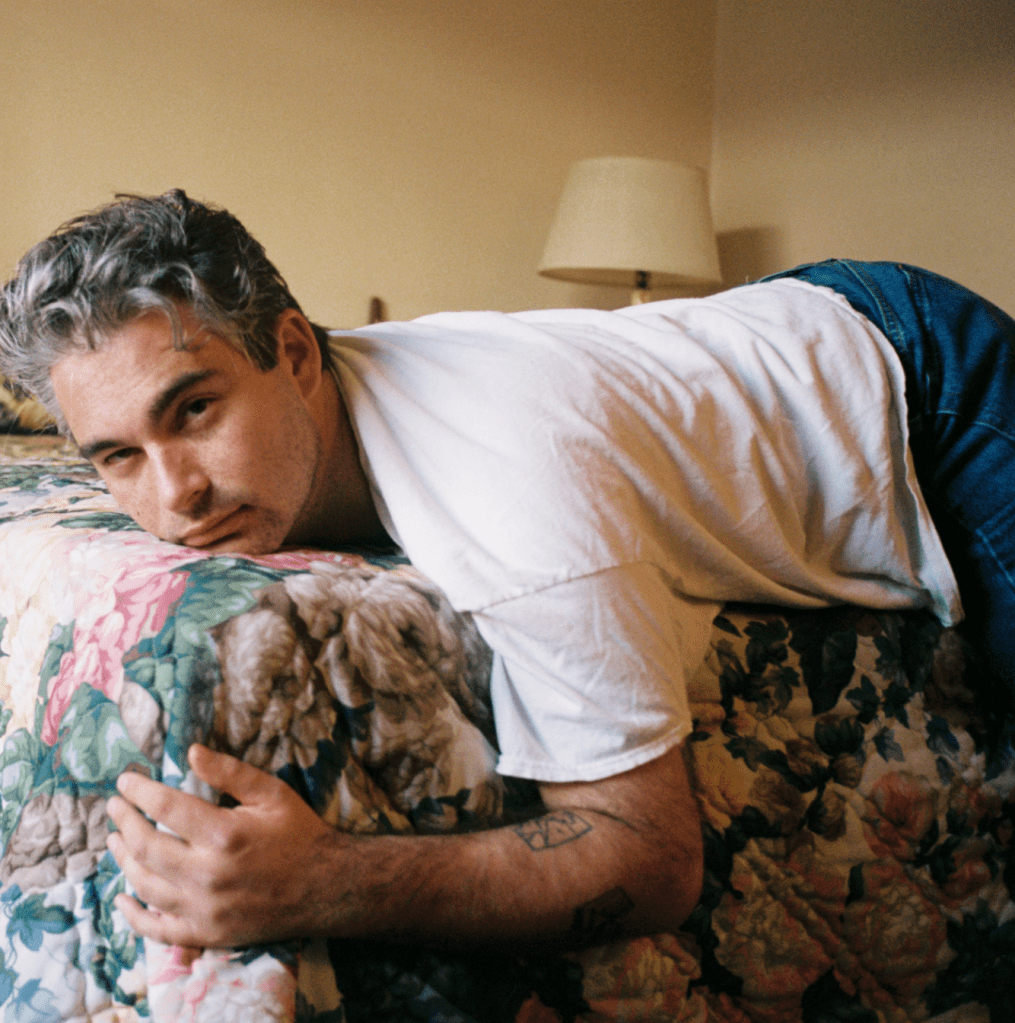
photo by Tommy Petroni
Hey Miles, thanks for taking the time — been looking forward to this. You know, when listening to your EP, it’s clear how much you’ve lived through, thought through, tried and scrapped before these songs finally came to life. And it’s not even about the sound — it’s the confidence in how you say things now, things that probably wouldn’t have made it into your lyrics before. What was the biggest barrier you had to break through to start writing this openly, without looking over your shoulder at what others might expect?
Well, thank you. Both Sunshine Goldmine and Turn On A Dime are songs I wrote almost ten years ago and placed in a proverbial “vault.” Country Club was a newer song. In between writing these songs was this big period of commercial pressure, and throughout that period, I was told that my songs were too literary, too abstract, and not relatable. I knew that wasn’t true, but I also frankly felt excluded by more indie and DIY scenes. I held a damned if I do, damned if I don’t paradigm in my head that kept me frozen for a long time. Most of that was my own fear projecting in front of me. So, my decision to present these songs as a body of work was rooted in a faith that uncompromising expression resonates with people, and the biggest barrier was in letting go of the outcome.
What really hit me was how effortlessly you move between genres. And it never feels like eclecticism for its own sake, or some attempt to please everyone. It feels like a natural pull in different directions — something internal.Was that approach a conscious decision after your label experience, where they clearly expected a certain mold from you? Or has that always been part of your musical language, and now you’re finally letting it show?
It’s always been a part of how I make music, and for me, the content of the lyrics and the methodology of how I navigate these subjects is consistent throughout the EP. What may seem somewhat varied in genre is underpinned by common themes. Its kind of like different chapters in a novel. The novel has its central motifs and the chapters may pivot to different worlds. Sonically, I focus on crafting progressions and melodies that accurately personify my internal landscape, and that sometimes means borrowing certain genre-specific dynamics.
“Turn On A Dime” stands apart in mood. It’s softer, quieter, but hits harder because of it — especially in the context of the rest of the record. Did you already know this song would become the emotional core of the EP, or did its importance reveal itself during the recording process?
I originally reached out to Vic Dimotsis (King Garbadge,) to produce Turn On A Dime, and that went so well that I shared Sunshine Goldmine and Country Club with him. He was the one that suggested that we present the songs together as an EP. So, no, I didn’t know it would be the core, it revealed itself as such as we built the EP together.
The way the three songs are structured — it’s like a miniature three-act drama. A lot of debut releases feel rushed, like the artist’s scared they’ll only get one shot to say everything. Yours is the opposite: three songs, no fat. Why three and not eight? Was it about restraint, or were you aiming to leave listeners with more questions than answers?
I believed that presenting something compact and punchy was better than quantity for quantities’ sake. To me, each song is a complete sentence, and I felt like I was making clear stances and introductions of who I am as an artist. I feel like muddying the waters with additional songs would’ve derailed the statement I was trying to make.
“Country Club” doesn’t pull any punches. You didn’t spare yourself, and you definitely didn’t spare the listener. That track feels designed to rattle people — make them think, maybe even piss them off. Did you ever wonder if you were pushing too hard? Or was the point from the start to be unmissable, no matter how uncomfortable it got?
I wrote very specifically about where I grew up, and I did feel some hesitation in that it could be potentially hurtful to people who felt I was writing about them, but I knew that writing with a razor sharp and biting honesty was the only way I wanted to address classism and racism inherent to the variance in criminalization of drug use between suburban and urban communities. I knew that the subject matter was provocative, but it was kind of like-if you’re going to say it, say it with your whole chest.
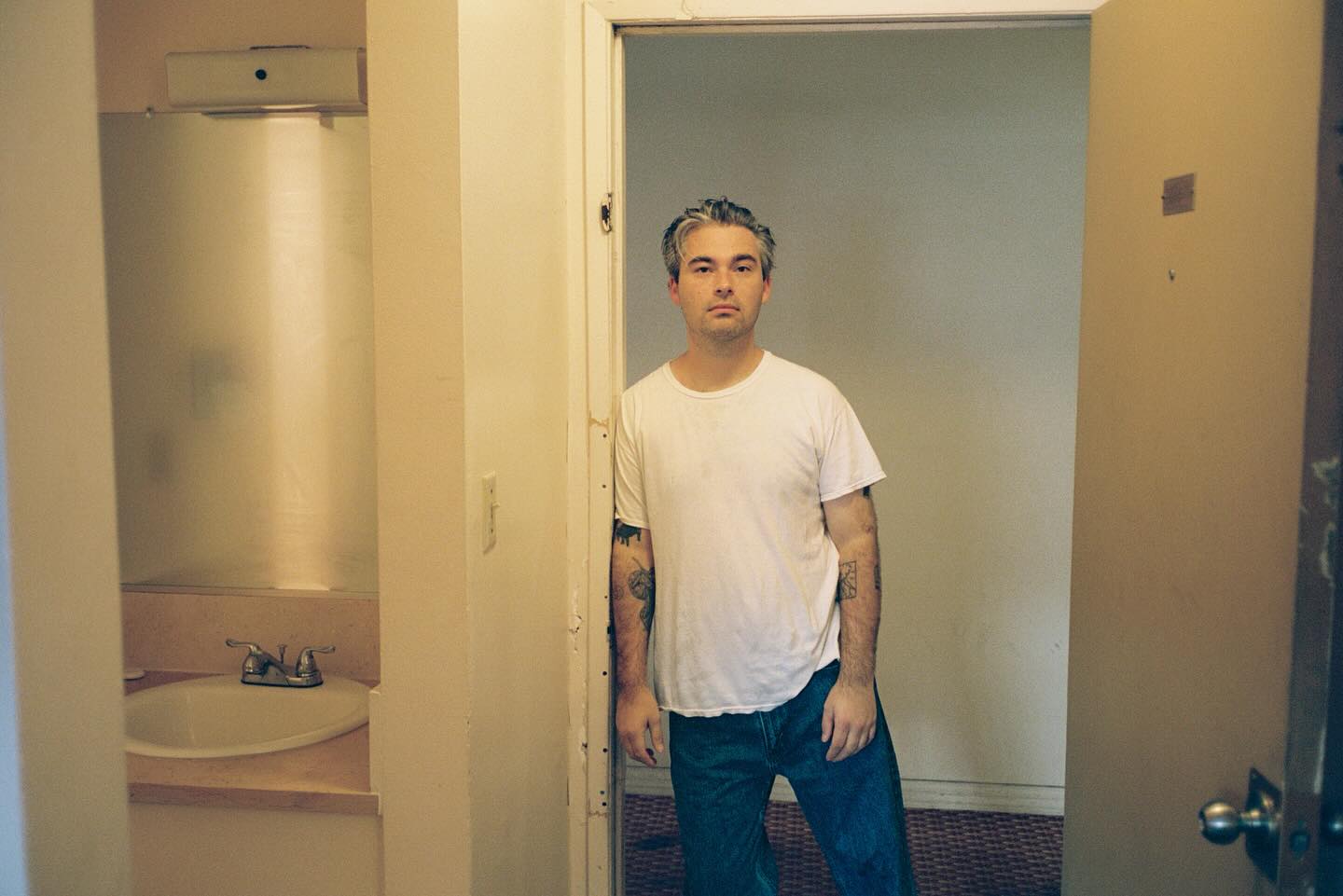
photo by Tommy Petroni
The production on the EP is incredibly physical. Some parts feel warm and lived-in, others are rough, like you left the scratches in on purpose.How did you and King Garbage build that sound? Were there moments when you wanted more air and he wanted more grit — or the other way around? Who ended up pushing who, and how did you know when it finally sounded real?
KG definitely pushed me. I had very specific ideas about production and he took what I wanted, honored it, and then elevated it. He was able to match and surpass the grit of my lyrics and chord progressions with his production genius. He introduced worlds within the songs that I hadn’t yet heard. We had a really clear dialogue about where we hoped each song would go, and once we reached that place, we checked in with one another for mutual agreement about arriving there. I think our instincts were largely in lock step and I think we knew the songs were done when we were both satiated. It’s kind of like a meal that “hits the spot.”
“Sunshine Goldmine” dives into some very murky territory — drugs, denial, self-deception. But there’s no moralizing. How important is it to you to avoid that tone? Do you think that kind of honesty hits harder when it comes without the safety net of judgment?
It’s complicated because we all have our judgements to some degree, and their impressions on our memories or experiences contribute to our shared reality. I think I try to approach honesty in my writing in a way that doesn’t deny judgement’s presence through conscious observation. If I’m able to see a certain perception clearly I can write in a way that isn’t solely informed by that narrow view. Sunshine Goldmine is in a way a sharp critique of the environment I found myself in growing up, but I think if it was solely born out of judgement it would feel trite. I think honesty is most powerful when it doesn’t exclude bias and instead acknowledges its implications.
You’ve already been through the industry machine — major deals, inflated promises, creative control slipping away — and then you flipped the table and chose freedom. But in music, freedom without money often doesn’t mean much. How do you see all that now: is it even possible to be an artist with a spine *and* make a living, or is the whole system designed for people who know how to bend?
I think most of the time its gamified for those of us who know how to bend. There are various reward systems that get activated when you participate in the whims of the machine. That said, I have a hunch that if you build a world of your own that is so undeniably intriguing, that you’ll find that it will in turn carry you through. How long that takes, and what that looks like in the end, are things that many artists have a hard time contending with. I personally need to let go of outcomes and trust that through continually honoring myself that I will get where I’m supposed to go. On a macro level, I think we can all feel the veil bursting and people are craving art that is more conscious and raw, and I think professional artists that make that kind of art are going to find financial security.
There’s always a moment — one meeting, one line in a contract, one conversation — where you just *know*: this isn’t gonna work. What was that moment for you? The one that told you it was time to walk, even if you haven’t sung about it yet?
After shelving me for two years, the label I was with assembled a group of really talented musicians and producers to make an EP. I had no creative control but was completely overwhelmed and struggled to advocate for myself. I can appreciate the songs while also recognizing that they simply weren’t mine to sing or to embody. When the EP was done, we started rehearsing and putting bells and whistles on the performances that frankly made my skin crawl. It came to a point where I had to get honest because it was killing me. I told the label how I felt, and after several uncomfortable conversations, they presented me with another option to make my own music but to do it under a different production team. This production team, while different in personnel, was an expression of the same type of machine and music that I objected to in the first place. I knew then that I was trying to reason with an entity that wasn’t willing nor really even supposed to accommodate what I was going for. It was my fault. I let a scarcity complex rush me into a business relationship. It was at that moment-when I was presented with a second option that was very much an iteration of the first-that I knew I had to walk away.
The EP feels sharp and deliberate — like you tested the ground before stepping forward. There’s a sense now of who you are and what direction you’re taking.So what’s next? Shows? Writing? Or are you already thinking of breaking everything down and going somewhere completely unexpected?
King Garbage and I are working on my first debut album! And I am actively booking shows. I just want to keep going and build off of the momentum that’s been created. I feel like I’m not allowed to stop-and that’s a good thing.
*Promoted content. All information provided is prepared in accordance with editorial standards and is intended to offer useful insights for readers.







 Indie Boulevard Magazine