
Let’s talk about what happens when you take self-awareness, literary precision, and just the right amount of absurdity, lock them in a New York basement apartment with a Korg, a bottle of white wine, and a copy of The Book of Disquiet, and ask them to write you a record.
You get Jokes for Angels — the third full-length release from Brian Michael Henry, and probably the closest thing we have this year to an album that’s self-deprecating without being hollow, emotional without being obvious, and theatrical without breaking into full musical theater.
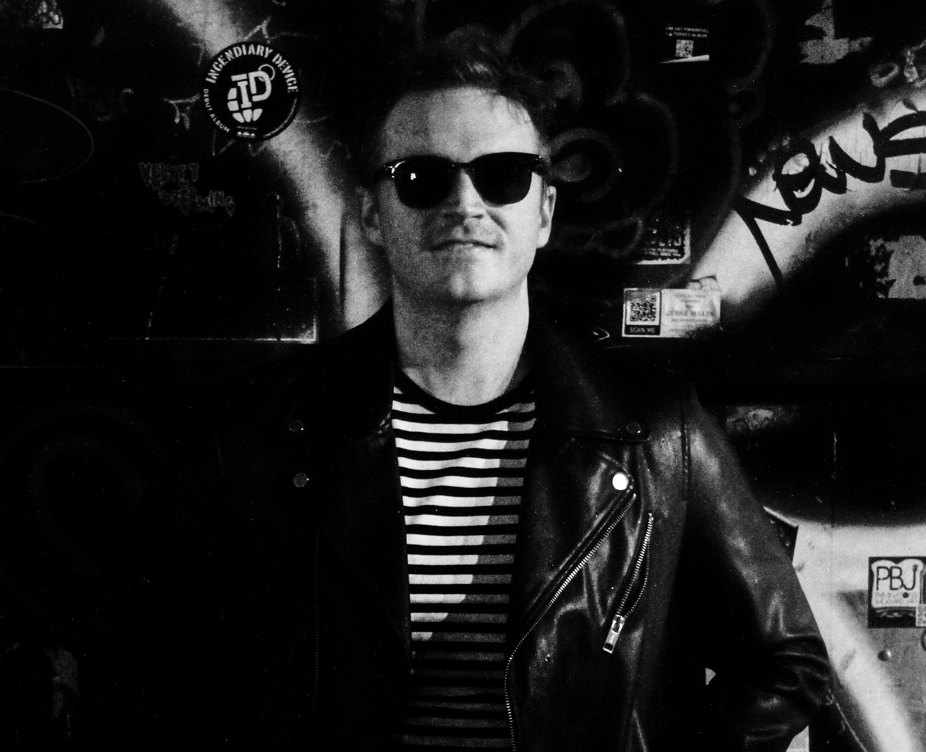
photo by Alice Teeple
Henry has always walked this line — somewhere between sardonic and sacred — but on Jokes for Angels, that balancing act sharpens into something far more compelling. Jokes for Angels holds its shape through contradiction. The tension is arranged, measured out across every track like a quiet pressure system. Every element exists in conflict, but nothing breaks — it just bends, curves, adapts.
You’re entering a world that knows it’s being built in front of you. There’s no illusion of some universal truth waiting behind the curtain. Instead, what Henry gives us is awareness. But here’s the kicker: that doesn’t make it any less sincere. If anything, the joke lands harder because it’s coming from someone who has felt it first. This is anti-confessional, sure — but only in the sense that it refuses to dramatize or romanticize. There’s still blood in the writing. It just doesn’t beg for your applause.
Structurally, the album flows like a monologue — not a polished TED Talk, but the kind of raw, late-night unpacking that happens when you’re finally too tired to lie to yourself. The tone keeps shifting: snide, then soft, then nihilistic, then sweet. But rather than feeling inconsistent, it feels true. Henry’s strength lies in letting contradiction breathe.
The album holds together as a whole and functions as a gesture, a monolith. But when you stumble upon “Family Style,” you just have to stop. This is one of those tracks that opens a door and says: “come in, we’ve got a chainsaw, a baritone, and theater.” It’s all here: a structure you can’t predict; a mood that resembles a musical horror-burlesque; and a vocal that sounds as if Tom Waits were recording in an old Broadway theater after two bottles of whiskey. Then you read that it was inspired by The Texas Chainsaw Massacre, and everything falls into place. Brian suggests imagining Leatherface at a family dinner… with his boyfriend — and that definitely adds to the experience.
Then comes “Octavia.” You drop straight into shadow. This is gothic, the real kind — slow-burning, distorted, stretched into an otherworldly vocal choir. Henry references the tragic legend of Octavia Hatcher. The track swings like a pendulum between dark rock and flashes of passion, pulled out of the darkness by a voice that sings, prays, and cries all at once.

photo by Alice Teeple
And then “Transformers” arrives, and this is pure darkness. The synths start breathing. It’s almost darkwave, but with a human face — the vocals keep it afloat, prevent the track from going lifeless. The guitars give you hope.
The title track “Jokes for Angels” acts as a turning point. Like in a film — the moment everything freezes before the angle shifts. It really splits the album in two: before and after. Before — anxiety, darkness, closed space. After — glimmers, movement, sometimes even humor. Here, the signature blend is at its clearest: synths, rock, baritone, lyrics you can quote, and a sound deliberately built to defy templates.
“Good Dad” is an unexpected shift. Almost like a breath of fresh air. The keys hook you. The rhythm drives you. Brian Michael Henry’s vocal still has that same recognizable density, but now it sounds lighter, softer.
The finale is the strongest. “Now You’re On Your Own” is a road ballad, but stripped of all the usual trappings. There’s country, some light electronics, and piano. And then, just when you think it’s over, “Waiting – Post-Punk Remix” kicks in, and the album flares up again. Same motifs, recast. Synths, rock, exposed wires. Still vivid, but now with a post-punk dryness and edge. A new shape. A new ending.
And if Brian Michael Henry’s previous works were more… let’s say, academic, Jokes for Angels feels like breaking free of those chains. It’s still devilishly intellectual, sarcastic, philosophical — but it sounds freer. Less looking over the shoulder. Less desire to fit some indie composition ideal. There are strange sonic decisions, non-obvious transitions, a total disregard for hit potential — and yet it works. Because it’s an honest album. You listen and you can tell the artist cares, yes, he’s fighting for every image and note in this record.
The album emerges from its veil with an anti-confessional stance — ironically distant, maybe even slightly antagonistic toward the listener, as if saying: “No, I’m not going to tell you my secrets, don’t be naive.” And the paradox is that the deeper you dive into this material, the more you realize — this exaggerated detachment is the confession. He’s not baring his soul, yet somehow manages to turn himself inside out anyway. Not in tears and snot, but in the form of observations, crooked wit, and lyrics that sound like monologues from a tired stand-up comic on the edge of a breakdown.
A story about a man who saw too much, felt too weird, and still managed to make something beautiful out of it. It won’t change your life. But it might make it feel a little more bearable for forty minutes. And honestly, that’s more than most albums dare to offer.
*Promoted content. All information provided is prepared in accordance with editorial standards and is intended to offer useful insights for readers.









 Indie Boulevard Magazine