
There’s a story here, and it doesn’t begin in a studio, or on a stage, or with a press release. It starts with a piano. A small upright spinet, abandoned under a tarp in the soggy backyard of a Brisbane house, its wood swollen with humidity, its keys forgotten by the man who left it to the mercy of summer storms.
The instrument looked like a lost cause. But then something happened—Malindi Morris saw the shape of something salvageable, a form waiting to be filled again. She bargained the price up, loaded it into the back of a Subaru Forester with two other believers, and gave it a second life. That act of rescue, absurd and beautiful, sets the tone for Pastorale, the new album from East of West with guest composer-pianist Romano Crivici. This is music made by people who listen closely to the world, even when it’s raining on them.
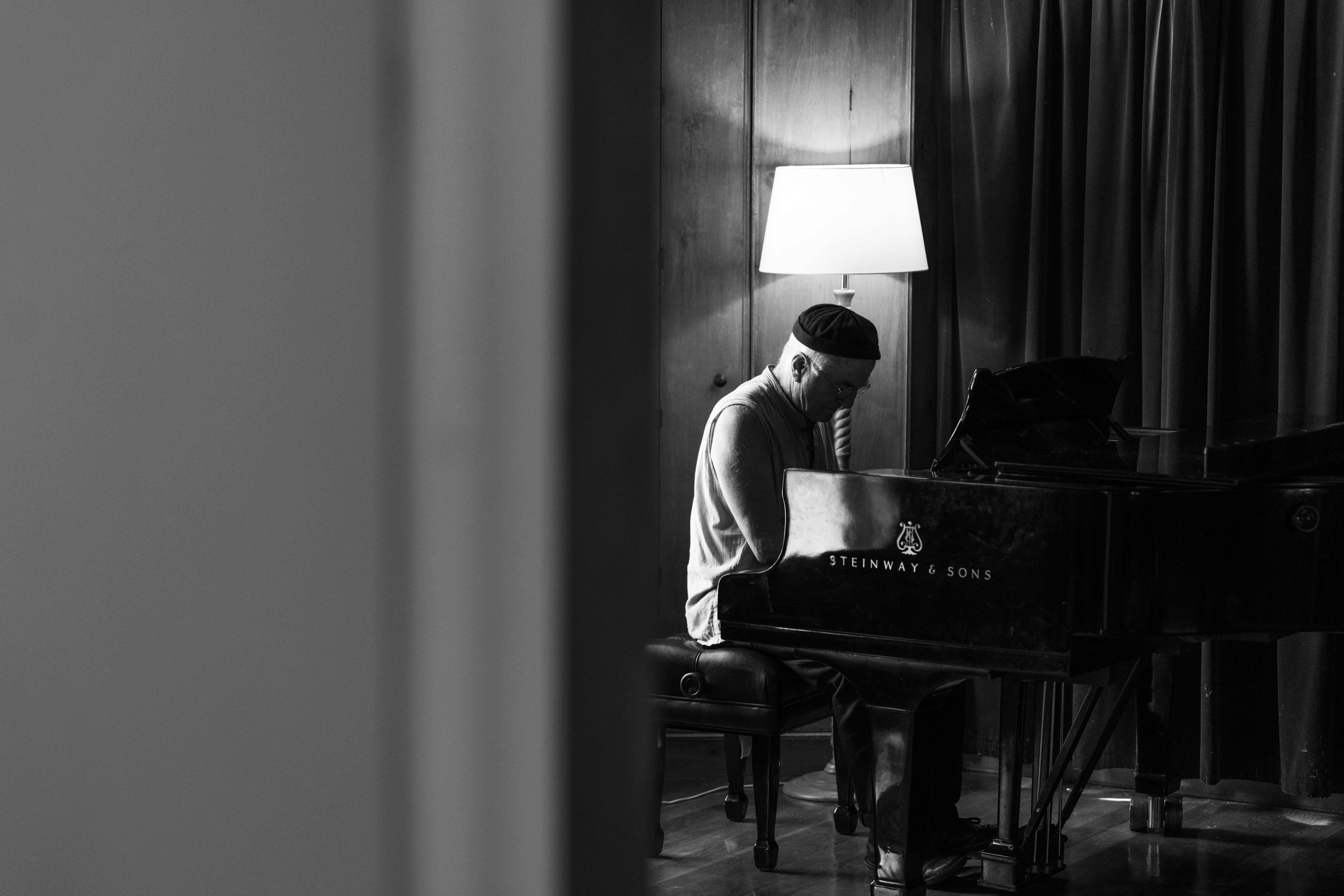
East of West are not new to this kind of work. Over the last seven years, they’ve become fluent in their own strange dialect of instrumental music—a blend of Balkan time signatures, Mediterranean colors, jazz sensibilities, and classical restraint. Their earlier album Moving Home already earned ARIA and Australian Folk Music Award nominations, and it played like a well-considered internal monologue set to melody. But Pastorale moves in a different direction. It’s looser, more alive, grounded in real moments. Less a performance, more a series of unfolding conversations in a language with no grammar—only pulse and breath and intuition.
The magic of Pastorale lies in how effortlessly it merges improvisation with carefully structured melodies and complex rhythms. The musicians—Gajić on double bass, Philip Griffin on oud, and Malindi Morris on percussion—share an intuitive understanding forged over seven years of collaboration. It’s audible in every track, a sophisticated dialogue between instruments, each part balanced, complementary, and necessary. Crivici’s piano is the new voice in this conversation, elegantly threading through each piece like a storyteller who can say everything without uttering a single word.
Recorded live in Brisbane by sound engineer Siiri Metsar, Pastorale has a striking clarity that enhances the album’s intimacy. Each track unfolds naturally, from richly textured uptempo sections to sparse moments of quiet beauty, painting intricate soundscapes that linger vividly. This is music you feel as much as hear, drawing you into a sensory experience reminiscent of cinema, filled with evocative atmospheres and emotional resonance.
A track like Quiet Days in West End nails that whole “film score for real life” vibe. Gajić pulled inspiration straight from his window—mango trees, backyard fences, laundry flapping on a Hills Hoist—and you can hear it in the way the melody just breathes. It’s soft, warm, and laced with a bit of Balkan DNA without making a big deal out of it. Then the album flips the script with something like Small Eyes, Griffin’s 11/8 tribute to an Australian snake that somehow ends up feeling both intricate and totally inviting. It’s complex, but never cold. The whole thing walks this line between brainy and beautiful—you follow along because it feels right, even when it’s doing something completely wild.
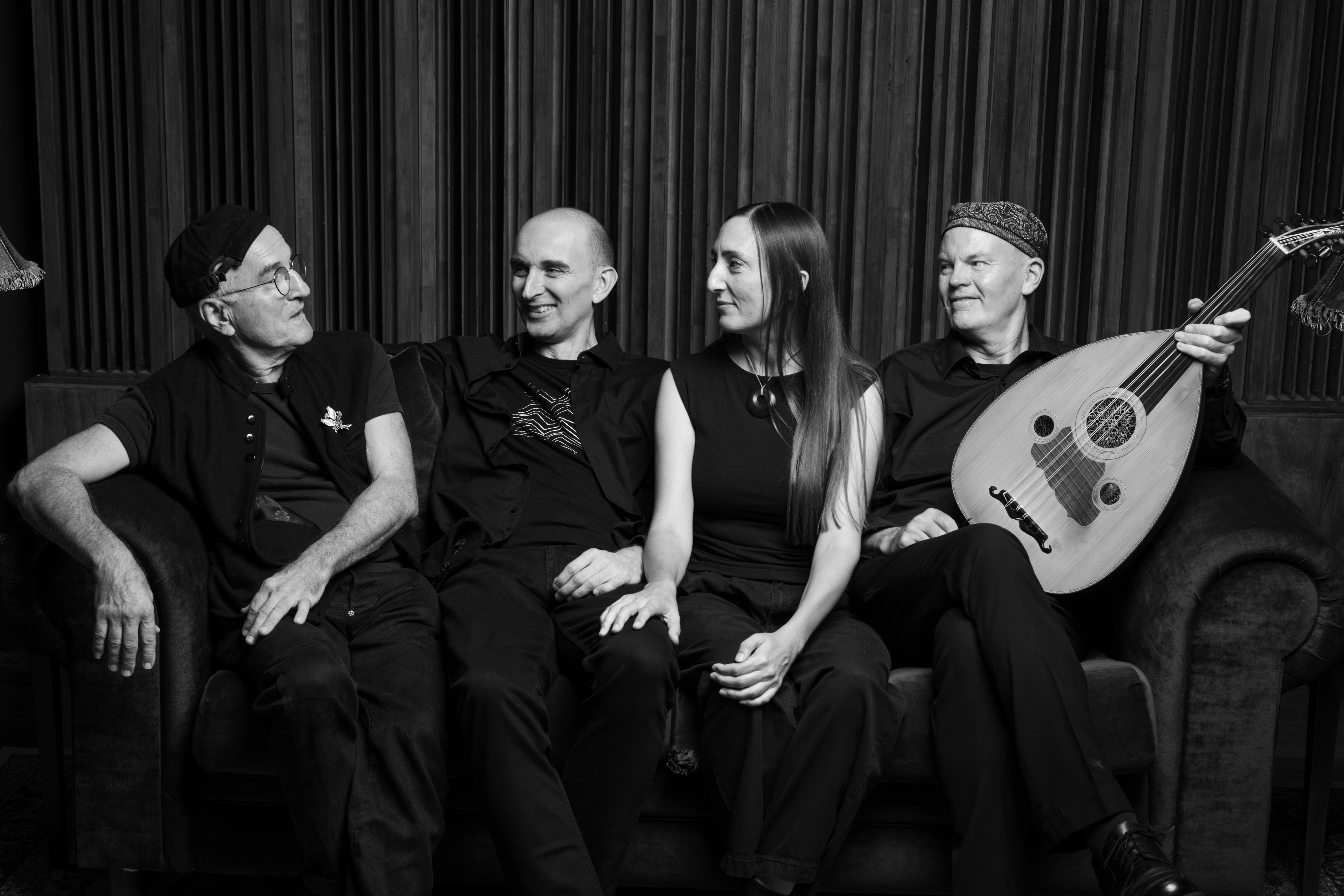
The musicianship on display here is remarkable, yet nothing ever feels purely technical. Rather, virtuosity becomes a language of expression. Gajić’s approach to composition, beginning from fragments of daily experience, ensures that each track feels deeply personal yet universally resonant. When Crivici’s piano meets the trio’s established dynamic, the result is something far more profound than mere addition. His presence reshapes their sound subtly but unmistakably, expanding its emotional and sonic palette.
It’s fitting, then, that the single ‘Where is Your Accent From’ was captured on video during the recording sessions. Watching it, you get an intimate glimpse of masterful artists deeply immersed in creation, their interplay so effortless it could deceive you into thinking improvisation is easy. It isn’t, of course; it’s simply that East of West and Crivici are exceptionally good at it. They make the delicate dance between improvisation and structure look completely natural.
The album’s title might suggest something pastoral, idyllic, removed from chaos. It reflects it, meditates on it, responds to it with curiosity instead of judgment. This is what happens when musicians stop trying to impress each other and instead focus on making space. If there’s one unifying thread here, it’s generosity. In the playing. In the writing. In the choice to collaborate. Even in the strange, almost mythic story of the upright piano that helped give birth to these compositions — a relic rescued from a muddy backyard, lovingly brought back to life.
For fans of Tãu Ensemble, Anouar Brahem, or Dhafer Youssef, sure. But comparisons only go so far. East of West are carving out their own corner in the instrumental world—one where improvisation and memory, place and pulse, coexist without competition.
The official launch on August 15 at Queensland’s Multicultural Centre brings East of West and Romano Crivici together on stage, and if the album’s anything to go by, the energy’s going to translate effortlessly. And having Linsey Pollak open the night? Couldn’t be more fitting. It’s an inspired choice; he, like East of West, builds his music on exploration, instinct, and emotion—less about technique, more about telling something real.
In the end, Pastorale leaves you feeling enriched, as though you’ve just witnessed a private conversation between gifted artists—one spoken through music rather than words, yet understood completely by the heart. It earns its place slowly. You may start listening out of curiosity, but you’ll stay because it starts to feel like somewhere you know — even if you’ve never been. And like the best kinds of music, it leaves you just a little different than it found you.
*Promoted content. All information provided is prepared in accordance with editorial standards and is intended to offer useful insights for readers.






 Indie Boulevard Magazine