
Today, we’re sitting down with Leepeck, a singer-songwriter from Warsaw who is steadily carving out his place in the world of folk and Americana. He was recently featured in Rolling Stone’s “10 Artists You Should Know” and also took home a Super Jedynka Award, so attention around his music is growing, and his name is starting to resonate on a wider scale.
Catching Leepeck for an interview proved to be quite the challenge—he’s constantly on the move, hopping between secluded mountain cabins, iconic New York clubs like Berlin in the East Village, and stages across Europe. Coordinating a time to talk felt almost like trying to catch smoke with your bare hands, but we made it happen, and the conversation was well worth it. In this interview, we discuss his upcoming album Where The Wild Things Drown, recorded live in a mountain cabin. It’s a raw, intimate project set to release in October. We also break down his latest single, ‘Sweet Valentine,‘ which has already started hitting the airwaves, and his breakthrough track “Speed of Light.‘ We talk about Leepeck’s collaboration with New York-based Earth Program Music and explore what it feels like to transition from intimate, cozy venues to a potentially much larger audience. The conversation dives deep into his creative process, the realities of the music industry, and how to stay true to oneself as public attention grows. So stick around—this is going to be a solid conversation about artistry, authenticity, and where folk music is heading in 2025.
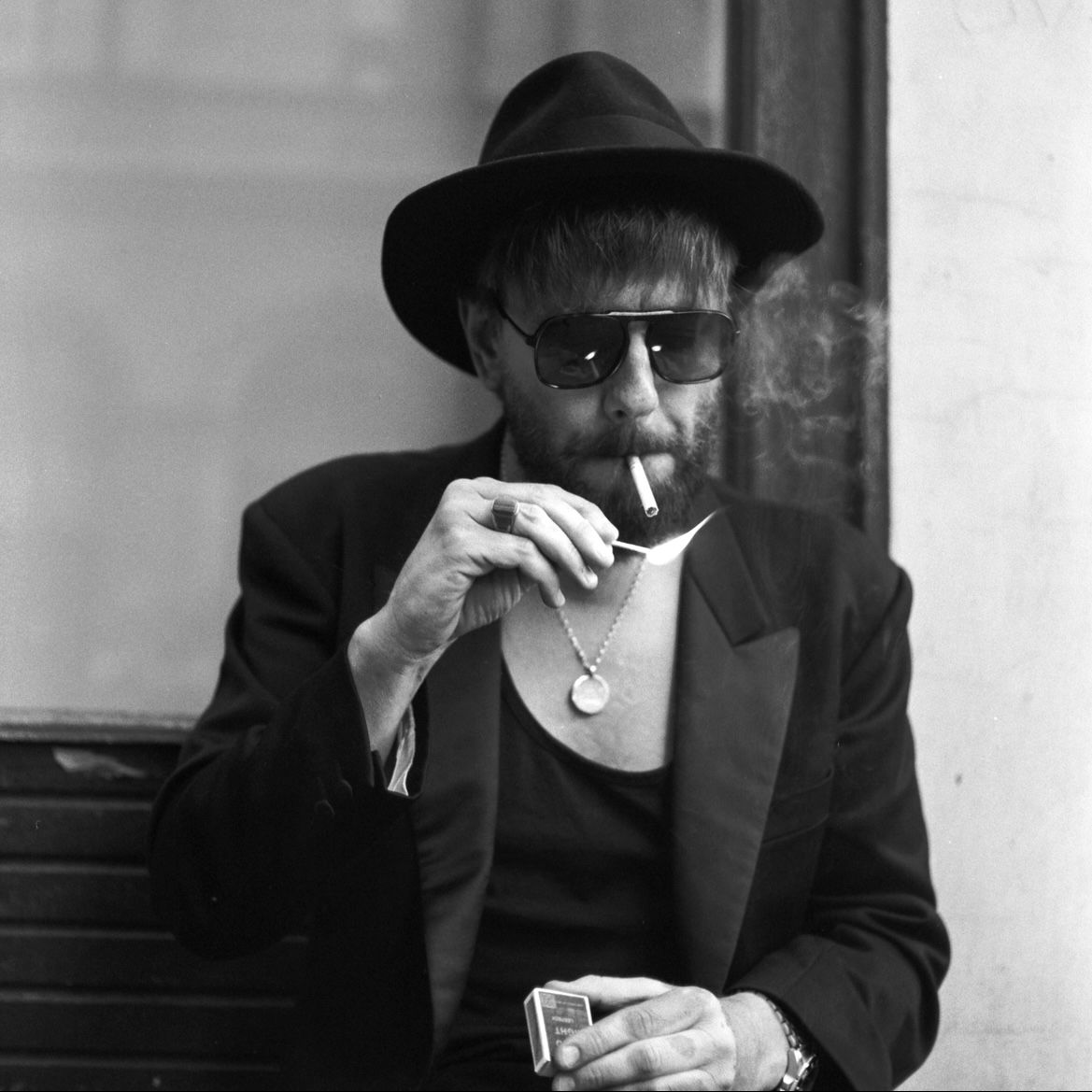
Hey Leepeck, thanks for taking the time to chat with us. I’ve been listening to “Sweet Valentine” on repeat, and there’s this moment – where your vocal delivery just drops into this deeper register, and it hits different than anything else on your previous releases. What was happening in your life when you wrote “Sweet Valentine,” and was there a specific moment when you realized this song demanded that level of vocal depth and emotional exposure from you?
I’m glad you can feel the weight this song carries. All the tracks for the new album were written in the first half of 2024, a very particular time in my life. That’s when I met my older brother for the first time, even though I had known about his existence for years. I was never really fascinated by family history, but that experience made me realize how vital those bonds truly are. On Where The Wild Things Drown, I dedicated one song, Mother Darkness Incomplete, to Bartek and to our mother. At the same time, I carried in the back of my mind the stories my father’s sister told me about my great-grandparents from Lviv. My great-grandfather Paweł, an oil worker, returned from South America to find his wife Walentyna unfaithful. In despair, he shot her and then took his own life. Though tragic, I see their story as one of passion, love, and ultimate sacrifice. We played Sweet Valentine take after take at night, with the mountains silhouetted outside the window. With each attempt, I felt myself sinking deeper into their story. I hope we captured that intensity.
Almost unconsciously, I shaped the song — and the way I sang it — to create the right atmosphere. It’s a song about death, love, and despair, but also a tale from a century ago, which gives it the feel of a myth, almost a legend. The kind of story cowboys might have sung about around a campfire. That’s why I performed it with a playful element and chose the lower register. It fits the mood, it comes naturally to me. And beyond that, singing in such a low voice brings a physical pleasure — the vibrations resonate through the whole body. It’s a kind of bliss that’s hard to describe in words.
So you recorded your upcoming album “Where The Wild Things Drown” live in a mountain cabin. That’s wild. I’m imagining you up there with just your instruments, no fancy studio tricks, no ability to punch in and fix every little imperfection. When I think about “Sweet Valentine” coming out of that environment, it makes perfect sense – there’s this raw intimacy that you can actually hear in the recording. I’m curious about those sessions because this approach is pretty bold in 2025 when everyone’s obsessed with pristine production. How did being isolated in that mountain cabin change the way you approached recording, and what did that environment give you that a traditional studio would have killed?
It was a time of freedom, peace, and disconnection from the outside world — a truly fantastic experience. Just a group of us locked away in a home studio on the side of a mountain. To be fair, it wasn’t just any home studio; it was our producer Marcin Bors’ house, fully equipped with great gear and an excellent team. Marcin later mixed the album at the Polish Radio studios. The whole record — including vocals — was tracked live in real time. That was our concept: emotion, energy, the bleed of sounds. Expression and honesty — because that’s what really matters in art. Small imperfections don’t matter; sometimes they even add a kind of magic.
Many musician friends advised me against recording this way, for the very reasons you mentioned. But to me, perfection is actually very far from perfection. It makes everything sound the same, stripped of individuality. As George Bernard Shaw once said: “Ideals are like stars — we may never reach them, but we can chart our course by them.” And if anyone is curious what those sessions looked like, there’s a video on YouTube for Stay Alive. It shows the exact take that ended up on the album and was released as a single. You can see the conditions: above us was the control room with the desk and compressors, while on the other side sound baffles were literally made of chairs and blankets. The atmosphere was incredible. We spent a week together, and during sessions a dog would wander between the mic stands. It was homely, cozy, and it allowed us to sink completely into the music — which became a living organism we were all part of.
You’ve got this interesting path – from winning the Super Jedynka Award in Poland to now signing with Earth Program Music in New York. That’s a serious geographical and cultural leap. I’m thinking about how your Polish roots shaped your sound, and now you’re taking that to a completely different market. What universal human emotions in your music do you think will resonate with American listeners who’ve never been to Poland?
I grew up on American music. When I was three years old, my dad would play Johnny Cash, Elvis, Fats Domino. I still remember listening to Folsom Prison Blues and asking him what that man was singing about. He told me: “About killing a man in Reno, just to watch him die.” Ain’t that cool? As a child, I often traveled to the U.S., since much of my family fled there after World War II. That’s where I watched Elvis movies and soaked up the music. Back in high school, I discovered Dylan, Janis Joplin, The Doors. And in Poland, the influence of American culture — movies, music — was so strong that I never really felt a cultural gap. Geographically, yes, America is far away — but I’ve been there many times, both to family in California and to the East Coast. In fact, this March I played a show in New York City at Berlin in the East Village, where I met Mike from Earthprogram.
You’re right though: my fascination with American music from the ’50s to ’70s is filtered through a Slavic sensitivity. That might make my songs sound different to American ears. Whether that’s good or bad, I don’t know. What I do know is that the emotions I try to convey are real — and in that sense, universal. Longing, hope, suffering, loss, love — these are feelings every human being knows. The question is whether the way I express them will connect. Some people will feel it deeply, others won’t. Honestly, I think there’s a better chance of this expression being fully understood in the U.S. than in Poland.
Your single “Speed of Light” is getting airplay on Breaking Sound Radio in LA – that’s huge for an independent artist. Radio is still this weird gatekeeper in the music industry, and getting that kind of exposure can change everything. Now with “Sweet Valentine” dropping, I’m curious about how that radio success affected your approach to this new single. Did you feel pressure to recreate that formula, or did it give you more freedom to experiment?
My songs have begun receiving airplay on various American radio stations — college and independent — and I’m hopeful it will continue to grow, that listeners who enjoy this kind of music will start to recognize it. But above all, I try not to calculate too much about what might work or not, because from experience I know that’s a dead end. Especially when your focus is authenticity and building a true fanbase. The entire album was recorded in six days, so there wasn’t even time for such analysis. By the time Speed of Light was played on Breaking Sound Radio, the album had already been mixed, so I felt no pressure — the songs were ready anyway.
Of course, I could have second-guessed myself and wondered if the next single should be something closer in spirit to Speed of Light. But I wanted to release Sweet Valentine simply because I believe in its potential. The track has just started going out to American radio, and I’m curious to see how listeners and journalists will respond. Speed of Light is a romantic love anthem, while Sweet Valentine portrays love from a much more brutal side. In fact, all my songs explore love in different forms and faces. So far, I’ve released three singles — Speed of Light, Stay Alive, and Sweet Valentine. On September 19, another bittersweet one, Comin’ Easy, will be out. Each is a little different, but together they form the complete picture. I can’t wait for that moment when the whole puzzle finally comes together.
October is shaping up to be huge for you with the album release on the horizon. The title “Where The Wild Things Drown” already carries a powerful weight. Hearing “Sweet Valentine” against that backdrop suggests the album is going to pull listeners into some intense territory. What can we expect from the rest of the record that this single is leading us toward?
Yes, we’re planning to release the album in October, and that’s also when we hope to play shows in the U.S. and Canada. There’s even a chance we’ll appear at one or two major festivals in New York City and London. Everything is still in preparation, so I’d rather not reveal specifics just yet — life has a way of surprising you — but I’m hopeful. By nature, I’m a pessimistic optimist, so I remain cautiously confident that things will work out. That’s why I’m especially glad to be having this conversation in such an important medium as Indie Boulevard.
The album Where The Wild Things Drown is eclectic, yet cohesive. There’s a song for my brother that is extremely minimal — just voice and piano, like Sweet Valentine — sung in a low register, simple but hopefully powerful. Elsewhere you’ll find faster songs with fuller arrangements, alongside more atmospheric, stripped-down pieces. What ties them together is the character of the melodies, the fact that everything was recorded live, and that the songs were written within a relatively short span of time.
Equally important are the lyrics, which explore metaphysical themes: death, nirvana, love, loneliness, transformation, and coming to terms with fate. These stories come from my own life and experiences — of which I’ve had plenty, and which I’ll be glad to share someday. The title is indeed somewhat dark, and at the same time fairy-tale-like. I’ve always been fascinated by the question of whether the world we perceive is real, whether there are dimensions where good and evil don’t exist, whether the beginning and the end meet at the same point. Has the story already been told, or has it never even begun? I’ve often felt a fluidity between the light and dark sides of my soul. That’s what the title refers to, and the songs on the album are fragments of those reflections.

This is your third album, and you tend to have long breaks between releases — around four years. In what ways does this album stand apart from the previous two records — in sound, in themes, and in the overall feel of the work?
Yes, in fact the breaks between my albums are usually around four years. Funny thing is, I always had the impression they were much shorter. You know how it goes – you release an album, then you spend a year or two on promotion, touring, and writing new songs on the road. After that you start working on the next record: you look for a producer, plan rehearsals, and finally do the recordings. That alone can take another year. Then you look for a label, and once you find one you still need to plan the release date far enough in advance to prepare proper promotion. And before you know it, four years are gone – even though it feels like you’ve only just finished your previous LP when the next one is already on the horizon. I think that’s pretty much how it works in the indie music world. Oh, and of course, a huge part of it is also finding the money to make it all happen.
As for how Where The Wild Things Drown is different from my earlier albums Na mnie już czas and Borderline – my previous record, as well as a few standalone singles, were in Polish. They were a bit more mainstream, and one of the songs was even used as the main theme for a feature film in Poland. My debut album Borderline from 2017 was in some ways closer to what we’re doing now – entirely in English, folk-inspired, and featuring beautiful harmonies by Ania Łazowska. But it was more introspective, gentler in tone.
Where The Wild Things Drown was recorded live, it’s more energetic, with more mature compositions and lyrics – hopefully. On keyboards I had the irreplaceable Michał Marecki, who also played on the earlier albums, but there were also some fantastic new musicians involved. Janek Tytman on mandolin, banjo, and guitar – he’s a great guy raised on bluegrass, who’s played a lot in the US as well as with Polish stars. And Adam Szuraj on drums, who brings that underlying drive and energy, creating the space and dynamics of the record.It took me a long time to put together such a great band, but it was worth it.
What’s your pre-show ritual, and what moment during a live performance do you live for the most – is it the crowd reaction, the connection with your band, or something else entirely?
My pre-concert ritual is pretty classic and old-school, just like the music itself — a sip of something good and a cigarette backstage. But what matters most to me during a show is building a direct, intimate connection with people — both the audience and the band. The best moments are when you sense that listeners are going through an emotional transformation. Once, after a gig in a tiny club, an older woman came up to me with tears in her eyes and said she needed one of my songs that night to feel better, to relive her life. Another time, in Manchester, I played a 200-year-old pub where the audience was, let’s say, not exactly welcoming. But by the end, they were singing that they loved me 😉 That was moving. The fact that music can soften hearts, bring joy and peace, that it unites rather than divides. Those are the moments when you realize your message matters, that it can actually affect reality. And for an artist, that’s incredibly important. Of course, applause, encores, the audience cheering — those are beautiful rewards too, a confirmation the show was a success. And in those moments, the band plays differently, almost lifted by wings. That’s the reaction I hope for on the Where The Wild Things Drown tour.
You’ve played at Berlin club in NYC’s East Village – that’s legendary territory. That venue has hosted some serious artists over the years. I’m thinking about how different that crowd must be from your European audiences. New York audiences can be tough – they’ve seen everything. But they also recognize authenticity when they hear it.What was it like playing Berlin club, and how do New York audiences respond to your music differently than crowds in Europe?
It was a very interesting experience. I had already played shows in Toronto during Indie Week, and I remember the audience there — especially at B-Side Lounge — being very focused and attentive. People reacted with bursts of enthusiasm now and then, but the overall atmosphere was serious, concentrated. In New York, it was similar. Just like in Canada, many people came up to me afterwards, commented, congratulated me, and talked about my style, my songs, artistic matters in general. I felt it was more like an encounter with an artist than a typical concert where the crowd goes wild. Of course, both times these were intimate shows, and the setting shaped how people responded. As for Berlin in NYC, I have to say I met some fantastic people there — eccentric in the best way, full of positive energy, people who’ve been coming since the late ’70s and ’80s. I’m sure many of them have seen legendary artists on that very stage, which made it a privilege to perform there. Overall, New York felt like home to me — and that’s how I felt on stage. I think my journey with the American audience is only beginning, with many experiences ahead — good and bad — and as we know, all of them are important.
Signing with Earth Program Music, a New York-based label, represents a significant shift in your artistic ecosystem. Label partnerships can either amplify an artist’s vision or compromise it, and the choice of label often reveals as much about an artist’s intentions as the music itself. The fact that you chose an independent label rather than a major suggests a particular philosophy about how you want your music to reach audiences. What drew you specifically to Earth Program Music’s vision?
For me, the most important thing is always the people. At my show in New York City, I met Mike Glaser from Earthprogram, and we talked for a long time before and after. Right away, I felt he genuinely wanted to work with me, to promote my music, and that he believed in me as an artist — in my vision, my sound, my songs, my lyrics.
I also saw that they represent James McCartney, and that the founders had held top positions at Columbia Records, Disney, and elsewhere. On every level — personal, artistic, and professional — Earthprogram felt like the perfect fit. We only started working together this spring, so it’s still early, but I know they’re the right people in the right place. What I appreciate most is that Earthprogram focuses on the entire album and on the artist as a whole. There’s still a lot of work ahead, but we’re already seeing the first results — and now we’re counting on the American audience and critics to give us a chance.
Looking beyond this album and the upcoming shows, where do you see your sound heading? You’ve got this folk foundation, but there’s something brewing underneath that feels like it could go in a lot of different directions. Sometimes artists know exactly where they’re headed, and sometimes they just follow what feels right in the moment. What’s the next sonic territory you want to explore after this album cycle?
If we knew exactly where we were heading, there’d be no mystery. Art is about searching, and sometimes the search takes us to unexpected places — like discovering that a piece can be four minutes and thirty-three seconds of silence. Cage wrote about chance in art, and how the direction we take is often the result of forces beyond our control. That’s why I try not to close myself off to anything. For me, what matters is that the final result feels as essential as possible. At a certain point, form and content become one — and only then do you know you’ve reached something true.
Of course, experience also matters. I try not to create songs I know I won’t want to play live. I’ve experimented — even ventured into disco or mainstream pop — but those songs never made it onto the setlist. So, to sum up: it’s worth keeping your mind open, but also having self awareness and knowing what you really want. Complicated, I know.
*Promoted content. All information provided is prepared in accordance with editorial standards and is intended to offer useful insights for readers.



 Indie Boulevard Magazine