
Nadia Essah is a twenty-six-year-old Norwegian-Moroccan songwriter and producer whose music blends jazz, R&B, and soul with a keen sense of rhythm and melody. After releasing her debut EP ‘Mood Swings: nostalgic‘ in 2023, she has spent the past couple of years sharpening her songwriting and production skills, preparing for the next phase of her career.
Her first single of 2025, ‘A step at a time,’ showcased a lush, soulful sound, but her follow-up, ‘Leave no stone unturned,’ reveals a different side. The track rides on a deep, elastic bassline, with pitter-patter drums and handclaps that give it an irresistible groove.
The new single started as homework. At The Norwegian Academy of Music, students were tasked with building off each other’s songs—take someone else’s chords or lyrics and make something new. Essah kept her classmate’s chorus and bridge lyrics, wrote the rest herself, and somehow turned an assignment into the best thing she’s made yet. The song bounces on a deep bassline and scattered handclaps, while flutes—her own, plus her mother’s—float overhead like smoke.
Between albums, Essah’s father died suddenly from lung cancer. “My focus changed completely,” she says simply. “I grew in every way during that time.” The experience shows up not in obvious grief songs but in how she works now—less rushed, more intentional. Her approach to production has evolved alongside her personal growth, moving away from purely digital tools toward a more organic, studio-based process that emphasizes spontaneity and storytelling. Talking with Nadia Essah is like watching someone fully in control of her own world. We get into how she writes, how she produces, the people and music that shape her.
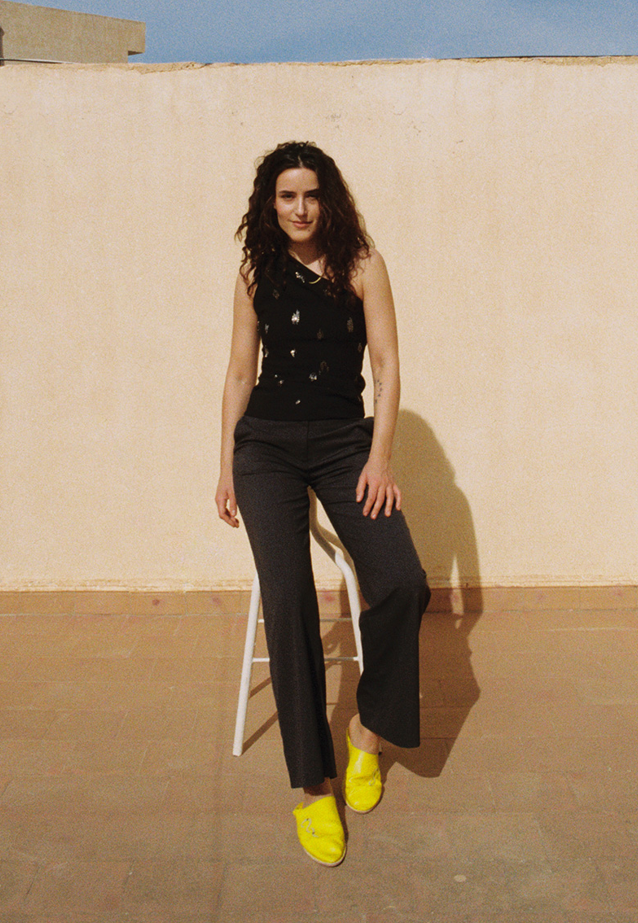
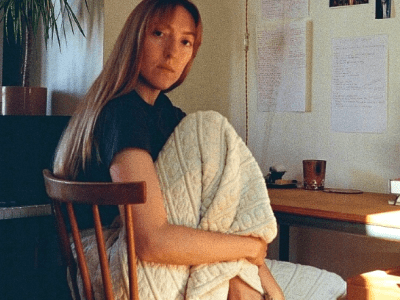
photo by Nora Warholm
Hey Nadia, I really value you taking the time — with everything you’ve got happening in the studio, music, and all the other aspects of your life, it truly means a lot. When I listened to your new song “Leave No Stone Unturned”, I was struck by the energy and atmosphere you managed to convey. It stands apart from “A Step At A Time”, with a more rhythmic drive, lively drums, and flute. You mentioned being inspired by the work of a former classmate, using part of their text and completing the rest yourself. Could you elaborate on this in more detail?
Hello, What a pleasure it is that you wanted to do this interview with me. Yes, I was absolutely inspired and used some of her lyrics in the song. The chorus is from her text and part of the bridge. The assignment was given for us to use a different starting point for a song, i.e if you always start with a chord on a certain instrument you should begin with the lyrics etc.. But this time we all gave a song to another classmate for them to take inspiration from it. I took it quite literally because it instantly triggered my inspiration and found some chords (that were quite different to what I usually would “go to”) and a rhythm that just worked. I think it’s quite interesting how different people’s creativity works.
Listening to your tracks, I notice how they evolve with each release, particularly with the new single “Leave No Stone Unturned”, which brings a real surge of commercial and art-house energy. It’s evident that you are constantly searching for new sounds and forms. When you sit down to write a song, is it a spontaneous process, or do you construct it already in the studio?
I am definitely searching for new sounds and ways to expose my inner artist and sort of peel my way down to the bone, if that makes sense. I just love exploring, both my daw and new ways of creating music. I think it’s both spontaneous as well as constructing it right away. Being a producer and writer those two very much exist and grow together bar for bar. Having access to a studio also helps speed up the process. I often think about how making music would be if I hadn’t started producing, quite different I would imagine.
The loss of your father in 2024 profoundly changed your life and your artistic perspective. How has this experience shaped what you want to convey through your songs? Are there specific choices in the new tracks that directly reflect this period in your life?
It very much changed my perspective, not just as an artist. I want to start with saying that these three songs that are out and on their way was written before he passed, so their not about the situation we went through. BUT, it definitely put a pause on everything a year ago and made me slow down. I didn’t have the capacity to move faster than I managed to, and I didn’t take any time off from uni either, which in retrospect I probably should have to make it easier on myself. I have written a lot of songs about him and our relationship and how it felt to go through that amount of grief in such a short amount of time. It’s quite indescribable frankly, but accompanied by music it makes a little more sense no matter how incomprehensible it is. I also think that there is an over all maturity has made itself visible in the past year, it aged me really. My voice, my words and also a little bit of my face. Grief is quite visible in ways one doesn’t really picture.
You’ve said that you now focus more on lyrics and poetry rather than pop structures. How does the process of choosing words and creating imagery unfold? Does the music come first, or the words?
I think one sparks the other quite simultaneously. I write morning pages most days and I usually find my most honest thoughts scribbled down in one of my notebooks. It’s usually tied to a specific person or incident, the songs I mean, so once I have a topic going it usually sorts itself out. I have very clear ideas and vision when it comes to the instrumental so producing it is mostly just letting myself get absorbed in my work for a bit. More often than not I have a line or a word ready when I start and sometimes chords…
You picked up the flute again after ten years and even invited your mother to participate. Elements of family history often appear in your music. To what extent do personal connections shape the sound and atmosphere of your songs?
I really don’t want to exaggerate my flute playing abilities, it’s very simple playing, but I did enjoy it a lot. It was so much fun having my mom play, she studied flute so she’s very profound in the art. That is a good observation, if only you’d heard the upcoming catalog you’d find it appears a lot. I grew up in a very musical household, both my mom and sister played the flute and my mom used to run a world music concert series in the city I grew up in, in Trondheim. Being part Moroccan influenced me a lot when it comes to the use of rhythms and how I perceive and create rhythm. The role of the percussion and the use of beats and the placement is very intricate at the same time as most people from there seem to know how to play simply because of music’s place in the society. In 2023 I went to Morocco (Oujda) for a wedding and I was thrilled to see music and the sudden outburst of drums, singing and dancing throughout the celebration. The drums were of various sizes and hand held (easy to move around) and I had no idea we had all of these in my grandmother’s house. They still very much have specific music for specific occasions like we used to in Europe before we got all modern and introverted…
You’ve mentioned working in the studio with complete freedom, letting the songs live their own life. Yet, you have managers, a label, and marketing. To what degree do your musical decisions adapt to business realities, and where do you fully defend your artistic vision?
Being an independent artist I get to decide everything – for better and for worse. I have complete freedom to create according to my vision and I think that even if I do one day sign with a label I will never compromise with my artistic vision. This has been really important to me for my whole career. In that case I’d rather be independent or do something else. I used to be a songwriter, you know, for a publishing house, but I got really tired of writing simply to write to write and not writing anything of importance other than streams. That is not the reason I do what I do. It felt really draining and if I’m being honest it took years to recover and be fully creatively recharged. I’ve never had to defend it – I create what needs to come out and I have no control of where the song takes me. I’m very much in the mindset of Rick Rubin and he says in his book “The Creative Act: A Way Of Being” “the job of the artist is to be a vessel for what’s moving through them”. In a lot of cases this is true, and you don’t have to be a million copies record selling artist to know this and for this to be true.
Many artists aim for chart positions and millions of streams. Do you measure success through numbers and hype, or through how your music genuinely affects the people who listen to it and how they experience it?
I used to, but then I slowly realized that I would’ve had to compromise my sound to fit a certain mold. What I measure is how profound the song is to me, how much of my vision I made come true and how it genuinely affects people who listen to it is 100% more important. I do want to make a living off this project, but slowly and with a genuine audience rather than six months of tiktok success… I have always been an album person and especially loved the 7th and 8th track, the underdogs of the big hit singles so I think my music is very much like that and I hope to find an audience who can appreciate the true hidden gems as well as the more popular ones.
Autumn is already here, and everyone who has seen your live performances knows it’s a true spectacle—emotions, energy, and music merge into one. Are you planning concerts this autumn and winter, and if so, in which cities will we be able to see you again?
It is, summer went by too fast. I don’t actually have any concerts planned. But I am in the process of booking a few concerts for spring in Oslo and around the south of Norway. Right now my focus is on finishing the album and making sure it’s as great as can be.
When you think about upcoming performances, are there particular venues or countries where you especially want to play?
I think I would just really like playing more concerts outside of Norway. I have big plans on going to Paris to play some shows. I for sure have some dream venues but time will show.
Live shows bring a different level of energy compared to the studio. What do you enjoy most about the stage experience and connecting with your audience?
I think some of my songs are way better live, I know I’m not supposed to say that but I find that they get to live a better life on stage with my wonderful band rather than in a strict bar for bar production. I love seeing the songs evolve into different shapes and forms live and especially seeing how the audience responds in real time. I had this one very magical show in Oslo last year, it was my very first sold out show and there was this window that I could see out to and my friends how hadn’t gotten their tickets in advance were waving to me with excitement and encouragement and there was this big surge of energy flowing around in the room. It was quite different from anything I’ve experienced. It really set the tone for the rest of the show and I had so so much to give and the audience too. I really think the energy from the audience has a lot to say for how great of a show it is going to be. If you want a shorter answer, I really just love and live for singing and performing with my band.
*Promoted content. All information provided is prepared in accordance with editorial standards and is intended to offer useful insights for readers.




 Indie Boulevard Magazine