
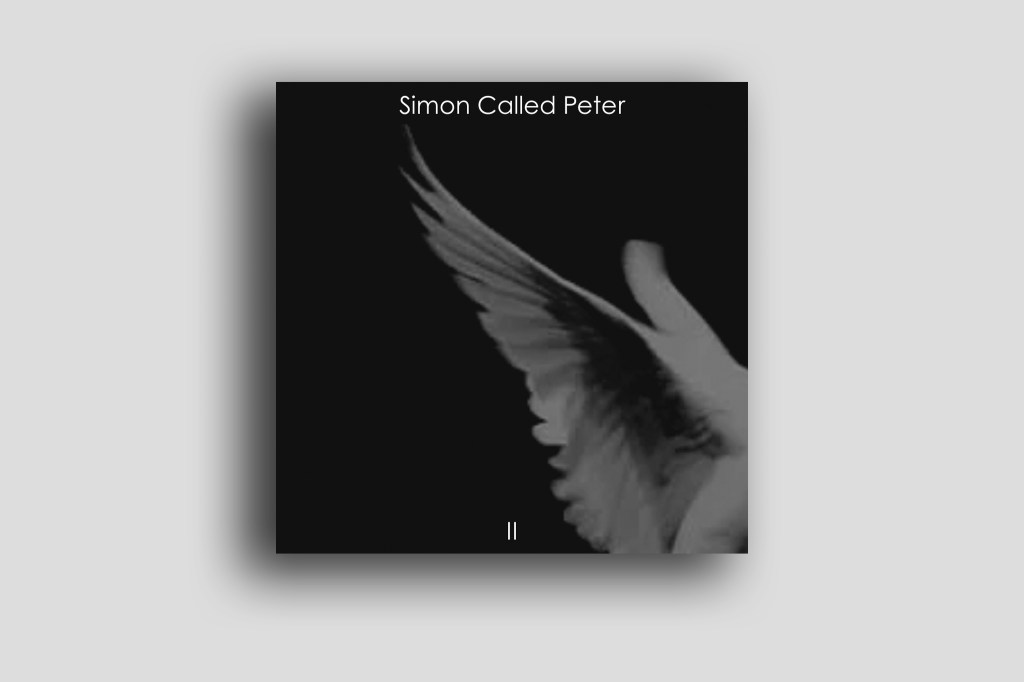
Look, I honestly tried to understand what’s happening with music in 2025. Half the artists are recording tracks in their bedrooms on their phones, the other half are spending millions at Abbey Road on sound that everyone’s going to listen to through a pair of cheap headphones anyway. And how brilliant that amidst all this madness there’s Simon Called Peter — a duo who’ve literally never been in the same room together.
Simon lives in London, Peter’s in Pretoria. Between them lie 8,000 kilometres, two time zones, and a heap of technical problems that should have killed any collaboration at the “let’s give it a go” stage. But no — they’ve already recorded two albums, and they sound as though they’ve been playing together in the same band their entire lives.
Their first record received enough recognition for them to start working on a second album, ‘Simon Called Peter II’. And when I heard their new single “Drowning” — five and a half minutes of pure, unprocessed rock that develops like a proper film — I realised something was happening here. Simon and Peter are literally building music from files sent across continents, from guitar parts recorded at different times of day, from ideas that one sends whilst the other develops them, never seeing their collaborator’s face.
It’s an experiment in how music is actually created when you haven’t got the luxury of sitting next to your colleague and saying: “What if we added another guitar here?” When every creative decision has to go through the internet, time delays, and cultural differences. Spoiler: probably makes no difference whatsoever. Perhaps it’s even better — no one can physically stop you from adding a sixth guitar layer at three in the morning.
And the maddest thing — they’re pulling it off. Their new album Simon Called Peter II sounds cohesive, organic, with that infamous “wall of sound” that usually only emerges from endless studio jams. We chatted about how they decide who gets to add “another guitar layer” (another spoiler: it’s always Peter), why their singles run for five minutes in the TikTok era, and what happens when you send your collaborator an entire album instead of a single demo.
Right, so if you thought you knew how rock music should be made in 2025 — prepare to reconsider your views.
Hi Simon and Peter, it’s truly an honor to speak with you. So the story goes that you and Peter met through a mutual friend, Mark Laird, and that moment eventually turned into Simon Called Peter. What stands out is how direct your approach was — instead of easing in with a track or two, or testing the waters with a quick call, you sent him an entire album. That’s not something people do every day. It’s like saying, “Here’s the full picture — let’s build something real.” When you decided to send that album, what were you hoping Peter would hear in it — and did you already imagine the kind of partnership it could turn into?
Simon: To answer your first question, I knew Peter is a very open-minded guitarist through his work with Third Son South, and of course the diverse social media music project he does The Need For Lead. I also knew that Peter would very quickly understand the vibe of where this second album was coming from. Of course after the success of SCP I, I/we wanted to do some different again, so we started with the drums, Dan See and Ben Hampson are a couple of London based session musicians which really set the vibe of the music very early on, everything else quickly evolved around this. So yes, I had an inkling that the partnership would continue to grow.
Peter: Well, Simon and myself had been on podcasts together and I might have slipped that I would not mind doing some guitar on his songs. Simon did start with one song but as soon as I had sent my bits in, he came with another. Then another, another and before I knew it, it was a complete album.
People talk about chemistry in bands like it’s this magical thing — either it clicks or it doesn’t. But what’s wild about Simon Called Peter is that you and Peter hadn’t worked together in person at all when this started. And yet, there’s this cohesion in your sound, especially on that first record, like you’d been playing together for years. What do you think it was that made the two of you lock in so naturally, especially coming from different countries, different contexts?
Simon: Well, the wonders of modern technology allow this kind of collaboration to happen a lot these days. I think both of us are both pretty experienced live and studio musicians, so to work with each other was very natural. I don’t think we are that different musically, we are both rock musicians, I probably tend a little more towards the Progressive side of things, Peter the more indie/alternative/Classic side of music.
Peter: It’s crazy! We have never met in person. Or is talking to each other on a screen nowadays a meeting in person? But the music Simon writes and records speaks to me and I immediately hear guitar parts that I’d like to add. And Simon is very enthusiastic every time I send in the tracks I recorded.
I want to talk about “Drowning” — it’s the first and lead single from your upcoming album Simon Called Peter II, and it doesn’t play it safe. It’s vulnerable, it’s cinematic, and it immediately sets a tone that feels deliberate. What made “Drowning” the right track to lead with from Simon Called Peter II? What was it about that song that felt like the right way to open this new chapter?
Simon: What a great question! Well, I guess we wanted as always to try and have an immediate impact with the release of SCP II, and to release a single coming in at five minutes is quite brave? For me, this track epitomises what the band is about really, its rock, its prog, its alternative, its melodic and it has meaningful lyrics. I love music that takes you on a journey when you listen to it and you hopefully hear something different each time you play it. With this track, even though I’ve heard it hundreds of time in production I get that same feeling and I/We are hoping that this will be the same for other people when they hear it.
Peter: Drowning is one of my favourite songs of II. I added several guitar tracks and used some weird sounds that came out so much nicer than I expected. When we had finished the album, Drowning was for me perfect choice to lead the way.
“Drowning” clocks in at over five minutes, and that already tells you something — the track takes its time, lets the mood unfold without rushing. There’s a sense of space, of trust in the material to speak for itself. Did you and Peter intentionally lean into that raw, unpolished feel — letting the performance shape the production — or was that simply the natural flow of how you both work together?
Simon: Again, I think it’s a natural part of how we work together. I remember sending Peter the original idea, along with a very detailed description of what the song was about. What I think Peter does really well is that he takes that idea and story and tunes in to my musical journey and simply adds what he hears. You are right about the sense of space in this song, and that’s almost the feeling we are trying to recreate with this song, the feeling of ‘where do you go’ in whatever situation you find yourself in where you might feel that your “Drowning”.
Peter: When we started with the first album I tried to urge Simon to write shorter songs but he showed me that some songs just need the time to develop. And then he urged me to play into that development and strengthen it with my guitar.
Jumping ahead to the new album, Simon Called Peter II, which is just around the corner — there’s always this pressure with a follow-up to either expand the sound or double down on what worked. Was the goal from the beginning to evolve the sound on this one, or did it just start morphing as the songs took shape?
Simon: As I said earlier, we (and I) are constantly looking to try and evolve our music and of course the music itself will sound like us, because it is us. Using the new drummers as a starting point was very inspirational in this instance, and as a result I think the songs almost took on their own personality as the process of writing, recording and production took place. I think we will always write rock songs, but because of the many musical influences we have, the feelings that our favourite music has will always come out in the way you write or shape our songs.
Peter: I think it went very naturally. Simon came with songs and I started tracking.. I had some new sounds that I wanted to use ( an ever ongoing evolution for most guitarists)
Second albums are tricky — they carry this invisible weight of expectation. And especially when the first one was received so well, with awards and press and all that noise, it can mess with the creative process. But sometimes, that pressure pushes artists to dig deeper. Did you feel that creative pressure going into Simon Called Peter II? And if so, how did you guys handle it without losing that core dynamic that made the first record resonate?
Simon: Well, for me I don’t really feel any pressure, I write a lot of songs for the different projects I’m involved in. Obviously, the hardest part of the process for me is deciding which song will work best with the projects I’m involved with. I’m lucky to have quite a diverse musical taste, and as I mentioned before, those tastes are of course going to come out in my song writing. I guess for SCP the criteria I spoke about earlier (its rock, its prog, its alternative, its melodic and it has meaningful lyrics) are major factors in deciding which songs go where. Of course there will be an element of the first album, but fingers crossed people will hear the next phase of the bands development in the music too.
Peter: For me it was an opportunity to put more in the songs then I had done on the first album. We had now become a band and looking back I could have done better so now here was my chance to try to do better.
You’ve worked with a rotating cast of drummers and session players — Matt Frost, Dan See, Ben Hampson. And yet, the core of the sound stays centered on you. How do you decide who fits into the world of Simon Called Peter, and how much space do you leave for those other players to shape the music?
Simon: Another good question! Matt of course was the drummer in my band H A L O based here in London, so I was fortunate enough to work with him for couple years (only one album though , Aureole) and got to know him really well over that period. Being a producer as well, I’m kind of used to working with different people, for example I found Dan and Ben via a company that sells drumming sessions online, I liked their work and built it into the sessions for recording the songs. In terms of shaping the music, and as I said before, these guys actually inspired me to focus the sound of the albums around them. I guess I have a signature sound as a guitarist, I use the same guitar, amps and pedals on all my projects, and I have the same clean bass sound, I also use pretty standard key sounds too, but I guess the difference is how I use them of course.
Peter: Ehhh.. I can answer the latter part. Simon gives me all the freedom in the world to do whatever I feel would fit on his songs. And he is always happy with what I do.
Simon, how do you approach vocal performance in a duo setting like this, especially when the guitar work from Peter can be so expressive and narrative on its own?
Simon: On this and the previous album the vocal performances were done before Peter actually recorded his guitars, so Peter had to record around what had already been recorded. Peter did add some of his own vocals into the mix as well however, and this was done after he had added his guitars. The structure of our songs allows for the two instruments to stand alone or together, for example Peter will quite often play an extra melody over a verse or more commonly over a chorus, sometimes bridge. I guess that’s also my progressive rock side pushing through where there are no rules just the music.
Between you and Peter, who’s more likely to say, “Let’s just add one more guitar layer”? And has that ever spiraled into a full-on “wall of sound” situation you had to dig your way out of?
Simon: I guess Peter would be the last guitarist to input onto the songs, as I mentioned earlier, I send him the basic framework, and he pretty much does his thing. On average there are around six guitar layers per song, I think that’s one of the main features of our music, as you say “a wall of sound”.
Peter: Hahahah that would be me. And l though Simon sometimes already comes with quite a full sound, I will find things to add to verses, choruses and in between.
You and Peter have this cross-continental setup — UK and South Africa, Zoom calls, file transfers, probably a lot of late-night voice notes. What’s the most chaotic or ridiculous moment you’ve had trying to finish a song remotely? Any accidental drum takes at 3 a.m. or pets walking across keyboards mid-recording?
Simon: Lol, I am your archetype B person, so a lot of my writing and production is done at night, but Peter being in Pretoria, South Africa is two hours ahead of me. Files are generally sent around midday European time, and I generally work on them straight away, mainly mixing. Between us we pretty much get it right.
Peter: I have no idea what goes on in Simon’s studio heheheh but in mine I try to just work structurally. I plan my recording times, track and then upload the files. We have some time difference (1 or 2 hours, depending on the time of year) but normally Simon mixes the tracks I have recorded in the song on the same day I upload them. And mostly we are very much in agreement how it should sound.
*Promoted content. All information provided is prepared in accordance with editorial standards and is intended to offer useful insights for readers.




 Indie Boulevard Magazine