
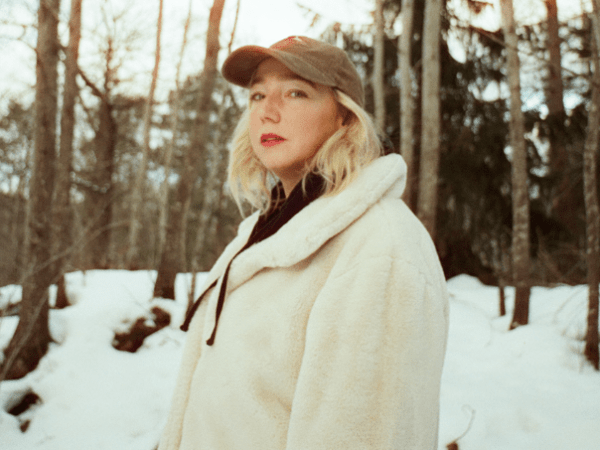
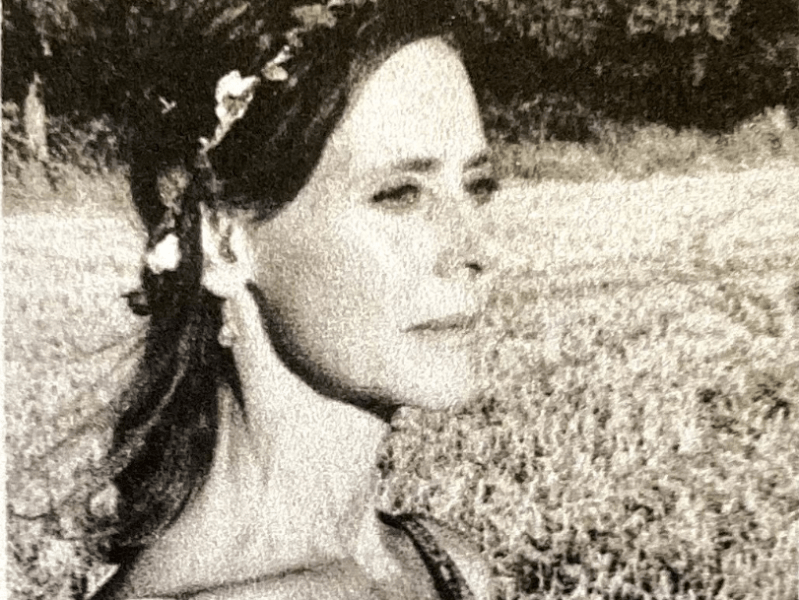
Terra Renae’s story reads like an improbable constellation of moments: a childhood tragedy, a chance encounter with Macy Gray in Los Angeles, a doctoral degree, European tours, and now an acoustic EP that asks her to stand vulnerable before her audience with nothing but a guitar and her voice.
The Filipino-American singer’s journey to music has been anything but linear—detours through modeling, academia, and years of vocal trauma have shaped an artist who understands that resilience means holding multiple truths at once. Her acoustic EP All I Have (Acoustic Sessions), coming out October 10, strips three fan favorites from her debut album down to their emotional core. Three tracks—“Lights Down Low,” “Over & Over Again,” and “Party in the Sunshine”—are reimagined with nothing but acoustic guitar and voice. In conversation, Terra talks about returning to the bare bones of her songs, the moments that shaped their stories, and why quiet can hit louder than any anthem. These acoustic versions reveal a songwriter probing the edges of her own music. It’s a different kind of confidence: bold enough to strip everything away and trust that the song—and her voice—can carry it all.

Hey Terra, really appreciate you taking the time — I know you’ve got a lot going on between the music, the creative work, and everything else you’re building, so it means a lot. You know, people usually think that childhood trauma either breaks a person forever or makes them super strong. But you lost your dad at seven years old, and on Christmas Day no less – a day that should be the most magical of the year. And now you sing about turning pain into joy. Tell me honestly – is every Christmas still a reminder of that loss? Or have you learnt to make that day magical again?
Christmas will always carry a weight for me, it’s the day I lost my dad, and that’s not something that ever truly goes away. But over time, I’ve learned to hold both realities at once: the grief and the possibility of magic. Music and ritual have helped me reclaim the day. Releasing “In My Dreams” on Christmas was part of that, a way to honor the pain while offering something warm and healing to others who might feel the same. Some years it’s tender and quiet, other years I choose to light candles, dim the lights, and make space for joy. It doesn’t erase the loss, but it changes the shape of the day. I am blessed to say that my husband and music partner, Praveen, has brought so much joy back into the holidays. Being part of his big, close knit family has helped me rediscover the fun and celebration of the season, and that’s been a gift in itself.
You’re releasing the acoustic EP “All I Have (Acoustic Sessions)” on 10th October, where you reimagine three fan favourites from your debut album. It’s an interesting move – to take songs that people already love and show them from a different angle. When you sit down with your guitar and strip everything else away – the production, arrangements, effects – doesn’t it become frightening? Because you’re left alone with just your voice and emotions.
Absolutely, it’s vulnerable in the best and scariest way. Stripping a song back forces you to face it without any safety net. On the original album, there’s production that sometimes layers or even buries the vocal. But in an acoustic setting, there’s nowhere to hide. That’s exactly why I do it, the stripped-down version reveals the truth of the lyric and the rawness of the performance. It can be terrifying, but it’s also where the song either proves itself or shows you what it still needs. For me, that fear is productive, it pushes honesty right to the foreground.
What secrets of these songs revealed themselves to you when you “undressed” them to acoustic versions? Perhaps you understood something new about yourself in those old lyrics?
Yes, for sure, when you remove layers, you hear the heart of a song. Some lines that felt like background suddenly become the emotional center. I found subtleties in phrasing and moments where a breath or a small melodic change made a lyric land differently. On a personal level, it reminded me that the stories I write keep evolving, my relationship to a lyric changes as I change. Playing these songs stripped back taught me to trust the core emotion more than any production trick.
From your entire debut album, you chose precisely three songs for acoustic versions. It’s like choosing favourite children – surely it was a difficult process. “Lights Down Low” became the first single from the EP, which suggests it’s special to you. Also, it’s a public favourite, but were there other options? Were there songs that immediately fell away because they don’t work without production?
It was hard, like picking favorite children. We wanted to choose songs that still carried their emotional weight when stripped back. “Lights Down Low” felt like the natural first single because intimacy is its message, and the acoustic version exposes that in a way that feels even more personal. There were tracks we tried acoustically that hit differently. Those songs will continue to live in their produced form. But others revealed new colors when undressed, and those were the ones that became perfect for the EP.
2022, a short trip to Los Angeles, and you literally bump into Macy Gray. It sounds like a Hollywood film script, but it’s your reality. What did you feel in that very first second when you realised it was Macy Gray?
It felt surreal being in the same room as Macy Gray, a little like the universe handing me an impossible gift. I was starstruck, but she immediately put me at ease with a big hug when we entered the studio. That kindness in our very first moment made it feel less like meeting a superstar and more like meeting a genuinely kind human being. That moment changed everything.

There was the story about voice trauma at an audition in Los Angeles – that’s simply a nightmare for a singer. You’re young, ambitious, you go to conquer the city of angels, and then your voice lets you down precisely when you need it most. What happened in that moment? Were there nights when you woke up and checked whether your voice had returned?
It was one of those terrifying, disorienting moments where your body doesn’t cooperate with your dream. My voice just shut down at the worst possible time. For a young singer, that feels like a door slamming in your face. Of course I worried, but more so, confused. I was so young, I didn’t quite understand what happened to my voice in that moment. Unfortunately, I then coped by shutting it out completely and stopped singing in public for years. When I revisited music later, especially with Macy Gray’s mentorship, I learned to be patient and kind to myself. Vocal issues taught me to respect rest, technique, and the emotional work behind performance. I came back stronger because I had to rebuild trust with my instrument and in doing so, I also rebuilt trust with myself.
I know you earned a doctoral degree. That’s years of study, research, dissertation. But at the same time, you always knew that music was your calling. I think many artists understand this feeling – when you’re doing something serious and proper, but your heart is still somewhere else. Did you feel a bit like a fraud when you defended your dissertation, knowing that your heart still belonged to music?
Never a fraud, I was still living a dream of helping people, I just didn’t realize I could do the same thing through a different passion. It felt more like living two truths at once. My education gave me tools I didn’t even know I needed; discipline, research skills, and a voice for expressing complex ideas. Of course, there were moments of tension, my heart was pulling me toward music while my head was pushing me through the next academic step. But in the end, I’m grateful for both paths. They shaped different parts of who I am, and now they both feed into my artistry.
Besides music, you had a modelling career. Two completely different roles. Does your modelling experience help you on stage, or does it hinder you instead?
Definitely helps. Modeling taught me how to inhabit a presence, to use posture, gaze, and a sense of character even when I’m nervous. It trained me to “turn it on” and hold a room visually, which has been especially helpful on stage and in videos. Doing a massive European tour, I realized how many fundamental skills modeling had already instilled in me. The only caveat is remembering to stay emotionally honest, stage presence without feeling is empty. My modeling background is a tool I lean on, not a mask I hide behind.
Your mother is Filipino, who came to America and raised you alone after your husband’s death. It’s incredibly difficult – to be an immigrant, widow and mother simultaneously. Children of immigrants often feel caught between two worlds – not fully American, but no longer quite representatives of their parents’ country. Tell me, how did she cope at all? Were there moments when she wanted to return to the Philippines to her relatives?
My mom is the truest definition of resilience. She came as an immigrant and carried the weight of grief, responsibility, and hope with incredible strength. I imagine there were lonely, difficult moments where the idea of going back to her family in the Philippines might have been comforting, but she stayed and built a life for us here. She worked tirelessly, protected me, and taught me that perseverance itself is a form of love. Her example shaped everything I value: independence, self-reliance, and the belief that you should never wait on anyone to move ahead in this world. She instilled in me the idea that no matter how tough the circumstances, you keep going, and you keep building. That mindset has been vital in music, because this industry requires incredible discipline and work ethic. I carry her lessons with me every day, both as a woman and as an artist.
You have a “big pop chapter” ahead of you. It sounds ambitious and rather mysterious. After the entire journey – from losing your father to meeting Macy, from a doctoral degree to European tours – you stand on the threshold of something truly big. What are you planning? And the main question – aren’t you afraid of even greater success?
Hmm, I don’t really feel like I’m stepping into a big “pop chapter,” I’m just grinding every day and staying focused on the work. But I’m flattered to be in any conversation related to music. Right now, we’re focused on creating powerful live moments, building both short and long form visuals, and making music that pushes my sound forward while staying true to the emotional core. There will be new singles, more videos, and new songs designed for the stage to really bring these stories to life.
Am I afraid of success? I won’t say I’m not nervous, big leaps are naturally scary, but I see nerves as energy you can use. Fear doesn’t stop me, and negativity doesn’t stop me. If anything, they fuel me, which is something I often speak about in my songs. My goal is to stay grounded, keep making honest art, and use whatever stage I’m given to deliver music that heals and connects people. Success is welcome, as long as it comes with integrity and the chance to keep doing the work I love.
*Promoted content. All information provided is prepared in accordance with editorial standards and is intended to offer useful insights for readers.



 Indie Boulevard Magazine