
Night arrives as a portal. Within its boundaries, inspiration crystallizes into worlds when reality becomes suffocating—when frameworks, obligations, familial expectations, and unexpected torrents of work threaten to collapse everything. Night offers permission to dismantle constraints and allow one’s essential self, one’s raw feelings, to surface without apology.
Kitty Coen constructed Conversations with the Moon within this nocturnal liberation. The Texas-raised artist confesses the album emerged from a sweltering southern night’s embrace, that peculiar temporal zone where isolation transforms from burden into revelation. Her vision of solitude diverges sharply from contemporary anxieties: rather than presenting isolation as containment or self-suppression to protect others, Coen frames it as archaeological excavation of the self—a chance to shed performative social masks and begin manifesting authentic desire. This perspective carries particular weight in our post-pandemic landscape, where isolation has become synonymous with trauma rather than transformation.
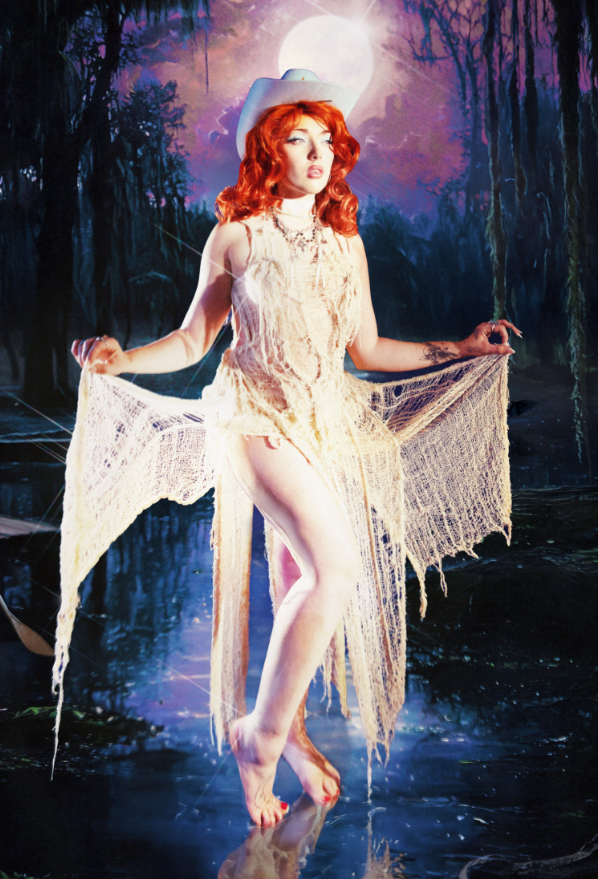
photo by Lissyelle Laricchia
Gothic darkness threads through the album’s twelve tracks like smoke through moonlight. Coen weaves together pain, loneliness, and—unexpectedly—the strength discovered through radical self-knowledge. Each song exists as its own entity while contributing to a larger meditation on what emerges when we stop performing for daylight.
“Tell My Mother” opens the record with deceptive gentleness. The melody unfolds with such tenderness it initially suggests a lullaby, underscoring what lies hidden in the heart, what each individual prioritizes above all else. The arrangement avoids jarring transitions, lulling the listener into false security. Then Coen’s voice enters and reconfigures everything—sleep becomes impossible, and separating melody from vocal performance proves futile. They’ve fused into something singular.
“Illinois Royalty” embraces contradiction as aesthetic principle. The introduction echoes the opener’s delicacy, establishing expectations of sustained lyricism. Then Coen detonates those assumptions: guitars slash through the arrangement with startling violence, and the dynamic range becomes its own character—shifting from contemplative passages to frenetic intensity and back again. The juxtaposition feels less like whiplash and more like witnessing someone’s internal state externalized in real time.
“Bright Eyes” summons genuine mysticism without resorting to cliché. The measured rhythm induces a meditative state, creating distance from everyday concerns. Coen’s vocal processing deserves particular attention here—certain phrases seem to emanate from another dimension entirely, as if she’s channeling voices from beyond our perceptual threshold. Crucially, she resists the temptation to overdecorate: there are no theatrical ghost howls or gratuitous supernatural sound effects. The track achieves its uncanny power through restraint, allowing hidden mystery to accumulate in negative space.
The title track “Conversations with the Moon” hands Coen’s voice complete dominion. Unhurried and tranquil as water, saturated with secrecy and power, it commands total attention. Everything else must stop. You find yourself anchored to your speaker, phone, whatever device delivers the sound, compelled to experience the song in its entirety. Coen navigates an impossibly thin line here: too much mystical affectation would shatter the entire construction, but she maintains perfect balance. The execution demonstrates mature artistic control, honoring the album’s conceptual architecture while taking calculated risks.

photo by Lissyelle Laricchia
“Grave Dancin” abandons lyrical introspection entirely. Instead of contemplating cosmic mysteries, Coen invites pure kinetic joy. The tempo accelerates into abandon, guitars and fiddles conspiring to create an irresistible whirlwind. Energy radiates from every note with such intensity that resistance becomes meaningless. Better to clear your schedule before pressing play—regret over unfinished tasks will only diminish the experience.
“The Drugs Don’t Work” stops time. This song defies traditional structure, functioning instead as confessional monologue. Coen strips away all pretense, delivering raw sincerity and unmistakable emotional pain from the opening seconds. The soul recognizes authentic suffering when it hears it. Fingerpicked guitar intensifies the atmosphere of melancholy and solitude. These moments require surrender—allow the accumulated pain to flow, ride the current wherever it leads. Hesitation means missing the opportunity to purge negativity through the safest possible channel.
“Memphis Man” closes the album with devastating grace. The track unfolds slowly, mournfully, penetrating to the deepest chambers of consciousness. Delicate violin and piano figures construct an atmosphere simultaneously mysterious and romantic. Here, Coen’s voice and the instrumental arrangement achieve complete synthesis—attempting to separate them would be violence. The music establishes emotional terrain so the listener can fully absorb the lyrics and Coen’s invested emotion. Her vocal performance guides like a beacon through dense fog, cautious yet unwavering. The desire to remain inside this song indefinitely becomes overwhelming.
Conversations with the Moon recontextualizes both gothic aesthetics and isolation as concept. Coen captures the genre’s shadowy, magnetic allure while avoiding its pitfalls, crafting an album where each track functions as its own revelation. Regarding isolation: Coen returns to its classical interpretation—solitude as methodology for understanding oneself, one’s emotions, one’s thoughts. The tracks most explicitly engaging this theme emphasize embracing rather than fearing time alone with oneself, recognizing it as gift rather than punishment, deploying it wisely.
This album stands as genuine treasure, offering illumination even in dire circumstances, extracting value from difficulty. Kitty Coen has delivered something rare: art that transforms perspective while delivering visceral pleasure.
*This review was made possible by SubmitHub









 Indie Boulevard Magazine