
There’s something almost comical about how we romanticize bedroom pop. We call it “intimate,” “honest,” “raw.” Everyone involuntarily conjures the image of a guy in a hoodie recording tracks on a laptop at three in the morning, as if this aura possesses some special truth unavailable to those who work in studios with proper acoustics. We forget that the bedroom is often simply the only accessible space, and solitude is a forced condition passed off as an artistic choice.
Tristan Rolland spent enough time in that bedroom. His 2023 debut Demi-mesure was a typical product of this aesthetic – synthesizer textures, processed vocals, a sense of isolation elevated to virtue. The French indie scene welcomed him warmly because he did what was expected of him: he was vulnerable but safe, melancholic but sweet. The perfect soundtrack for scrolling Instagram at two in the morning.
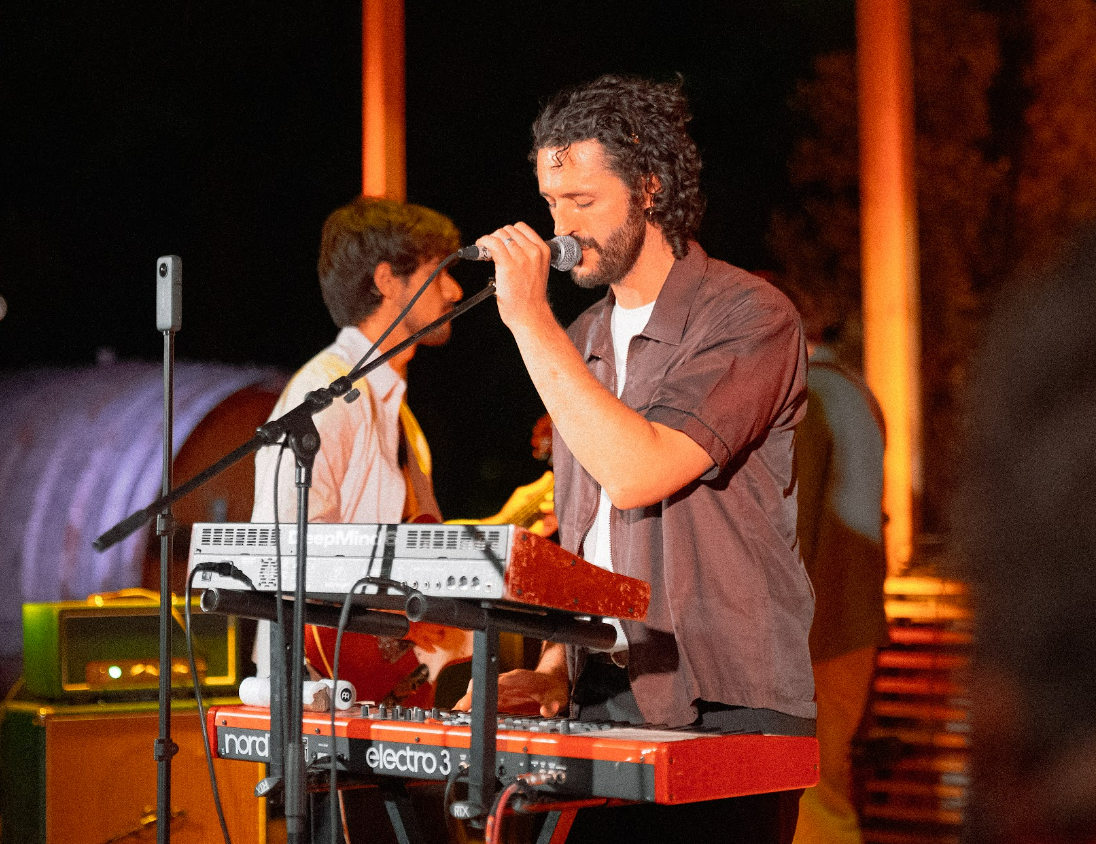
But something broke between 2023 and 2025. Or, more precisely, someone. Rolland confronted the set of problems that usually turns young artists into either clichés or real artists: addiction, family rupture, questions of sexual identity, escape from the provinces to the capital. The standard trajectory of a hyper-emotional artist in a conservative country, a story told a thousand times. The difference is in how you tell it.
Rolland could have stayed in his bedroom, deepened the aesthetic of isolation, recorded another album about sadness on Ableton synthesizers. Instead, he did something radical for a bedroom pop artist: he invited other people in. Thomas Valay, Julien Bacquart, Thomas Henry – three musicians who transformed Percheye from an avatar of solitude into a real band. This decision seems simple, but it changes everything. Because when you invite others into your music, you no longer control the narrative alone. Your pain must be translated into a language that others understand. Your songs must work in a room with living people, and live instruments have a habit of exposing falseness.
SOFA is the result of this transformation, and the title is, of course, ironic. The sofa is where you have therapy, where you spend your first night after moving to a new city, where you sleep when your family kicks you out of the house. It’s furniture of transit, temporariness, unsettledness. The five tracks of the EP are five sessions on this couch, five attempts to figure out who you are when all the old supports have collapsed.
France has a strange relationship with candor in music. Chanson allowed everything – drama, passion, exhibitionism of feelings. But the contemporary French indie scene prefers distance, irony, aestheticization of pain. Direct expression is perceived as vulgarity, as an American import. Rolland balances between these traditions – he’s French enough to maintain delicacy of form, and modern enough to speak directly about addiction and sexuality. This duality makes SOFA special in the context of the Francophone scene.
But there’s also a broader context. In 2025, the bedroom pop phenomenon has practically exhausted itself as a cultural movement. What began as a rebellion against polished mainstream has become its own mainstream – with recognizable clichés, predictable aesthetics, an army of imitators. Every other project on Bandcamp sounds like Clairo recorded through a pillow. The question is how to evolve while maintaining the sincerity that made bedroom pop significant.
Some artists choose hyperproduction – they turn the bedroom into a studio, hire producers, polish the sound beyond recognition. Others delve deeper into lo-fi aesthetics, make the sound even rawer, even more “authentic.” Rolland and his Percheye chose a third path: he left the bedroom physically. Called in a band. Added live instruments. But preserved the intimacy of expression that defined his early work.
This decision required courage because the risk was real. Live instruments can sound pretentious. Funk grooves can be perceived as an attempt to become a “serious” musician. Jazz improvisations can look like self-indulgence. The line between evolution and betrayal of one’s aesthetic is thin, and the fanbase of bedroom pop projects is often intolerant of change.
But Rolland seems to have understood something important: authenticity is not defined by form, but by content. You can be sincere with a synthesizer in a bedroom, you can be sincere with a live band on stage. Instruments are just instruments. What matters is what you do with them and why.
And this is where the music itself begins.
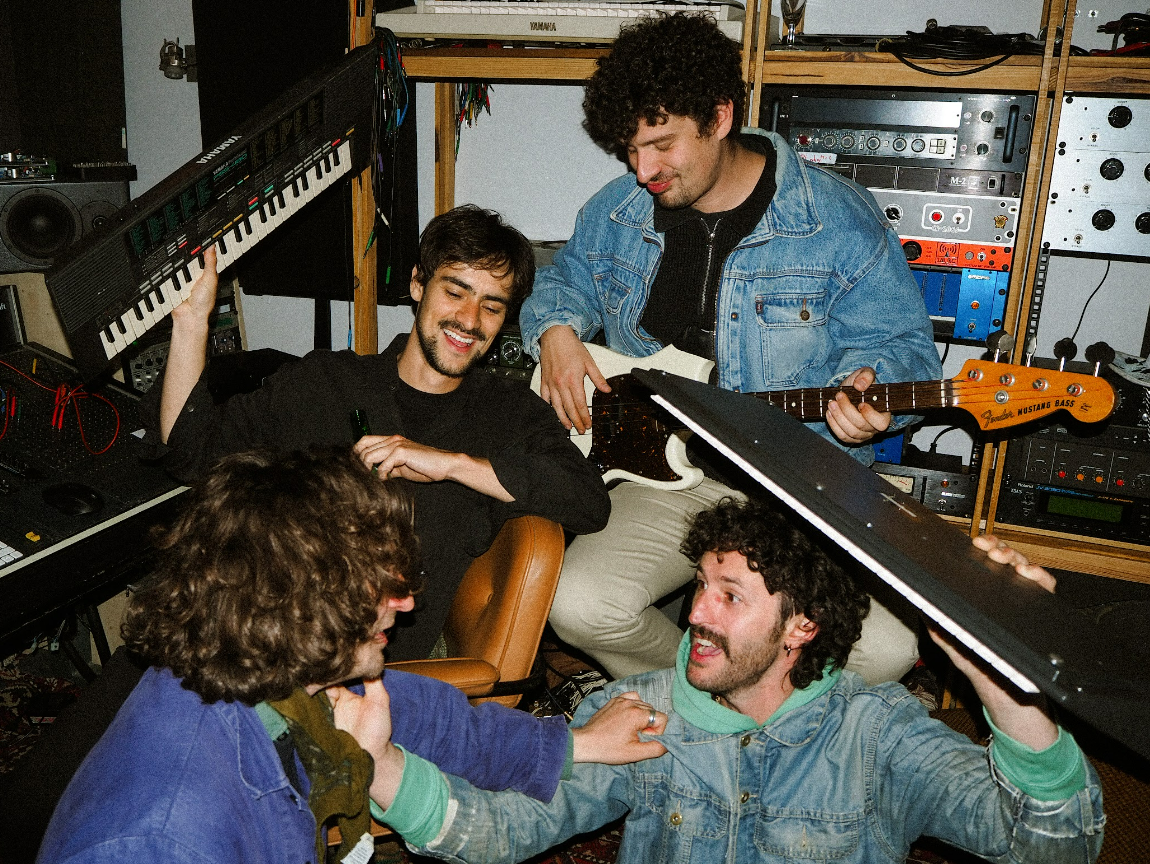
“Drained Out” opens the EP like a slap – Valay’s guitar riff cuts through the air, Bacquart’s bass line crawls under the skin, Henry’s drums hit right in the solar plexus. Rolland sings about toxic relationships that suck your soul through a straw, but his voice sounds surprisingly calm, almost detached. This is the voice of a person who’s already on the other shore, looking back and trying to understand how he even survived. “Meander” slows down to the speed of memory. Here Percheye sounds like Cigarettes After Sex if they had grown up on the southern coast of France and listened to Chet Baker instead of Slowdive. By the middle of the EP comes “Doesn’t Feel Like Before,” and suddenly everything explodes. If the first two tracks were a therapy session, this is the breakthrough moment when you realize that nostalgia pisses you off more than the present. Rolland screams (well, as much as you can scream in indie pop) about how you can’t get the past back, and it’s the most alive moment on the entire EP. “When Everybody’s Dancing” is jazz, but jazz for those who thought they hated jazz. The final “Ballade” begins with piano, and for a second it seems Rolland decided to end it all like Bon Iver – quietly, beautifully, predictably. But he’s cleverer. The piano passages build into a complex architecture where every moment is calculated but feels spontaneous. This is a moment of catharsis earned by the previous four tracks.
SOFA works because Rolland uses an expanded palette of sounds to say what synthesizers couldn’t. His story required funk grooves, jazz improvisation, the live energy of drums. The bedroom was too cramped for the pain he was trying to express. He needed more space, more air, more people nearby.
But this EP has its flaws. Sometimes the production is too polite for music that should bleed. Sometimes the melodies go where you expect them to. But these are trifles against the main thing: Percheye created an EP that proves evolution is possible without betrayal. That you can leave the bedroom and preserve sincerity. That a band can amplify personal expression, and live instruments can tell the truth.
When the last note of “Ballade” fades, you understand: Rolland survived. He left the bedroom, assembled a band, recorded his pain, turned it into music that heals. And if he survived, maybe you will too.
*Promoted content. All information provided is prepared in accordance with editorial standards and is intended to offer useful insights for readers.




 Indie Boulevard Magazine