
The journey as a metaphor for transformation has long been embedded in cultural discourse, yet few contemporary composers embody this idea with such consistency and intimacy as Andreas Wolff does in his new album “Inner Compass“.
From the odysseys of ancient epics to the road movies, movement through space has always symbolized internal changes, the shifting of identity coordinates, the reassembly of personality under the pressure of new impressions. However, in today’s era of total digitization of everything, when Google Maps has transformed the entire world into a set of coordinates and Instagram has reduced travel to a series of curated images, the very idea of wandering as a transformative experience demands reconsideration. What remains of travel when the element of surprise disappears? How does one cartograph an experience that is fundamentally subjective? Andreas Wolff offers an answer through music.
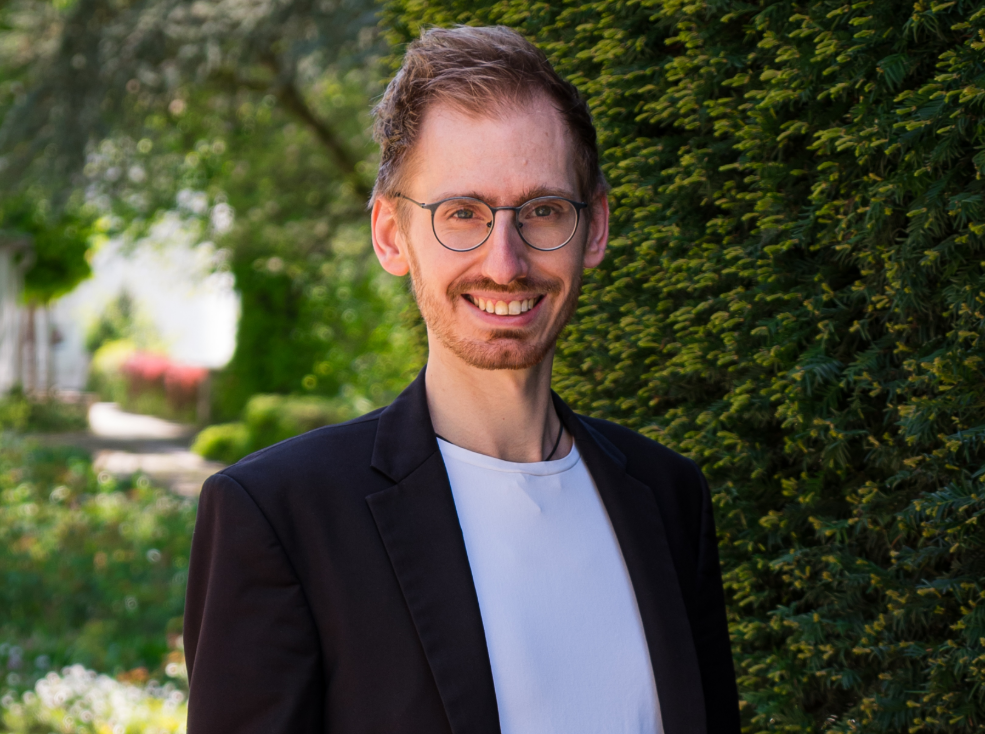
His new album “Inner Compass” functions as an antithesis to digital geography—this is a map that leads inward, where external coordinates serve merely as entry points into the labyrinths of memory and emotion. The six years of work on the material become, for Andreas himself, a form of journey, where the temporal duration of creation is as important as the final result. In a culture of instant content consumption, where albums are recorded in weeks and releases follow one another with assembly-line regularity, a six-year cycle appears almost provocative. Wolff chooses slowness as both an aesthetic and ethical position. Solo piano as a format in 2025 represents a curious cultural phenomenon. On one hand, it’s a return to origins, to the purity of an instrument stripped of electronic layers and production tricks. On the other, it’s a challenge to oversaturated production, where maximalism has become the norm and minimalism is perceived as a luxury of attention.
The neoclassical tradition, to which Wolff formally belongs, has experienced a renaissance over the past two decades, becoming a space where composers explore the borderlands between academic tradition and contemporary sensibility. However, the success of artists such as Nils Frahm, Ólafur Arnalds, or Max Richter has created certain expectations and genre stereotypes—ambient textures, electronic processing, collaborations with visual artists. Andreas Wolff deliberately distances himself from these conventions. His choice—acoustic piano without any program processing—is radical in its simplicity. It’s a gesture of trust in the instrument and in his own mastery, a refusal of technological crutches that can compensate for weak performance. And you should know that now absolutely everything, even live concerts, passes through filters and processors, and such sonic purity becomes an almost extremist position.
The concept of “Inner Compass” is built around the idea of music as cartography. Each composition marks a specific point—geographical, temporal, emotional. But unlike traditional maps, this coordinate system is fundamentally subjective. Wolff creates an atlas that works only for him, and paradoxically, it is precisely this specificity that makes the album universal. We all carry similar maps within us—places that changed us, people who became landmarks, moments that function as magnetic poles of our internal navigation. Wolff simply materializes this usually invisible structure through sound.
As I already mentioned, the album creation process stretched over six years, and this duration is critically important for understanding the project. Each composition on “Inner Compass” was created during a specific period of Wolff’s life, absorbing the atmosphere of the moment, fixing emotional states as, let’s say, photography fixes light. I would even dare call this an autobiography, where tracks function as chapters, each reflecting a certain phase of becoming. This is a processual project, where the very act of prolonged creativity, slow accumulation of material, gradual crystallization of ideas is important.
Wolff works with memory as an unstable, constantly transforming material. Memories of places and people that formed the basis of the compositions are already filtered by time, distorted by subsequent experience, reconstructed in the act of creation. Music here becomes a medium through which the past is translated into the present, the personal into the shareable. He creates mnemonic structures, memory triggers that can activate the listener’s recollections, though their specific content will differ radically. This is music as a provocation of remembering.
The album also raises the question of what remains from the experience of travel when the movement itself ends. Souvenirs, photographs, recordings—all these are attempts to materialize the ephemeral, to fix the elusive. Music in Wolff’s work performs a similar function, but with a fundamental difference: it fixes the emotional resonance of experience, while specific details dissolve into the abstraction of sound. And… this is quite a strange effect—the listener gains access to Wolff’s feelings but is deprived of the context that generated these feelings. Music functions as emotional essence, a distillate of experience.
The album’s twelve tracks are arranged in a specific architecture. This is a journey with a clearly marked beginning and finale, but the route between these points is nonlinear. He avoids obvious narrative strategies, instead creating emotional constellations where each composition is connected to the others by invisible gravitational forces. The album demands attentive, sequential listening—this is a project that unfolds in time, resisting the logic of playlists and random shuffle.
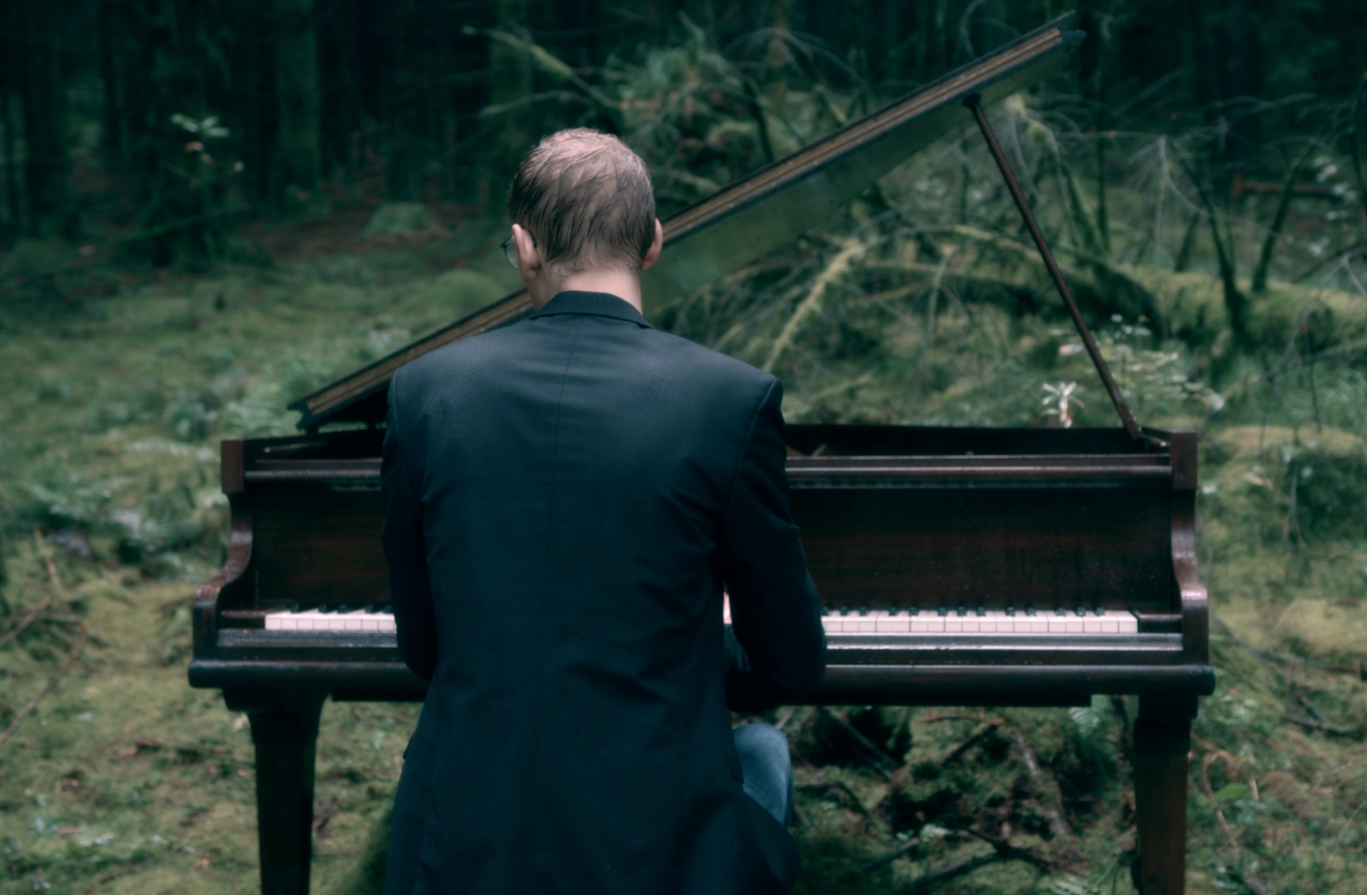
First notes of “Atlas” and you’re already somewhere else—that immediate cinematic yank, the feeling of walking into a cinema mid-scene and having to catch up. Wolff constructs something closer to a geographic legend than a traditional composition: aleatoric textures shimmer and scatter, percussion brushes striking piano strings until they sound almost like rainfall on glass, like static interference from some distant signal. Melodic fragments surface, half-form, sink back. Not ambient exactly. More like he’s drawing a map while standing on a boat. The weirdness lives in how he handles tension. Sound builds, air compresses, you’re waiting for the release—and then he just backs away. Lets it deflate. Starts over. What you thought was north drifts west. And memory works exactly like this, doesn’t it? You’re certain something happened in a specific room, specific season—then later you realize the room was different, the season was months off, and maybe the whole thing happened to someone else and you just absorbed it as yours.”Bubbles” shifts focus toward the ephemerality of the moment. The composition’s lightness is deceptive—behind the seeming simplicity hides a carefully constructed architecture of joy. He explores the spectrum of positive emotions, from curiosity to genuine euphoria, while avoiding sentimentality. Melancholy is present here as a light trace, giving depth of recollection to the smile.
“Blackbird” reveals a more complex emotional topography. The smoothness of the melodic line masks the composition’s inner strength—it functions as a musical talisman, a source of hope in periods of uncertainty. Wolff works with contrasts: light and warmth coexist with inner power capable of gradually neutralizing negativity. In “Home,” Wolff achieves the quintessence of chamber intimacy. The composition embodies that special atmosphere of protection and rootedness that defines the concept of home. “Para Ti” exposes the most fragile aspects of the album’s emotional spectrum. “Summer Dance” embodies the kinetic energy of the season. The composition is light and piercing, its structure reminiscent of a summer rain’s rhythm—quick but warm. Wolff explores the metaphor of growth: timid energy gradually rises and unfolds, like a flower beneath the sun’s rays. And now the closing “Together” synthesizes the album’s contradictions into a single emotional culmination. The composition combines solemnity with softness, gratitude with the sadness of parting, the joy of meeting with the fear of loneliness.
Which makes the middle stretch of the album more curious. Having demonstrated a willingness to color outside traditional boundaries—having shown he can layer, reverse, smudge the edges when the music calls for it—Wolff then pulls back into more conventional territory for several tracks. The question isn’t “why didn’t he experiment at all?” It’s “why stop?” What if those textural instincts that animate “Atlas” had pushed further into the record’s second half?
Prepared piano techniques, deeper dives into field recordings, more aggressive spatial manipulation—not as gimmicks, but as natural extensions of the vocabulary he’s already using. Some passages settle into familiar patterns where you can feel him choosing safety over the kind of risks the album’s opening gestures promised. Maybe that’s intentional—a map that starts chaotic and gradually finds its bearings. Or maybe it’s caution creeping in.
What does work: eighty-eight keys mapping out complicated interior geography, proving you don’t need a Berlin warehouse and a Moog to convey emotional depth. This is patient music, the cinematic kind. Where he takes this approach next—further inward into meditative focus, or sideways into sonic risk—honestly doesn’t matter as much as the fact that he’s already built something that justifies its own runtime through specificity, not just vibes. Either direction could work. Right now, the compass needle holds steady, pointing at something real.
*This review was made possible by SubmitHub








 Indie Boulevard Magazine