
There exist moments in history when geographic identity and global turbulence merge into a single creative wellspring. The art lies in the ability to capture these vibrations, transform them into sound, and present them to the world in such a way that the message reaches the listener in all its undiluted truth.
Swedish band Killing Kind approached the creation of “Being Human” with precisely such an understanding of their mission, which will be released on October 31. This highlights the second album and immediately draws interest to it. The album is born at the intersection of unique Scandinavian melancholy.
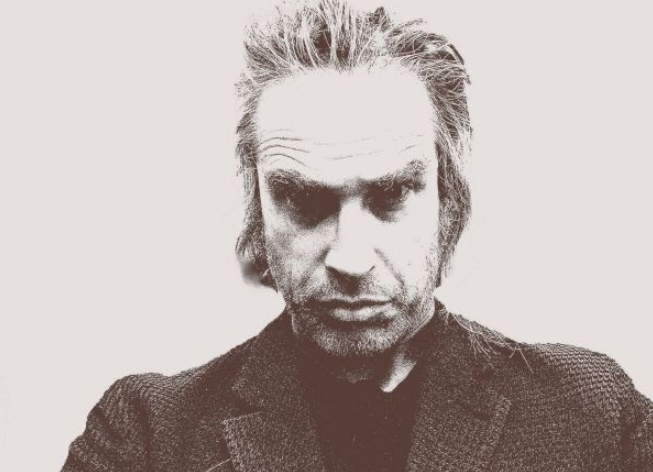
That very dark Nordic aesthetic that permeates everything from Bergman’s cinema to the black metal scene of the 90s, and the universal anxiety of the present day. This approach to making music allows it to break into the subconscious itself and draw attention to problems that often slip out of sight. Killing Kind openly speaks of a shift toward a darker, more oppressive atmosphere compared to their debut, and this shift is felt from the first seconds. To create the new atmosphere of ‘Being Human’, the musicians combined retrofuturistic science fiction, gothic romanticism, and the merciless documentary realism of what’s happening outside the window, which produces an impressive effect.
The album functions as a memorial—an elegy for a world sliding into the abyss, a farewell ceremony for an era where common sense increasingly gives way to absurdity. Killing Kind create funeral hymns for civilizations that have chosen the most destructive paths to resolve crises—those societies where fires are preferably doused with fuel instead of using water. You can notice how the musicians suggest watching from the outside as humanity methodically sets fire to its own house. Killing Kind dissect the vices of the present day through the prism of gothic imagery and sci-fi aesthetics. This mixture of genres and styles creates a deep sound and invites you to look at the dystopian future and feel all the drama of their requiem for the present. This is a critical view delivered through the filter of genre fiction—a device that allows speaking about the painful with necessary distance.
The recording took place at the legendary Sunlight Studio under the guidance of Tomas Skogsberg — a producer whose name is forever inscribed in the history of the Swedish death metal scene thanks to his work with Entombed and Dismember. Thanks to the outstanding work of Tomas Skogsberg, the album’s eleven tracks exist as a single organism. In every second of the recording, the hand of a master is felt, professionalism based on decades of experience, combined with burning creative obsession that transforms technique into art. I feel that each track serves as a separate chapter in the overall narrative about the human condition, actions, and the future.
“Dance” bursts in without warning, without ceremony, without courtesy intro. The track attacks instantly, its dynamics resembling an electric shock capable of physically moving the listener from their place. Every element is processed in such a way as to create visceral tension, forcing the nervous system to react to every transient, to every sharp transition. The guitar parts sound like exposed nerves — raw, bare, pulsating with pain and energy.
At the same time, it’s remarkable that Killing Kind manages to preserve an element of mysticism, a certain occult dimension that transforms the gothic sound into a ritual. The guitars carve out space with sharp, angular riffs, creating a hypnotic effect. This sound draws you in deeper with each measure and eventually fills the mind completely. ‘Dance‘ sets the rules of the game: ‘Being Human’ demands complete engagement.
“The Wall” follows as an antithesis, as a breath after the suffocating grip of the previous track. The contrast is so radical that it borders on cognitive dissonance – after the brutality of “Dance,” this song envelops the listener in a completely different texture. The softness here works as a conscious artistic choice, as a way to show the dynamic range of the album. The melodic line comes to the foreground, and here Ernst Erlanson’s piano works in tandem with Lidija Radmilac’s strings, creating chamber ensemble intimacy. The piano sounds reflective, almost meditative, its passages recalling Romantic era composers, that tradition where the instrument served as a conduit for deep emotional states.
I am especially struck by how the viola adds a layer of Nordic sorrow that permeates the entire Scandinavian cultural tradition. This sound, in a strange way, intertwines with the light images in the melody. Perhaps that is why “The Wall” reflects a feeling close to hope – a fragile sensation that the global catastrophes hanging over the world can still find a peaceful resolution.
“Go Away” immerses the listener in the very heart of gothic tradition – here Killing Kind pay tribute to everything from Victorian mourning rituals to the golden age of Gothic Rock. “Go Away” opens with the funeral bells, whose deep, resonant tone immediately establishes a ceremonial atmosphere. This gives you goosebumps and creates an almost hypnotic, gothic ecstasy. These are sounds associated with finality, with ritual passing, with that moment when a community gathers to witness the end of worlds.
This track is simply the perfect funeral-farewell song for those who ignite political and military fires in the world, not giving a drop of opportunity to extinguish them. Not even a thought arises that this track could be dedicated to something else. And here there is one interesting feature (besides the impressive music!) We are talking about the vocals. The mournful, yet high vocals create a dual impression. On one hand, at the very beginning of the track, with peculiar processing, the vocals were heard as the voice of a priest performing a funeral service for the dead. On the other hand, closer to the end of the track, the vocals become more… human, there are no associations that this is the voice of a clergyman. Such a distinctive musical cocktail literally tears off the “rose-colored glasses” and forces one to look around.
The track “Choking” literally from the first seconds evokes associations with a world after a great catastrophe. Such an illusion is supported by sound processing that can be heard quite often in science fiction films depicting a world after a global catastrophe. But besides these notes, guitar and drums stand out prominently here, which gives the melody a distinctive dynamics. And such a combination says: the world after the catastrophe will not die, but will only begin to develop anew. But is it worth it?
“Warriors and Carpenters” immerses in the atmosphere of science fiction from the first seconds after the beginning. But here it is immediately worth noting: unlike the previous track, here the “cosmic” theme is vividly expressed through sound processing (one can find the same notes in many films about space). But a little later these parts begin to alternate with sharper and more commanding guitar parts, giving the track a darker sound. Therefore this track one wants to listen to and listen to, in order to fully enjoy the sci-fi atmosphere.
I like how the album ends with “Distant World” and its approach radically differs from the expected trajectory. The opening bars introduce a melodic line that sounds almost celebratory — there’s brightness, major key progression, rhythmic buoyancy that suggests festival atmosphere, moments of joy. Björn Norberg vocals sound like a voice of reason, like a reminder that celebration remains premature. However it maintains its darkness, which echo throughout the entire song. For me this creates a feeling of anxiety and leads to the thought that there are themes in the world that are still not resolved.
“Being Human” by Killing Kind is unusual and interesting. In it one can find notes of science fiction on any theme (from space to post-apocalypse), gothic and impenetrable fog descended from Swedish hills directly onto the listener’s shoulders. But the chosen theme was revealed completely, without any embellishments or omissions. Everything is clear, precise and understandable. “Being Human” gives the opportunity to push aside illusions and blind faith, and simply reflect on the theme “What if?“. In this way, one can arrive at interesting results. Therefore such an album is a find for those who want at least periodically to remove the “rose-colored glasses” that someone else diligently sometimes hangs on us, and begin to choose their own path.
*Promoted content. All information provided is prepared in accordance with editorial standards and is intended to offer useful insights for readers.







 Indie Boulevard Magazine