
Adolescent life remains one of the central themes of art—relevant, eternal, inexhaustible. The reason lies in the very nature of this age: sincerity here reaches frightening depths, feelings exist in a state of permanent contradiction, internal struggle unfolds with such intensity that the subject itself often gets lost in the labyrinth of its own emotions. A teenager is always on the edge of understanding and misunderstanding themselves, constantly trying on the mask of adulthood, which is still too large. The teenage experience represents an inexhaustible source, a gold mine for any creator.
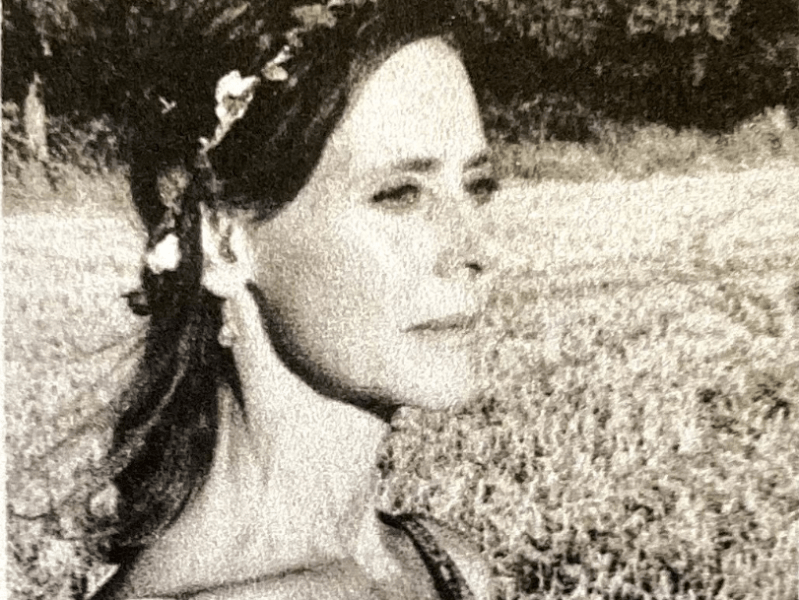
Ava Valianti subscribes to this philosophy. At sixteen years old, she creates songs that function as first-person authorial essays—intimate reflections clothed in sonic form. Her music is a kind of meditative narrative, where autobiographical material transforms into a universal statement. For her debut EP “petunias,” Valianti chose a truly ambitious task: to discover beauty where the ordinary person’s gaze slips past, in unnoticed moments, in spaces deprived of attention. The central object of investigation became precisely adolescent life.

As Valianti herself notes, teenagers’ stories possess a paradoxical nature: they are simultaneously universal and absolutely unique. Universal, because every person passes through this experience—recognizability here reaches a hundred percent. At first glance, these stories lack an element of particularity. However, each adolescent experience unfolds in its own way, demonstrating the strength, resilience, and depth of the human soul in that brief period when it is still free from social conventions, when fatigue from societal demands is still ahead. It is precisely in this interval between childhood and adulthood that a person is capable of feeling with ultimate intensity.
“First day of Spring” is an intro that has, let’s say, key significance. It’s an invitation into a parallel dimension, or a journey into the past. Against the backdrop of a classical instrumental melody, Ava’s own childhood voice is barely audible, like a signal coming from afar, an echo from another world. This distancing creates a sense of unreality in what’s happening, transforming this small intro into a message from an alternative, magical space. Valianti here acts as a conductor between worlds.
“Buttercups” changes the album’s temperature, enveloping the listener in a thick shroud of sadness and sorrow. Ava’s soft voice reveals that very adolescent fragility and vulnerability in all their fullness. The song is built on dramatic contrast: approximately at the track’s midpoint, a sharp transformation occurs. The melody and vocals change register—instead of fragility, strength appears; instead of vulnerability—energy; instead of melancholy—audacity. The rhythm accelerates, as if Valianti is physically pushing sadness away from herself, calling to start living a full life, rejoicing and valuing the surrounding reality. This transition feels like emotional catharsis, like a moment of overcoming.
“Laugh Track” captures attention with its swift, light rhythm. The track is associated with a strong, fresh wind—an element that calls for adventures and discoveries, that carries freedom from imposed frameworks. The guitar parts function as a catalyst: they ignite excitement, provoke a smile, make you think about escape—even if just for a few hours—to places where everyday obligations lose their power.
“Distant” demonstrates a different approach from the first seconds. Valianti’s voice here sounds serious, almost strict. The hidden fervor of previous tracks disappears. She emphasizes through the entire song structure: social isolation for a teenager is a critical, devastating phenomenon. Misunderstanding and rejection from society can harden a person, turn them into a threat to the very people who cast them out. The track’s fast rhythm performs a dual function: on one hand, it weakens the darkness of the message, making it bearable; on the other—it emphasizes the fleeting nature of time, that critical window when the situation can still be corrected. Later, this possibility disappears.
“CleanMy Room” is filled with warmth that can be defined as domestic, sheltering. In this space, quarrels and misunderstandings are absent. Here exists a place of unconditional acceptance—the teenager is accepted wholly, with all their problems and peculiarities, here lies protection from external threats. Valianti manages to convey precisely that specific fragility of atmosphere that a home possesses in its ideal manifestation—a place you strive to return to again and again, a space of safety and understanding.

And after “clean,” “Hot mess” bursts in! The melody immediately establishes the rules: softness and tenderness are inappropriate here. Valianti’s vocals partially soften this harshness, creating balance, however the singer herself periodically hits sharp notes, reinforcing the track’s central message: honest acceptance of imperfection requires courage. Valianti emphasizes that this act of acceptance requires audacity, an element of challenge—all of this is legible in the melody and vocals. Because we’re talking about real life, where imperfections open the possibility to manifest from a different, more beautiful side.
“Running on Empty” is the key and final track that closes the EP. Valianti’s tender voice sounds like background, like a sonic environment allowing thoughts to move freely in space. It is precisely in this song that Ava opens her soul to listeners. The vulnerability she displays is striking—she doesn’t even try to hide it; on the contrary, she puts it on display. Such openness is winning. The hidden sadness permeating the track, thanks to Valianti’s honesty, penetrates directly into consciousness, awakening long-closed memories. When listening to this song, one should be prepared for emotional swings: the surging feelings and memories may bring tears.
The main achievement of “petunias” and the singer herself lies in the delicacy with which she dissects adolescent experience, demonstrating a trinity: fragility as an aesthetic principle, vulnerability as honesty, strength as a consequence of the first two qualities. At the same time, Ava Valianti remains within the boundaries of good taste—the indicated emotions serve as architectural elements strengthening the tracks’ construction, transforming potential melodrama into something significant.
Of course, sixteen years is an age simultaneously a blessing and curse for an artist. Some songs on “petunias” betray their youth with a certain straightforwardness of metaphors; in places, one feels a gravitation toward the safe emotional territories of bedroom pop aesthetics, which have already been well-mapped by her predecessors—from Clairo to Beabadoobee. The production at times chooses the comfort of recognizable solutions instead of risk. However, it is precisely these moments of conditional naivety that paradoxically work in the record’s favor—they serve as a reminder that before us is a real teenager, and an authentic voice of a generation speaking in the language of their time, using the instruments available to them. What might seem like a limitation turns into strength: Ava Valianti writes music of her age, and this requires more bravery than attempting to seem older or wiser. “petunias” is a debut that promises captivating evolution—provided that Valianti preserves that raw honesty that makes this EP so convincing.
*This review was made possible by SubmitHub








 Indie Boulevard Magazine