
Potsdam, 1747. An old man from Leipzig, two days on the road, sits down at Frederick the Great’s newfangled fortepiano and begins improvising on the royal theme. Instead of courtly flattery, Johann Sebastian Bach weaves in a saltus duriusculous—a “harsh leap,” a dissonance that any educated 18th-century listener would have read as a musical gesture of defiance. He’ll title the finished composition Musikalisches Opfer, where the German Opfer means both “offering” and “sacrifice,” and write the heading in a language the king didn’t understand. Petty king of counterpoint.
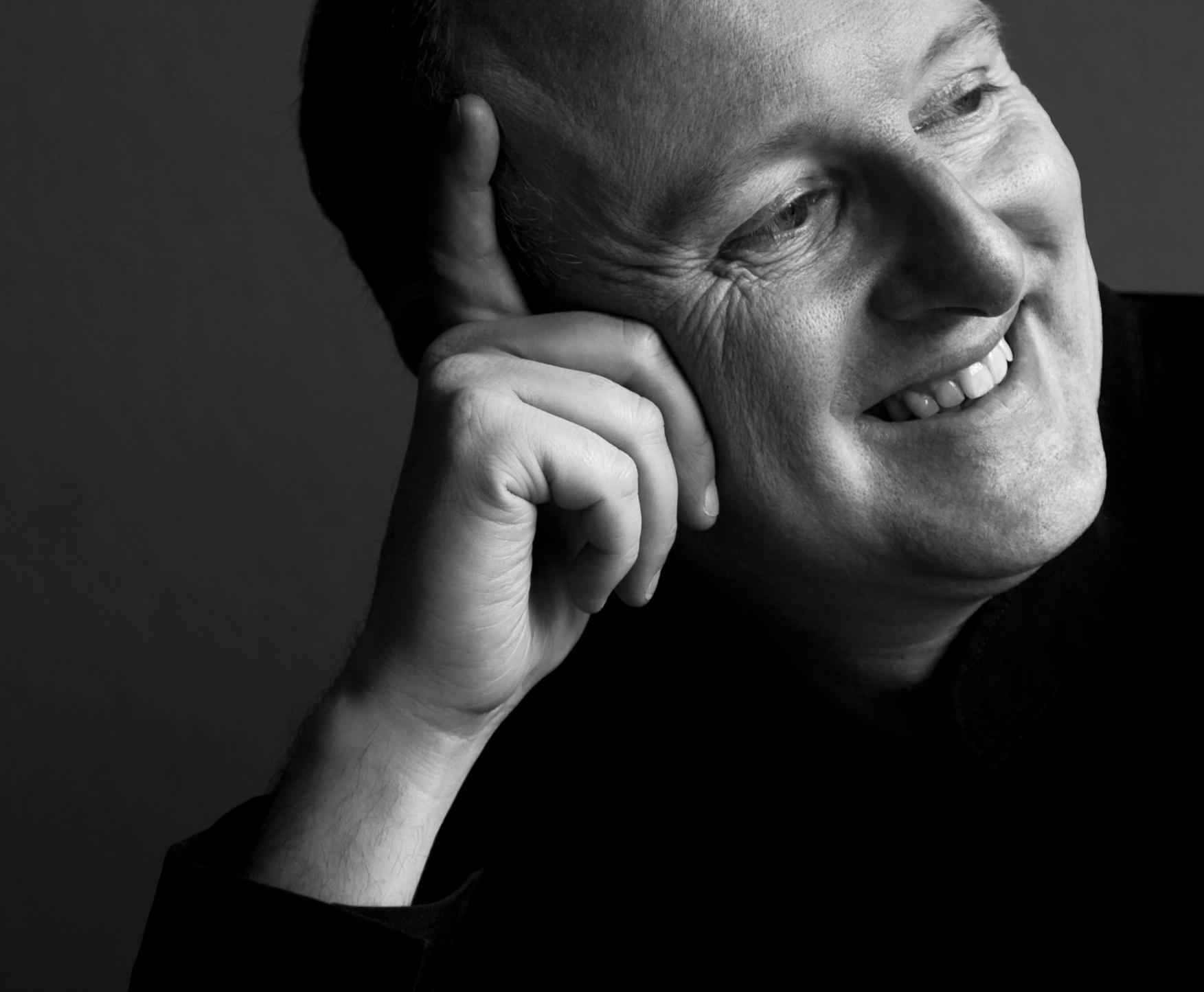
British pianist James Lisney builds his autumn tour around this act of polite sabotage, placing Bach’s Ricercar alongside Beethoven’s late sonatas—music that, in his words, “defeats our perception of time.” For forty years he’s been returning to these works, each time stripping away layers of what he calls “pseudo-intellectual obfuscations”—when you don’t know what to say but pretend you’re saying something very Beethovenian.
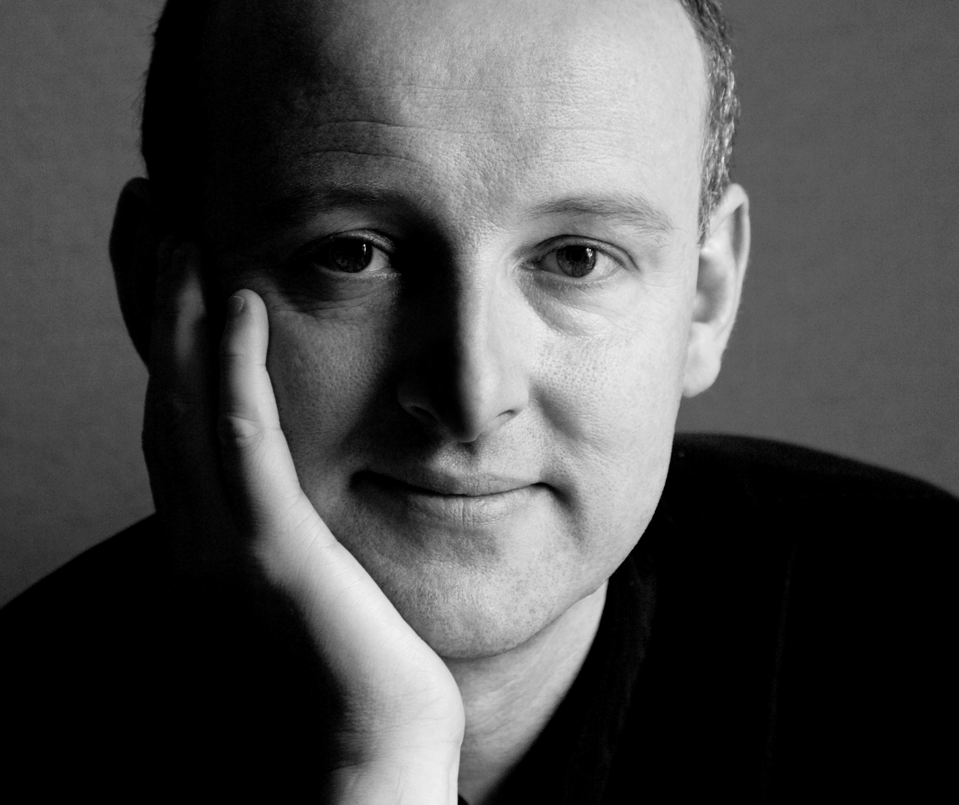
Lisney draws parallels between Bach at Frederick’s court and Shostakovich under Stalin (both hid dissent in fugues), complains that modern Steinways are too smooth and suffocate the oratorical character of 18th-century music, and explains why Claudio Arrau, before his concert at Cardiff Cathedral, studied Beethoven’s score “like a child reading a picture book”—one finger, note by note.
James, it’s wonderful to speak with you, and thank you for taking the time. I’ve been thinking about your program notes, particularly this striking phrase about Bach’s Ricercar a 3 potentially representing an artist “speaking truth to power” – this notion of Bach adding galant flourishes to Frederick the Great’s theme while remaining a master of increasingly archaic counterpoint. There’s something almost subversive about that image, isn’t there? The old Leipzig master arriving at court, improvising on the King’s fortepiano, weaving complexity into what was expected to be mere flattery. When you approach this piece now, centuries removed from that moment in Potsdam, do you sense any of that tension?
Firstly, the pleasure of meeting is mutual – and thank you for engaging with the implications of the programme at hand; it is a well worn cliché, but daily exposure to such great music is the most stimulating – and balancing – of activities. With regards the comment that Johann Sebastian Bach was challenging authority – even a colossally powerful tyrant – this was nothing new. Throughout his career, he had constantly spoke up for his ideas, and his worth and had been a demanding employee in his various posts, often driving the authorities to exasperation. We can assume that he saw his meeting with Frederick as no different and he would have been aware that they had different philosophical and political viewpoints. It is conjecture as to how these differences might have been approached in conversation, but Bach would not have held back in his musical expression.
The King presented Bach with a theme to extemporise a contrapuntal fantasy, soon after arriving at Potsdam, Bach having endured two days journey. The composer would have immediately have seen that the melody featured two symbols: a dissonant downward leap (he would have recognised it as a saltus duriusculous or ‘false leap’); and a chromatic descent (passus duriusculus), often used in music to describe sorrowful emotions. In the weeks following his meeting with Frederick, Bach expanded his realisation of the theme to form the Musikalisches Opfer – The Musical Offering. Even the title is a barb, written in a language that the King did not speak (he used French) and, typically, using a word that had a double meaning: the German word Opfer can mean ‘offering’ but also ‘sacrifice’.
Bach’s cryptic criticism of the King (and there are many more buried within the Musical Offering) has parallels with the behaviour of Shostakovich when faced with Joseph Stalin. Beethoven’s Sonata opus 111, in the same key as the Ricercar, also starts with a ‘false leap’…
Claudio Arrau’s assertion that passion deepens with age is fascinating, particularly when applied to Beethoven’s late sonatas. You’ve returned to this triptych repeatedly over forty years, each encounter revealing what you describe as “new insights” and “greater pianistic authority.” But I’m curious about what you’ve had to unlearn during these return visits. Are there interpretive choices from your earlier performances that now feel like misconceptions? What hardened convictions about these pieces have you had to dissolve to allow for deeper understanding?
My first encounter with this music was in 1982, when I learned opus 110 for a competition. I faired well, and ended up in discussion with a member of the jury, the distinguished pianist Louis Kentner. He asked me how long I had been studying the music and I confessed that it was about three months. He smiled, and gently mentioned that he had been working on it for over a half a century.
Claudio Arrau often mentioned that one of his greatest recitals of late Beethoven took place in Cardiff Cathedral. I was lucky enough to know the tuner for that event, the late great Bob Glazebrook, and he told me that the maestro was pouring over the scores before the concert, following the notes in minute detail with one finger, like a child reading a storybook. I suppose that I take from this – and have found out through repeated experience – that Beethoven communicated his intentions incredibly clearly and that one needs to be brave enough to play what is written. This can sometimes mean that results are unlike favourite performances by celebrated pianists but, as we grow older, it is easier to be oneself and not follow the crowd.
I do not (yet!) play the complete cycle of Beethoven’s sonatas, but have given countless performances of pretty much the complete chamber music with piano. This is music of great pianistic brilliance that demands mastery in many different ways: flexibility of timing, the inspiration of string techniques, clarity of textures, control of volume, etc. I have also been fortunate to work with inspiring musicians, not least those that have their musical roots in the world of ‘early music’ – a phrase which now seems out of fashion. This environment has nurtured and developed my work on the solo sonatas unconsciously; it has not been a case of ‘unlearning’ but of peeling away unnecessary complexity and pseudish habits – often these are/were sophist obfuscations to create a pretentious ‘Beethovenian’ character where I was unsure of what I was saying. As Chopin said, increasing simplicity comes from hard work and is “Art’s golden seal”.
The decision to frame Beethoven’s late sonatas with preludes – Chopin, Shostakovich, Bach via Myra Hess – suggests you’re thinking curatorially about how audiences enter these “new universes,” as you put it. Shostakovich died fifty years ago; Myra Hess almost sixty years ago this November. There’s an archaeology of interpretation at work here, layers of musicians communing with each other across time. When you play Hess’s transcription of “Jesu, Joy of Man’s Desiring,” are you conscious of her fingers, her particular relationship to these Beethoven sonatas?
Programmes come together through a combination of creative planning and serendipity. Certainly, I was not aware of Myra Hess’ anniversary until after the majority of the programme was in place – but her performances of two of the late sonatas have been close to my heart in recent years. I have played the last three sonatas as a programme on many occasions; we know that Hess did so to great effect in Carnegie Hall, for example, and Andras Schiff has performed them twice in one evening, sweeping through the trilogy as if it was one work.
Beethoven, however, gave these sonatas separate opus numbers, thus emphasising their individuality. Two of my teachers expressed doubts as to the artistic value of monograph programmes: I heard Phyllis Sellick pronounce that my Wigmore Hall recital of Schubert’s piano music was “a list, not a programme”; and, in gentler terms, John Barstow, praised a performance of Beethoven’s Tempest Sonata by Grigory Sokolov as being played as if “Beethoven had written only one sonata”.
To answer the question more directly – no, I do not sense Hess’ relationship to the Beethoven sonatas when I play her Bach transcription. I just recall her comment that she never managed to play it without suffering a memory lapse!
As a performer managing the physical reality of a concert program, how do you reconcile the temporal demands of a structured evening with these pieces that seem to want to exist outside time? Does that tension ever feel productive, or is it something you’re constantly negotiating?
These works are remarkably condensed. They are concise expressions; performers, critics, and audiences can get unnecessarily obsessed by mysticism and complexity when they communicate with the authority of Shakespeare. I feel that all involved should relax and focus on the music’s human narrative and ultimately joyous aspects.
You’ve noted that the Ricercar can “lay claim to be the first major piano work,” which positions this program at a fascinating nexus – the very beginning of piano literature and what many consider its apex in the Beethoven sonatas. Do you think about the instrument itself as a character in this narrative?
I think that my favourite modern Steinway is a long way from the beautiful instruments that Bach and Beethoven were encountering. The aesthetic priorities of modern instruments can obstruct the ’speaking qualities’ of keyboard music from the seventeenth and eighteenth centuries; music can become merely lyrical and beautiful and be robbed of its oratorical character. I have been delighted to work on period instruments when the opportunity arose, but have never been able to invest a great deal of time to cultivate regular performances.
The music in this programme is not essentially pianistic but, rather, aims towards song, speech, narrative, and dance. Even the quintessential pianistic composer Fryderyk Chopin, was apparently inspired to write his Prelude, opus 45 by the colouristic developments of his friend Eugène Delacroix.
How does the specific materiality of the contemporary piano – its capacity for both whisper and thunder – shape your interpretive approach to music written when those extremes weren’t yet possible?
These extremes were certainly possible. The range of colour on period instruments far outstrips our glossy modern beasts which emphasise homogeneity of tone colour. Recalling the Steinway chief tuner Bob Glazebrook again, he told me that a good piano should be “dangerous” and we both agreed that the trend in piano preparation was towards smooth efficiency that was most suited to a consistent beauty rather than characterful drama. To get the modern instruments to speak is a challenge. Think of the lengths that Glenn Gould went to get instruments with sufficient dramatic range.
You’re embarking on this autumn tour across quite varied venues – from the Royal Birmingham Conservatoire to intimate spaces like The Red Hedgehog. The Stoller Hall in Manchester is acoustically superb but holds 450 people; the 1901 Arts Club in London is far more intimate. Given that Beethoven’s opus 111 concludes with those transcendent, almost otherworldly variations, does the size and character of the room fundamentally alter your approach?
Variety of hall, piano, audience size and composition are what make the live experience irreplaceable. St George’s in Bristol is, perhaps, the finest piano recital venue in the United Kingdom and one is never aware of its size. It feels intimate and peopled by comfortable, relaxed Bristolians who recognise each other’s faces – a concert community. The message of the music remains the same, wherever it is performed. If it must be distorted for a venue, it is the wrong place to perform it.
Are there interpretive choices you make in a 100-seat venue that would feel wrong in a 400-seat hall, or is your relationship to this music now so internalized that the external environment becomes secondary?
I think that there becomes a time when the external environment is definitely secondary. Pianists talk about ‘projecting’ or altering their pedal concepts, about enjoying a flattering acoustic and avoiding overly dry ones – but I have tended to celebrate the variety of circumstances that one encounters. Sviatoslav Richter talked of taking a piano “like fate”; other artists enjoy dry acoustics that allow for the revelation of details that can be obscured in a traditional concert hall acoustic. Your question is correct: the message of the music of the music needs to be internalised an, at the same time, the authoritative artist needs to “sweat the small stuff”.
Can you walk me through your preparation for this specific tour? Are you working on all the pieces simultaneously, or do they require different types of attention at different stages?
Part of the joy of preparing a project like this is the research involved. The collection of the necessary materials is exciting: scores, research materials, inspiring literature and drama, etc. I have read Beethoven literature all my life but, for this programme, I gained particular stimulus from reading James Gaines’ Evening in the Palace of Reason (concerning Bach and Frederick the Great), and I can also recommend Jessica Duchen’s biography of Dame Myra Hess (National Treasure) as a fine Christmas gift for a music lover.
The tour concludes at The Red Hedgehog on December 7th, your second performance there. You’ve toured extensively throughout your career, so this isn’t unfamiliar territory – but I’m curious whether that final performance of a tour cycle carries a different weight or energy for you?
The title of the tour is ‘James Lisney: a musical offering’. This strap-line is multi-purpose, relating to Bach’s Ricercar, of course, but also to the general worth of the music involved, my relationship to this selection, Dame Myra Hess’ wartime concerts at the National Gallery and her belief in the value of music to transcend difficulty, and it is a suitable programme for philanthropic purposes. To this last end, their are a few fundraising concerts in private houses – and the concerts at The Red Hedgehog, Highgate on November 22nd and December 7th are supporting the purchase of a fine Bechstein piano in a special venue which deserves our support.
The tour continues after December 7th, and the final concert of 2025 is in a synagogue in Amsterdam; a reminder that Dame Myra Hess came from an orthodox Jewish family and made her first significant career breakthrough in the Netherlands, remaining a popular figure in that country until her death.
This is undoubtedly a programme that I will carry forward into future seasons. Bach’s Ricercar has me under its spell and I do not want to put it down just yet.
As for “Jesu Joy of Man’s Desiring”…well, I was raised in a very small house and the family had to suffer a lot of my practice. My father returning from work, would often place the sheet music in front of me and request a performance. I quickly worked out that the music appeared to repeat over its four pages and felt that the practical thing was to play the first page several times. Dad was delighted with this and praised me to the hilt.
Many years later, my father was in hospital for the very last time and asked me what I was learning. I mentioned that I was studying the Hess arrangement for a forthcoming concert.
“All of it?”, he replied…
CONCERT DATES & VENUES
9 November, Bradshaw Hall, Royal Birmingham Conservatoire
18 November, St George’s Bristol
21 November 1901 Arts Club, London
22 November, The Red Hedgehog, London
28 November, The Quay Theatre, Sudbury, Suffolk
4 December, The Stoller Hall, Manchester
5 December, Stamford Arts Centre, Stamford, Lincolnshire
7 December, The Red Hedgehog, London
*Promoted content. All information provided is prepared in accordance with editorial standards and is intended to offer useful insights for readers.








 Indie Boulevard Magazine