
Tragedy in life is a kind of threshold or boundary where life divides into before and after. After a tragedy (even a small one), a person inevitably transforms, becoming someone fundamentally different. The same applies to creative people. For them, tragedy of any scale is a peculiar period that either becomes an impulse for revealing new strengths and abilities in their chosen field, or forces them to rethink their entire creative path.
For Ali and the Wild Geese, the creation of the album and its release coincided with a personal tragedy, which became a fundamental turning point. The tragedy made it such that the release went out with a whisper – while grieving, Ali had no power behind the release to promote it properly. Yet there are certain moments in this album requiring reconsideration from the perspective of a listener prepared to encounter raw sincerity. Despite the quiet release, the album itself carries that existential weight born from what she experienced, allowing her to bring her bold and risky idea to its very end, casting aside all doubts to realize her obsessive dream.

photo by Aleksandr Karjaka
Although many discouraged her from this, pointing to the microscopic percentage of success for such undertakings. In her new album Next, two bold, almost reckless ideas harmoniously merged. The first – revealing existential truths familiar to every person and those trials we go through every day, transforming the ordinary into an epic narrative. The second – using orchestral experience in creating an album liberated from conservatory conventions. Both ideas are bold, difficult to implement, and worthy of deep respect in their realization.
The album Next contains only nine tracks. And know that they are all quite autobiographical. Why should a modern person listen to them? At minimum, because Ali worked to ensure that each song conveys that strength and transformative energy that a person receives by going through numerous difficulties and trials in their life. Each song is a kind of milestone on the path of overcoming. At maximum – one can appreciate the boldness of the concept and reflect on the trajectory of one’s own existence. After all, if it’s possible to realize something so global and relatively eternal, then something “smaller” will turn out to be significantly easier. As mentioned earlier, the album has nine tracks. But I want to highlight perhaps the most key among them:
Red Wine opens the album. The central place here is occupied by the melody, which becomes the main protagonist of the narrative. Cheerful and spirited in its country stylistics, it makes you smile and sets feet dancing, instantly transporting the listener to a rural celebration somewhere in the American heartland. Even the small pauses are perceived organically – some for completing one movement, others for beginning a new one, as the insistent violin commands. The melody dominates here so much that Ali’s vocals become an additional instrument even after the second and third listening (unless you specifically focus on it). This is a conscious choice, demonstrating the maturity of the production vision.
But the track Feelin’ a Way is the complete opposite of the first! And thanks to this contrast, it immediately captures all attention from the first seconds after it starts. Ali’s piercing yet tender, gentle yet strong vocals accompanied by violin and piano make the heart tremble, as if Édith Piaf had met with a modern American woman. Smooth transitions convey longing, pain, and hope – that holy trinity of emotions that forms the foundation of any great musical work. And yet Ali maintained balance, where emotions remain under control, enriching the meaning of the lyrics, evoking a deep but controlled emotional response from listeners.
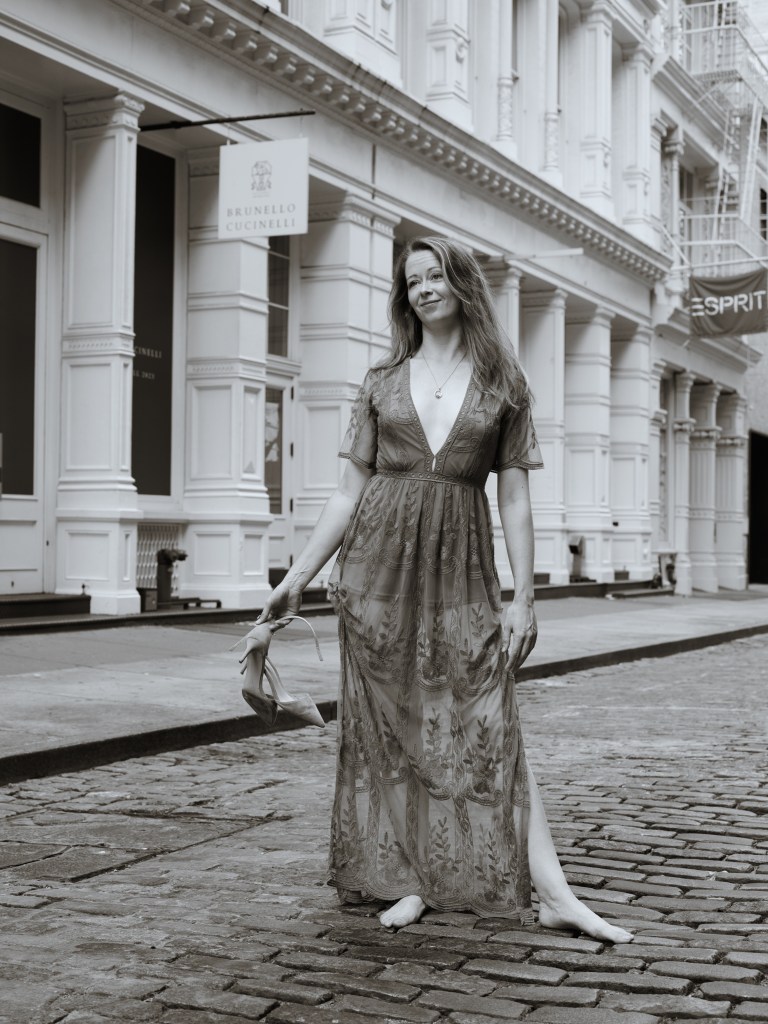
photo by Aleksandr Karjaka
The lyrical mood continues in the next track Missin’ Me. Here, too, first place is given to the performer’s strong vocals, but the dramaturgy changes radically. If the previous track was dominated by vulnerability, here a gradually gathering challenge is clearly traced. And it’s multilayered (addressed simultaneously to the performer, circumstances, and listeners). It’s intended for everyone at once, creating a sense of collective catharsis. Ali and the Wild Geese offers to compete to understand who deserves what. The challenge is quite soft, easy to accept or decline (if desired), which only adds charm to the track and makes you listen to it again and again, discovering new semantic layers.
But the track Bad Detective surprises with a mixture of dynamism, melodiousness, and distinct country nuances. In places, this track echoes the first one, but there’s a significant difference: the pauses are considerably shorter, and the emphasis is placed precisely on them, as if underlining the importance of information specifically in these sections. It turned out great!
And finally What You Know, closing the album. The emphasis is on vocals, which become the center of the universe of this song. Here Ali used a completely different performance technique. This is simultaneously a confession, a challenge, and an invitation to join in a collective experience. The interplay of violin, bass, and guitar creates an intimate yet expansive backdrop, allowing Ali’s voice to carry the full emotional weight of the track. It’s a powerful closing statement that stands completely autonomous in its aesthetic, requiring no comparisons – it simply exists as the natural culmination of everything that came before.
Next exists in that rare space where personal trauma transforms into a universal statement, where orchestral training meets the raw energy of the indie scene, giving birth to something unexpectedly cohesive. Ali and the Wild Geese does what few manage to do – they create an album as a statement, as a challenge, as nine chapters of one book about overcoming.
The fact that this album saw the light at all is already a victory. The fact that it sounds exactly like this is evidence of artistic maturity. Ali proves that conservatory education and the modern independent scene can coexist in one track, that personal grief can become fuel for creating something beautiful, that risk justifies itself when it’s backed by genuine expression. And if the next release by Ali and the Wild Geese maintains this boldness of expression, we will witness the birth of a truly important voice in contemporary music.
*This review was made possible by SubmitHub








 Indie Boulevard Magazine