

No one has yet learned to play with music, turning it inside out, the way Nada UV has. This is genuine alien vintage, where time has been erased, weaving retro with modernity. However, there are no wide-brimmed hats here, no glamorous dresses with dancing to a jazz orchestra. This music is infused with R&B, special effects, through which vaportrap noir smoothly slips.
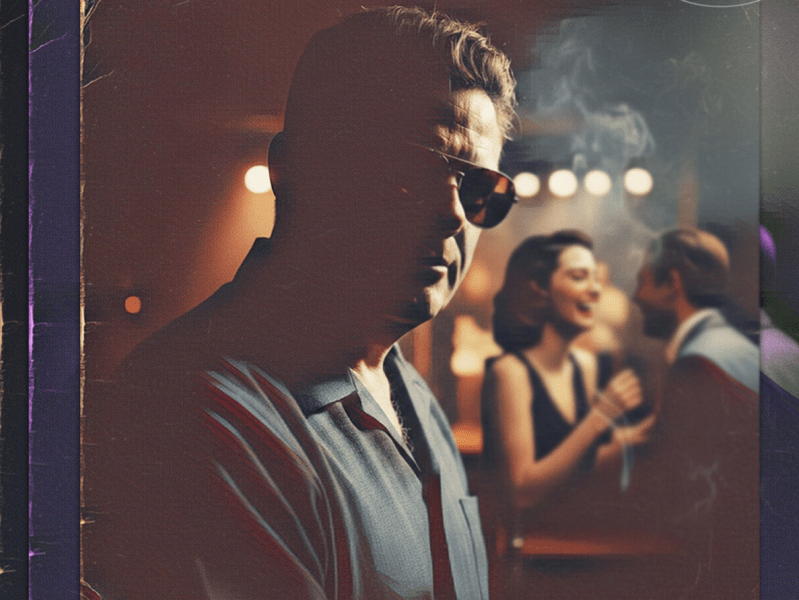
Somewhere between the faded frames of Wong Kar-wai and the trembling lights of advertising signs on VHS tape, there exists a special space of memory – imaginary, constructed from fragments of other people’s recollections and the unfulfilled promises of eighties pop culture. Nada UV inhabits precisely this territory, where retro-futurism loses its irony and becomes pure affect, a method of feeling. The self-titled album is an attempt to map the night city as a state of consciousness, where neon reflections exist simultaneously in the past and future, in reality and in reverie.
Eighteen tracks form a kind of psychogeographic route through places that probably never existed. Dream pop here functions as an environment, as air – rarefied, shimmering, saturated with refractions. R&B structures emerge through layers of reverberation and vinyl hiss like the architectural skeletons of abandoned buildings. Vaportrap noir – if one can even use this term without ironic quotation marks – proves to be an accurate definition for music that exists in the gap between genres.
This is nocturnal glamour without saccharine sweetness with interesting effects – exactly what everyone who wants something more complex needs. Here even the meaning of the lyrics is much deeper than club candy.
I was most impressed by the following tracks, which I want to tell you about in more detail.
“Running the Show Like a Ruthless God“ – light noir of slightly tired musicians for whom nightly club concerts are routine. The slight hoarseness of the voice, characteristic of dream pop, adds a slightly “weary” shade to the vocals, but how beautifully it sounds! A neon show on the edge of possibility, when energy is about to run out, once again proves that vocal beauty doesn’t mean strength. Even slightly fatigued, one can create a masterpiece. “Running the Show Like a Ruthless God” struck me with the lightness of its alien sound. This is how a long-burning neon light gently fades, fragile vocals in harsh music.
“Don’t Call (Just Think of Me)“ takes me back to an old disco club, where the signature voice of the lead singer sounds to slow retro with a light crackling. A light, slowed-down dance, neon light make you forget about everything except movement. The main “spark” of this track is the vocals. Here they turn on like disco lighting: easily, brightly, quickly, but without excessive pressure. A wonderful track for those who can’t sleep, who spin in a slow dance under the lights of the big city (and beyond). A find for those who want to dance slowly even in their dreams, rather than run to the refrigerator for chips. By the way, it’s created for those who are somehow afraid of intimacy and want to keep at a distance those they love.
“Already Here” appealed to me with its raspy instruments, burnt retro sound in contemporary processing. Here there are already more optimistic notes than in many other tracks, and the most tender-provocative backing vocals create a gorgeous atmosphere of light temptation flowing over the skin. A charmingly insistent track with effective crackling will appeal not only to lovers of forgotten melodies on old records. This is quite a contemporary hit, like turning on the light in an old room, reviving hope.
“Pink Bruises Under Onion Skin” – a tender, elegant ode to dark impulses, clothed in an affectionately melodic form. Light instrumental airy retro about not the best side of personality that everyone has, in the best incarnation of dream pop. Beneath the light, glamorously doll-like sound hide decidedly non-childish passions.
The ballad “You’re Not Gonna Like What You Find“ gorgeously reveals Nada UV‘s vocals with unearthly transitions. This is where it unfolds as a starry canvas, shining like a lighthouse over the dark city of sleeping melodies. This isn’t just night, but swinging on swings in the clouds under a huge full moon, amid the sweetest dreams. In the chorus, the lead singer’s voice reaches the apogee of angelic beauty. It doesn’t drown in special effects, but smoothly glides over waves of unearthly acoustic music, immersing one in dreams. And although the title suggests that something won’t be liked, the track captures the soul entirely, mesmerizing with unearthly beauty. One could float on its waves endlessly.
“Kiss Me Where It Hurts Most“ is an excitingly playful track. Here again one feels disco without excessive noir, light but not glamorous. The lead singer’s voice beautifully conveys excitement, it no longer has that unearthly shimmer, but it sounds great. However, the track is about pain, consolation, but without drama. It sounds disco-light, tremulous, somewhat glamorous. This is excitement on the skin, playfulness masking the vulnerability of the soul. The vocals here alternate with beautiful whispers, passion with closedness, creating a sense of trembling. An interesting track with non-standard vocals, making you think about many things.
“Say Less” – a triumph of acoustics. Here the voice already merges with acoustic effects, creating a weightless, alien space without clear lines. The boundary between darkness and light is finally erased, revealing the expanse of imagination, and the music conveys every movement of the soul without words. Here one wants to dance in a white dress, spin in chaotic movements among pillows, dream without boundaries. This isn’t about relaxation, but about dissolution in sounds. If you want to fall asleep, relax, dream, turn on “Say Less.” This is truly a waking dream, where acoustics erase all boundaries between instruments, voice, uniting them into a single whole. Lights merge together, turning night into sleep.
“I Like the Fizz“ – glamorous R&B without excessive retro. A bit of rap, a drop of disco, clear earthly vocals, and the toy is ready. A broken melody without excessive acoustics doesn’t plunge into the darkness of illusions, but brings you out of dreaminess as if from fog. Here there’s already more dance, playfulness, coquetry. There are very few effects, but the disco style is felt. A worthy conclusion to the journey through the world of musical illusions, bringing you home to a cup of strong coffee in a cozy armchair.
The album’s key achievement is the creation of its own sonic language at the intersection of genres that usually exist in isolation from each other. Dream pop loses its guitar romanticism, R&B is stripped of its groove and sociality, disco becomes a memory palace. Vaporwave aesthetics here work as a method, as a way of deconstructing pop forms, but lose their critical irony – Nada UV treats the material with almost religious seriousness, with the conviction that these faded images and blurred melodies contain some important truth about the nature of desire, memory, identity.
If one were to look for a bit of salt in the wound, well, one could note a certain homogeneity of the album – eighteen tracks are maintained in a very narrow dynamic and temporal range. There are almost no moments of genuine explosion, catharsis, conflict here. Everything exists in a mode of slow smoldering, gradual fading. For some, this will be an advantage – the opportunity to immerse themselves in a uniform atmosphere for over an hour. For others – monotony that tires with its monochromaticity.
Nevertheless, “Nada UV” is a significant statement in the context of contemporary alternative pop. This is music that takes clichés – nostalgia for the eighties, dream pop drowsiness, vaporwave melancholy – and transforms them into something personal, heartfelt, devoid of the cynicism of postmodern play with cultural codes. Nada UV believes in their neon reveries, in their faded utopias, and this faith is transmitted to the listener, creating a rare effect of emotional authenticity in music built from simulacra and references. The night city of Nada UV is a place where you can get lost in the best sense of the word, lose yourself in order to discover something else – another version of the past, another possibility of the present, another way to feel and remember.
*This review was made possible by SubmitHub







 Indie Boulevard Magazine