
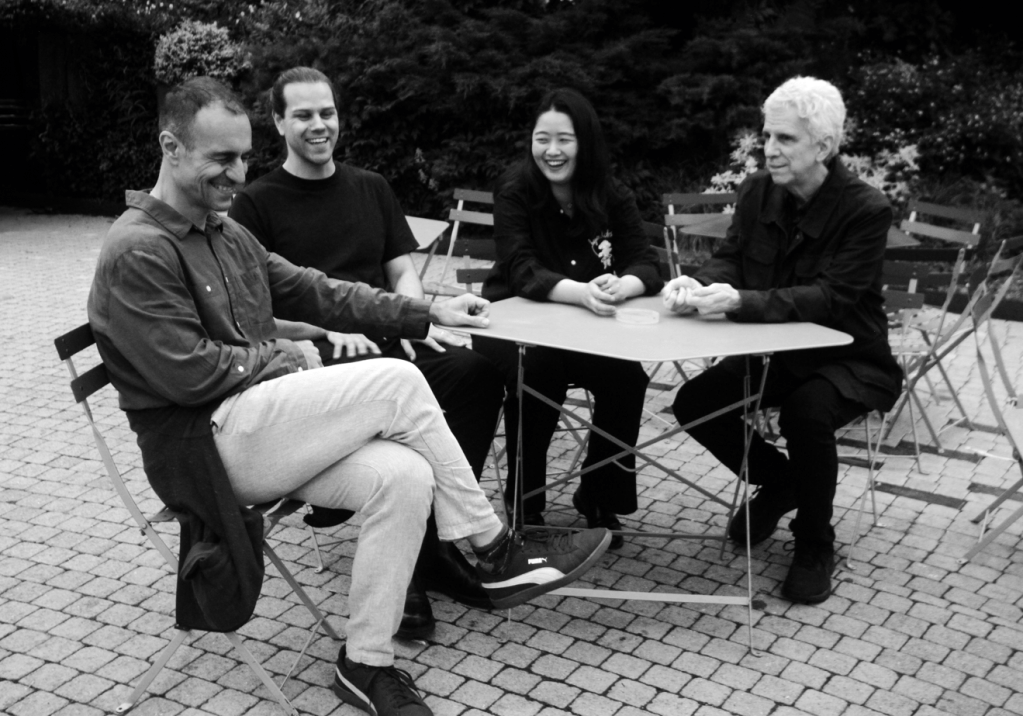
New York has always been a place where traditions collide and reimagine themselves. Jung Stratmann Quartet embody precisely this principle of cultural métissage: Sujae Jung‘s Asian meditativeness, Wolf Stratmann’s European chamber sensibility, Steve Cardenas‘s American freedom (who spent years alongside the legendary Paul Motian), and Marco Djordjevic‘s Balkan rhythmic inventiveness coalesce into a statement that belongs to all these traditions simultaneously and to none of them individually.
The new single “This Wine Tastes Very Dry,” which was released today in anticipation of the full-length album ‘Confluence‘, works as a perfect metaphor for the sound. Dry wine—a drink without residual sugar masking its character. This composition is stripped of ornamentation, cheap emotional effects, everything that makes jazz “pleasant” for the casual listener. It’s exposed, tart, demanding your willingness to accept it on its own terms.
I returned to this track again and again over the course of weeks, trying to understand why it holds attention despite its apparent lack of conflict. The composition opens with Jung‘s piano phrases that hang in the air with that particular suspension—when harmony is about to resolve, but the musician holds the tension for another moment, and another, forcing the listener to balance on the edge of anticipation. Stratmann‘s double bass materializes almost imperceptibly, his line entering so naturally, as if it had always been sounding, you just hadn’t heard it before.
Marko Djordjevic deserves separate discussion, because his approach to drums is radically different from what generations of swing drummers have taught us. For the first two and a half minutes he exists on the periphery of the sound field—brushes rustle on the snare drum so quietly that you could mistake it for external noise, cymbals ring at the edge of perception. Djordjevic builds tension through absence, through refusing to give what’s expected, and when he finally announces himself with a full rhythmic statement at 2:30, it’s perceived as an explosion, though dynamically he remains restrained. Cardenas on guitar, though appearing only at the very end, demonstrates that particular wisdom that comes only through decades of playing with musicians who understand the value of space.
Are they even improvising? Or is all of this written and rehearsed? A good question, and there’s no answer. When musicians play together long enough, the boundary dissolves. What’s written begins to sound spontaneous, what’s improvised settles like composition. The quartet has clearly logged dozens of hours together, and it’s audible—they anticipate each other, leave space, take it back without words.
The album Confluence may become one of the important jazz statements of late 2025.
*Promoted content. All information provided is prepared in accordance with editorial standards and is intended to offer useful insights for readers.









 Indie Boulevard Magazine