
Lux Griffith. The name came from a matchbox. The surname was borrowed from a Berserk character. Jordane Sagot from Nantes calls it a lucky charm—a final attempt to make music without compromise after a string of failures.
Eleven minutes of the debut EP People Are People To People is indie pop that disguises darkness beneath sunny melodies. There’s a childlike perspective that perceives the absurdity of adult masks without cynicism. Monsters as a metaphor for outsiders. Tim Burton meeting David Bowie somewhere between glam rock and Sinatra’s jazz standards. Producer Léo Doublé noticed the songs were written from a child’s point of view. Sagot himself hadn’t realized it—as if the inner child he’d been ignoring for years suddenly sat down next to him during recording. The next album, he promises, will be completely different. More experimental. Somewhere between Kid A and Short n’ Sweet. We talked about how children’s play differs from adult pretense, why repeating the same record twice is pointless, and how an alter ego can be more honest than a real name.

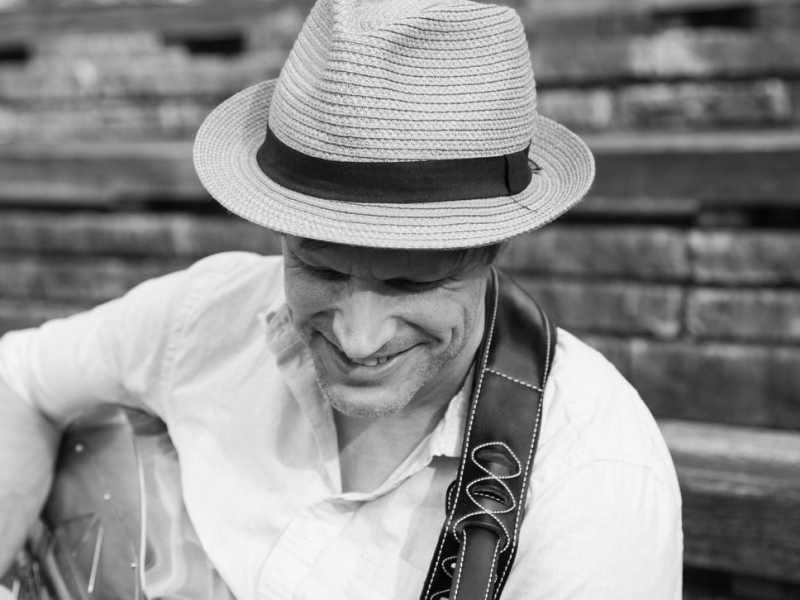
photo by PIINOVA
You mention that the name Lux first came to you through a dream about a future daugh ter, and then materialized through a box of matches at exactly the right moment. There’s something almost mystical about how artists choose their alter egos—as if they already exist somewhere and are simply waiting to be found. And adding the surname Griffith from «Berserk» creates an interesting tension between the tenderness of the name Lux and the dark charisma of that character. How do you feel the presence of this alter ego in everyday life—is it a protective shell, a separate personality, or rather a way to manifest those parts of yourself that Jordane keeps under lock and key?
Choosing this name felt like creating a lucky charm for the project. After many trials and errors with previous musical endeavors, I saw this one as my own “final fantasy” — a chance to give everything I have without any artistic limitations.
As for the alter-ego aspect, I’ve always been fascinated by Ziggy Stardust, David Bowie’s invented persona. Since I’m deeply inspired by the 70s glam rock aesthetic, I wanted to craft a character that feels larger than life. Something theatrical — an Harlequin-like figure that lets me explore both art and myself without boun daries.
On «People Are People To People,» you write from a child’s point of view without reali zing it until Léo Doublé pointed it out to you. This reminds me of how David Bowie used to say that the best songs are written when you’re not fully in control of the process—when something moves through you rather than coming from you. A child’s optic allows you to see the absurdity of adult masks and social rituals without cynicism, with pure bewil derment. Was there a moment during the recording of the EP when you suddenly became aware of this childlike perspective, and did it change anything about how you finished the material?
I love the idea that songs can be born on their own, and we’re just the tools that help bring them to life. Lately, I’ve been experimenting with this old-school technique of opening random books to spark lyric inspiration.
During the recording process, I really became aware of that childlike perspective. It didn’t technically change the material, but there was this strange feeling accompanying me throughout the sessions — almost as if my inner child, the one I’d neglected for years, was suddenly sitting right beside me.
You mention «The Elephant Man» as an example of a film that asks the question «who is the real monster?» On «People Are People To People,» monsters become a metaphor for how society perceives people who don’t fit into frameworks, who don’t wear the right mask. How deliberate was the choice to package these dark themes in such a light, pop-oriented form?
Well, Pop is simply the music I love and listen to the most, and the lyrics pretty much came on their own. I had to take a step back at one point and realize what I was actually writing about. I grew up watching Tim Burton movies, so I guess I learned early on that monsters aren’t always a threat — and that you can feel em pathy for what society might label as monstrous.
So I’m not sure how intentional it all is. I just tend to explore darker themes the same way someone would write a love song — and sometimes both end up in the same track. I love Michael Jackson just as much as I love Midsommar. So all my influences, no matter how different they are, naturally blend together.
Working with Léo Doublé (Queen Willow, Supermoon) clearly brought a certain texture to the sound of the EP. Four tracks in eleven minutes. How did you and Léo determine which ideas to keep and what to discard? Were there demo versions that went in a more experi mental direction or, conversely, in a more straightforward pop sound?
There were demo versions — I made them alone in my room, and they’re actually very close to what you hear on the EP. Then, with Léo, we work on shaping them into something as close as possible to the final product before stepping into the studio. He’s an amazing drummer, so he really helps bring the drum parts to life, for example.
We treat the demos like a skeleton and then build everything around them, adding new parts one by one. We recorded each instrument separately — with the demo in our headphones — at Le Garage Hermétique over four days. During that time, we also captured a bunch of textures just for fun. They have tons of weird ins truments and effects there, so of course we had to play around with them, haha. Later, during mixing, we got creative with them.
Léo is a really creative friend. We’ve known each other for six years, and we talk about art all the time. Most of the time we already know what the other wants musically, and we trust each other so deeply that we can both express ourselves freely.
Babayaga Pepperland’s cover art with flowers as a metaphor for scars and traumas—it’s a visually powerful image, especially in the context of flowers being constantly cut but growing back again. In pop music, there’s often pressure to make trauma aesthetic, to turn pain into something consumable. Do you feel a responsibility to listeners who might reco gnize themselves in these themes?
I don’t think I do. I just try to let everything that goes through my mind and my soul impact the music — my traumas, my fears, my joy. Those feelings are universal, so people might relate to them, but what I do remains very personal.
I also like to avoid giving away all the keys to understanding my work. I’d rather let people feel whatever they feel without telling them how they’re supposed to interpret it. In the end, what I create and the stories I tell matter far less than what they mean to the listener.
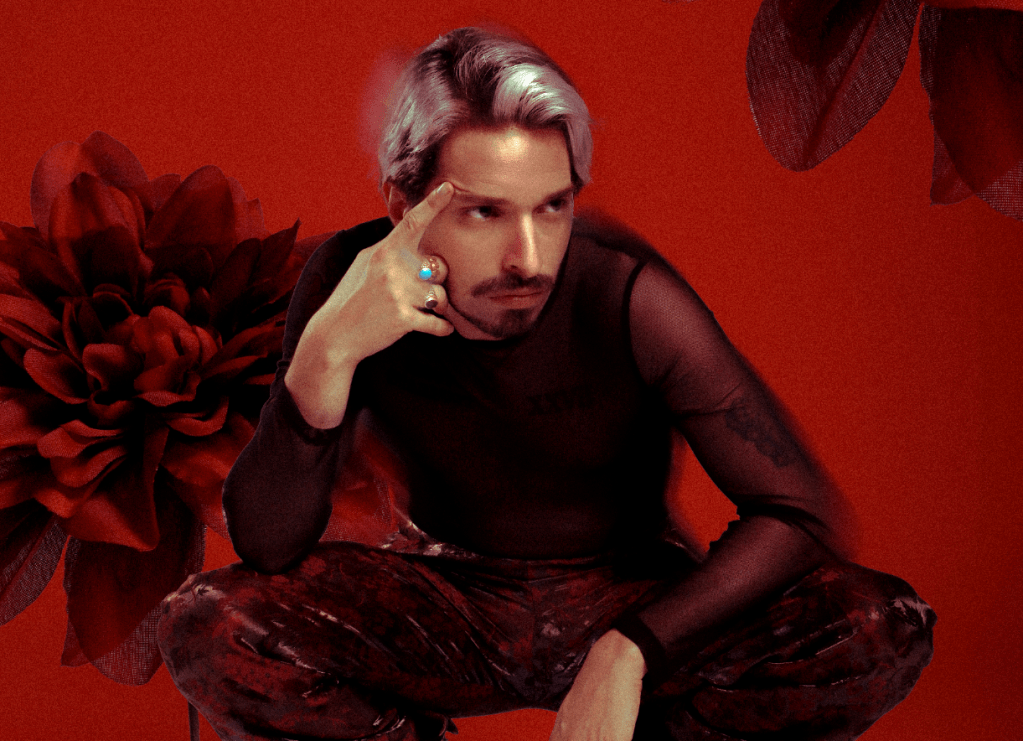
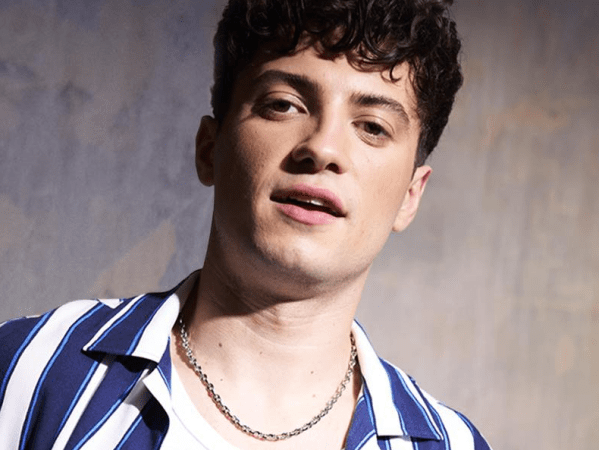
photo by PIINOVA
Many artists get stuck searching for «their sound,» afraid of appearing inconsistent. Now that you’ve found a sound for Lux Griffith on this EP, do you feel this is the final form, or rather a moment in an ongoing evolution? And was there panic at some point: «What if I never find myself?»
Well, that’s a very understandable fear, haha. But at some point, I decided I needed to make music for myself — and that’s really the best way to figure out who you are as an artist. I really don’t see the point of making the same record twice, what is coming after this first EP will be very different. It will be Pop but with a very different approach, way more experimental. I really feel like I’m somebody different every day, I just go wherever that takes me.
You’re planning to shoot music videos in a genre style, create monsters, possibly be come one of them yourself. How do you see the relationship between the songs and their visual embodiment—should the video illustrate the lyrics or create a parallel narrative?
It really depends on what you want to do. It can be both — there’s no single formula. Right now, I want my music videos to feel like paintings, like standalone pieces of art. I’d love to explore that more. I’m heavily influenced by Impressionism and Symbolism, and I want people to experience that not only when they listen to my music, but also when they watch the visuals.
I’d love to try and make more abstract and surrealist music videos in the future.
«Batshit Crazy» stands out as a sunny love song among the more melancholic material on the EP. Love is often portrayed as either salvation or yet another trauma in indie music. But there’s something refreshing about how this song exists without heaviness, almost like a breather. When you wrote it, was it a conscious decision—to give the listener and your self a moment of light—or did it just appear naturally?
Nah, I was just feeling silly, haha. I wanted to write a song that day, and that’s simply what came out. I’m also a big fan of classic jazz tunes — from Sinatra to Dean Martin. I can’t help but love a corny song or movie. You can definitely feel that cheesy jazz influence in “Mood Swing” as well. A bunch of the lyrics are borrowed from jazz standards — that’s my little Easter egg.
You mention that the next album will be more experimental with a strong Bowie in fluence, and that «Bruised Knees» already contains clues. Bowie was a master of reinven tion, but also a master of knowing when to stop—»Low» works precisely because he didn’t turn it into a three-hour ambient opera. Are you afraid of losing part of your audience if you go too far into experimentation?
Well, first you need an audience before you can lose them, haha. I’m still at the beginning of my career, and experimentation is always going to be a big part of what I do, no matter what.
I truly believe there’s a way to make music that lives somewhere between Kid A and Short n’ Sweet. Music has changed so much — our generation grew up with the internet, with every genre instantly available to us. It feels like the right time to explore and experiment. So many artists are redefining what Pop can be. Musicians like Oklou or Kaeto are really inspiring to me.
You say that adults «give themselves a personality, pretending to be someone,» while children don’t do this. But creating an alter ego like Lux Griffith—that’s also a form of pre tending, constructing a personality. Perhaps the difference is that children play sincerely, without self-consciousness, while adults play out of fear or necessity. When you put on the name Lux Griffith and go on stage or into the studio, does it feel more honest than just being Jordane? Or is it just another form of the same mask you sing about?
I see it as a game you know. Playing pretend. We can be whoever we want to be. Add a little bit of magic to our lives.
*Promoted content. All information provided is prepared in accordance with editorial standards and is intended to offer useful insights for readers.




 Indie Boulevard Magazine