
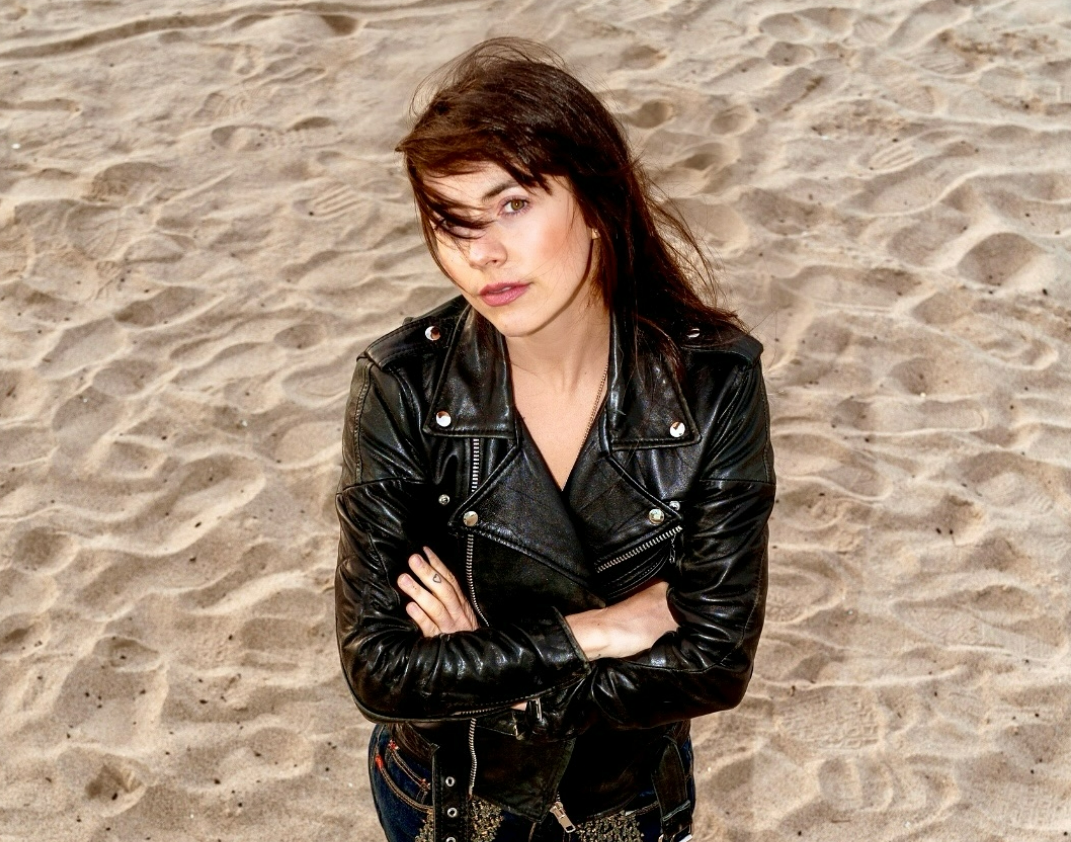
Marilyn Hucek feels. You can hear it from the first bars, though you understand it somewhere around the middle. Her father suffered from Alzheimer’s disease while she was finishing LAAMP. Four million streams on Spotify before the debut release, and mind you, this is a number that means little, but it shows: people are ready to listen, ready to listen to how she articulates her grief into the microphone.
Her debut album is simply called MARILYN. Her own name as a statement, as taking full responsibility for the utterance. Eight songs, just under thirty minutes, structured as a journey. A fairly familiar trajectory for a chamber pop album: from light to shadow, from hope to acceptance of loss. The risk is that such a structure can turn into a predictable scheme, where emotional points are placed too neatly, too academically.

But… Here it’s important to understand what Hucek went through. Alzheimer’s disease is the slow disappearance of a person in a living body. It’s a trauma of a special kind, stretched out in time, deprived of the catharsis of sudden loss. To speak about this publicly, to turn it into music requires either exceptional courage or therapeutic necessity. Perhaps both.
The album’s sound is sustained in the aesthetic of contemporary indie pop: clean, airy, with an emphasis on vocals. There are no experiments with form or structure, or any kind of avant-garde techniques. Hucek chooses an accessible language, and this is a conscious choice. She wants to be heard, wants the songs to reach those experiencing a similar experience. This is a noble goal, though it does limit the artistic possibilities of the material. When the subject is so heavy, so nonlinear by its nature, you want the music to reflect this chaos, this fragmentation of consciousness. Instead, we get neatly constructed songs with classic verse-chorus-verse structure. The safety of the production becomes simultaneously an advantage and disadvantage of the album.
“I Made It” opens the album with light. Here Hucek paints a portrait of youth, that moment in life when everything seems possible. Guitar arpeggios are transparent, almost crystalline, drums hold a light, danceable rhythm. Her voice here sounds free, joyful, with that carefreeness that’s only accessible to those who haven’t yet faced real loss.
“Naked” slows the tempo. The title speaks for itself—this is a song about vulnerability, about that moment when external defenses stop working. Hucek sings about distance, physical and emotional, about how separation from loved ones exposes attachment to them. Here the first cracks begin to show in the optimistic picture of the first track.
“Love to Hate You” adds energy. Guitars here sound denser, with light overdrive, drums become more aggressive. Hucek explores the ambivalence of feelings—that strange mixture of love and irritation that arises in close relationships. The title is straightforward, almost clichéd, but the performance saves the track from banality.
“Pressure Makes Diamonds” returns danceability. The title references that idea that suffering tempers, that strength is born from pain. This is dangerous territory—it’s easy to slip into motivational clichés, into Instagram quotes about how “what doesn’t kill us makes us stronger.” Hucek balances on this edge, sometimes almost slipping into banality, but holding on thanks to the sincerity of performance. Musically this is the most electro-pop track of the album.
“Rebound” is such pop-rock that you could easily hear somewhere on the radio, in a Netflix series, a very commercial track. The lyrics here are also quite unobtrusive, a song about the lightness of relationships.
“To Be or Not To Be” leads into ballad territory. The Shakespearean reference in the title is ambitious, almost daring—this is one of the most famous phrases in world literature, and using it for a pop song is risky. But Hucek takes this phrase and rethinks it through the prism of female experience, through questions of choice and responsibility. I really liked the delivery of a serious, important theme: light, but touching the soul.
“Me Salvaste el Alma” switches to Spanish. Hucek has Chilean roots, and here she turns to this part of her identity. The title translates as “You saved my soul,” and this is a direct, uncomplicated statement of gratitude. The track is dedicated to that person—or people—who became a support in difficult times.
“Neil Young” closes the album. The title is a direct reference to the musician whose music Hucek’s father listened to. This is a dedication to the deceased, an attempt through song to preserve memory, to say what wasn’t said during life. The track is personal to the point of awkwardness, and in this intimacy lies its main strength and main danger. The instrumentation is maximally reduced: Production here finally retreats, lets the music breathe.
MARILYN exists in a complex space between art and therapy, as well as themes of love and relationships. This is Hucek’s attempt to cope with trauma through its articulation, through turning personal grief into public utterance. Such an approach is always risky. It’s too easy to slip into sentimentality, into exploitation of one’s own pain for emotional impact on the listener. The album sometimes comes dangerously close to this edge, especially in moments when the lyrics become too straightforward, too declarative.
The album’s main strength is in Hucek’s voice. She possesses an instrument that is beautiful, flexible, capable of conveying a wide spectrum of emotions. Her technique is impeccable. She knows how to control breathing, masters dynamics, understands how to make vocals maximally pleasant.
One could object that the accessibility of language is a conscious choice by the artist, a desire to reach the widest possible audience. This is fair. Hucek makes music for people experiencing similar experiences, and for them what’s important is not artistic novelty, but emotional resonance.
The decision to donate five percent of sales to the Alzheimer’s Association deserves respect. This gives the project a dimension of social responsibility, turns it into an act of solidarity with those who have faced the disease. Hucek could have used this charitable component as a PR tool, but she keeps it modest, mentioning it almost in passing. This speaks to the seriousness of intentions.
In the two years that have passed since Love and Loss, Hucek has grown noticeably. This is audible in the confidence of vocals, in readiness for emotional exposure, in the maturity of lyrics, even in her gaze. She has traveled the path from a beginning singer searching for her voice to an artist with a clear understanding of what she wants to say.
MARILYN is an album about the strength to continue. About how to find resources to move forward when the world around you is falling apart. About how to turn pain into something, if not healing, then at least expressible. The question is where Hucek will go next. MARILYN is a strong debut, but it also shows the limitations of her current approach. The next album will show whether she’s capable of going beyond safe indie pop and risking form for the sake of matching content. The talent is there, the voice is there, there’s something to say. What will happen next? Personally, I’m intrigued.
*Promoted content. All information provided is prepared in accordance with editorial standards and is intended to offer useful insights for readers.








 Indie Boulevard Magazine