
Violin occupies rare air in rock music. Warren Ellis turned his bow into prophecy with The Dirty Three, conjuring apocalyptic westerns from catgut and rosin. Black Heart Procession wove strings through California noir until the instrument became another dialect of shadow. Post-punk, though? Post-punk remains mapped by guitars, bass, drums—the holy trinity of angular aggression. CO-ED DORMS, a quartet fresh from opening slots with Xiu Xiu, Black Midi, and Horse Jumper of Love, arrived to redraw the cartography. Their self-titled debut exists as a single unedited live performance—nine tracks captured in one take, preserving every bead of sweat, every split-second decision, every moment where disaster brushed close enough to feel its breath.
The gamble succeeds because CO-ED DORMS grasp the essential physics: post-punk lives in constraint and release, in the microsecond before structure collapses under accumulated weight. Studio polish gets jettisoned. Digital correction stays exiled. What remains breathes and bleeds in real time. The violin becomes their primary weapon, slicing through fuzz bass and distorted guitars with a voice that pivots from operatic grandeur to serrated aggression inside single measures. Gimmick territory beckons—hey, look, strings in post-punk!—but the band deploys the instrument with identical brutality to any overdriven amplifier. Classical training surfaces sideways, manifesting in intervals that refuse expectation, in phrasing that actively resists predictable patterns. Post-punk dressed in formal wear, then dragged through broken glass—this becomes the operating aesthetic.
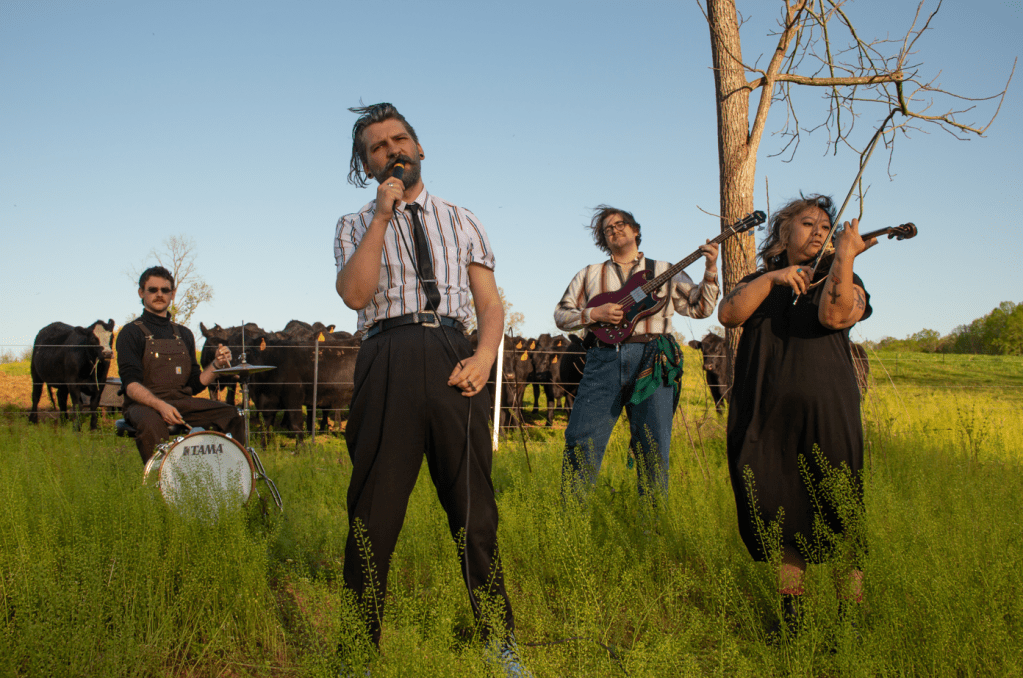
photo by Makayla Haag
“The Pigeon” opens the album with ceremonial weight. Drums arrive first, measured and deliberate. Bass enters next, then guitar, layering distortion like geological sediment. The violin finally appears, soaring over industrial wreckage—though soaring misses the mark. The instrument hovers, circles, occasionally plummets. Beauty and brutality occupy identical frequencies here, the album’s thesis statement rendered in sound.
“Feeling Good (Oh Yeah)” kicks tempo into high gear while keeping violin centered. The strings function as a second rhythm section, chopping out jagged phrases that actively avoid melodic resolution. Charles Jones stretches words into strange geometries, finding air pockets between instrumental assault. Velocity dominates, but control remains absolute—calculated chaos, precision masquerading as accident. The violin solo midway abandons classical pretense entirely, sawing out lines closer to percussion than melody. By the end, the track emerges as espresso shot, designed to recalibrate nervous systems.
“Money” begins with violin dominance, establishing hierarchy before drums or bass enter the frame. Jones’ vocals open conversational, almost casual, before dynamics shift and we land in full-throated territory. The band’s use of space here fascinates—instrumental breaks feel vast, emptying the sonic field so thoroughly that returns double their impact. The violin seizes solo opportunities and sprints with them, while vocals fight back, demanding attention, refusing subordination.
By track seven’s arrival, “QUIET DOWN” operates within established vocabulary. This one strips hierarchy away entirely, flattening power structures until everything exists at identical volume. The band’s punk ethos surfaces in purest form: unity through volume, power through ego dissolution. Single-minded intensity persists for the track’s entire duration, offering zero release valves.
“Milk Drinker” introduces rhythmic patterns suggesting obsession. A single note pulses underneath everything, steady as cardiac rhythm, while other elements drift across the stereo field in unpredictable trajectories. The effect evokes mechanical repetition—dialing the same number repeatedly, each time expecting different results. Vocals recede into background, surfacing occasionally before dissolving back into the mix. Tension accumulates as the track progresses, pressure building without outlet.
“Murder On Main Street” closes the album through dismantling everything prior. Melodic phrases fragment. Rhythm stutters and fractures. Instruments drift in and out of phase with each other. Vocals hover in this unstable architecture, sometimes guiding chaos, sometimes swept along by it. Resolution stays absent. The track embraces disintegration as compositional strategy, letting pieces fall according to physics rather than design. As closer, it refuses catharsis or summary statement. The album simply stops, leaving listeners to process accumulated impact.
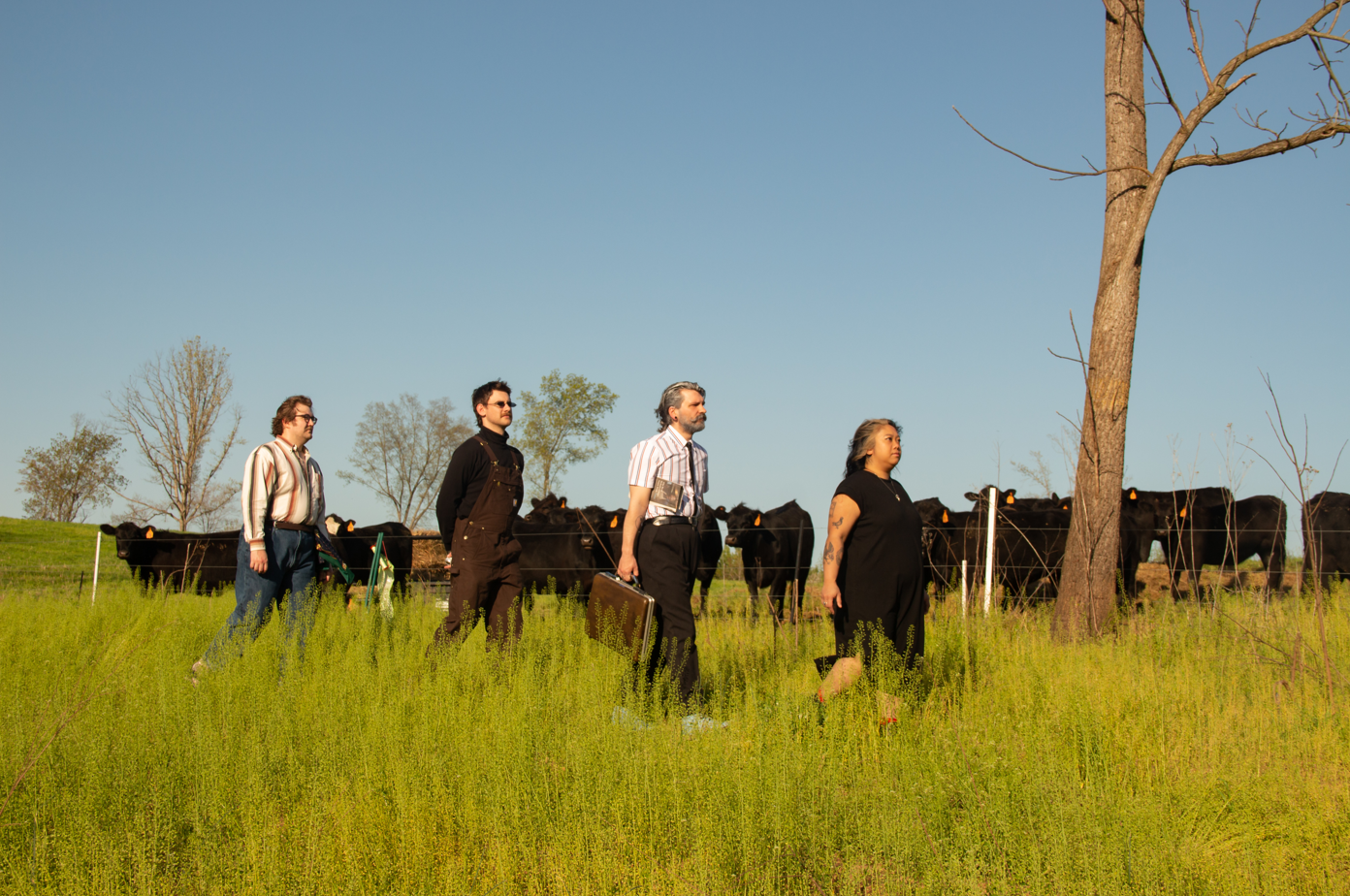
photo by Makayla Haag
CO-ED DORMS recorded their debut the hard way: one take, zero edits, every mistake preserved in amber. This decision courts disaster—poorly executed ideas amplified, technical errors immortalized, energy that peaks early then dissipates. Instead, they’ve captured something increasingly rare: documented proof of a band operating at full capacity, channeling collective energy into focused output. The unedited approach means every choice gets heard in real time, every dynamic shift, every moment where arrangement threatens collapse before pulling back together. This music exists in perpetual tension between control and chaos, never settling into either extreme.
The violin gambit defines their approach while leaving crucial elements unexplained. The instrument provides novelty within post-punk’s established framework, yes. CO-ED DORMS wield it as both scalpel and hammer—capable of surgical precision and blunt force trauma in equal measure. Classical training gets weaponized, turned against its own conventions.
What CO-ED DORMS accomplish on this debut: establishing sonic identity that feels both familiar and alien. They work within post-punk conventions—distorted bass, driving drums, angular guitars, emotional intensity—while simultaneously warping those conventions through instrumentation and arrangement choices that border on perverse. Presenting one continuous live performance gives the album coherence without forcing conceptual unity. Individual tracks maintain distinct identities while contributing to cumulative effect.
This self-titled debut positions the quartet as genuine contenders in experimental post-punk’s current landscape. They’ve solved the violin problem—making it central while avoiding novelty, embracing rawness while maintaining craft, generating intensity through means beyond pure volume. The album rewards close attention while also functioning as visceral experience. You can analyze compositional choices or simply let sound hit you. Both approaches yield results. The unedited live recording captures a band firing on all cylinders, channeling collective energy into something urgent and necessary. CO-ED DORMS have announced themselves. The rest of post-punk should take notice.
*Promoted content. All information provided is prepared in accordance with editorial standards and is intended to offer useful insights for readers.







 Indie Boulevard Magazine