
Do you feel a certain irony in the fact that a musician who spent years approaching strangers in concert venue parking lots with the question “can I play you a song?” is releasing his debut album right now? In 2025, when virality has become currency and attention is measured in seconds, Gregory McLoughlin offers a radically classical concept: human contact as the foundation of musical experience.
His self-titled debut arrives from another temporal dimension. There are no attempts to please playlists, no calculations for TikTok fragments—forget about that. Instead, an album that functions as a document of a certain type of stubbornness. The stubbornness of a person who learned to play bass in his twenties, dragging the instrument out from under a couch in a Bronx apartment. The stubbornness of a musician who got fired from bands for being unprepared while he was still learning. The stubbornness of an artist who invented his own form of street performance because traditional busking seemed too aggressive, too one-sided.
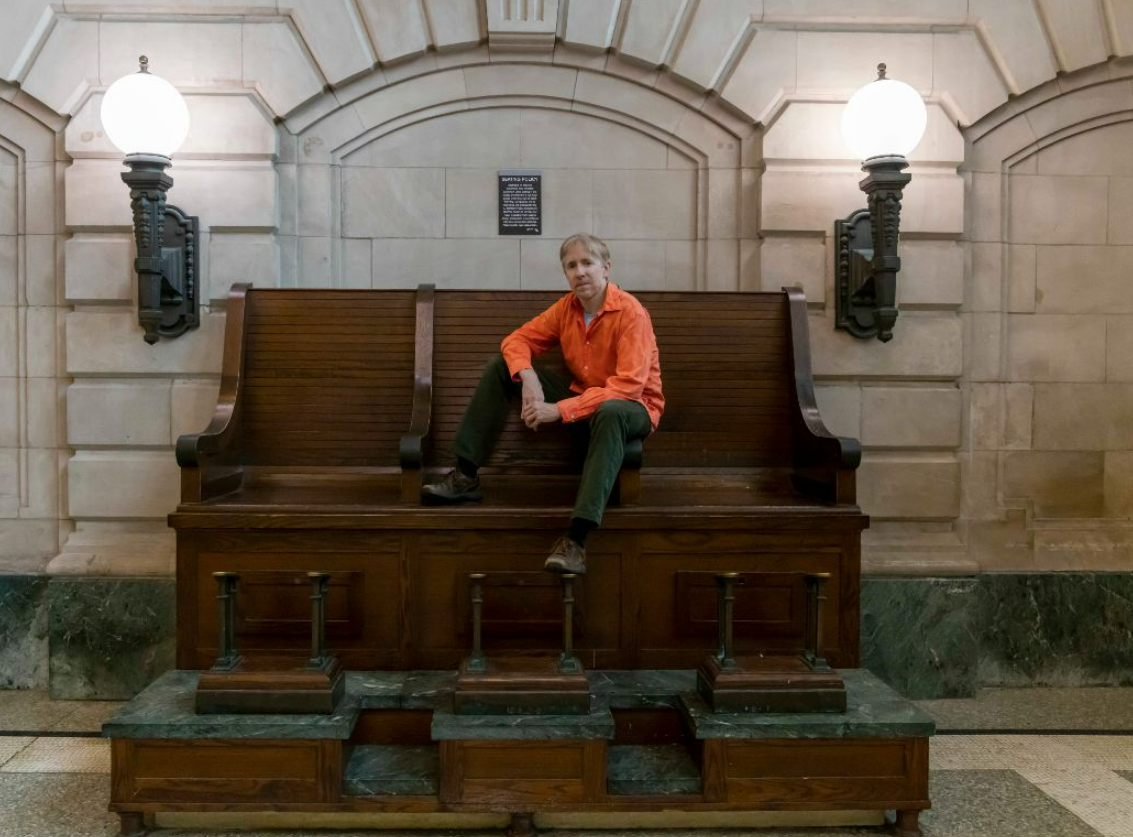
McLoughlin can be compared to a dinosaur: a sideman who spent enough years in the shadow of other people’s songs to understand what he wants to say himself. His path to this album was indirect—through the jam scene, through Grateful Dead, through an online Berklee course that unexpectedly unlocked something in his head. Now songs come in dreams, melodies materialize after a ten-minute nap. Yes, maybe this sounds like a romanticized tale about the creative process, but McLoughlin tells it without pathos, simply as a biographical fact.
Architecture of Honesty
“You Set the Tone“ opens the album with a relieved sigh—a track that McLoughlin himself almost removed from the tracklist as insufficiently serious, until a listener insisted on its importance. This is a telling moment. The album is full of decisions made despite the internal censor, despite the desire to seem deeper or darker. The production is frankly homemade, the texture of the sound rough, but this is the roughness of choice, a landmark in sonic space.
“Businessman” bursts in with guitar energy that could be called rock and roll if the term hadn’t been completely worn out. The track grew from reading David McCullough on the Johnstown Flood, about the price of ignoring warning signs by those who have power. McLoughlin rarely looks outward in his lyrics—most of the album is turned inward, into the personal mythology of separation, memory, growing up in a house that felt unstable. But here he allows himself social commentary, and the result works precisely because it’s delivered without preaching. Two guitars—one with the bite of Joe Walsh, the other with the edge of Chuck Berry—create a tension that keeps the track on the brink.
“When I Was Sand“ throws a punk snarl into the center of the record. Here lives a real drum solo, a thing that modern indie production usually buries or sterilizes. McLoughlin lets the drummer tell their own story while bass and guitars hold the pocket. The moment explodes the album’s neatness deliberately, and it’s refreshing.
“Little Janessa” was born in a field on Kauai in 2014, with an unplugged bass in McLoughlin’s hands and bright birds in the sky. The lyrics came years later—three life chapters, a letter in the bridge. The song moves with a tenderness that could seem sentimental, but McLoughlin sings directly enough to avoid sweetness. His voice is the voice of a person who learned to speak truth aloud, even when trembling.
“Superficial Lines” unfolds as a road song without postcard clichés. McLoughlin builds atmosphere through bass movement, through shifting dynamics. Blue hour on the highway, a moment between places.
And then “Hinges“—a track that McLoughlin deliberately keeps off the internet. Inspired by the loss of a friend, it sits at the center of the album as a point of silence. McLoughlin understands that sometimes the most generous action is to write pain directly and allow it to be found. The song waits for those who reach it.
Verdict
The album suffers from a certain unevenness. McLoughlin clearly feels more confident in bass patterns than in vocal melodies, and at times you can hear him reaching for notes that sit just above his comfort zone. The production in places sounds budget-limited, though it’s hard to say where aesthetic choice ends and necessity begins. Some lyrics circle around an image instead of landing on a specific phrase. “Lemonade“—written alone during a breakup, sunny on top and blue underneath—at times sounds like a first draft that required one more revision.
But it’s precisely this incompleteness, this visible work on the material, that makes the album convincing. McLoughlin records his life in real time, without pretensions to mastery he hasn’t yet achieved. He’s an extrovert with enough anxiety to feel collapse after a standing ovation. He’s a father who centers himself by remembering that children matter more than applause. He’s a musician who believes in himself without reservations—in the sense of continuing to show up, approach strangers, risk rejection, drag the bass-and-kick setup everywhere like a portable porch.
So yes, his self-titled album works as an introduction that feels belated. It’s the first full statement from a musician who built a community the same way he assembles a setlist: one listener at a time. The album lives in the space between street performance and studio revelation, between jam scene and indie rock, between the dreams and reality of a person who learned to play late but learned well. If you see him in a parking lot or on a sidewalk, say yes. He’ll play you a song. It might linger longer than you expect.
*Promoted content. All information provided is prepared in accordance with editorial standards and is intended to offer useful insights for readers.







 Indie Boulevard Magazine