
Bellefolie recorded her new single “Restless Nights” in one take. Her voice slips from English to French mid-thought—that’s how her brain thinks, how her throat is wired. A Norwegian who thinks in two languages, she went from the western coast to Parisian stages and London venues holding thousands less in under a year.
She opened for Sivert Høyem on tour, got airplay on NRK P3 and radio stations from France to the US. GAFFA, the largest music magazine in the Nordic region, named her artist of the week. At Vill Vill Vest, one of Norway’s major showcases for new talent, her performance left an impression.
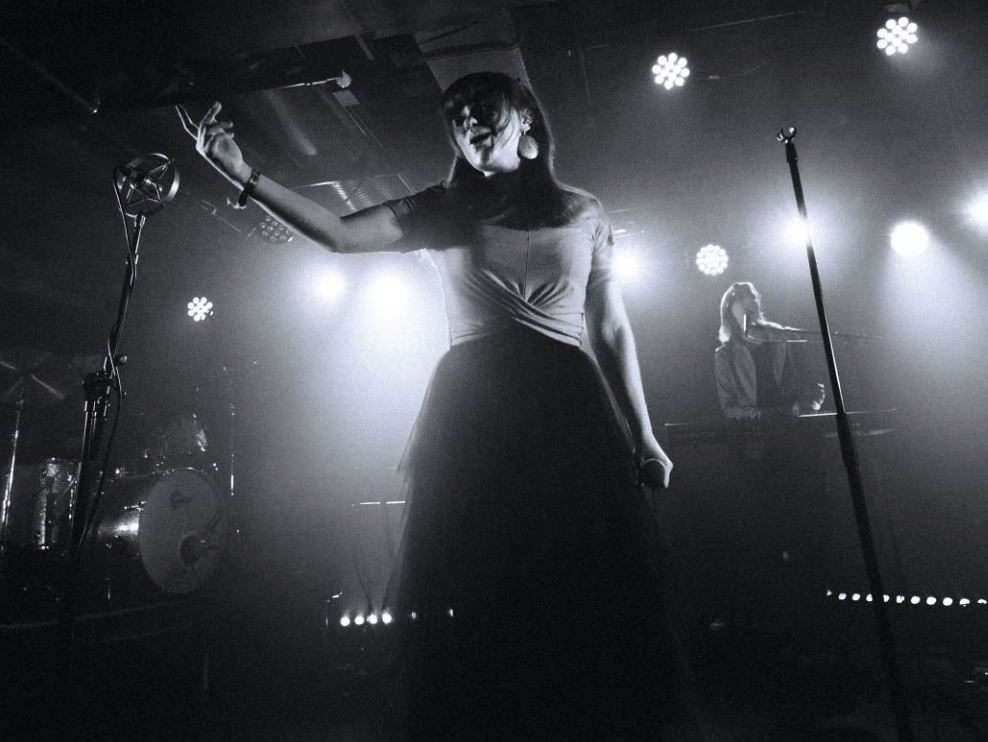
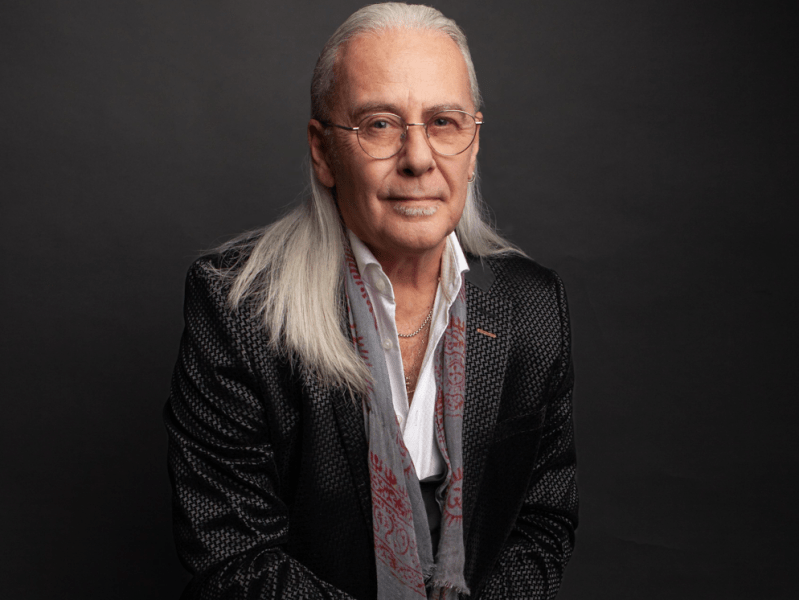
photo by Alina Leira
“Restless Nights” is the central point of the album Beautiful Madness, which comes out January 30. Here the protagonist stops running from her own mortality and acknowledges anxiety as an ally. There’s nowhere further to go. A realization the entire album has been circling toward. Kierkegaard, depression, awakening from apathy—Bellefolie speaks about this directly. She has overcome several depressions and profound grief. The secret to healing for her is acknowledging restlessness as a friend who returns to remind you of something important. Change is only possible when you stop lying to yourself.
Many are already comparing Bellefolie’s sound to Lorde, RAYE, and Björk—the icy rawness of the Norwegian coast, French sharpness, synthesizer landscapes, heavy bass, complex rhythms. Her voice penetrates with fearless clarity.
In our conversation she’s just as candid as she is in her songs. We discussed why she stopped fighting fear, how multilingualism changes a song’s emotional register, what happens to an artist when anxiety becomes a guide, and how an album is structured where crisis leads to frightening transparency.
Hello Bellefolie, how are you? Great to see you on “Indie Boulevard”! Listening to your music, I can’t help but notice there’s a certain continuity, a geography of emotions through crisis. “Grey Area” ends, and “Restless Nights” immediately begins, then the album “Beautiful Madness” awaits us, which (out now) comes out January 30, 2026. It’s like a route. Track by track, the listener moves through something, descends or ascends, it’s not always clear. How did you decide what order the songs should go in so that this journey has the right trajectory?
Hi! Thank you for such thoughtful questions. You’re right, I approached the album as a continuous movement rather than a collection of standalone songs. The track order traces a gradual shift in how unrest is experienced and responded to. The record is structured as an exploration of different human responses to crisis. We are living in a time where multiple crises unfold simultaneously, and when pressure becomes continuous rather than episodic, the response is often numbness, apathy, withdrawal, escape, or a retreat into simplified truths. From Restless Nights onwards, which functions as a turning point, the album increasingly stays with anxiety, not in a clinical sense, but as something existential. The movement is not towards comfort, but towards honesty.
The album is called “Beautiful Madness”, and this title balances on a very fine line. On one hand, there really can be some kind of beauty or clarity in crisis, in a moment of complete collapse. On the other hand, there’s a risk of turning real pain into an aesthetic object, into something beautiful for listeners. Especially now, when the whole industry talks about mental health, but often it turns into a performance. Where does the boundary lie for you between honest expression of crisis and turning it into inspiration?
The word madness can have meanings beyond the pathological, and I find this ambiguity interesting. In French, you have folie. In that sense, madness is understood as a rupture with habitual ways of thinking, and a way of seeking new answers to old questions. I use my own experiences as material, but the motivation is never self-display. It has to come from me, from something that feels urgent. If my reflections can open reflection in others, then there is dialogue, and dialogue is crucial for development. I love this about music: how I can work through my experiences through the work of others, and vice versa.
You know, there’s this scene in Terrence Malick’s film “The Tree of Life”, where the mother whispers her thoughts into the void, and the camera just stays with her in that silence. When you listen to “Restless Nights” as one continuous improvised take, a similar feeling arises. You left all the sighs, hesitations, transitions between languages, all these micro-moments that are usually cut out. What did you hear in that first recording that made you realize – this is it, nothing more needs to be recorded?
I remember being alone in the studio, already inside the feeling the song carries. At a certain point, the music expressed something I couldn’t have articulated otherwise. All the unplanned elements carried meaning. In a time where so much is edited and manipulated, keeping that raw moment felt important. Trying to refine it would have meant removing exactly what the song was about. I would rather be a bit rough, but authentic, than polished and impossible to relate to on a human level.
In jazz there’s a concept of “Playing The Space”. The idea that silence and pauses are just as important as the notes. “Restless Nights” is in a strange limbo, you describe it as “the silence before speaking the truth aloud”. What does this silence sound like to you, and why did the album need to stop exactly here, in this space?
For me, this silence is the moment where I stop trying to resolve things. Throughout the album, I explore different reactions to crisis, but that movement also passes through stages. At this stage, instead of trying to make the discomfort of unease – this existential ache in us – go away, or running away from it, I simply sit in it. And I realise something: restless nights are loyal. I begin to see this state as a friend rather than an error to be fixed. Not something to escape from, but something that can tell me something about what it means to be human, and perhaps even bring me closer to myself rather than further away.
You mention that the album was inspired in part by Søren Kierkegaard’s writings on existential anxiety – the idea that you can’t bypass fear, you need to go through it, meet it face to face. This is quite specific reading for a pop artist. There’s complex language, abstract concepts that need to be unpacked. In “Restless Nights” you can hear that these ideas were lived through, passed through the body, through the voice. How did you come to this performance, to philosophical texts, and how did the process of reading them influence what you do in music?
I was always a philosophical child, but after experiencing an unexpected and painful death in my close family, these questions became even more central to me. I searched for answers in philosophy, and even though it never offers certainty, there is no place where I feel more at home. What I take from Kierkegaard, and also Albert Camus, is that human unease isn’t a flaw to correct, but something to face. Both of them articulate things I already feel, and they do so with remarkable language. What they write about feels especially relevant today, when it’s so easy to escape into distraction and constant input rather than sitting with our own thoughts. For me, philosophy isn’t separate from the music. It shapes what I write and how I sing. I can be inspired by a philosophical text just as much as by another artist.
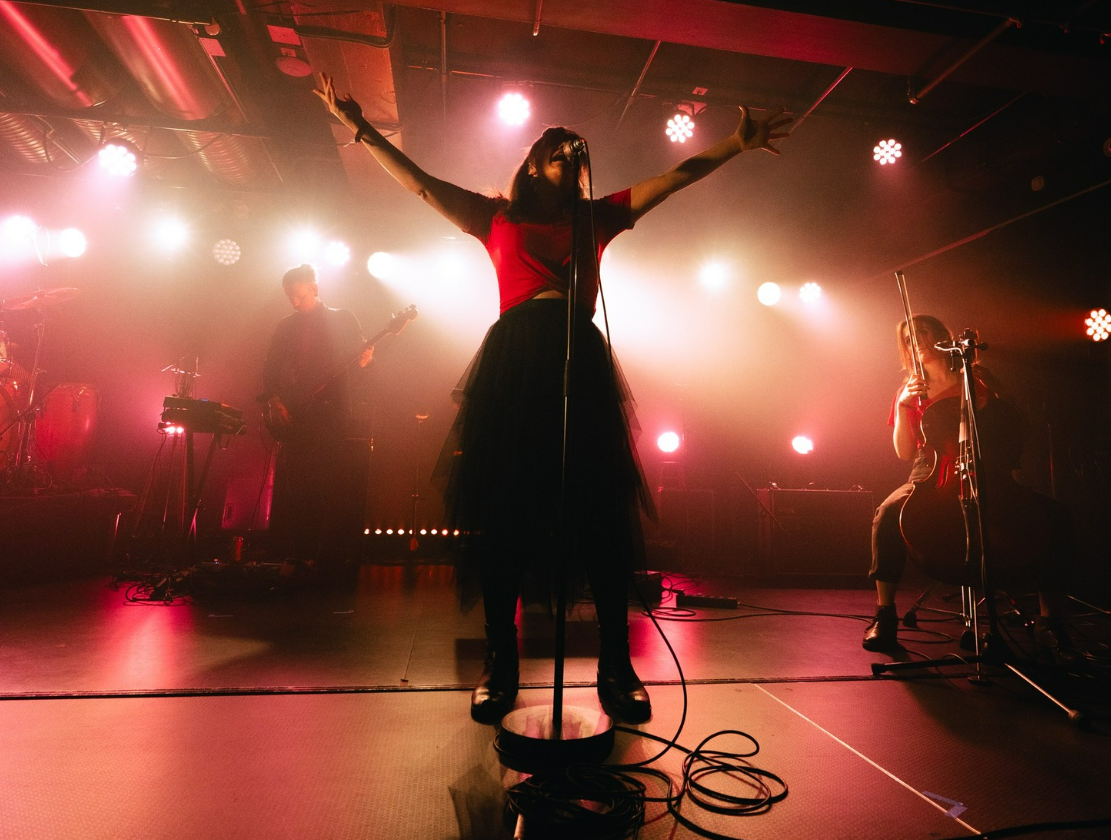
photo by Alina Leira
In “Restless Nights”, you switch between English and French, and this happens organically, right in the process of improvisation, as if each language is needed for its own thought. There’s a feeling that English and French carry different emotional temperatures, different intonations. When you sing, how do you feel which language is needed for which thought? Is this a conscious choice or does it just happen?
I experience that no single language can contain the whole experience. In Restless Nights, the switch between English and French happened spontaneously and without planning. It’s almost as if I’m telling one story on two levels at once. In this particular song, the English voice feels more direct, while the French one is more poetic. In another song, it could easily be the opposite. Even though it’s just me improvising alone, a kind of polyphony emerges, different emotional lines moving at the same time. It’s not a conscious decision in the moment. It just happens, and I follow it. That multiplicity reflects the unrest I’m singing about, and my decision to see it not as a problem to fix, but as something to stay with.
You grew up on the west coast of Norway. It’s a very specific geography, there’s completely different light, different weather than in the rest of Europe. Long dark winters, the ocean, isolation. Many Norwegian artists say that this place shapes sound almost on a physical level. How specifically is the west coast heard in your music?
I grew up in rural western Norway. As a child, I spent a lot of time looking at the stars. It made me feel small, and it raised early questions about existence, death, and what lies beyond us. My parents literally fished our dinner from the ocean in an old wooden boat. I was introduced very early to that sense of vastness – the darkness, the waves, the scale of it all. I think the grand and sometimes heavy emotional landscapes in my music come from there. When I later moved to Paris, the focus shifted from nature to culture – art, philosophy, music, cafés, conversations. Those early reflections found language there. But the source of that questioning, the sense of scale and humility, is something I still strongly associate with the west coast of Norway.
The last year has been very intense for you, from a beginning artist to performing for thousands of people, Paris, London, opening for major artists, recognition in the press. This is a rapid rise that requires constant energy, presence, movement. And in parallel you’re writing an album that’s all about slowing down, about how to stop fighting, how to stop and face what frightens you. These are two very different tempos of life. How do you live through this speed of career and where do you find inspiration for future releases?
The pace has been intense, and it’s not always easy to slow down and sit with things. At the same time, this year has forced me to practice what I write about. I’m constantly stepping into uncertainty in real time, going on stage knowing I might be criticised, and doing it anyway because I’m fighting for something I genuinely believe in. I often have to resist the impulse to escape the discomfort that comes with being this exposed in public. This kind of life also generates new emotions and new reflections along the way. Looking ahead, I want to make more space for deep writing again. After the next tour, I plan to retreat to the outer coast to be quiet for a while.
You have a line “I will learn… I le-learn… our days are counted.” Finitude, mortality. This is the thought that most people try not to keep in focus, especially in youth, especially at the beginning of a career, when everything seems infinite, full of possibilities. But you put this at the center of the album, the idea that time is limited. How has this realization changed what music you make and what you consider important to say?
Working with themes of mortality has felt natural to me. It was after the loss I mentioned that I began expressing myself through music. Before that, I worked mainly through poetry and writing. Suddenly, I ran out of words, which was frightening for someone who had always found language easily. Through music, what first emerged were tones, sometimes quiet, sometimes primal cries. Knowing that time is limited has changed what I value in music. It pushes me toward honesty and presence, away from distraction and performance. I tend to feel it when a song comes from something real and urgent. I do not want music to become something I do for money, but something I only do when I have something I genuinely need to say.
Your music is described as a collision of the cold of the Norwegian west coast with something warmer and more passionate – two different emotional modes in one sound. Cold restraint and open emotionality. Minimalism and drama. Where does this contradiction come from in you, and how does it influence the music you create?
My mood seems to follow the seasons in Norway. Winter is dark and cold, but in summer the sun does not set. I carry both melancholy and enthusiasm, and my songs often hold these states at the same time. I have used irony as a way of working with that tension, playing with clichés to create contrast. There is often an expectation that serious themes should avoid playfulness or irony, but when those elements are brought together, something new can emerge. I do not really believe there are fixed rules in music, just as there are no fixed answers in thought. That is what I mean when I describe the album as philosophical. There are no final answers in philosophy, and there are not any in this music either.
*Promoted content. All information provided is prepared in accordance with editorial standards and is intended to offer useful insights for readers.






 Indie Boulevard Magazine