
Pianist Thomas Luke took the BBC Young Musician prize in 2020, played Wigmore Hall, Lang Lang gave him advice. And now, coming very soon on January 16, is See Me Now—an album where Luke recorded his own tracks instead of Chopin and Rachmaninoff.
Thomas Luke from the Isle of Wight learned to play on his grandfather’s organ, went through the Junior Royal Academy of Music, currently at the Royal College of Music under the guidance of Vanessa Latarche. In parallel, he launched Many Pianos—experiments with layering four or more pianos, digital plus acoustic. Jacob Collier acknowledged his cover of Little Blue, the video spread to thousands.
In 2024, Luke made it into the top 22 young pianists at the PianoTexas International Festival, received the Prix Monti at the Piano Campus International Competition. The Vienna International Music Competition praised his technique and musicality. Concerts from Leipzig to Fort Worth, from Xiamen to London. Steinway & Sons called him a “trailblazer” after he conducted the first SpirioCast between two British venues.
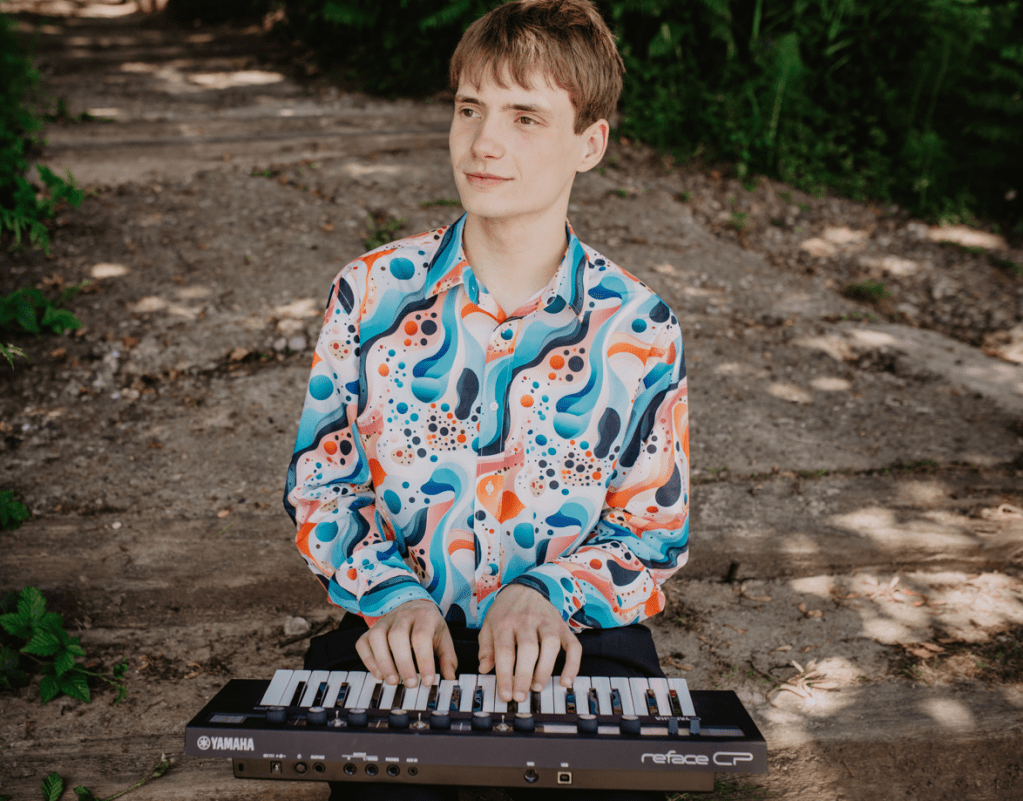
All this academic career led Luke to existential questions. He realized that the stage shows only part of his musical identity, and besides the legendary classics, he wants to play what he hears in his head. See Me Now is the answer to these questions.
The album mixes genres, adds production and field recordings. Luke wove into the tracks references to his experience, sounds of nature, ambient.
Reviewers are already talking about “a language of graceful beauty and brilliant understanding of the piano.” Luke calls the album a statement of artistic freedom. In the interview, he talks about how he broke out of the classical school framework, why he decided to record his own music instead of others’, and what it means to build a career on his own terms in 2026.
Thomas, the title of your debut album – See Me Now – sounds simultaneously like a challenge, a plea, and a reflection. When you first spoke these words aloud, realizing that this was the album’s title, what did you feel?
I don’t actually remember the exact moment I settled on the title! But I do remember very clearly the thinking that led me to it, and once it came to me, I just knew it was right. It felt like it fit the album perfectly.
It was partly inspired by a song I absolutely love by The Script, called If You Could See Me Now. In that song, the singers reflect on who they’ve become and how their parents who are no longer alive might view them now. Around the time I was solidifying my album’s overall concept and form, I was doing a lot of that kind of personal reflection myself, noticing where I was at in my life, everything I’d learnt and everything I hadn’t, the successes, the failures, the joys, the insecurities – really having a long, honest look in the mirror. And, naturally, I found myself thinking a lot about my Grandad, who played such a huge role in my early relationship with music. There’s a line in that song that really hit hard for me: ‘I’m tryna make you proud, do everything you did / I hope you’re up there with God saying, “That’s my kid”’. If my Grandad is up there, looking down at me, I want him to be saying that.
However, as much as the title is reflective, it’s also an invitation. In a way, it’s a polite request to the world; I’m showing who I am, what I’m building, and asking people to look properly. I’m not someone who sits back and hopes for the best; I’m fairly tenacious. This album was a huge personal investment – I wrote and arranged everything, ran the crowdfunding, locked myself in the studio for three days, and mixed and produced it myself. See Me Now is an invitation to notice all that, and the path I’m carving out.
As I grew up, I increasingly struggled to reconcile my eclectic influences and musical instincts within a single label. I love the ‘classical concert pianist’ world deeply, but it’s only part of who I am. This album became a way of asking what might happen if all the different sides of my musical life were allowed to coexist and inform one another, rather than being kept separate. I hope See Me Now feels like a step forwards, both musically and personally – a way of making my own mark, on my own terms.
The melody for the title track came to you at age four, when you were putting away toys after preschool playtime. For seventeen years this melody existed somewhere inside you, while you studied at the Junior Royal Academy of Music, won competitions, performed around the world. It waited. You write that you lived through moments, sorrows, and joys together with it. What changed in this melody over seventeen years—did it remain the same, or did your adult life rewrite its meaning?
From a purely objective point of view, I believe the melody itself is mostly unchanged from what came into my head all those years ago… though I’m pretty sure its tempo was quite a bit faster back then! What I suppose has changed, however, is my relationship to the melody.
At four years old, it was just a happy, simple tune, much like life itself at that stage. I didn’t overthink it at all – to be honest, it came into my head almost by accident, entirely of its own accord! Hearing the melody now transports me straight back to that preschool playground, to a moment when everything was just beginning. Naturally, when looking back, the rose-tinted glasses slide on and the nostalgia perhaps distorts reality to some extent. But I don’t mind that. In fact, that feeling of hazy nostalgia is something that’s fascinated me for a while, and has been a source of inspiration and experimentation in my music.
Growing up, I inevitably experienced a varied mixture of life’s highs and lows, as everyone does. When I think about the melody through the lens of the time that’s passed since its initial conception, it provokes reflection on the seventeen years that followed, and perhaps that’s why my relationship to the melody feels different now. The notes may be the same, but in a way, they show me how I have changed, and living my life alongside them has gently moulded their meaning.
Your grandfather clearly plays a profound role in your musical journey, from those early organ games under the stairs to the spiritual connection you felt at Victoria Peak. How do you think he shaped not just your musicianship, but your approach to what music can mean and communicate?
Some of my earliest memories are of playing keyboard games with my Grandad – an amazing man who was, amongst many things, a passionate amateur musician with a particular love of the guitar, piano and organ. He took enormous pride in his Roland electric organ in the room under the stairs, and I treasure memories of sitting next to him on the organ bench as he excitedly showed me round that beast of an instrument, playing me new pieces he’d been practising – anything from a Bach Invention to a Joplin rag.
We had endless fun exploring the different sounds, especially the scat choir, whose syllables changed from ‘doo’ and ‘dat’ to ‘pow’ depending on how hard you pressed the keys. One of our favourite games was called ‘Lion and Mouse’. I played the mouse, starting in the light, twinkling top end of the keyboard, and he played the lion in the growling bass register. We’d slowly creep towards each other, playing scales inwards, until our animals met in the middle, got frightened, and ran back to their respective ends of the keyboard again.
My Grandad really was the one who started it all. He showed me what music could be, long before rigorous training, discipline, pressure and expectation showed up. I’m incredibly grateful that my introduction to music was rooted in play, joy and connection, rather than strict regimes or demands. Of course, the hard work and sacrifices followed – every professional pianist knows that path well – but they came as a conscious choice, born out of a genuine love for music, rather than external pressure or expectations. Because of Grandad, I knew music was meant to be fun. It was laughter, imagination, and human connection – something we risk losing sight of in this day and age.
So, 20:02, Heathrow Terminal 4, matcha latte, first flight outside Europe. The precision is terrifying—you remember the minute, the terminal, the drink. Do you first live through a moment and then understand it will become music, or are you already living in a mode of constant archiving of experience?
I’ll let you in on a secret – I ‘remembered’ the exact minute by checking the timestamp on my phone’s photo app. I took a photo of the matcha latte to send to my family to let them know I’d made it through security! That said, the terminal, date and general moment are etched pretty clearly into my memory, as it was such an exciting and pivotal moment in my life.
At the time, I had no idea that such a small moment of feeling would one day inspire a piece of music on my debut album. I’m now fascinated by the idea that seemingly insignificant moments gain true meaning only in hindsight. There are so many examples of this I can think of in my own life, and I’m sure readers will find their own too. What feels trivial or mundane at a time can later reveal itself as a major pivot, a quiet turning point we only recognise once we’ve moved on and looked back. It’s an idea that is both magical and humbling, and I think this piece reflects that sense of retrospective discovery.
The melody for the title track was born in your head at age four and sat there for seventeen years until you recorded the album. Seventeen years—that’s your entire conscious life experience. You became a different person, went through adolescence, began performing, won competitions. The melody waited. Are you afraid that you’ve spent your main idea on this album and will now have to invent from scratch, or do you have a couple more powerful ideas in reserve?
I’m not at all afraid of having ‘spent my main idea’! Of course there is a deep poignancy to this album because of how strongly it’s tied to my roots, not just through the melody of See Me Now, but also through sound recordings of the sea near my house, voices of friends, wildlife and so on. But I’m very happy to confirm that the well is far from dry.
There are plenty more ideas yet to arise from the depths, be that from old sketches in notebooks or newly forming seedlings of ideas germinating in my mind as we speak. I’m already beginning to shape concepts for future projects, both recorded and live, and I feel creatively energised rather than spent. If anything, this album feels less like an endpoint and more like a starting line.
“All The Things I’ve Learnt Without You” is about a specific person, and you promise never to name them to anyone. At the same time, you invite listeners to substitute their own “You.” This composition works as a mirror—everyone sees their own loss or absence. Is it frightening that thousands of people will rewrite your personal story, putting their own faces into it?
Not at all – listeners cannot ever rewrite my personal story, that’s not how it works. Those experiences happened to me, whether anyone knows about them or not.
One of the things I love most about music is precisely this ability for people to project their own lived experiences onto it. So much music I’ve listened to has helped me process feelings, understand myself, and navigate difficult moments in life purely because I could relate my own lived experiences to what I was hearing. With this album and this track, I’m simply offering something of my own into that same shared emotional space.
Whilst All The Things I’ve Learnt Without You is a reflection on things since a person left my life, it is not a particularly sad piece. In fact, I hear a lot of hope in it. I wrote it almost as a form of musical therapy, as a way of understanding myself better and recognising how much I’d gained whilst living through the shadow of a person’s presence. There’s just as much melancholy in it as there is hope and newly found understanding. It’s not necessarily about being in a clear, definable emotional state – rather, letting any feelings come, or not come, without any judgement. Music is so special because it communicates what words cannot, so of course I’m struggling to articulate myself to the level I wish I could here! But what I mean is that those undefinable feelings, or indeed the feeling of ‘nothing’, can be every bit as powerful as the feeling of ‘something’.
Dawn / When Rain Turns To Snow is described simply: falling in love makes ordinary water falling from the sky beautiful. The temptation to romanticize new feelings is enormous in music. You chose the image of meteorological transformation—water remains water, only its aggregate state and perception change. Love as a chemical reaction or physical phenomenon—is this a defense against sentimentality or a way to describe more precisely?
I wouldn’t say it’s a defence against sentimentality, no. There are certainly pieces where that kind of approach can apply. For example, Ravel’s Une barque sur l’océan, a piece I’ve performed many times, comes to mind. In that music, you could argue that Ravel was simply portraying the natural phenomenon of sea waves themselves, rather than hanging emotional baggage onto that framework. Waves are just waves – they aren’t sad or happy unless we decide they are, whether that conclusion arrives consciously or subconsciously! If simply representing the peaks, troughs, sparkles and splashes of water is what Ravel was doing, then my job as an interpreter and performer is to faithfully portray those waves and the natural phenomena in a way that does not impose my own human emotions onto the sea of colour…
Musicians and researchers debate the point I’ve just briefly explored in great length – I’m sure theses have been written on it! Who knows what the truth is. Regardless, I don’t think my music operates in quite that way. As a chronic overthinker, I would disagree that the metaphor of When Rain Turns To Snow is a defence against sentimentality! There is a great deal of dreaming and wistful wonder in the music; it is pretty sentimental if you ask me. The thought process that led me to the piece’s title was merely as follows: The septuplet figuration running through the piece was inspired by feelings of lightness, motion and fluttering hearts. Little pearls of melody drop into the texture like tiny gasps of excitement, little palpitations. The way the notes fell happened to lead me to the image of rain, and after some reflection, I realised that the idea of rain turning to snow was the perfect metaphor for the emotional transformation I wanted the music to convey.
The album was recorded on a Venables & Son Custom-218, whose name is “Maurice”. Sudhira Hay and Marcin Brzozka prepared the instrument, recorded at Christopher Braime’s Studio Falkland Lodge for three days in September. All these people, their hands, their ears, their decisions became part of the sound. Then you mixed it yourself, produced it, decided how the album would breathe. How many versions of each track did you go through before you knew this was it – or did you know immediately when you sat down to mix?
All of these people are immortalised in the genetics of the final album through their invaluable contributions during the recording process. Their work and craftsmanship shaped the sound of the album every bit as much as I did. I have to mention Christopher Braime in particular for all the support he’s given me over the years. The recording days coincided with that awkward UK weather shift from late, sort-of-warm summer to chilly early autumn, when pianos tend to have a minor existential crisis. On the final evening of recording, the piano began slipping out of tune and Chris was a hero, repeatedly running out to the studio late into the night, armed with his tuning fork, to fix it so I could finish recording!
You ask how many versions there were for each track: There were many (and I almost managed to keep track of them all)! When editing and mixing, it’s usually a good plan to duplicate files so you have backups if needed. The initial Logic sessions contained all the stems and rough versions of everything I recorded in the studio. Then came duplicates for editing and mixing, more duplicates for further experimentation, and that’s not to mention the different versions I created for retries of production and mixes I wasn’t happy with initially.
Before the studio recording days, I’d already recorded the entire album as a demo in my tiny music room at home. Listening back to that now, it is strikingly similar in content, albeit lower in quality. Since that version, the more improvisatory material naturally changed, gained confidence and broadened scope, and compositional ideas evolved between writing, performing and recording. Moreover, some of it continues to evolve through live performances these days. That’s the beauty of music – it’s an art form which revolves around time as its core dimension. It is temporary, irreplicable and ever-changing.
Having received guidance from artists like Lang Lang, Arie Vardi, and Stephen Kovacevich, and now mentorship from Alim Beisembayev, what’s the most valuable or surprising piece of advice you’ve received about finding your own voice within—or beyond—the classical tradition?
I’ve been incredibly lucky to receive advice from so many musicians I deeply respect, which makes it hard to single out just one moment. However, a conversation that’s really stayed with me was one I had with Jacob Collier, who is simply an astonishing musician and a lovely human being to go with it. After he heard a cover I recorded of his song Little Blue, he invited me to meet him following his Djesse Vol. 4 launch concert in London. We had a lovely chat and spoke about some of the uncertainties I was grappling with at the time – how I could reconcile all the parts of my musical identity into a career that felt truly authentic and freeing. He reminded me that not quite knowing where you are at the tender age of 21 was completely fine, and not knowing where things might lead was part of the journey. He encouraged me to keep creating, keep exploring, and trust that clarity would emerge through the process. That reassurance meant a great deal to me, and, looking back, he was absolutely right.
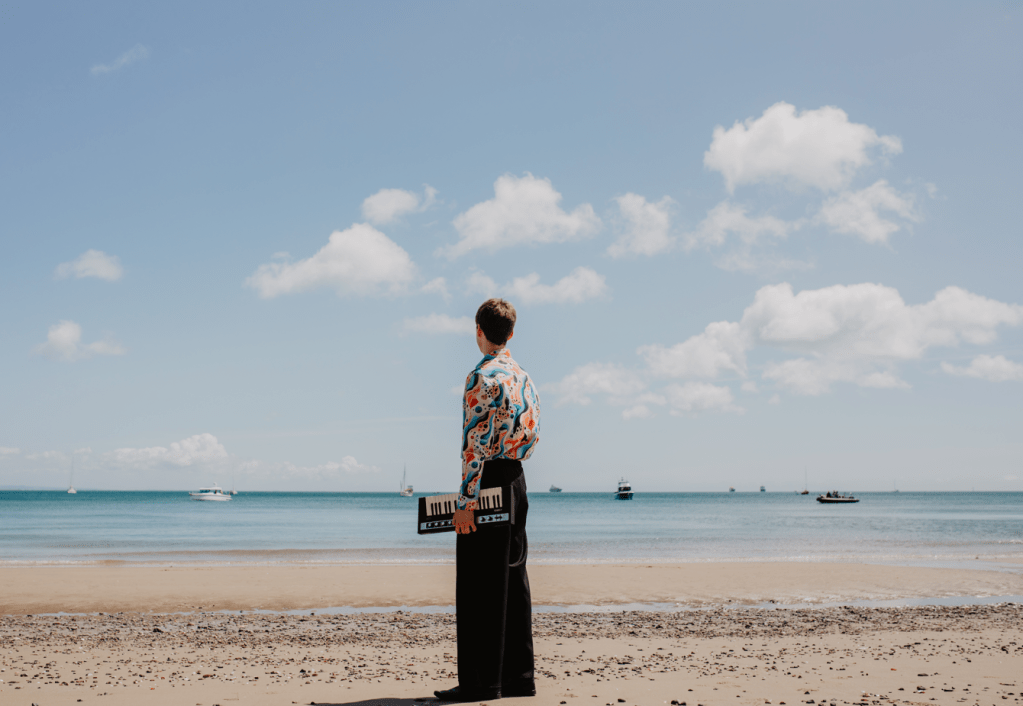
The album lasts 44 minutes 55 seconds. You mixed and produced it yourself, recorded it in three days in September. Holly Cade’s photograph was taken at Priory Bay, on the island where you were born. Everything came full circle: memories of your grandfather, Texas spirits, Hong Kong sunset, and once again Isle of Wight. A circle or a spiral? Where does the door that See Me Now opens lead—to the next album, to other instruments, or to the silence after having spoken?
There’s certainly a sense of closure, or full-circledness to the album. This is partially through design – it begins with Dawn and ends with Sunset, so maybe we are living a day or even a life through the course of the album. The initials of the inner six tracks even spell my name. There are many Easter eggs and running connections throughout that make it into a cohesive whole, a ‘complete’ album. But emotionally and creatively, it’s far more of a spiral than a circle.
This album had several intentions behind it, one of which was simply to establish a foundation, to put something into the world that aligns more honestly with the career I want to build. I already have ideas forming for future albums and concert projects, and they’re beginning to take shape naturally in a way that can build on the foundations I have laid down with See Me Now. The album feels not like a final statement, but rather an opening of the door, a means to step out through it into whatever comes next…
*Promoted content. All information provided is prepared in accordance with editorial standards and is intended to offer useful insights for readers.



 Indie Boulevard Magazine