
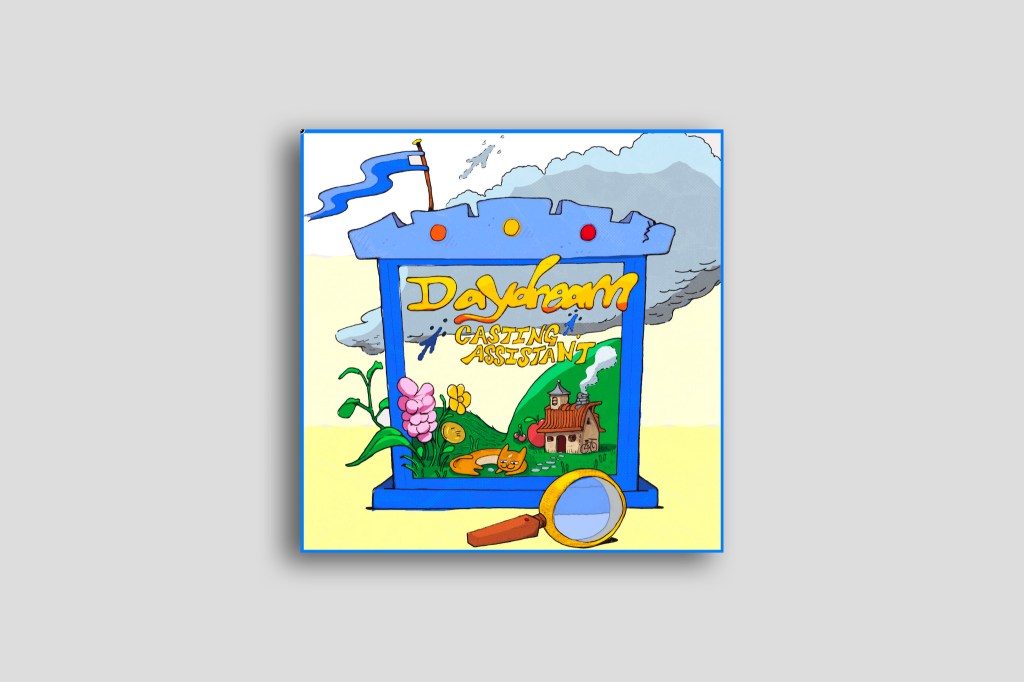
Oliver Hill from Birmingham launched Casting Assistant in November 2025 at a moment when indie guitar music was undergoing an interesting shift—the genre was beginning to return to the bedroom pop roots of the early tens, but without that naive optimism that Real Estate had on Days or Ducktails on The Flower Lane. Hill assembled a team across the ocean: Christian Diana from New Jersey took vocals, Jack Poole from Boston did the cover art, and the result is a project that sounds cohesive, even though the participants are physically scattered across continents.
Daydream begins with guitars that burst in immediately, a bright riff with reverb that references the nineties—that time when Pavement was recording Crooked Rain, Crooked Rain, when Yo La Tengo was making Painful, when nobody particularly tried to sound expensive. Hill understands this aesthetic. The bass enters softly, envelops the structure, holds the song in a warmth that contrasts with the melancholy of the lyrics.
Diana appears with a hazy, blurred voice, recorded in a way that makes you feel—this was a single take, possibly late at night, possibly on the first try. His voice lives in this haze naturally, he’s comfortable there, he speaks to you directly from within it.
Hill constructs the track around an idea I would call optimistic melancholy. It’s a state where sadness becomes an engine, where nostalgia gives you energy to move forward, and memories work toward the future. On the surface, this is a song about wanting to escape from your own head, from a daydream where the protagonist is stuck in solitude. It’s a clever play on the idea of immortality—we live forever because death happens inside us, in fragments, each time we say goodbye to someone or to a version of ourselves. Then the chorus—a plea for salvation from one’s own daydream, where it’s lonely, where you need someone to pull you out. Diana sings this without pathos, without drama, simply stating a fact.
The track cuts off abruptly. Two minutes thirty seconds fly by, and you’re sitting there waiting for a continuation, but there isn’t one. Hill could have developed the idea, given another verse, stretched out a bridge, allowed the guitar to slip into a solo and extend the catharsis. But he cuts it. On one hand, this is a smart decision—leave the listener hungry, make them hit repeat. On the other—you want more, you want to hear where Hill can take this idea if he gives himself space to experiment.
For a debut track, this is a strong statement. Casting Assistant shows potential, shows that Hill understands the tradition he’s growing out of and is ready to work with it consciously. I recommend listening!
All information provided is prepared in accordance with editorial standards and is intended to offer useful insights for readers. Please note that the opinions, interpretations, and evaluations expressed by the author may substantially differ from the viewpoints of our readers or the general public at large, and we respect the diversity of opinions.







 Indie Boulevard Magazine