
Getting in touch with Siqian Li turned out to be a quest. Between rehearsals, flights, and studio work on her debut album Voyage among Fragments coming out in March, the pianist seemed to dissolve into her own schedule. But we waited it out.
Siqian is a pianist with a biography spanning three continents and a degree from the Royal College of Music, who chose for the album’s first single Boum! by Charles Trenet in Weissenberg’s arrangement. A 1938 track about falling in love, lived through the Holocaust and transformed into a virtuosic piano piece—a risky choice for algorithms where you have 30 seconds to grab a listener’s attention.
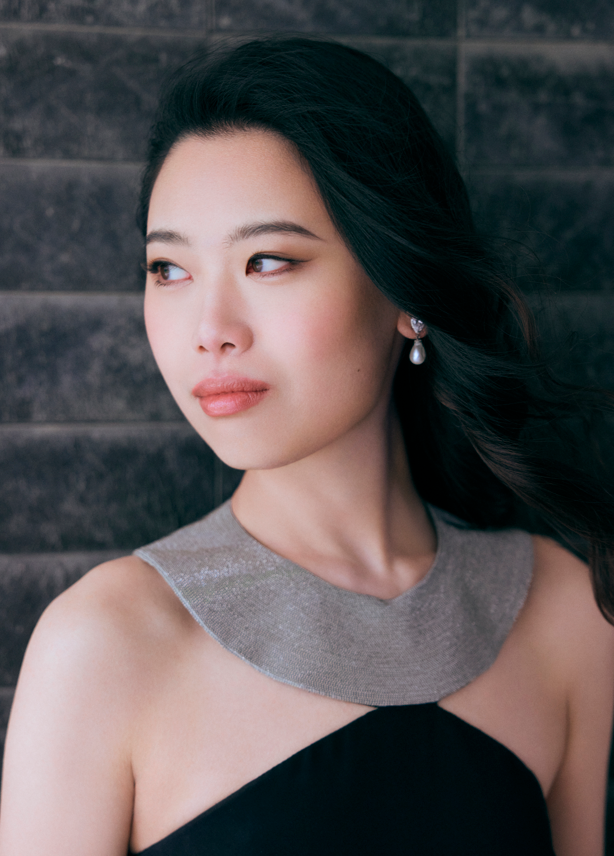
We talked about preparing for months only to release control on stage. About the difference between playing in a concert hall for thousands and in a café where someone might sneeze right during Chopin. About why critics write “graceful” about female pianists instead of “powerful,” and whether it’s worth playing classical music against tradition. About fragments instead of complete cycles, about studio recording with Tony Faulkner where the living matters more than the flawless, and about what happens to the innocence of a pre-war song when you play it in 2026.
Hello Siqian! Thank you for taking the time to talk about yourself and your work. You chose “Boum!” by Charles Trenet in Weissenberg’s arrangement for your first single—a composition born in 1938 as a carefree hymn to falling in love, right before Europe plunged into war. Weissenberg, who survived the Holocaust as a child, later transformed this song into a virtuosic piano piece. When you play this music now, in 2026, moving through all these historical layers—from pre-war Paris through trauma to your own biography spanning three continents—what happens to that innocent infatuation from the original song?
For me, the innocent infatuation in Boum! doesn’t disappear, but it no longer belongs to a single moment or meaning. It has travelled and transformed through time, history, and different lives, each layer leaving its trace. When I play it, I let the music itself guide my interpretation. The historical layers remain quietly in the background, allowing the music to speak in the present moment. What matters most to me is how it breathes now.
In that sense, the innocence becomes something shared rather than personal. Trenet’s carefree joy of falling in love, Weissenberg’s virtuosic transformation, and my own experience of encountering this music from a different time and place all coexist. Love is love, the melody still smiles, no matter how far it has travelled. That sense of innocence in the original song may be more fragile in the arrangement, and therefore more precious.
This is the first single from the album, and you chose precisely this piece as the calling card for “Voyage among Fragments”. It’s a curious choice, because in the streaming era, the first single has to hook a listener within 30 seconds, otherwise the algorithm buries it. And “Boum!” in Weissenberg’s version is a virtuosic piece that demands attention and time to unpack all its layers. Did you choose the first single thinking about how to attract a new audience, or did you simply take what you consider most representative of the album, even if it’s risky from a marketing standpoint?
Voyage among Fragments is an album about a journey, about memories, encounters, and moments that unfold gradually and need space to be felt. I didn’t want the first single to act as a shortcut or a simplified version of that idea.
Boum! felt right precisely because it invites the listener to stay. In Weissenberg’s arrangement, it’s playful, brilliant, and full of character, but it also reveals itself in layers over time. That reflects the spirit of the album: music that doesn’t give everything away at once, but encourages curiosity and slow listening.
At the same time, Boum! isn’t heavy or inaccessible. It has an immediate spark, a sense of fun and energy that can speak even to someone who doesn’t usually listen to classical music. For me, that balance mattered. I wasn’t choosing between attracting a new audience and being representative of the album, this piece does both, in its own way.
So yes, it’s a risk in a streaming culture that rewards instant hooks. But I believe there’s still room for music that invites people to walk through it, rather than rushing past it. If someone stays with Boum! beyond those first moments, they’re likely ready for the journey the album offers.
You named your upcoming debut album “Voyage among Fragments”. This is interesting because classical music is traditionally perceived as something complete, whole—sonatas, concertos, cycles. Can you tell us more about the new album and what all the fans should expect?
I believe fragments are how we actually experience life, through memories, encounters, and moments that stay with us. When I was thinking about this album, I realised that my own musical journey didn’t feel like a single, continuous narrative, but rather a collection of these fragments that gradually shaped who I am. As I wrote in the artist note for the album, I hope “this music reminds us all that beauty often lives in the most fleeting, delicate moments between what was and what is.”
The album programme spans French, Chinese, and American repertoire, moving between brilliance and introspection, outward energy and inward reflection. Each piece represents a different moment along that journey: sometimes tied to a place, sometimes to a period of life, sometimes to a very specific feeling. On their own, they might feel self-contained, but when you place them next to each other, they begin to form a larger picture. That’s where the idea of Voyage among Fragments comes from: it’s not about presenting a perfectly closed cycle, but about inviting the listener to walk through these moments and make connections along the way, in their own way.
You’ve played both at Bridgewater Hall for thousands of people and at Fidelio Café, where listeners sit with their coffee cups just metres away from you. Technically, these are the same pieces, the same hands of yours on the keys. But I’m sure that in a café someone might accidentally sneeze during Chopin, while in a concert hall a cough causes a scandal. Do you adapt your playing to the space, or should the space adapt to the music?
Of course, the notes on the page and the hands on the keyboard are the same, but the atmosphere and energy are not, and that changes everything.
I don’t worry too much about sneezes or coughs. We’re not playing for robots, and music has always lived among real human sounds and imperfections. What matters much more to me is the quality of attention in the room, the sense of shared presence between the performer and the listeners. That kind of communication isn’t something you can describe easily in words; it’s something you feel.
In a concert hall, the energy can feel expansive and focused, almost architectural. In a more intimate space like a café, the connection can be closer, more spontaneous, and very human. I don’t think one should adapt entirely to the other. Instead, I stay open and responsive, allowing the music to meet the space, and the people in it, as they are. When that exchange happens, the space, the audience, and the music begin to breathe together.
Paul Lewis once said you have “huge emotional range and effortless pianistic control.” Control and emotional range are almost opposites in ordinary life: the more control, the less spontaneity. Tell me about the moment when you rehearse a piece for months, bring it to absolute control, and then step onto the stage—do you release that control or, on the contrary, hold it even tighter?
I don’t really experience control and emotional range as opposites, at least not in music. For me, what Paul Lewis described as “effortless control” is really about having a solid foundation. It’s the kind of control that comes from knowing the piece so deeply that it no longer occupies your conscious mind.
When I practice a piece for months, I’m building understanding, trust, and flexibility. By the time I step onto the stage, that preparation allows me to let go rather than hold on tighter. Because everything is grounded, I have the freedom to respond in the moment. I don’t experience control and spontaneity as opposites: control gives me the possibility to be spontaneous. It allows me to take risks when I choose to, not out of impulse but with intention, so the music remains alive and each performance can breathe in its own way.
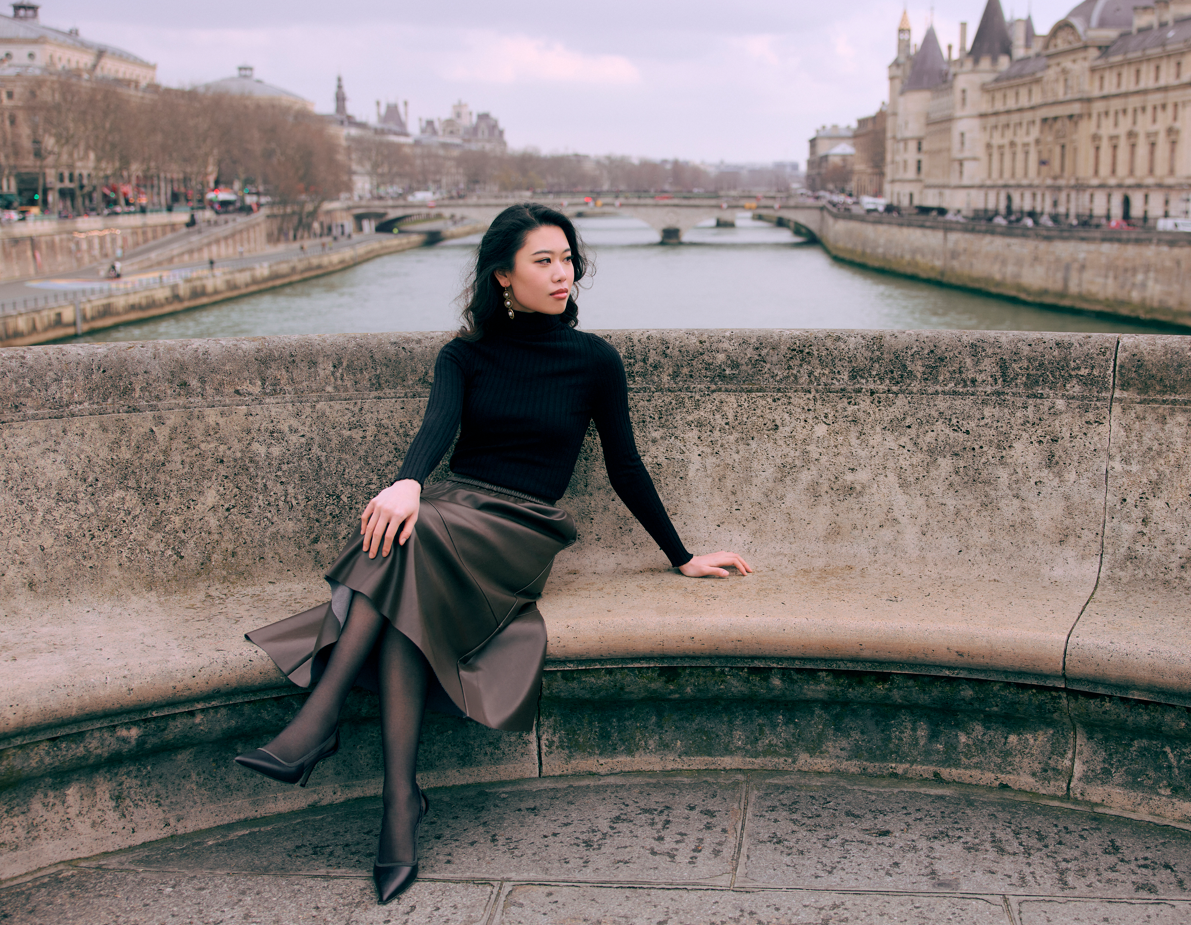
China, France, America—your three cultural points. But you studied at the Royal Academy of Music in London. The British pianistic tradition is often described as restrained, intellectual, anti-virtuosic in the old Romantic sense. Do you feel that London became the fourth point of your cultural geography, or was it simply a convenient crossroads between your three worlds?
I wouldn’t describe London as just a convenient crossroads at all, it very much became its own point in my artistic geography. What struck me most about London was not a single “British style,” but its openness. It’s an artistic centre that welcomes an extraordinary range of voices, aesthetics, and ways of thinking, and that openness had a profound impact on me.
My time in London changed my artistic vision in a very deep way. It encouraged me to think more clearly about structure, intention, and honesty in music-making, while also giving me the freedom to question traditions rather than simply inherit them. I felt challenged, but never confined.
Rather than pulling me away from virtuosity or emotion, the experience here helped me integrate them more consciously. It sharpened my listening, my curiosity, and my sense of creativity as a musician. In that sense, London wasn’t just a meeting point between China, France, and America — it was a place that opened me up further, allowing all those influences to coexist with greater clarity and depth.
You’ve played Weissenberg, who is known for taking the repertoire of the golden age of Romanticism and filtering it through the prism of post-war modernism—the result was harder, faster, sometimes even colder. Do you have composers or works that you’d like to play completely against their traditional interpretation? Say, Chopin as a minimalist or Debussy as a maximalist?
I think a lot depends on what the priority is at a given moment — the composer, the listener, or the time we’re living in. Interpretation is always shaped by context.
What interests me about artists like Weissenberg is not that he deliberately played against tradition, but that he questioned habits. He filtered the Romantic repertoire through his own time and experience, and sharpening the musical language. In that sense, reinterpretation can be an act of honesty rather than rebellion.
Today, we hear many reinterpretations of well-known classical works that would certainly not have been considered “correct” in the composer’s own time, but they resonate strongly with modern listeners. I don’t see that as a problem in itself. The question is whether the reinterpretation grows out of a deep understanding of the score, or whether it’s simply a surface effect.
With composers like Chopin or Debussy, I’m not interested in forcing an extreme idea — Chopin as minimalist or Debussy as maximalist — but in finding a balance that speaks both to the music and to the present moment. Chopin can feel radically simple when freed from inherited sentimentality; Debussy can feel surprisingly intense and layered without losing transparency.
I think interpretation is always a dialogue between past and present, composer and listener. When that balance is right, the music feels alive and necessary, not because it’s been pushed into a concept, but because it’s been listened to deeply.
“Voyage among Fragments” comes out in March 2026. Over the past five years, the classical music industry has experienced the pandemic collapse of concerts, the streaming boom, TikTok with fragments of Rachmaninoff, AI that’s already trying to compose music. When you were preparing this album, were you thinking about how people will listen to it—in its entirety in one sitting at home or in parts through headphones on the subway?
I honestly didn’t think too much about how people should listen to the album. When I was preparing it, my focus was very simple: what do I want to express, and what kind of honesty does this music require from me? For me, the music had to come first. If the expression is truthful, it will find its own way of reaching people, regardless of the format.
So rather than adapting the music to the way people listen today, I trusted the listener. I hope the album can meet people wherever they are — whether that’s a quiet room, a long journey, or a brief moment of attention — and still invite them into something deeper.
Recording a debut solo album is a technically completely different process from a concert. In the studio, you can replay a fragment twenty times, splice together the best takes, remove every extraneous pedal sound. When you were recording “Voyage among Fragments”, were you striving to capture studio perfection or trying to preserve the feeling of a live performance, even if it meant leaving certain “imperfections”?
Preserving the feeling of a live performance was absolutely the top priority for me — and it was something my recording engineer, Tony Faulkner, and I were completely aligned on from the very beginning.
Of course, the studio offers endless possibilities for refinement, but we were never aiming for a kind of polished perfection that feels detached from real music-making. What mattered to us was capturing a sense of flow, breath, and continuity, the feeling that the music is unfolding in real time, rather than being assembled piece by piece.
That doesn’t mean we ignored detail or clarity, but every decision was guided by the question: does this still feel alive? Sometimes that meant keeping a take that wasn’t technically “perfect” in every microscopic sense, but carried a stronger sense of direction, risk, or emotional truth. For me, those moments are what make a recording feel honest.
The press often calls you “graceful and touching.” It’s a compliment, but it’s also somewhat ambiguous, because historically precisely such epithets were applied to female pianists, avoiding words like “powerful” or “intellectual.” When you read reviews of your performances, do you pay attention to the language that critics use?
I do pay attention to the language critics use, but I read it only at the surface level. Words like “graceful” or “touching” can feel ambiguous, especially given the history of how female pianists have been described. At the same time, I don’t see those qualities as something secondary or limiting.
To be truly “touching” in music requires deep inward observation, sensitivity, and understanding — qualities that take time to develop and a great deal of honesty. In many ways, I think that kind of depth is becoming rarer today. Power is visible, and impressive, and we certainly don’t lack pianists who can play powerfully. But to move someone quietly, without forcing emotion, is often much harder.
So rather than resisting those words, I embrace them, not as a stereotype, but as something precious. If grace and emotional clarity are part of my musical voice, I see that as a strength, not a limitation. I don’t aim to fit into a category, but to speak truthfully through sound. If the result feels touching, then the music has done what it needed to do.
All information provided is prepared in accordance with editorial standards and is intended to offer useful insights for readers. Please note that the opinions, interpretations, and evaluations expressed by the author may substantially differ from the viewpoints of our readers or the general public at large, and we respect the diversity of opinions.






 Indie Boulevard Magazine