
Some artists spend their careers chasing happiness. Judith Owen spent hers learning how to mean it. Calling from her adopted home in New Orleans—a city that knows a thing or two about finding joy in the wreckage—the singer-songwriter behind this year’s unlikely anti-Valentine’s anthem “That’s Why I Love My Baby”.
After decades of living “two lives, private and public,” battling depression from her teens through her 40s, and finally breaking free from major label constraints, Owen has emerged as something the music industry didn’t quite know it needed: a piano-playing, profanity-wielding, theatrically trained badass who writes bittersweet ballads about radical acceptance and makes millions of people dance while doing it. Her sold-out intimate tour—hitting everywhere from Pizza Express Soho to Minneapolis dive bars it’s a masterclass in vulnerability as power, in joy as survival, in the primal magic that happens when a room full of strangers witnesses “lightning in a bottle” together.
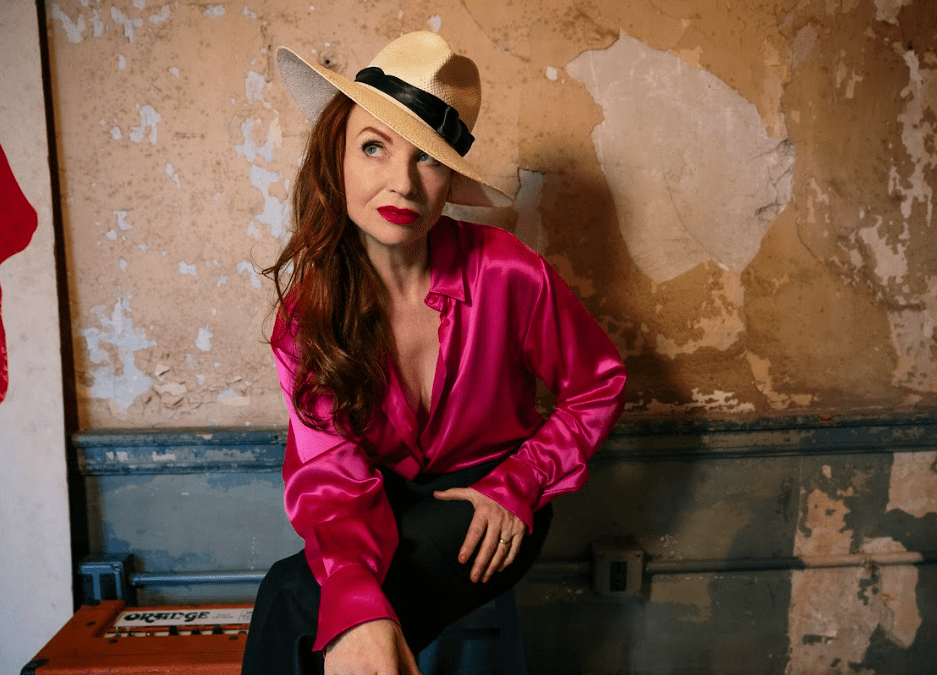
We caught up with Judith Owen between tour dates to talk about writing love songs to difficult husbands, why happiness doesn’t kill your muse, and what it means to be the “queen of the bitter sweet” in an era that’s finally ready to hear that wisdom isn’t the opposite of joy—it’s the path to it.
There’s a fascinating tension in “That’s Why I Love My Baby”—you’re writing an anti-Valentine’s Day song that somehow becomes the most romantic thing imaginable. It’s like you’re applying therapeutic concepts of “radical acceptance” to your husband’s refusal to buy into Hallmark capitalism. When you were writing this, did you worry listeners might think you’re settling rather than choosing a more authentic form of love?
The song is absolutely about the “radical acceptance” of what is, and the polar opposite to “you’re perfect now change”, which is what I was doing to my husband every Valentine’s Day!
And yes, it IS a romantic song, about loving someone for who they are all year round, not just on a “Hallmark” date. It’s the opposite of settling. I mean, what’s a card or a rose, compared to an unwavering love for who you are and what you do?
“Come On And Get It” got millions of streams and The Times called it one of the year’s most joyous releases. But joy in music is often treated as less complex than melancholy—like it’s somehow easier or less worthy of serious artistic exploration. Do you think there’s something about the particular way you embody joy—this knowing, hard-won kind of happiness—that’s resonating differently with listeners now than it might have even five years ago?
Absolutely! I’m very honest about how hard won my present happiness is. I was depressed and really very ill from my teens to my 40’s , living 2 lives, private and public, for many years. But my aim was always to be healthy and to actually feel lasting joy, in my day to day life, not just when I was “self-medicating” on stage. My audiences see that and hear it in my music and my honesty, delivered with the humour that allows people to listen. I call myself “queen of the bitter sweet”, as my original songs and re-interpreted covers all speak of life’s paradox…being beautiful and painful, at the same time! It’s no wonder I made New Orleans my home, as it embraces more than any other place I’ve known, how to find joy in the face of adversity. 5 years ago, we were all afraid, and reeling from Covid, and that’s why I made ‘COAGI’, to find the joy and escapism we so badly needed. It changed me and allowed me the freedom to be my authentic self, unafraid of people who thought passionate, joyful music wasn’t “serious”. There’s nothing more serious than surviving and thriving in this scary world. I learnt the hard way, and I’m sharing what I know, and my audience feel it.
You’ve got this sold-out show at Pizza Express Soho. And your whole tour is these intimate venues rather than larger rooms. Given that your songs deal with deeply personal revelations, how does performing in these smaller, acoustically vulnerable spaces change the way you inhabit the songs?
It’s interesting how intimate rooms facilitate intimate and exciting performances, where the audience have an involvement and investment that you don’t get in large rooms. Me and my band often talk about how we love the grand rooms, but experience the truly special performances in the small ones where everyone’s packed in and sharing one combined experience. It’s “warts and all” and that’s the human beauty of it all. The audience leave on a high knowing they saw something that will never be re-produced. It’s so personal, being part of “lightning in a bottle”.That’s what I love as an audience member myself!
You mentioned it took you “years to stop being a drama queen every Feb 14th.” When you’re writing from hindsight and hard-won wisdom rather than from inside the chaos, does it ever feel like you’re losing something vital, or does perspective give you access to a different kind of truth?
I tend to write about what I’m experiencing, and I’ve learnt that often I didn’t completely understand the weight of their meaning until much later. Writing’s almost a subconscious thing, where the words and meaning are out before you have a chance to wrap your head around them. So strangely, hindsight and perspective allows me to accept and share my hard-won wisdom. I’d much rather sing from that “knowing” place than from inside the chaos. I know there’s that old fear that you’ll lose your muse if you’re too happy. I’ve never had that issue, I have enough darkness to last a lifetime. My goal is to reach a place of joy and understanding.
The piano has this particular weight in the singer-songwriter tradition—it forces you to be stationary in a way the guitar doesn’t, creates a different relationship with the audience. Do you ever feel like the piano imposes certain expectations on you as a performer?
Not any more, not since ‘Come on and Get It’, forced me to stand front and center and be the front-woman, band leader, and consummate performer. Luckily it came naturally to me, also being an actress and dancer. Truthfully, it’s almost impossible to be a “front man”, when you’re trapped behind the piano, that’s why early Elton was SO theatrical and flamboyant at the piano. Being front and center has also made me a more animated when I’m at the piano. It’s been a late an incredible blossoming for me. Now I can’t imagine not doing both!
The new album drops this spring, but in the streaming era, albums as coherent artistic statements have become almost anachronistic. People consume singles, playlists, isolated tracks. Are you still creating with the assumption that someone will sit down and listen to the album as a complete work, or have you made peace with people encountering these songs as isolated moments in their own personal soundtracks?
I’m fine with it all, just as long as you hear my music somewhere! I’m not precious about how people hear it, as songs should stand alone, and together. I think vinyl buyers are more likely to have the full “album” experience, so that’s why I still take the running order seriously, for those who like the complete experience of the musical journey in a curated record.
Your husband clearly appears in your songs. Artists who write about long-term partners walk this interesting ethical line. Do you have agreements about what’s fair game, and has he ever heard a song and said “That’s not quite how I remember it”—and if so, whose version wins, the artistic truth or the literal truth?
Good question! Truth is, he really doesn’t have an ego about it. He’s either incredibly moved by my songs about him, or he’s been bearing me an enormous grudge all these years! (I think it’s the former). I’m not sure I would have coped so well if it was the other way round. But writers are very selfish that way, however in my defense I should mention that I wrote a song for him within a week of our meeting, and gave him a copy right before he flew to the US. It sealed the deal and he’s been the subject of some of my best songs since then!
You’re touring Paris, Evanston, Minneapolis, St. Louis—wildly different cultural contexts. Humour, which is central to your voice, is incredibly culturally specific—what lands in London might not work in Minnesota. Do you find yourself adjusting your delivery based on where you are, or do you trust that the gap between romantic expectations and reality is universal enough that the humour transcends geography?
Perhaps it’s my accent or perhaps it’s just the universality of what I’m singing about that makes it work in Paris, Barcelona, London, Australia, St Louis, or Minnesota. My humour does seem to transcend, in spite (or perhaps because), I attempt to speak a few phrases and definitely swear, in the language of the country I’m performing in. I’m also built to entertain and win you over no matter what. It’s just who I am.
Bush Hall on June 1st is a homecoming of sorts. The UK has this complicated relationship with its musical heritage right now—caught between nostalgia for when British music dominated globally and anxiety about the future. As someone who’s watched the infrastructure around music transform completely, what do you make of where UK music is right now, and do you feel any responsibility to mentor the next generation?
I think the next generation is going to be more than fine. The biz continues to change and now the creative world is rightfully terrified about AI. For me, nothing can ever replace the live human, warts and all, lightning in a bottle, performative experience. So I’d encourage any young musician to put the hours in and learn the craft of being a great live performer. It’s magical, and primal, and I (and thankfully my audience) bloody love it…
Do you ever feel pressure to simplify, or have you reached a point where you’re just making music that feels true to you and trusting your audience will come with you?
The most important thing that I learnt from getting off a major label, and re-gaining creative freedom was…be your authentic self, as a musician, person, and performer. Your audience will love you for it, and stay with you because of it. I was always a “closet” badass. Turns out that’s what my audience wanted too!
All information provided is prepared in accordance with editorial standards and is intended to offer useful insights for readers. Please note that the opinions, interpretations, and evaluations expressed by the author may substantially differ from the viewpoints of our readers or the general public at large, and we respect the diversity of opinions.






 Indie Boulevard Magazine