
There’s a version of this story where Pete Wiley moves to a city, finds four people who like the same records he does, and rehearses every Tuesday until something clicks. That’s not this story.
Operating out of Mount Airy, Maryland — somewhere between the noise of DC and Baltimore, but deliberately removed from both — Wiley has built Blocks of Life into something harder to categorize and more interesting for it: a rotating cast of collaborators, a parallel life as a writer and essayist, a bass guitar spot in another band entirely, and a new single, Whisper in the Dark, arriving February 20th with the kind of emotional architecture that suggests he’s been thinking carefully about the distance between a murmur and a breakthrough. We sat down with Wiley to talk about what it actually means to make music without a fixed lineup, why a song is more like a photograph than a map, and what happens inside your head when you’re standing on stage playing bass while someone else sings your words.
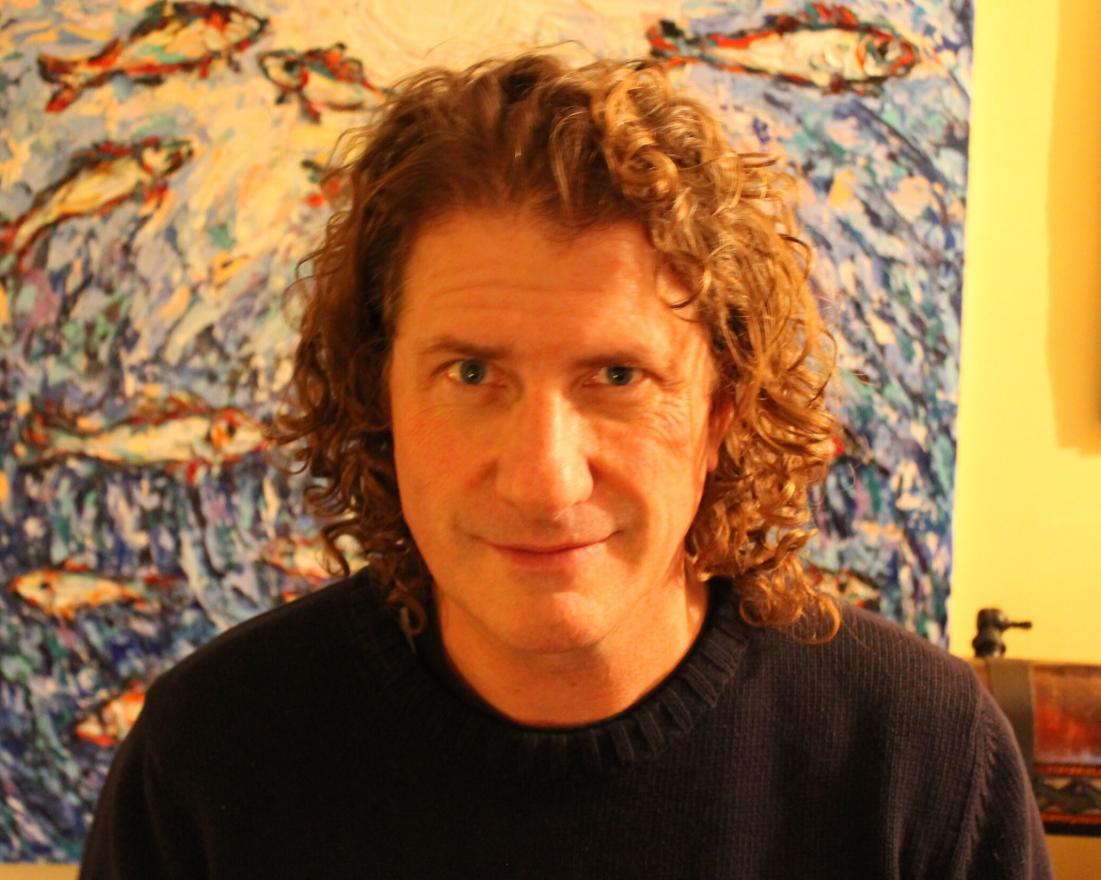
Pete, it’s wonderful to speak with you, and thank you for taking the time. Your parallel work as a songwriter and essayist makes me think about the difference between text on a page and text in a song. Because it seems to me that when you write an essay, the reader has time to stop, go back, reread a paragraph. In a song, the listener has three minutes, maybe four, and a line rushes past. Have you ever caught yourself trying to cram into lyrics a thought that requires two pages of prose to fully unfold?
That’s a great question, and yes — I’ve absolutely caught myself trying to compress an essay into a verse. When I’m writing a book or a blog post, I can unfold an idea slowly. I can define terms, offer examples, acknowledge counterpoints. In a song, you don’t get that luxury. A lyric has to carry meaning and rhythm, and melody, and it has to pass by in seconds.
Early on, I definitely tried to make lyrics do too much. I’d think, “If I just phrase this precisely enough, they’ll understand the whole idea.” But songs don’t work that way. They’re more like emotional doorways than arguments. Now I try to write lyrics that imply rather than explain. If an essay is a map, a song is more like a photograph — it captures a moment, and the listener brings the rest.
Mount Airy, Maryland — a town an hour’s drive from DC and Baltimore, but distant enough from the music scenes of both cities. You record with a constantly rotating collective of musicians, which suggests a conscious decision against forming a classic band. Was there ever a moment when you thought “damn, maybe I should just find four people and rehearse on Tuesdays”?
Mount Airy is an interesting place to make music. It’s close enough to cities to feel connected, but far enough that you’re not swept up in a scene. And smaller (closer) cities, like Frederick, also have a vibrant music scene, which we are very much part of. I play with my working band, Coldstream, and between Blocks of Life and Coldstream, I have the best of both worlds. I have my “every Tuesday” rehearsals and live gigs with Coldstream, and I can craft my specific vision for my music with Blocks of Life. And Blocks of Life was intentionally built differently. I like the idea that each song can gather the right people for that moment. Some songs need restraint. Some need tension. The rotating collective keeps me from writing for a band and pushes me to write for the song itself. It also keeps things fresh. Every collaboration teaches me something new.
Your new song “Whisper in the Dark” opens with ethereal acoustic guitars, then erupts into an intense, searching vocal part. Do you remember the first time you heard a song that taught you that quiet and loud could inhabit the same space? What was that revelation?
I don’t know if I can name a single first moment, but I remember being deeply affected by bands that weren’t afraid of contrast — where intimacy and intensity weren’t opposites. The revelation for me wasn’t just dynamic range. It was emotional permission. You can whisper something vulnerable and then let it break open. You don’t have to choose between subtle and searching. In Whisper in the Dark, that shift from ethereal acoustic to a more intense vocal isn’t just about volume — it’s about emotional pressure building and needing release.
You play bass in the band Coldstream, and sometimes they perform your Blocks of Life songs alongside their own material. This is an interesting inversion of the usual “main project plus side project” story. Tell me: when you’re standing on stage as a bassist and you hear someone else singing your song, what’s happening in your head?
When I’m on stage with Coldstream, playing bass, and someone else is singing a Blocks of Life song, there’s this mix of detachment and pride. Part of me is listening like an audience member — hearing how the song lives outside of me. Another part is quietly thinking, “I remember writing that line alone in a room.” One of the benefits of releasing my music as Blocks of Life is that I am the sole producer. When I bring my songs to the band, I allow my bandmates to take them and run with them. Because I already have my complete vision of the songs, I don’t feel any need to dictate how the band interprets them. The versions that the band plays are often quite different from my Blocks of Life release, and that’s great! It actually reinforces the idea that songs don’t belong to us forever. Once they’re out there, they become shared. Hearing someone else interpret your words is a reminder that the song can carry meaning beyond your original intention.
Your sound is built on acoustic guitar as a foundation, but when you listen to “Whisper in the Dark”, there’s clearly an evolution happening. Which guitar do you prefer, acoustic or electric, and why?
Acoustic guitar feels like home. It’s where most songs begin for me. There’s something honest about it — you can’t hide behind production. But electric guitar opens a different emotional vocabulary. It allows space, texture, tension. In Whisper in the Dark, even though the foundation is acoustic, there’s a sense that the sound world is expanding. I don’t think it’s either/or. Acoustic is the foundation. Electric is often the color.
Your influences — Noah Kahan, Vance Joy, The National, Iron & Wine — they’re all successful artists, but each has carved out their niche very differently. Kahan blew up on TikTok, The National built a career over twenty years. When you’re recording songs in the studio with different musicians, do you think about how these tracks will reach people in 2026? Or do you consciously ignore all that machinery and just do what you want to do?
I’d be lying if I said I never think about how music reaches people now. The landscape is real — TikTok, streaming, long careers versus viral moments. You can’t pretend it doesn’t exist. But in the studio, I try to ignore all of that. If I start writing for “how this will land in 2026,” the song loses integrity. I’m more interested in whether it feels honest in the moment. Longevity, in my view, comes from depth, not strategy. If a song is real, it has a chance to find its people — whether quickly or slowly.
Blocks of Life is at its core, as you yourself call this project, “intentionally collaborative”. This means you don’t have one sound engineer or producer who knows your sound by heart and can say “Pete, this sounds like your song” or “this sounds like you’re trying to be someone else”. Do you have some kind of internal compass that tells you “this is definitely Blocks of Life”?
That’s a great question, and I think the answer lives in the balance between collaboration and control. On the instrumental and vocal side, I really welcome input. When I bring a song to musicians, I’m not handing them a chart and saying, “Just execute this.” I want to hear how they interpret it. A guitar phrase might shift the emotional tone. A harmony might reveal something in the lyric I hadn’t fully heard yet. That openness keeps the songs alive.
At the same time, I’m the sole producer. I shape the arc of the track — the dynamics, the pacing, the emotional contour. And I’ve worked with the same sound engineer, Chris Clement, on mixing and mastering from the beginning, so there’s a consistent sonic lens across everything. Even as the lineup shifts, the way the vocal sits, the restraint in the arrangement, the overall atmosphere — those things stay grounded. It’s also worth saying that while the lineup can change from song to song, there are a few core collaborators who appear on most of the recordings. Multi-instrumentalist Peter B Wiley and drummer Jim Wiley, for example, have become part of the musical DNA of the project. So there’s both fluidity and familiarity.
The internal compass, though, is thematic. If a song feels honest, reflective, and aligned with the broader ideas behind Blocks of Life, it belongs. The musicians help it breathe. The production keeps it coherent. That tension between spontaneity and structure is what makes it unmistakably Blocks of Life.
I’m thinking about how live performances are always a moment when something goes according to plan and something falls apart beautifully or terribly. Have you had a show where someone forgot the words, or a string broke at the most dramatic moment, or someone from the audience shouted something so strange that you all lost concentration?
Live performance is always a mix of control and surrender. There have been moments where someone blanked on a lyric or a part came in slightly off. And in those moments, there’s this split second of panic — and then you realize the audience doesn’t see it the way you do. Sometimes the “mistake” becomes the most human part of the night. I’ve come to appreciate those imperfections. They remind you that music isn’t a product. It’s an event. Something alive.
Are you the type who does thirty takes of one vocal line until it becomes perfect, or do you believe in the first take, when the energy is still raw and real?
I’m probably somewhere in the middle. I care about getting it right, especially emotionally. But “right” doesn’t mean flawless. Sometimes the first take has a fragility that you can’t recreate. Other times, it takes a few passes to relax into the performance. I usually stop when it feels emotionally honest. If a take is technically perfect but emotionally flat, it doesn’t survive. I’d rather keep a take with a little edge in the voice if it feels true.
You have a rather multilayered life, where you’re constantly switching between roles — songwriter, bassist, writer, studio perfectionist. I’m thinking about how most artists have a moment when they realize “this is what I want to achieve with this project”. But you intentionally don’t have a fixed lineup, and as I understand it, there’s no pressure to build a traditional band career. Tell me frankly: do you have a specific ambition for Blocks of Life — something you want to achieve in the next five years — or are you consciously avoiding that kind of thinking?
I don’t think I’m avoiding ambition — but I may be defining it differently. Blocks of Life isn’t just a music project. It’s a collection of creative endeavors — music, essays, poetry, video, books — all orbiting the same set of ideas about living intentionally and meaningfully. In that sense, I already feel like I’m in the career I want. The ambition there isn’t to pivot into something else — it’s to keep evolving as my vision evolves, and let the body of work grow in coherence and depth over time. When it comes to music specifically, I do have two parallel goals. One is to build a significant, dedicated audience for the Blocks of Life songs — not just listeners, but people who genuinely connect with the music and understand what it’s about. I’m not chasing noise; I’m interested in resonance. A moderate, deeply engaged audience means more to me than surface-level reach.
The other goal runs alongside that, and it’s Coldstream. Being a vital member of that band matters to me. That means collaborating on other people’s songs, bringing the strongest live performance I can to every show, and helping the band continue to grow and evolve. There’s something powerful about contributing to a shared creative identity in that way. So I wouldn’t say I’m drifting without direction. I just have layered ambitions. I want Blocks of Life to expand as a creative philosophy, and I want my role in music — both as a songwriter and as a band member — to deepen over time. That feels like a long game, and I’m comfortable playing it.
All information provided is prepared in accordance with editorial standards and is intended to offer useful insights for readers. Please note that the opinions, interpretations, and evaluations expressed by the author may substantially differ from the viewpoints of our readers or the general public at large, and we respect the diversity of opinions.





 Indie Boulevard Magazine