
They named the band after someone who belongs to everyone and no one at the same time. They write songs with titles like Limerence — a word most people only encounter at 3am, when they’re googling why they can’t stop thinking about someone. And their new single Mother is out now, built around a question at its core: “Did I ever know you?” — which, depending on who you are and what you’ve been through, can mean something entirely different.
The Ingrid are Jess Charleslyn, Josh Platt, and Will Hornsblow — three people who started playing together as schoolkids, in the thick of the pandemic, when social life collapsed and only music remained. Since then, they’ve worked with producer Greg Walsh, built their own creative collective, and developed a philosophy that simultaneously critiques the music industry — and consciously operates from within it. We sat down with the band to talk about psychological terminology in song titles, drumming as a form of trust, Instagram therapy as the new Wikipedia, and why you’d release quiet music into the loudest media landscape in the history of human civilization.
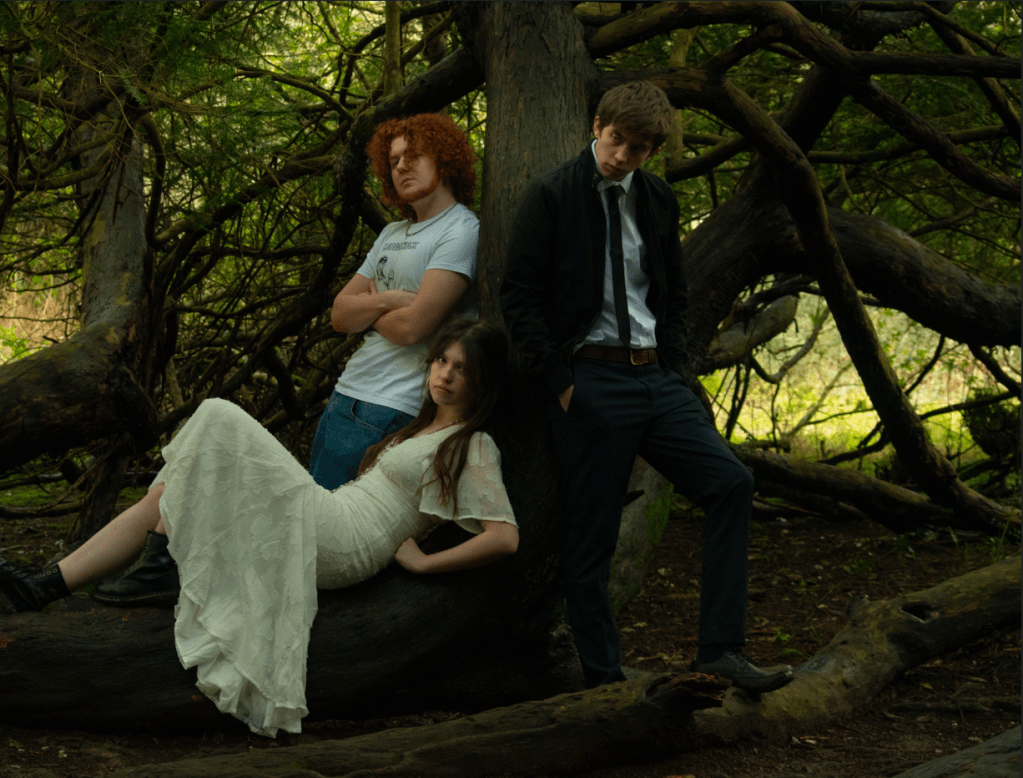
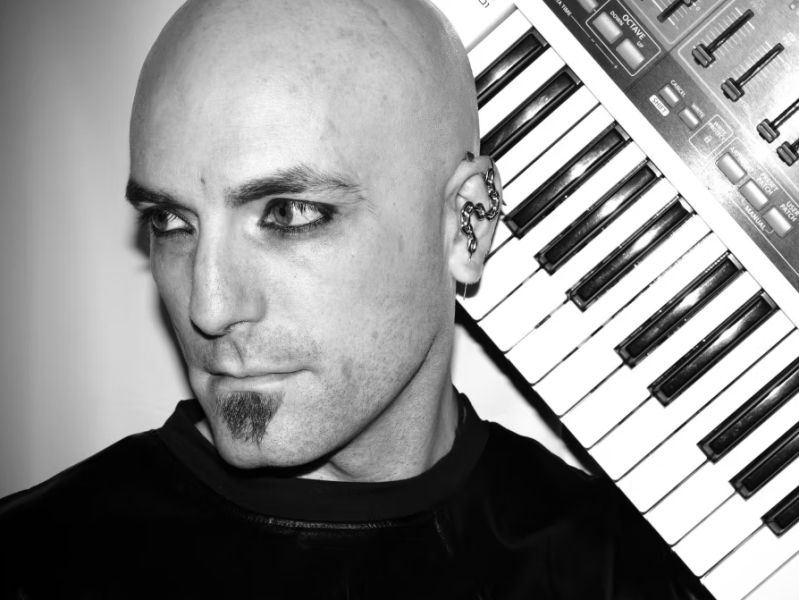
photo by Sally Connelly
Hey guys! You know, there’s something almost archaic about calling yourselves “The Ingrid” — it reminds me of those 60s bands that used female names as if they were talismans or mysterious figures rather than actual people. The Shirelles, The Ronettes, even Siouxsie and the Banshees in a way. But you’re doing it in 2026, post-irony, post-everything. And I’m curious because the name suggests both intimacy and distance at the same time — like you’re naming the band after someone specific, but we don’t actually know who Ingrid is or was. Is there a real Ingrid?
(Jess) That depends on what you define as real, Ingrid is the sum of the parts just like a person.
(Josh) Yes, Ingrid is all of us, It means beauty and a lot of our songs reflect the beauty of emotions.
(Will) All in all, we are The Ingrid.
“Limerence” and “Mother” — these aren’t exactly the kind of single titles you’d workshop in an A&R meeting. Limerence is basically an obscure psychological term for obsessive romantic attraction, the kind of word you only know if you’ve been reading about attachment theory at 3am. And now “Mother,” which is loaded in about seventeen different directions. Are you intentionally constructing a kind of emotional taxonomy with your work, and if so, what state or feeling is desperately missing a proper name?
(Jess) Two of us read psychology at University so we are familiar with these terms but also about how some feelings do miss proper names so to speak. We are constructing songs that talk about the processing of the event, not the event itself meaning there is the space for multiple emotions or conflicting feelings to exist within our music but we try not to define this too much.
(Josh) Yes to follow on the names just fit what the songs are about; some came after the song was made, some came before.
Greg Walsh has worked with everyone from You Am I to Augie March — he’s seen basically every iteration of Australian indie rock rise and fall. He’s old enough to remember when “alternative” actually meant something threatening. And here you are, barely out of school, working with someone who’s got that much institutional memory. What does he challenge you on?
(Josh) We actually work with a different Greg Walsh than who you’re suggesting (Tina Turner, Pink Floyd, Kate Bush). But the principle of working with someone with that much experience remains the same. He knows a lot of ‘secret ingredients’ that can only come with that experience, he greatly challenges us to push ourselves and find our own ‘secret ingredients’.
(Jess) Greg is a pro and I wouldn’t say he judges us based on our youth so to speak but instead he invites our ideas and hey, who is to say that naivety is always a bad thing? He challenges us for sure on our writing; different chord progressions, unique time signatures but he works with us in a way that remains authentic to us. It’s all in the name of expanding our musical knowledge.
(Will) Working with mentors who have so much experience, knowledge, and expertise is truly enlightening and inspiring. Greg is the best at what he does and us working together is more collaborative as opposed to rule following.
Josh, you’ve mentioned the “Ringo school” of drumming — which is really about ego death in service of the song, right? Ringo made The Beatles better by never trying to be John Bonham. But you’re also coming from filmmaking, which is fundamentally about control, about deciding what the viewer sees and when they see it. How do you reconcile that directorial impulse with the self-effacing philosophy of your drumming? Or are they actually the same thing?
(Josh) Directing a film isn’t about control, at least for me. A thing I understood very early on in filmmaking is that you can’t control everything. My job as a writer or a director is to see where the story wants to go, and then give that control and trust to other people in their own fields. It’s almost everybody else’s job on set to control everything, such as the way the art director controls how the sets are built or the way an actor controls how they say their own dialogue, and that in turn gives me room to ‘go with the flow’ for the betterment of the story. I put that same trust in my band mates. The story tells me where the camera should go, just as the song tells me where the drums want to go.
The pandemic origin story is becoming its own cliché at this point — everyone’s lockdown band, bedroom producer era, “we found ourselves through music during isolation.” But yours actually sounds different because you were literal teenagers, which means you were processing the total collapse of the social structures that define adolescence. Did forming this band feel like an act of defiance against that loss, or was it more like building a replacement world entirely?
(Jess) I think it’s wonderful that through something that was horrific for many people such as frontline workers, those who lost loved ones and everyone who went through social isolation – solace was found through creativity. Forming this band felt like a natural resolution in the sense that we started our own music journeys when the world as we knew it was changing. From that, we build our own world.
(Will) In my opinion maybe and maybe not. I wouldn’t say forming the band was a act of defiance as it was more of a act of love, love for music, love for playing, and a love for my band mates. Love can be defiant some may say. While the escapism of being in a band is cool it was definitely not the driving force behind forming in such abnormal conditions.
“Mother” sits in emotional ambiguity, you’ve said. “Did I ever know you?” — it’s a question that could be about a parent, a lover, a past self, even God if you’re feeling expansive. But ambiguity in 2026 feels almost radical when everyone’s expected to process their trauma in public with absolute clarity and closure. Instagram therapy-speak has convinced people that every feeling needs to be named, categorized, and resolved. Are you consciously resisting that impulse toward emotional resolution, and if so, what do you think we lose when we demand that everything must be understood and healed?
(Josh) I believe we are resisting that impulse. The problem with said ‘instagram therapy speech’ is that no one’s an expert but everyone acts like it, which can really spread some harmful information. It’s like the modern day equivalent of getting all your info off wikipedia, except all the more dangerous. We’ve all found through our own life experience that it’s okay to not know how you feel or not know what’s wrong in any situation. It’s freeing once you realise that.
(Jess) Indeed, I think it’s really important, as I said earlier, that our music holds space for two things to be true at once. Perhaps a real life example of cognitive dissonance if you like. Personally, I try not to look at our music as either resolved or unresolved – it just is. It exits and my only hope is it does whatever it needs to for whoever is listening.
The music industry loves the myth of the lone genius, the auteur, because it’s easier to market one face than thirty contributors. You’re saying everyone who touches the work becomes part of it. But practically speaking, how does that work when there’s money or recognition involved? Because collectivism is beautiful in theory, but capitalism is really good at finding the cracks.
(Jess) I think everybody that works with us is genius just in their own way and that shouldn’t be taken away from during marketing. Hours can go into making album art but how often does the artist receive the same recognition as the musician? We want to create a space where we not only promote the other creatives we work with but also give them space and grace to promote their work in general.
(Josh) Yeah It’s a way of promoting everyone who works with us, getting names out there is invaluable these days.
(Will) Exactly, it’s more including everyone instead of just not mentioning everyone who is involved, we want everyone who is involved to be recognised for their impact and their input. The collective though in it’s early days is a space by artists, for artists.
Will, you started playing guitar during the pandemic after “a major life shift” — which is delightfully vague and I respect that you’re not elaborating. But you’ve also said you bring an “instinctive, dreamlike quality” to the sound, which suggests you’re not coming from a place of technical mastery or theory. Do you think there’s something specifically valuable about learning an instrument during a time of upheaval, when you’re not trying to become “good” in any conventional sense but just trying to make something that feels right?
Yes and no as every player is different in their own way. I believe it comes from feel and emotion, as i’ve met so many better players than I, but could they make the same music without already knowing the guitar (my guess is probably not). As I said before everyone has their own style from their own musical backgrounds, mine just happens to come from “a time of great upheaval”. I think ‘good’ is a subjective term here as it implies some music is inherently bad. Music could be theory wise very weak but emotionally very impactful and vice versa.
You’re critical of the music industry being “bloated and unfair,” which — sure, yes, objectively true. But you’re also releasing singles, working with established producers, doing press. You’re inside the machine even as you’re critiquing it. What does “creative disruption” actually look like when you still need the infrastructure you’re trying to disrupt?
(Josh) A single drop of water can break down an entire computer, but that drop has to be inside the machine to cause that disruption does it not?
“Mother” sounds intimate rather than dramatic, unresolved rather than declarative. But you’re putting it out into the world where it will be streamed, playlisted, algorithmed, consumed between TikTok videos and Spotify ads. There’s something almost tragicomic about creating music that trusts “subtlety over spectacle” and then releasing it into the most spectacle-driven, attention-deficit media environment in human history. Do you ever worry that the music is too quiet for the room it’s entering, or do you think that’s exactly why it needs to exist?
(Josh) I think that’s exactly why it needs to exist. It may be that it’s not for the room, but for those people who wanna leave the room and catch a quiet breath outside.
(Jess) I couldn’t have put that better myself. We aren’t trying to be mainstream or alternative. It may be cliche but we truly are just writing to be ourselves. As Josh said previously, to effect the machine you must be in the machine yourself.
(Will) You have hit the nail on the head, the reason this music needs to be made is because it’s not what’s happening right now, you think the world wanted stg peppers or pet sounds when they were being created? But they got it and now those albums are reconigsed as trail blazers and have created the musical template for the next generations, this not saying that that we’re comparing ourselves to the Beatles or the beach boys but the sentiment rings true, you have to break the template – go create something new.
All information provided is prepared in accordance with editorial standards and is intended to offer useful insights for readers. Please note that the opinions, interpretations, and evaluations expressed by the author may substantially differ from the viewpoints of our readers or the general public at large, and we respect the diversity of opinions.





 Indie Boulevard Magazine