
Pianist Anastasiya Bazhenova‘s debut album traces a path from clarity to madness — through Mendelssohn and Prokofiev. We spoke with her about why classical music needs psychology, and why the piano remains the most honest instrument.
Anastasiya Bazhenova makes her statement with a program that speaks for itself. Her debut album, From Mendelssohn to Madness, operates on its own terms. The program is built as a single inward trajectory: from Mendelssohn‘s transparency to Prokofiev‘s Sixth Sonata, where the coordinates are already broken, and the music registers fear, fury, despair, irony, and paranoia with an almost documentary precision. Bazhenova conceives the album as a whole — as the story of one consciousness passing through stages: certainty, resistance, collapse. Getting hold of Bazhenova for a conversation turned out to be a task with an asterisk. Between rehearsals, recording sessions, and flights, her schedule read like a score where someone had crossed out all the rests. More than once we came close to simply running a review and forgetting about the interview altogether. But eventually it all came together. What emerged was a conversation about how classical music maps psychological shifts, why Mendelssohn is more complex than he is usually given credit for, and what happens to a performer when she lives through someone else’s madness with her hands on the keys.

Hi Anastasiya, thanks for taking the time to talk with me — I know you’ve been very busy lately. The album title — From Mendelssohn to Madness — is a striking one. It immediately sets up a trajectory, almost like a film script. There’s an enormous psychological distance between those two poles. I’m curious: did you construct this programme as a narrative, where the listener travels from one state to another — or is the “madness” in the title not really the destination at all, but something that’s already present from the very beginning, lurking inside the Mendelssohn?
Thank you for the thoughtful questions. I did think about the programme as a kind of journey, but not in a simple sense of moving from calm to madness. For me, the tension is already present in the Mendelssohn. His music often sounds lyrical and balanced, but there is also something fragile in it, as if the stability could break at any moment. The Fantasia in F-sharp minor begins to open up that tension — it is more restless, more searching. And by the time we reach Prokofiev, the tension is no longer hidden. It becomes direct, physical, almost violent. So the “madness” in the title is not only the destination. It is something that slowly reveals itself along the journey.
You went through that ten-year specialised system for gifted children in Russia — a system that has produced entire generations of phenomenal pianists, but one that pianists themselves often, let’s say, speak about with very complicated feelings. Now, years later, living in Norway, in a completely different cultural environment — how do you feel about that foundation? Is there something you’ve had to consciously unlearn in order to find your own voice?
The Russian school gave me an extremely strong musical foundation, and I feel very grateful for that. It is a tradition that has shaped many remarkable musicians, and I never felt the need to “unlearn” it. On the contrary, it gave me the discipline, the musical language and the seriousness towards music that I still rely on today. What changed over time was not this foundation, but my own life experience. As you grow older and go through different stages of life, music begins to speak to you differently. Certain emotions and colours become clearer, and your sound naturally evolves. That kind of understanding comes from life itself — it cannot really be taught. I also realised that I am not interested in playing everything simply because it exists in the piano repertoire. For me the music has to resonate very deeply on a personal level. When that connection is there, the interpretation becomes much more honest.
How did the recording process for From Mendelssohn to Madness go — were you striving for an “ideal” version of each piece, or were you trying to preserve the feel of a live performance, with all its risks and rough edges?
The recording process was quite intense, but I wasn’t thinking in terms of creating an “ideal” version of each piece. For me the most important thing was simply to remain faithful to the concept of the album. This programme is built around a very clear inner idea, and during the recording I was mainly focused on keeping that idea alive in the sound. When the concept is present, the music begins to speak naturally. Technical perfection on its own is not really the point. So my goal was not to polish every detail endlessly, but to make sure that the spirit of the programme remained intact.
Etcetera Records is a label with a fairly specific reputation — they’re known for giving artists space for unconventional projects without imposing commercial logic. For a debut album, the choice of label is almost as much of an artistic decision as the choice of repertoire. How did the collaboration with Etcetera come about — did they accept your concept wholesale, as it was, or was there a dialogue during the process that somehow shaped the final form of the album?
The collaboration actually started with the concept of the programme. I approached Etcetera with a very clear idea of the album and its inner trajectory, and they immediately understood what I was trying to do. For me that was very important, because this project is not just a collection of pieces. The programme is built around a very specific psychological idea, and I wanted the recording to reflect that. So the process was quite natural. The concept remained exactly as it was from the beginning, and the label gave it the freedom to exist in its own form.
There’s an image that has come to be associated with you, one that could often be described as “an artist with a rich inner world” — and that’s a compliment, of course, but I think there’s an interesting tension hidden behind that phrase. Because the stage is a public space, and an “inner world” is, by definition, something private. Every time you walk onstage, you’re essentially making visible what is usually invisible. Is a concert, for you, an act of openness — or is it, on the contrary, a way of hiding behind the music?
For me it is a little bit of both. Music allows you to reveal something very personal, but at the same time it protects you. You are not speaking directly about yourself — everything passes through the language of the music. In that sense the stage is a very strange space. It is public, but the most important things that happen there are actually very internal. The audience does not see your thoughts or your experiences directly — they only hear them transformed into sound. So perhaps a concert is not exactly an act of openness or an act of hiding. It is something in between — a way of sharing something very private without ever fully explaining it.
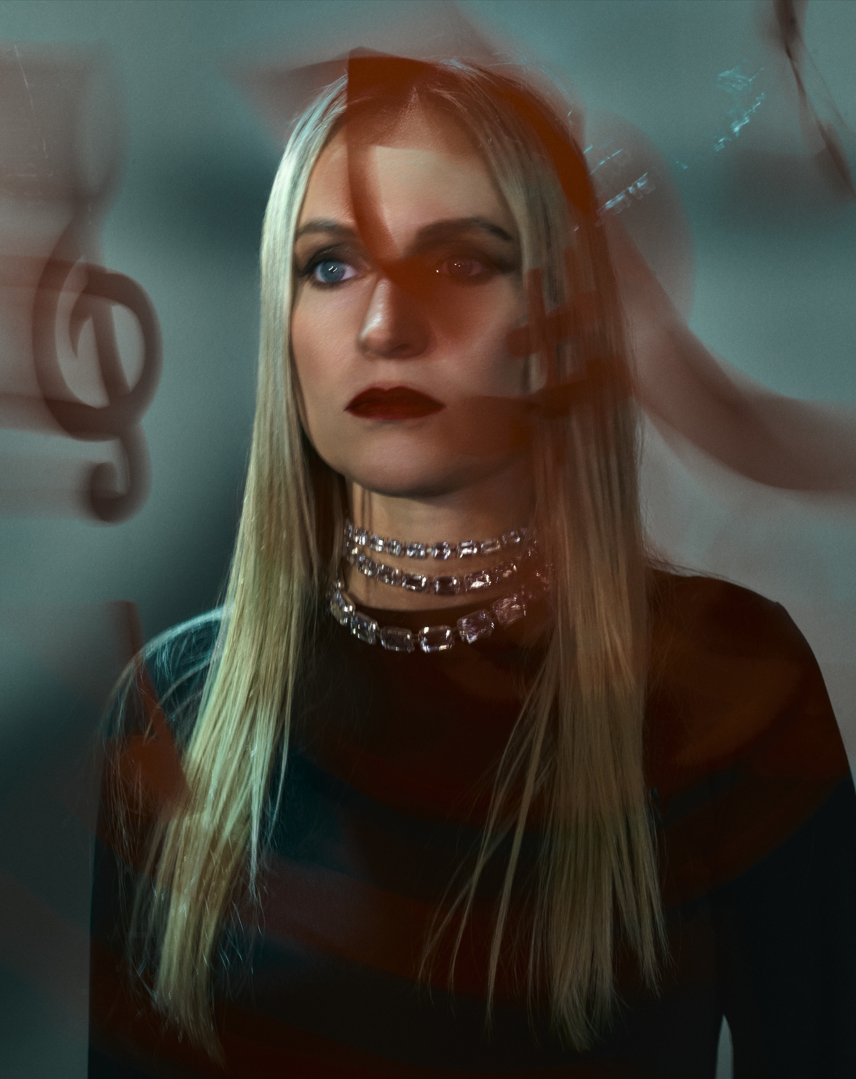
Mendelssohn’s Fantasia in F-sharp minor is a piece that often gets lost in the shadow of the Songs without Words, even though it’s far more radical in its emotional depth. There’s an almost Schubertian sense of wandering, of being lost. It doesn’t seem like a coincidence that you placed it in the programme right next to the Prokofiev. What drew you to this Fantasia specifically — and do you hear something in it that resonates with the Sixth Sonata, perhaps some shared nerve?
What always fascinated me about this Fantasia is that it feels very different from the image we usually associate with Mendelssohn. Instead of clarity and elegance, there is a strong sense of searching in this music, almost as if the ground is constantly shifting. There is also a feeling of wandering in the piece — the music moves through very different emotional spaces, sometimes without clear resolution. That gives it a certain instability which I find extremely compelling. In the programme it naturally leads towards Prokofiev. Interestingly, the Fantasia is in F-sharp minor and the Sixth Sonata is in A major, its relative major, so there is even a subtle tonal connection between the two. But more importantly, the Fantasia already opens a psychological space where the stability begins to dissolve — and from that point the leap into Prokofiev feels almost inevitable.
Prokofiev’s Sixth Sonata is the first of the so-called “War Sonatas.” It was composed in the late 1930s, in an atmosphere of total fear, and premiered by Richter in 1940. Back then, music was a way of processing horror, of giving it form, of somehow coping with it. Now, in 2026, we’re witnessing something entirely different: war is broadcast live, bombings are edited to trending music from social media, violence is packaged as content. There’s this sense that the modern world has developed some monstrous immunity to what used to cause shock. And in these conditions, you walk onstage and perform music that was written precisely as a response to catastrophe — but you’re playing it for an audience that’s used to scrolling past war footage between cat reels. How do you feel about that distance? Can the Sixth Sonata still break through that anaesthesia today — or has classical music already lost that kind of power?
For me, the Sixth Sonata is not powerful simply because it illustrates war in an external way. What interests me much more is how it reveals a state of inner catastrophe. That is why I think it still speaks very directly to us today. We live in a time where people are constantly confronted with extreme images, to the point where shock itself seems to lose its force. But that does not mean that people feel less. On the contrary, modern life is full of anxiety, tension and emotional fragmentation that often remain unspoken. Outwardly everything may still look balanced, but inwardly many things are breaking. This is why the Sixth Sonata feels so contemporary to me. It does not simply describe historical trauma — it exposes a human being from the inside. In each movement there is a different kind of psychological pressure, and that is what makes the work so disturbing and so true. So yes, I believe it can still break through today. Perhaps not by shocking in an obvious way, but by forcing us to recognise something in ourselves that we would rather not see.
Norway is a country with a very particular sonic environment: silence, space, nature that essentially imposes a certain rhythm of perception on you. It’s the complete opposite of the density and intensity you came from. I’m curious: has living in Norway influenced the way you hear sound — or did your sonic identity take shape earlier and remain unchanged?
I think my musical identity was formed much earlier, during my years of study. The Russian tradition gave me a very strong sense of sound and structure, and that foundation has remained very important for me. But living in Norway has changed something in the way I listen. There is a lot of space and silence here, and that inevitably influences your perception of sound. You become more aware of very small details — the colour of a single note, the way a phrase breathes. So I would not say that Norway changed my musical identity, but it perhaps gave me a different kind of listening. And for a pianist, learning to listen more deeply is perhaps the most important thing of all.
You grew up in Russia, inside a system where classical music is practically a state institution — a serious profession with a clearly understood status. Then you found yourself in Norway — a country where the cultural landscape is structured completely differently: fewer hierarchies, more personal space, a different attitude towards ambition as such. You perform across Europe and North America, and at each of those points there’s a different audience, different halls, a different relationship to the question of why a live classical music concert even matters in 2026. I’m curious: do you feel that these different contexts affect the way you play? One kind of energy in a Russian hall, another in Norway, a third in America? And if so — is there an environment where you feel most free as an artist?
I think the core of my interpretation does not change depending on the country. When I walk on stage, the music itself remains the same and my idea of the piece remains the same. That inner direction is something I try to protect wherever I play. But the energy of a hall can be very different. Every audience listens in its own way. Sometimes you feel a very intense concentration, sometimes a more open and relaxed atmosphere. As a performer you inevitably respond to that, and the music can breathe differently from one place to another. For me the most important thing is not a particular country but the moment when the audience is truly listening. When that kind of silence appears in the hall, you feel completely free as an artist.
A final question — and perhaps the simplest one, but it feels important. The word “madness” in the album title can be read in many different ways: as clinical insanity, as creative obsession, as radicalism, as a loss of control. What does this word mean to you personally, in the context of this album?
For me the word “madness” is not about losing control. It is about the moment when the inner balance of a person begins to crack. We often think of madness as something extreme or pathological, but in reality it is much closer to ordinary human experience. It can grow out of fear, obsession, loneliness, or simply from the unbearable tension between what we feel inside and what the world expects from us. In that sense, “madness” in this album is not something distant or theatrical. It is something that lives quietly inside many people. Music simply gives it a voice.
All information provided is prepared in accordance with editorial standards and is intended to offer useful insights for readers. Please note that the opinions, interpretations, and evaluations expressed by the author may substantially differ from the viewpoints of our readers or the general public at large, and we respect the diversity of opinions.








 Indie Boulevard Magazine